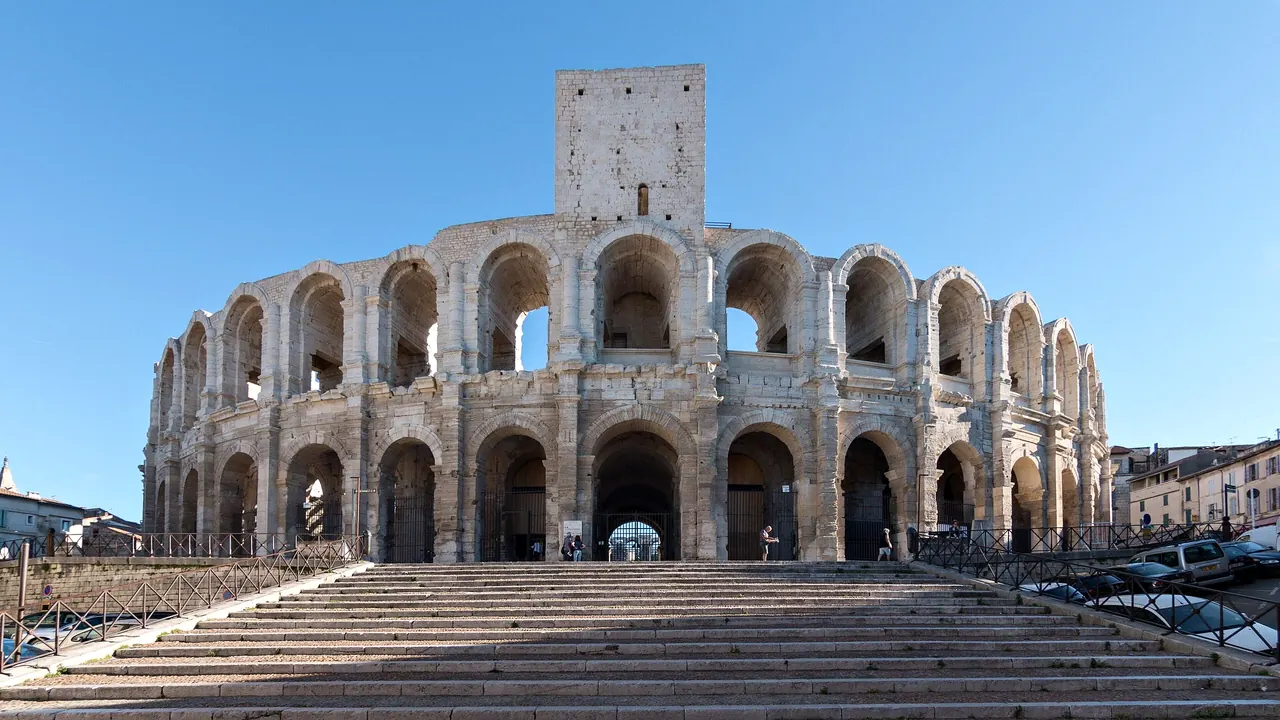
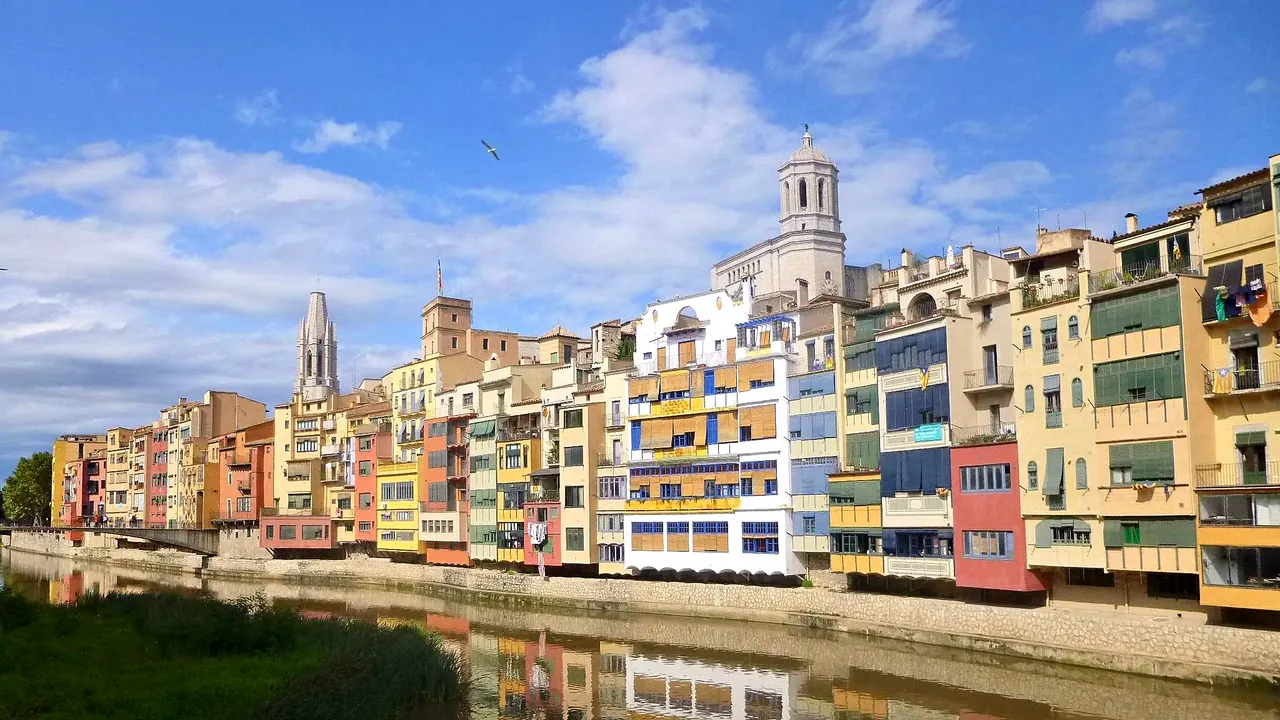
Photos: Arles by Martin Kraft, CC BY-SA 3.0, cropped; Girona by Zarateman, CC0.
Arles or Girona?
Our verdict in twelve categories, each scored against the same fixed benchmark cities, and the climate month by month, so you can choose for your trip.
Choose Arles for
- culture and sights
- day trips
Arles is the choice for travellers who want history they can walk through. Its Roman arena, theatre and Alyscamps sit within a few minutes of each other. The Camargue begins at the edge of town, with flamingos, white horses and long wild beaches. It suits a slow, sunny trip built around sights, markets and drives out to Avignon, Nîmes and Les Baux, for people who don't mind quiet evenings.
Choose Girona for
- wellness
- food and drink
- nature and the outdoors
Girona rewards people who travel for what they eat and do. The cooking is better and more varied, with Catalan taverns alongside serious tasting-menu kitchens. The countryside is made for cycling and walking, Barcelona is a short train ride away, and a thermal-spring town lies just to the south. Its medieval old town is lovely without being as rich in monuments, so it fits an active or food-led trip better than a sightseeing one.
Scoreboard
Twelve categories on one fixed scale from 0 to 100. The shaded stretch is the gap between the two.
Your match
Pick a travel style or drag the sliders, and both match scores follow your weighting.
Wins on culture and sights and day trips with your weighting.
Wins on wellness and food and drink with your weighting.
What matters to you?
Category by category
What the scores mean for a trip.
Beaches & swimming
Neither town has a beach of its own, and both make the sea a day out, roughly the same distance away. The difference is in the kind of shore. From Arles you cross the Camargue to flat, wild strands at Saintes-Maries, Piémanson and Beauduc, with dunes, plenty of space, little shade and mosquitoes from the marshes.
From Girona the Costa Brava offers pine-backed rocky coves around Begur and sandy bays at Tossa and Platja d'Aro. The water there is clearer and slightly warmer, but the best-known coves are crowded in high summer.
Food & drink
Girona is the better place to eat. Its Catalan home cooking, mar i muntanya dishes and xuixos pastries sit alongside an international fine-dining reputation. The Empordà vineyards supply the wine lists, and the neighbourhood places across the Onyar reward exploring.
Arles has a narrower table. Gardiane bull stew, Camargue rice and tellines are good reasons to stay for lunch, and the Saturday market on the Boulevard des Lices is a highlight in its own right. Beyond that, the choice of chef-led restaurants is small, and many places shut in winter.
Culture & sights
Arles holds more. Its arena, antique theatre, cryptoporticus and Alyscamps make up one of the richest Roman ensembles outside Italy. Add Saint-Trophime's cloister, the Roman barge in the Museum of Ancient Arles, the Luma tower and the Rencontres photography festival, and two days feel well filled.
Girona's appeal is the medieval setting more than individual monuments. The cathedral's vast Gothic nave, the Jewish Call, the Arab Baths and the walk along the walls make a fine day of wandering. Its museums are modest by comparison.
Nightlife
Neither is a night-out town, but Girona has a little more life after dinner. In term time, students keep the bars around Plaça de la Independència busy, a few music bars and small clubs open late at weekends, and the late Spanish timetable keeps the terraces full in summer.
Arles closes earlier, with café tables on the Place du Forum and then quiet streets. The exception is the Easter and September ferias, when bodegas fill the streets. For a real night out, Girona has Barcelona a short train ride away, while from Arles it means a drive to Montpellier or Marseille.
Nature & outdoors
Girona gives more to do outdoors, and more variety. Road cyclists base themselves there for Rocacorba and Els Àngels, greenways run to Olot and the coast, and the Gavarres hills start at the edge of town. Within reach are the Garrotxa's volcanoes and beech woods, the cliff paths of the Costa Brava and the Pyrenees.
Arles offers one great landscape rather than many. The Camargue's lagoons, flamingos, white horses and migrating birds are best seen on horseback or by bike along the dykes. The Alpilles add proper hiking among olive groves, but summer brings heat, mosquitoes and the mistral.
Day trips
Both are outstanding bases, and the choice comes down to what lies around them. Arles reaches Avignon and Nîmes in well under an hour by train. The Pont du Gard, Les Baux, Saint-Rémy and Aigues-Mortes make it a hub for Roman Provence and its villages.
From Girona the pull is Barcelona by fast train, Dalí's Figueres, Púbol and Cadaqués, and medieval villages such as Besalú and Pals. France is close as well. In both regions a car opens up the villages.
Good for families
Neither town is built around children, and both work best as a calm, safe base for families with older children, with cobbles and steps that make pushchairs hard work. The outings differ. Around Arles, children can ride ponies at Camargue ranches, watch flamingos and paddle in shallow delta water, though the summer heat and mosquitoes can be tiring.
Girona offers the Devesa park's shade and play areas, the city walls to explore and the Costa Brava's sandy bays, with restaurants that welcome children late into the evening.
Getting around
On foot both centres are easy, and the stations are close to the old towns. Arles is flat and compact, with a free shuttle bus looping the centre. Girona's Barri Vell is steep and full of stairs, but its fast trains to Barcelona and Figueres are quicker than anything from Arles.
Beyond town the story is the same in both: infrequent buses, and the coast and villages are much easier by car. In Girona, a bike also works for local trips.
Shopping & style
Both are small-scale, and serious shoppers head to a bigger city. Arles leans towards Provençal crafts: printed cottons, santons, gardian shirts, Camargue salt and its well-stocked bookshops and photography books.
Girona has more everyday independent fashion and shoe shops along the Rambla, plus Empordà cheeses and wine from the Mercat del Lleó and plenty of cycling kit.
Affordability
Girona is a little easier on the budget. Its weekday set lunches and everyday taverns are good value, and almost everything is in walking distance. Arles costs about what a provincial French town does, and it is cheaper than the smart villages of the Luberon. A combined pass helps with the sights, but most visitors also need a hire car.
In both towns rooms are the pinch point. They are scarce and dearer during the ferias and photography festival in Arles, and in summer, at flower-festival time and in the cycling season in Girona.
Live music & performing arts
Both have thin stage programmes and no resident opera, so timing matters more than the choice of town. Arles comes alive in summer, with concerts in the Roman theatre and arena, the Les Suds world music week and the course camarguaise.
Girona's peak is in autumn, with Temporada Alta's international theatre and dance, and the Auditori hosts touring orchestras and jazz. Many of its plays are in Catalan.
Wellness & relaxation
Girona offers more ways to unwind. Caldes de Malavella, a short drive south, has thermal-spring hotels with pools and treatments, which Arles has no equivalent of.
Arles relaxes you through its pace instead: siestas through the heat, shaded squares, evenings by the Rhône and converted farmhouses with pools out in the Camargue and the Alpilles. Spas there are limited to a few hotels.
When should you go?
Pick your month. The climate figures are measured averages, not a forecast.
Arles in July
Girona in July
Daytime high, °C
Rainfall in the month, mm
Where the figures come from
Arles's temperatures are measured 28 km from the centre, at Nimes / Courbessac.
Arles has no rain gauge within 25 km of the centre, so its rainfall comes from a gridded climate dataset read at the city rather than from a gauge further away.
Temperature and rainfall are climate normals, averaged over the years shown. Arles: 1991-2020 (sunshine 1981-2010) normals, Nimes / Courbessac (28 km from centre). Girona: 1991-2020 normals, Gerona / Costa Brava (10.1 km from centre).
Both towns sit inland with the sea a drive away, and their summers peak at the same 31°C in July and August. That is hot for afternoons on stone streets, so sightseeing moves to the mornings and evenings. Arles has the drier, sunnier summer, and July there barely sees rain. Girona keeps a steady trickle through spring and summer. The sea is good for swimming in both from late June into September. The Costa Brava is the warmer of the two, reaching 24°C in August, a couple of degrees above the water off the Camargue.
Autumn brings the rain to both, and it falls harder in Arles, where October is the wettest month at 105mm. Winter is where the two differ most. Girona's days stay around 14°C, mild enough for walking the walls, while Arles drops to about 11°C in January and many of its restaurants close. For walking and day trips, May, June and late September are the best months in both.
Which traveller are you?
On a culture and arts trip, Arles is the stronger pick. A whole UNESCO-listed Roman town sits within a short walk, with Romanesque carving at Saint-Trophime, Van Gogh's landscapes and the summer photography festival. Girona's medieval quarter is beautiful but has fewer major sights.
For a food and nightlife trip, Girona comes out ahead. It has ambitious tasting menus, Empordà wine and vermouth, and student bars and small clubs open late at weekends. Arles offers market produce and long lunches, but the town goes quiet after dinner.
On an outdoors trip, Girona gives more variety. There are famous cycling climbs, traffic-free greenways, the volcanic Garrotxa, coastal cliff paths and the Pyrenees within reach. Arles has the Camargue's birdlife and horse riding, plus the Alpilles for hiking.
Before you go
| Measure | Arles | Girona |
|---|---|---|
| Official language | French | Spanish |
| Currency | Euro (EUR) | Euro (EUR) |
| Sockets | CE230 V, 50 Hz | CF230 V, 50 Hz |
| Driving side | Right | Right |
| Time zone | UTC+1, UTC+2 in summer | UTC+1, UTC+2 in summer |
| Emergency number | 112 | 112 |
| Elevation | 0 m | 70 m |
| Main airport | Marseille Provence Airport (MRS)54 km from centre126 non-stop destinations | Girona-Costa Brava Airport (GRO)10 km from centre18 non-stop destinations |
| Public holidays this year | 11 days | 14 days |
By the numbers
| Measure | Arles | Girona |
|---|---|---|
| City population | 51,811 | 108,666 |
| People per km² | 68 | 2,779 |
| Museums within 10 km | 3 | 9 |
| UNESCO World Heritage sites within 50 km | 5 | 0 |
| Swim season, months above 21 °C | 2 months | 3 months |
Where else could you go?
Every comparison below shares a destination with this one, so you can follow Arles or Girona somewhere new.
- Avignonvs Arles
- Montpelliervs Arles
- Aix-en-Provencevs Arles
- Marseillevs Arles
- Barcelonavs Girona
- Andorra la Vellavs Girona