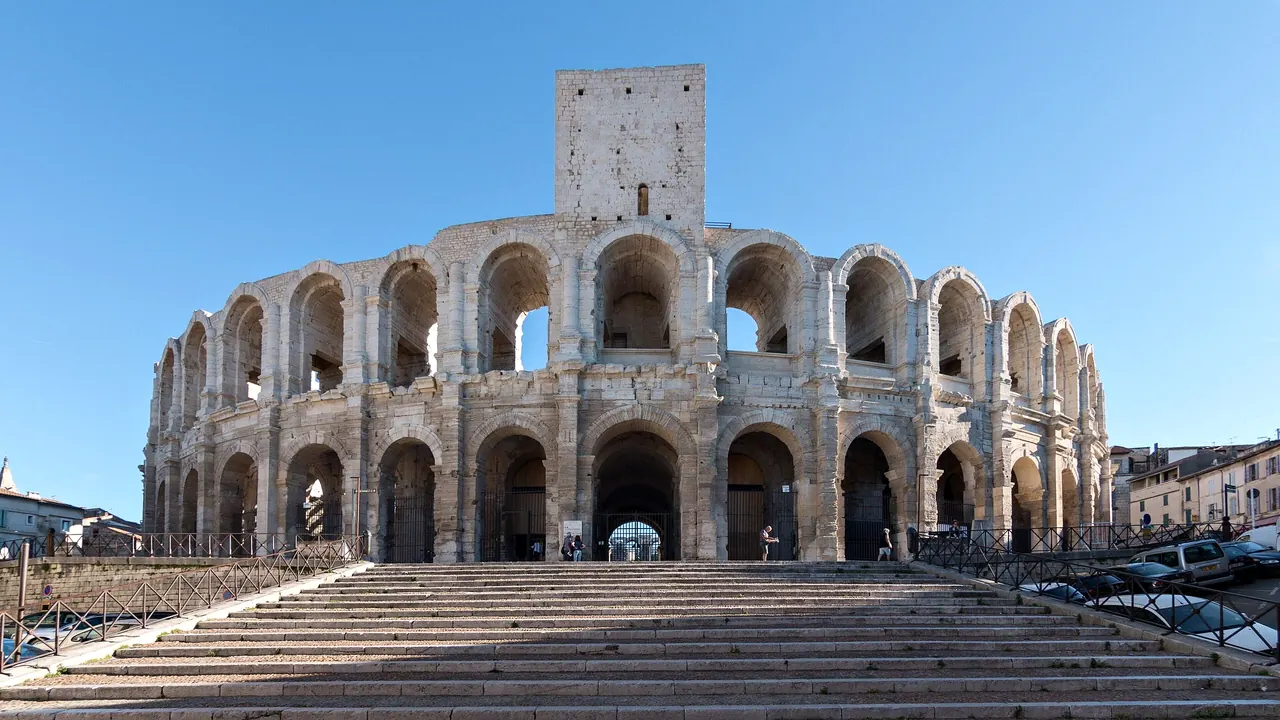
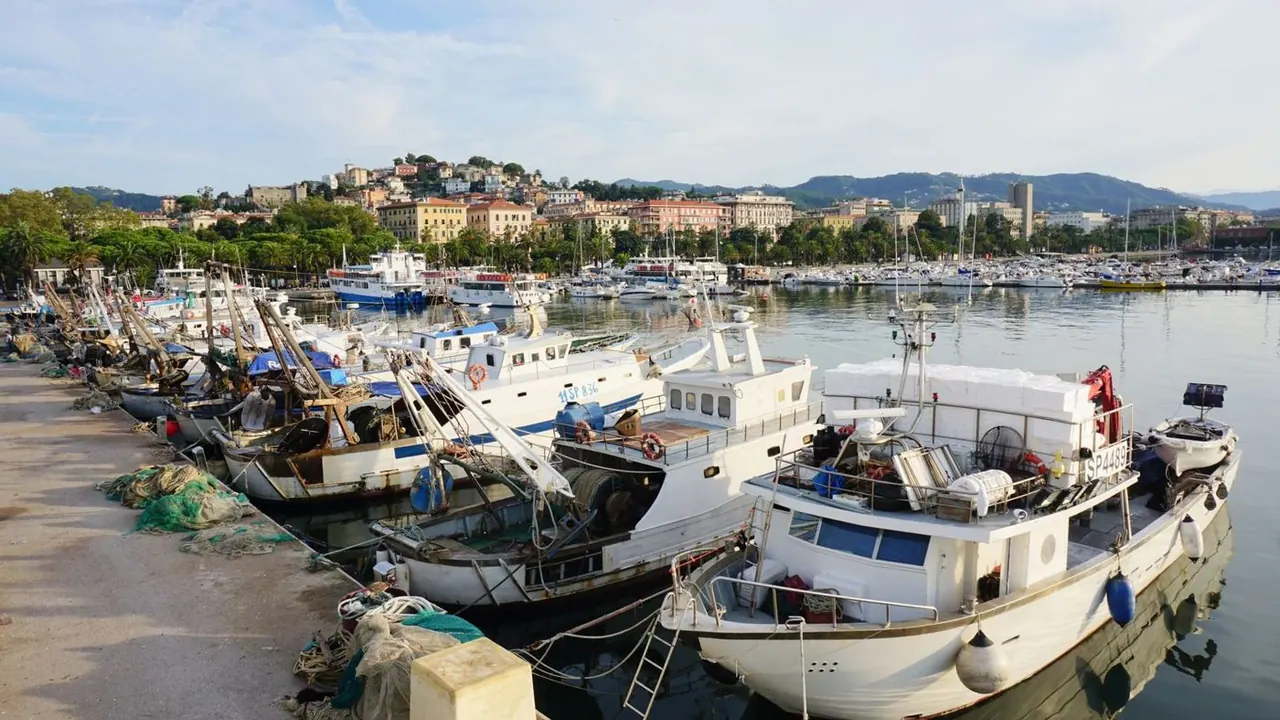
Photos: Arles by Martin Kraft, CC BY-SA 3.0, cropped; La Spezia by Irina Balashova, Pexels License.
Arles or La Spezia?
Our verdict in twelve categories, each scored against the same fixed benchmark cities, and the climate month by month, so you can choose for your trip.
Choose Arles for
- culture and sights
- live music and the arts
Arles is the choice for travellers who want history close at hand. The arena, the antique theatre, the Alyscamps and the cloister of Saint-Trophime all sit within a short walk. Around them are the flamingo lagoons of the Camargue and a ring of Provençal towns to explore, though a hire car makes most of that much easier. It suits a slow, sunny trip of market lunches and Roman stones more than a lively one.
Choose La Spezia for
- getting around
- beaches
- nature and the outdoors
La Spezia makes more sense if the coast is the point of your trip. Trains run from the city into the Cinque Terre, there are footpaths over terraced cliffs, and Portovenere and Lerici have clear water for swimming, so you can do without a car altogether. The city has fewer sights of its own, but it is a better base for walking, swimming and boat days on the gulf.
Scoreboard
Twelve categories on one fixed scale from 0 to 100. The shaded stretch is the gap between the two.
Your match
Pick a travel style or drag the sliders, and both match scores follow your weighting.
Too close to call, 2 points apart
Wins on culture and sights and live music and the arts with your weighting.
Wins on getting around and beaches with your weighting.
What matters to you?
Category by category
What the scores mean for a trip.
Beaches & swimming
Neither town has a beach of its own, but La Spezia's coast is easier to use. Buses, trains and boats take you to sheltered sand at San Terenzo and Lerici, rocky coves at Palmaria and Fiascherino, and the long beach at Monterosso. The water is warmer and very clear, but the beaches are small, often pebbly and largely taken up by paid bathing establishments.
From Arles you have to drive across the Camargue to reach the sea. What you find there is wide, wild sand at Saintes-Maries, Piémanson and Beauduc, with plenty of space but little shade, and the mistral and mosquitoes to deal with.
Food & drink
Arles cooks with produce from the Rhône delta. Look for gardiane bull stew, Camargue rice, tellines and saucisson d'Arles, all at their best from the long Saturday market on the Boulevard des Lices. Lunches are long, and many kitchens close for the winter.
La Spezia gives you more to eat through the day. There is farinata and focaccia from wood ovens, stuffed mussels from Portovenere, and pesto on trofie or testaroli, with Cinque Terre whites to drink. Neither place does much fine dining, but La Spezia's everyday eating is more varied and keeps going all year.
Culture & sights
On sights, Arles is far ahead. Few towns its size have this much Roman building still standing: the arena, the theatre, the cryptoporticus and the Alyscamps. Add the cloister of Saint-Trophime, the Museum of Ancient Arles with its Roman barge, and the Rencontres photography festival, and you have two full days of sightseeing.
La Spezia is a nineteenth-century naval town with arcaded streets rather than an old core. The Museo Amedeo Lia and the stele statues at Castello San Giorgio are well worth seeing, but most of the region's history lies out along the coast, not in the city.
Nightlife
Both are quiet at night, though La Spezia has a little more going on. Its aperitivo crowd fills Via del Prione and the promenade, and in summer the waterfront bars at Lerici and San Terenzo stay busy.
Arles mostly ends the evening with dinner on the Place du Forum. The exception is the feria at Easter and in September, when street bodegas keep the town up late for a few days.
Nature & outdoors
Both have fine landscapes, but La Spezia's are more dramatic and more varied. The Cinque Terre cliff paths, the Palmaria loop and the Montemarcello headland are all close by. Kayaking and diving in the gulf are good, and the marble peaks of the Apuan Alps are about an hour inland.
Arles faces a flat, open delta. Here you go riding, cycling the dykes around the Étang de Vaccarès and watching flamingos and herons, with proper hiking only in the Alpilles.
Day trips
Both are excellent bases, and they differ mainly in what kind of places you reach. From Arles the trips are to towns and monuments: the Papal Palace in Avignon, the Roman buildings of Nîmes, the Pont du Gard, Les Baux and Saint-Rémy. Some need a car.
From La Spezia most of the trips are along the coast. The Cinque Terre villages are minutes away by train and Portovenere is a short boat ride. Inland there are Sarzana and the ruins of Luni, and Pisa, Lucca and Portofino are about an hour away.
Good for families
Neither is built for young children, but La Spezia is a little easier. Its flat centre and seafront gardens are fine with a pushchair, boat trips around the islands are a good day out, and the sheltered beaches at Lerici are gentle.
Arles appeals more to older children who like animals and history. They can climb the arena towers, explore the cryptoporticus and ride ponies at Camargue ranches. Against that, the streets are cobbled, summers bring mosquitoes, and most outings need a car.
Getting around
La Spezia is the easier place without a car. Coastal trains run through the Cinque Terre, buses go around the gulf, and ferries run in the warmer months. Driving into the villages is more trouble than it is worth, and the main inconvenience is crowded summer trains.
Arles is easy to walk, and its station serves Avignon, Nîmes and Marseille well. Buses to the villages are infrequent, though, and the Camargue really calls for a car or a bike.
Shopping & style
Neither is a shopping destination, but what you bring home differs. Arles sells Provençal printed cottons, santons, gardian shirts, Camargue salt and photography books from its many bookshops.
In La Spezia the best souvenirs are food: pesto, Sciacchetrà and Monterosso anchovies, plus marble from nearby Carrara. Its pedestrian streets mostly have everyday chain stores.
Affordability
Costs are broadly similar in the two, and each is the cheaper base for its region. Arles costs less than the Alpilles villages, and La Spezia costs less than the Cinque Terre. The extra costs differ, though. In Arles it is the car hire most visitors need. In La Spezia it is trail passes, boat trips and paid beach establishments, while the trains themselves are cheap.
Live music & performing arts
Both put on most of their performances in summer, and Arles has the more distinctive settings. There are concerts in the Roman theatre and the arena, the Les Suds world-music week, and feria brass bands alongside the course camarguaise.
La Spezia has the Teatro Civico season, a long-established jazz festival and open-air concerts in castle courtyards around the gulf. For opera, you travel from either town.
Wellness & relaxation
Arles relaxes you through the rhythm of the town itself. There are shaded squares, a siesta through the summer heat and quiet evenings by the Rhône. For more of a retreat, some converted farmhouses in the Camargue and the Alpilles take guests and have pools, and a few of the better hotels have small spas.
La Spezia has the only thermal water of the two, at the small baths of Equi Terme in the Lunigiana valley, about an hour inland. Its calm is otherwise found out of town and out of season, on the island of Palmaria or over a slow afternoon in Tellaro. In summer the crowds in the Cinque Terre are anything but restful.
When should you go?
Pick your month. The climate figures are measured averages, not a forecast.
Arles in July
La Spezia in July
Daytime high, °C
Rainfall in the month, mm
Where the figures come from
Arles's temperatures are measured 28 km from the centre, at Nimes / Courbessac.
Arles has no rain gauge within 25 km of the centre, so its rainfall comes from a gridded climate dataset read at the city rather than from a gauge further away.
La Spezia's temperatures are measured 65 km from the centre, at Pisa / S. Giusto.
La Spezia has no rain gauge within 25 km of the centre, so its rainfall comes from a gridded climate dataset read at the city rather than from a gauge further away.
Temperature and rainfall are climate normals, averaged over the years shown. Arles: 1991-2020 (sunshine 1981-2010) normals, Nimes / Courbessac (28 km from centre). La Spezia: 1991-2020 normals, Pisa / S. Giusto (64.8 km from centre).
Both towns have hot summers with similar daytime highs, around 31°C in Arles in July and August and a degree lower in La Spezia. That heat is fine for the beach but tiring for walking the Roman sites or the Cinque Terre paths in the middle of the day. The sea is warmer on the Ligurian side, reaching about 25°C in August against about 22°C off the Camargue, and it stays pleasant there into early October. Arles is the sunnier of the two all year, and noticeably so in winter.
Spring and early autumn are the best seasons in both. May and June are warm, fairly dry and good for walking. The autumn rain hits La Spezia harder, with October and November each bringing about 150mm, and its winters stay damp. Arles gets its heaviest rain in October as well, but much less of it, and from December to March it is drier and brighter, which makes it the better choice for an off-season visit.
Which traveller are you?
For a culture and arts trip, Arles is clearly better. Its UNESCO-listed Roman monuments, the Romanesque carving at Saint-Trophime and the Van Gogh connections are all within walking distance, and Avignon and Nîmes are a short train ride away.
On a beach and sun trip, La Spezia has the advantage. The sea is warmer, and the coves at Lerici, Tellaro and Palmaria plus Monterosso's sandy beach are all reachable by bus, train or boat. The wild Camargue strands need a car and offer little shade.
For an outdoors trip, La Spezia gives you the Cinque Terre cliff paths, kayaking and diving in the gulf, and the Apuan Alps inland. Arles is better suited to riding and birdwatching across the flat lagoons of the delta.
Before you go
| Measure | Arles | La Spezia |
|---|---|---|
| Official language | French | Italian |
| Currency | Euro (EUR) | Euro (EUR) |
| Sockets | CE230 V, 50 Hz | CFL230 V, 50 Hz |
| Driving side | Right | Right |
| Time zone | UTC+1, UTC+2 in summer | UTC+1, UTC+2 in summer |
| Emergency number | 112 | 112 |
| Elevation | 0 m | 3 m |
| Main airport | Marseille Provence Airport (MRS)54 km from centre126 non-stop destinations | Pisa International Airport (PSA)65 km from centre82 non-stop destinations |
| Public holidays this year | 11 days | 13 days |
By the numbers
| Measure | Arles | La Spezia |
|---|---|---|
| City population | 51,811 | 92,119 |
| People per km² | 68 | 1,792 |
| Museums within 10 km | 3 | 12 |
| UNESCO World Heritage sites within 50 km | 5 | 2 |
| Swim season, months above 21 °C | 2 months | 4 months |
Where else could you go?
Every comparison below shares a destination with this one, so you can follow Arles or La Spezia somewhere new.
- Avignonvs Arles
- Portofinovs La Spezia
- Montpelliervs Arles
- Luccavs La Spezia
- Pisavs La Spezia
- Aix-en-Provencevs Arles