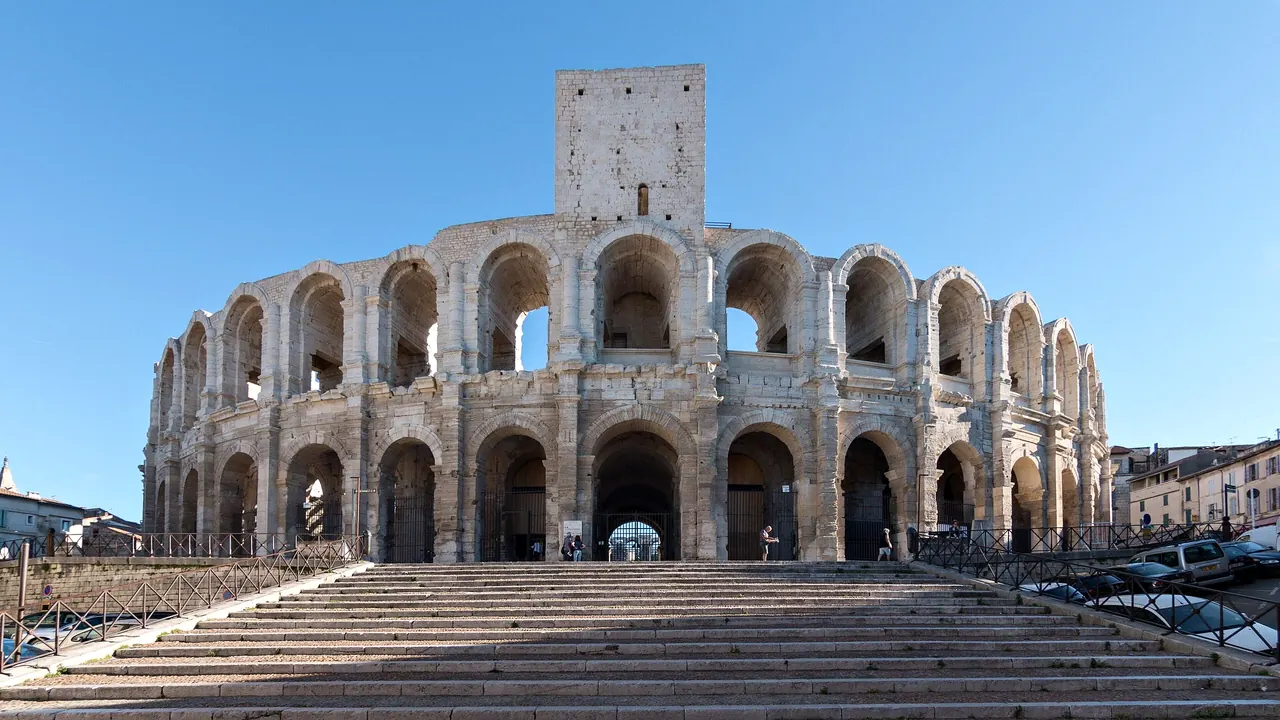
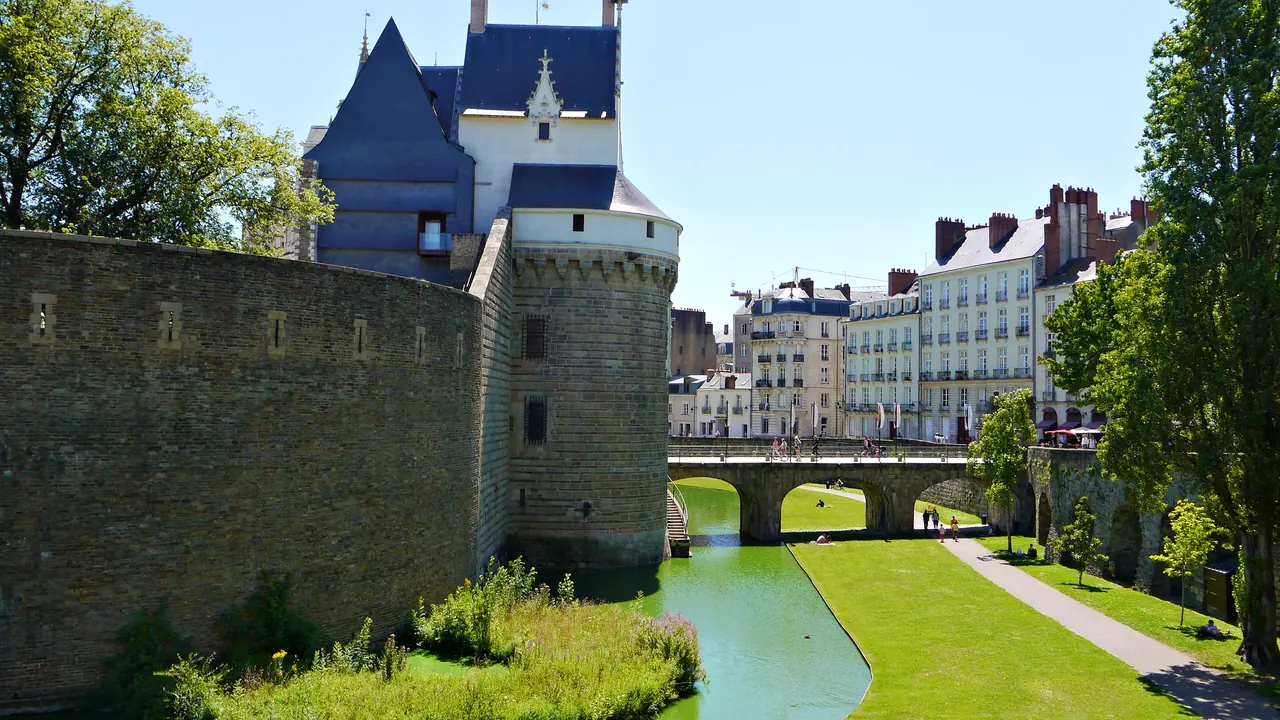
Photos: Arles by Martin Kraft, CC BY-SA 3.0, cropped; Nantes by Carole44, CC BY-SA 3.0, cropped.
Arles or Nantes?
Our verdict in twelve categories, each scored against the same fixed benchmark cities, and the climate month by month, so you can choose for your trip.
Choose Arles for
- nature and the outdoors
- day trips
- culture and sights
Arles suits a traveller who wants Roman stones, Van Gogh's landscapes and wild country close at hand, and who will happily hire a car. The town itself is small and quiet, but it opens onto the Camargue's flamingos and white horses, the Alpilles ridges and a whole circuit of Provençal towns, from Avignon to Nîmes. It is a place for slow days of sightseeing and long lunches, with early nights to follow.
Choose Nantes for
- nightlife
- families
- live music and the arts
Nantes is the better pick for a city vacation that runs on trams and keeps going into the evening. Its student crowd fills the Bouffay bars, the opera and orchestra play all year, and the mechanical elephant on the Ile de Nantes makes it far easier with children. The countryside is gentler and the history less ancient, but daily life is simpler, and the Atlantic coast and the Loire Valley are both within reach by train.
Scoreboard
Twelve categories on one fixed scale from 0 to 100. The shaded stretch is the gap between the two.
Your match
Pick a travel style or drag the sliders, and both match scores follow your weighting.
Wins on nature and the outdoors and day trips with your weighting.
Wins on nightlife and families with your weighting.
What matters to you?
Category by category
What the scores mean for a trip.
Beaches & swimming
Neither city has a beach of its own, but Arles has the better day at the sea. The Camargue shore at Saintes-Maries, Piémanson and Beauduc is long, wild and empty, and the shallow Mediterranean is warm enough for easy swimming through high summer. Expect little shade, though, and bring mosquito repellent.
The Atlantic beaches near Nantes, at La Baule and Pornic, are tidier and can be reached by train, but the water stays cooler and the season is shorter.
Food & drink
Nantes gives you more to eat. It is the home of beurre blanc, it is close to the oyster beds, it has Muscadet vineyards on the doorstep and the Talensac market, and its bistro scene runs from the Bouffay lanes to Graslin all year round.
Arles has stronger local character, with gardiane bull stew, Camargue rice and tellines, and its Saturday market is a real event. Beyond that, though, the choice of restaurants is narrow and thins out in winter.
Culture & sights
Arles holds more history in a smaller space. The arena, the antique theatre, the cryptoporticus, the Alyscamps and the carved cloister of Saint-Trophime form a UNESCO group within a short walk, and the Luma tower and the photography festival add a modern layer.
The appeal of Nantes is later in date and more varied: the ducal château with its candid history museum, the 18th-century merchant quarters, the slavery memorial and Jules Verne. Both towns can be seen in two or three days, but Arles leaves a deeper impression.
Nightlife
Nantes has a real night out, which Arles mostly lacks. Students keep the Bouffay pubs and terraces full, and later the crowd moves to the clubs and riverside bars in the old warehouses on the Ile de Nantes.
In Arles an evening means dinner and a drink on the Place du Forum. The exception is the Easter and September ferias, when bodegas take over the streets for a few nights.
Nature & outdoors
Arles sits beside one of France's great wild landscapes. The Camargue's lagoons, salt flats and reed beds bring flamingos, white horses and migrating birds right up to the town, and the Alpilles add limestone ridges for hiking and cycling.
Nantes has quieter water country: the wooded Erdre, the Loire à Vélo route and the Brière marshes, with cliff walks on the Côte Sauvage. It is pleasant, but it has no hills and fewer surprises.
Day trips
Few bases match Arles for excursions. Avignon and Nîmes are a short train ride away, and the Pont du Gard, Les Baux, Saint-Rémy and Aigues-Mortes are all close, so you could fill a week without sleeping anywhere else, though a car helps with the villages.
Nantes has a broader but more spread-out choice: salt-marsh Guérande, Angers and its tapestry, the Loire châteaux and Vannes on the Gulf of Morbihan, with more of the journeys easily made by train.
Good for families
Nantes is the more natural fit for children. The walking elephant and the carousel at the Machines de l'Ile are pure fun, the trams are easy with a buggy, and a safari park and Puy du Fou are both within a drive.
Arles works for older children who like gladiator-era ruins, ponies and flamingos. However, summer heat, mosquitoes and cobbles make it harder work with little ones.
Getting around
Both centres are compact. The difference is how far you get without a car. Nantes has a tram network you pick up at once, river shuttles, flat streets for cycling and trains to the coast and to Paris.
In Arles you can walk everywhere in town and reach the big neighbouring cities by train. The Camargue, the Alpilles villages and the wild beaches, though, really need a car.
Shopping & style
Nantes offers more variety: the three-level Passage Pommeraye, chain fashion and a department store around Rue Crébillon, and independent and second-hand shops near Bouffay and Decré.
Arles is better for a bag of Provençal souvenirs, such as printed cottons, santons, Camargue salt and gardian shirts, and for its bookshops and photography prints. Neither town is a destination for luxury.
Affordability
The two cost much the same, and the difference lies in where the money goes. In Nantes, hotels are easy to find and the trams keep transport cheap, while dinners and drinks are the main cost.
Arles is good value for Provence, but rooms tighten during the ferias and the photography festival, and the car hire most visitors need adds to the bill.
Live music & performing arts
Nantes has a stage all year round: opera at the Théâtre Graslin, the regional orchestra, contemporary work at the Lieu Unique, and La Folle Journée filling the city with classical concerts each winter. It also has its giant street puppets.
The performances in Arles are seasonal and open-air. There are summer concerts in the Roman theatre and arena, Les Suds world music in July, and feria bands and the course camarguaise in the warm months, but very little happens in winter.
Wellness & relaxation
Neither city is a spa destination, but Nantes has a little more on offer, with the long-established seawater thalassotherapy centres at La Baule and Pornic about an hour away.
In Arles, rest comes from the pace of the town: siestas, shaded squares and quiet evenings by the Rhône. Some converted mas in the Camargue and the Alpilles also serve as retreats with pools.
When should you go?
Pick your month. The climate figures are measured averages, not a forecast.
Arles in July
Nantes in July
Daytime high, °C
Rainfall in the month, mm
Where the figures come from
Arles's temperatures are measured 28 km from the centre, at Nimes / Courbessac.
Arles has no rain gauge within 25 km of the centre, so its rainfall comes from a gridded climate dataset read at the city rather than from a gauge further away.
Temperature and rainfall are climate normals, averaged over the years shown. Arles: 1991-2020 (sunshine 1981-2010) normals, Nimes / Courbessac (28 km from centre). Nantes: 1991-2020 normals, Nantes (6.6 km from centre).
Arles has the Mediterranean pattern. May, June and September are the sweet spot, warm and very sunny without the heat of high summer. July and August reach about 31°C, which makes the middle of the day hard going among the stones and the marshes, though it is also when the sea is warm enough for an easy swim. Autumn brings the heaviest rain, with October the wettest month at about 105mm, and winter is mild, bright and quiet.
Nantes is cooler, greyer and damper all year. Summer tops out at about 25°C, which is pleasant for walking the city at any hour, but the Atlantic only reaches about 19°C in August, so swimming is brisk and the beach season is short. Late spring to early autumn is the best time to go. From October to January the rain is steady, peaking at around 100mm in December, and there is far less sunshine than in Arles at any time of year.
Which traveller are you?
On an outdoors trip, Arles wins. The Camargue begins at the edge of town, with flamingos, ranch rides through the marshes and bike tracks along the dykes, and the Alpilles add proper hiking. Nantes has gentler, flatter river country and no hills.
For a food and nightlife trip, pick Nantes. Arles offers long market lunches, then goes quiet. Nantes pairs beurre blanc with Muscadet and oysters from the nearby coast, and its Bouffay lanes and Ile de Nantes dockside bars stay busy late.
On a family trip with young children, choose Nantes. Arles's summer heat suits older children keen on ruins and ponies more than toddlers, while Nantes stays mild and has playgrounds in the Jardin des Plantes, a safari park nearby and calm sand at La Baule.
Before you go
| Measure | Arles | Nantes |
|---|---|---|
| Official language | French | French |
| Currency | Euro (EUR) | Euro (EUR) |
| Sockets | CE230 V, 50 Hz | CE230 V, 50 Hz |
| Driving side | Right | Right |
| Time zone | UTC+1, UTC+2 in summer | UTC+1, UTC+2 in summer |
| Emergency number | 112 | 112 |
| Elevation | 0 m | 2 m |
| Main airport | Marseille Provence Airport (MRS)54 km from centre126 non-stop destinations | Nantes Atlantique Airport (NTE)8 km from centre97 non-stop destinations |
| Public holidays this year | 11 days | 11 days |
By the numbers
| Measure | Arles | Nantes |
|---|---|---|
| City population | 51,811 | 327,734 |
| People per km² | 68 | 5,027 |
| Museums within 10 km | 3 | 11 |
| UNESCO World Heritage sites within 50 km | 5 | 0 |
| Swim season, months above 21 °C | 2 months | None |
Where else could you go?
Every comparison below shares a destination with this one, so you can follow Arles or Nantes somewhere new.
- Avignonvs Arles
- Montpelliervs Arles
- Aix-en-Provencevs Arles
- Marseillevs Arles
- Saint-Malovs Nantes
- Saint-Tropezvs Arles