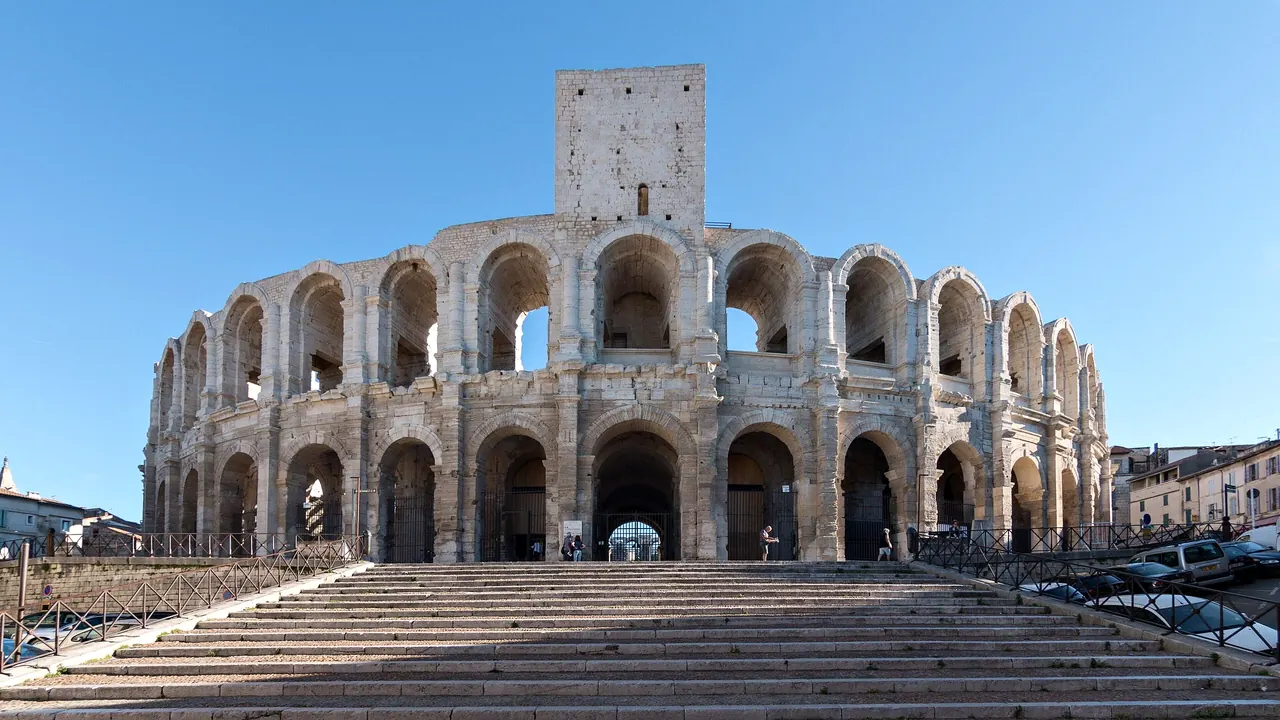
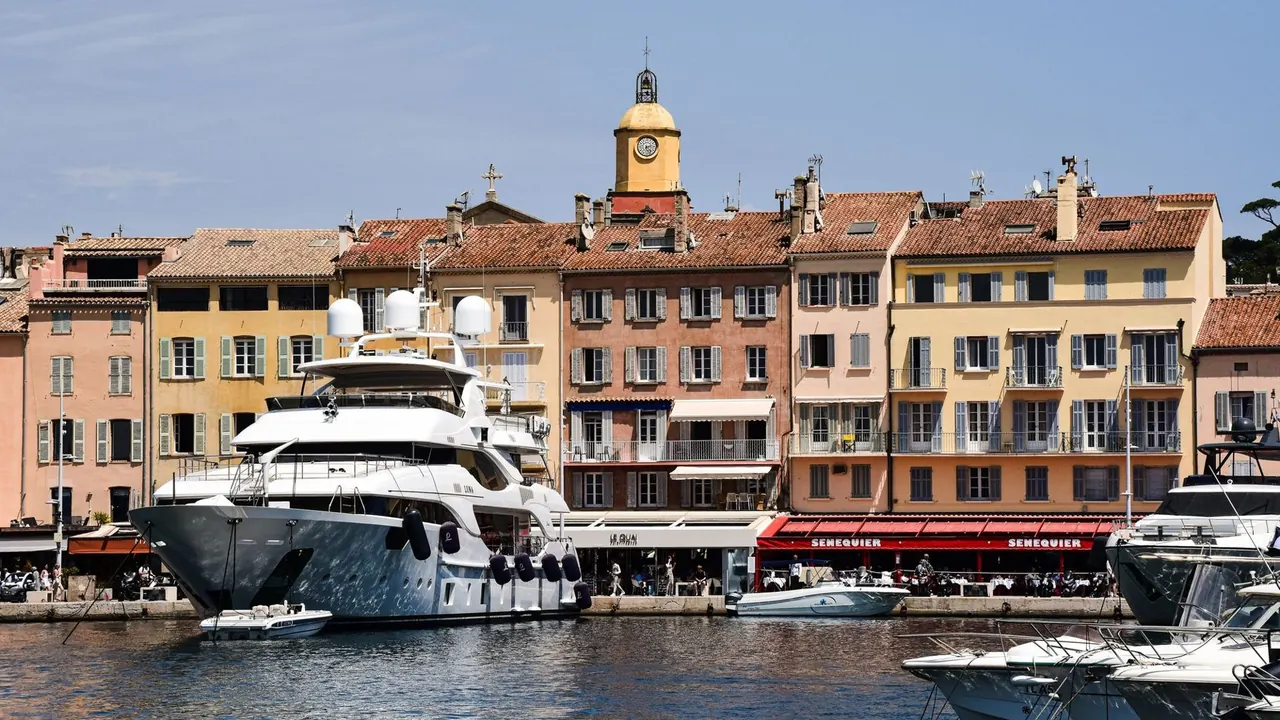
Photos: Arles by Martin Kraft, CC BY-SA 3.0, cropped; Saint-Tropez by AXP Photography, Pexels License.
Arles or Saint-Tropez?
Our verdict in twelve categories, each scored against the same fixed benchmark cities, and the climate month by month, so you can choose for your trip.
Choose Arles for
- prices
- culture and sights
- day trips
Arles is the better choice for a trip built around history and seeing the region. Its Roman arena, theatre and Romanesque cloister are all a short walk apart, the Camargue begins at the edge of town, and trains run to Avignon and Nîmes. That makes it a sensible base for a week in Provence without straining the budget.
Choose Saint-Tropez for
- nightlife
- beaches
- shopping
Pick Saint-Tropez when the sea and the summer scene are the point. Pampelonne's long sand, the boutique lanes behind the port and the clubs that run until dawn give it a glamour Arles never aims for. In return it is very expensive, its sights take a single day, and leaving town means joining the queue on one coast road.
Scoreboard
Twelve categories on one fixed scale from 0 to 100. The shaded stretch is the gap between the two.
Your match
Pick a travel style or drag the sliders, and both match scores follow your weighting.
Wins on prices and culture and sights with your weighting.
Wins on nightlife and beaches with your weighting.
What matters to you?
Category by category
What the scores mean for a trip.
Beaches & swimming
Saint-Tropez is the beach destination of the two. Pampelonne gives about 5km of fine, pale sand, with beach clubs and public stretches in between. Quieter coves lie further down the peninsula, all a short ride from the port.
Arles has no beach of its own. The Camargue strands at Saintes-Maries, Piémanson and Beauduc are huge, flat and wild, with room to spare even in August. But they mean a 40km drive, little shade and mosquitoes, so they make an outing rather than the centre of a stay.
Food & drink
Both towns cook Provençal food, and both hold their main market under the name des Lices, but the flavour differs. Arles cooks the Camargue: gardiane bull stew, red rice, tellines and saucisson d'Arles, eaten over long lunches on the Place du Forum at provincial prices.
Saint-Tropez looks to the sea and to polish, with grilled fish, bouillabaisse, rosé on the sand, strong hotel dining rooms and its own cream-filled tarte tropézienne. Its weak spot is the everyday meal, because many quayside places charge for the view more than for the cooking.
Culture & sights
Here Arles is in another league. The arena, the antique theatre, the cryptoporticus and the Alyscamps form a UNESCO-listed Roman group within a short walk. Around them are the Romanesque cloister of Saint-Trophime, a museum holding a Roman barge raised from the Rhône, and Gehry's tower at Luma.
Saint-Tropez's heritage is smaller and centres on painting rather than stone. The Annonciade's pointillist and Fauvist canvases recall the years when Signac painted the harbour. The citadel and the lanes of La Ponche are pleasant, but a single day covers them.
Nightlife
In summer Saint-Tropez is the place to go out. Afternoons at the Pampelonne beach clubs lead to champagne on the harbour and then to famous clubs that run until dawn, all in a moneyed style with table service and a dress code.
Arles winds down after dinner on the square and stays up late only during the Easter and September ferias, when bodegas fill the streets. Out of season the two are much alike: a drink at a café table and an early night.
Nature & outdoors
Both have fine country on the doorstep, of very different kinds. Arles opens onto the flat Camargue delta, which you explore on horseback or by bike along the dykes, among flamingos, white horses and migrating birds. The Alpilles add hill walking.
Saint-Tropez is about rock and water. The coastal path runs past pine-backed coves to Camarat and Taillat, the cork-oak forests of the Maures lie inland, there is sailing and diving in the gulf, and the national-park islands of Port-Cros and Porquerolles are within reach. Spring and autumn suit both best.
Day trips
Arles sits among some of the best-known towns in southern France. Avignon is about twenty minutes by train and Nîmes about half an hour, and the Pont du Gard, Les Baux and Saint-Rémy are a short drive away. Few bases in Provence put so much Roman and medieval history within an hour.
Saint-Tropez's outings are gentler: the hilltop villages of Ramatuelle and Gassin, Grimaud's castle, the canals of Port Grimaud by boat, and wine tastings around the peninsula. They are pretty rather than important, and summer traffic can turn a short trip into a long one.
Good for families
Neither town is built around children, and each suits a different kind of family. Arles works for older children who like history and animals, with the towers of the arena, the dark cryptoporticus, pony rides at the ranches and flamingos near Saintes-Maries.
Saint-Tropez's draw is the gently shelving sand at Pampelonne and Gigaro, which suits small children. Against it count the adult harbour scene, the prices and the summer traffic, and many families stay across the gulf in Sainte-Maxime instead.
Getting around
Both centres are small enough to walk, but Arles is much better connected. Its station is a short walk from the old town, with regular trains to Avignon, Nîmes, Marseille and Montpellier, and a free shuttle loops the centre. The Camargue still needs a car or a bike.
Saint-Tropez has no railway at all, its main beaches are several kilometres out of town, and in summer the single road along the gulf jams for hours. The passenger boats from Sainte-Maxime and Port Grimaud are the most pleasant way in.
Shopping & style
Saint-Tropez is the shopping town of the two. Big fashion houses open summer shops in the lanes behind the port, alongside resort wear and jewellery, and the town has its own hand-stitched leather sandals, made in small workshops in the old town.
Arles keeps to Provençal crafts and books: printed cottons, santons, gardian shirts, Camargue salt and rice from the Saturday market, and good bookshops full of photography titles, since it is a publishing town. Anyone in Arles who wants fashion goes to Aix or Marseille.
Affordability
Arles costs about what any French provincial town does, with lunch menus, market food, mid-range hotels and a combined pass for the sights. The main extras are a hire car and higher room rates in July and during the festivals.
Saint-Tropez is among the most expensive places on the Mediterranean, from rooms and beach loungers to a coffee on the port, and you pay for taxis or parking on top. Many visitors stay inland or across the gulf and come in for the day.
Live music & performing arts
Neither town has much of a stage year round, but Arles offers more. In summer there are concerts in the Roman theatre and arena and the Les Suds world-music festival each July. The ferias bring brass bands, the course camarguaise, where the bull is not killed, runs through the warm months, and the town theatre has a modest season.
Saint-Tropez has open-air classical and jazz evenings in gardens and on the citadel, live sets at the beach clubs, and the Bravade, a costumed procession with muskets each May. Outside summer, serious audiences travel from Arles to Avignon or Nîmes, and from Saint-Tropez to Toulon or Nice.
Wellness & relaxation
Saint-Tropez has the edge for pampering, with polished spas in its luxury hotels and villas. In May, June and September the town slows to an easy rhythm of morning walks to the citadel and pétanque under the plane trees, though high summer there is crowded and loud.
Arles has only a few hotel spas and offers calm instead: shaded squares, siestas through the heat, evenings by the Rhône, and converted farmhouses in the Camargue and the Alpilles run as quiet retreats with pools.
When should you go?
Pick your month. The climate figures are measured averages, not a forecast.
Arles in July
Saint-Tropez in July
Daytime high, °C
Rainfall in the month, mm
Where the figures come from
Arles's temperatures are measured 28 km from the centre, at Nimes / Courbessac.
Arles has no rain gauge within 25 km of the centre, so its rainfall comes from a gridded climate dataset read at the city rather than from a gauge further away.
Saint-Tropez has no rain gauge within 25 km of the centre, so its rainfall comes from a gridded climate dataset read at the city rather than from a gauge further away.
Saint-Tropez's sunshine is measured 62 km from the centre, at Nice.
Temperature and rainfall are climate normals, averaged over the years shown. Arles: 1991-2020 (sunshine 1981-2010) normals, Nimes / Courbessac (28 km from centre). Saint-Tropez: 1999-2020 (sunshine 1991-2020, rainfall 1991-2020) normals, Le Luc (24.2 km from centre).
Both towns have hot, dry summers and a wet autumn, but the swimming season is not the same. Off the Camargue the sea is only really pleasant in July and August, when it reaches the low 20s, and in June and September it is still cool for most swimmers. Off Saint-Tropez the water warms sooner and stays warm longer, comfortable from June to September and about 24°C in August. In July and August both towns pass 30°C, which is too hot for walking Arles's Roman sites at midday but fine for a day on Pampelonne.
For sightseeing, Arles is at its best in May and late September, when it is warm and sunny without the summer heat. Its rain arrives in autumn and peaks in October at 105mm. Saint-Tropez's wet season comes later and is heavier, with 155mm in November. In winter both are mild and quiet, with Saint-Tropez slightly warmer and a little sunnier.
Which traveller are you?
On a beach and sun trip, Saint-Tropez is the clear pick. Pampelonne's fine sand and the clear coves at Escalet and Cap Taillat are close at hand. From Arles, the Camargue beaches are a drive away and make a day out rather than a stay.
For a culture and arts trip, Arles wins easily. The Roman monuments, the carving at Saint-Trophime, the Alyscamps that Van Gogh painted and the Luma tower fill two full days, with Avignon and Nîmes close by. Saint-Tropez has one fine museum.
On a tight budget, Arles is far easier. Market food, lunch menus and mid-range hotels cost what they do in any French provincial town. Saint-Tropez prices everything for the yachting crowd, and the cheapest way to see it is as a day trip.
Before you go
| Measure | Arles | Saint-Tropez |
|---|---|---|
| Official language | French | French |
| Currency | Euro (EUR) | Euro (EUR) |
| Sockets | CE230 V, 50 Hz | CE230 V, 50 Hz |
| Driving side | Right | Right |
| Time zone | UTC+1, UTC+2 in summer | UTC+1, UTC+2 in summer |
| Emergency number | 112 | 112 |
| Elevation | 0 m | 0 m |
| Main airport | Marseille Provence Airport (MRS)54 km from centre126 non-stop destinations | Nice-Côte d'Azur Airport (NCE)64 km from centre130 non-stop destinations |
| Public holidays this year | 11 days | 11 days |
By the numbers
| Measure | Arles | Saint-Tropez |
|---|---|---|
| City population | 51,811 | 3,582 |
| People per km² | 68 | 320 |
| Museums within 10 km | 3 | 4 |
| UNESCO World Heritage sites within 50 km | 5 | 0 |
| Swim season, months above 21 °C | 2 months | 3 months |
Where else could you go?
Every comparison below shares a destination with this one, so you can follow Arles or Saint-Tropez somewhere new.
- Avignonvs Arles
- Cannesvs Saint-Tropez
- Antibesvs Saint-Tropez
- Montpelliervs Arles
- Aix-en-Provencevs Arles
- Nicevs Saint-Tropez