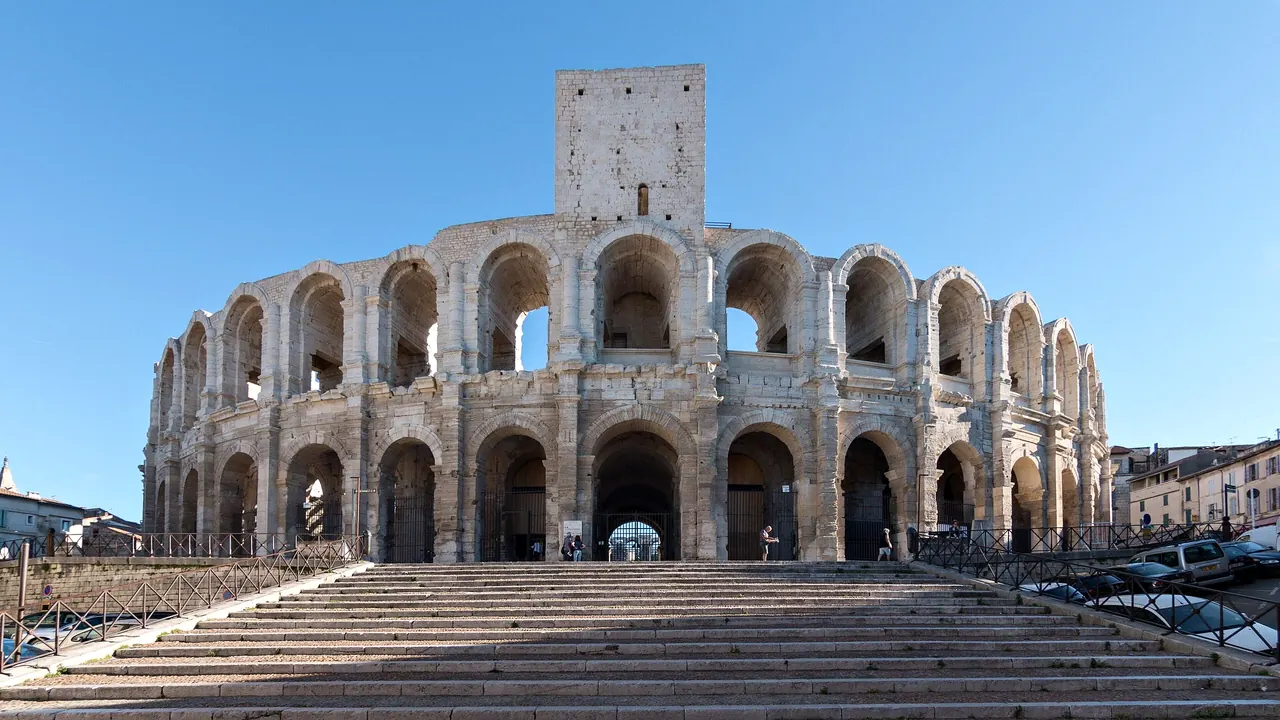
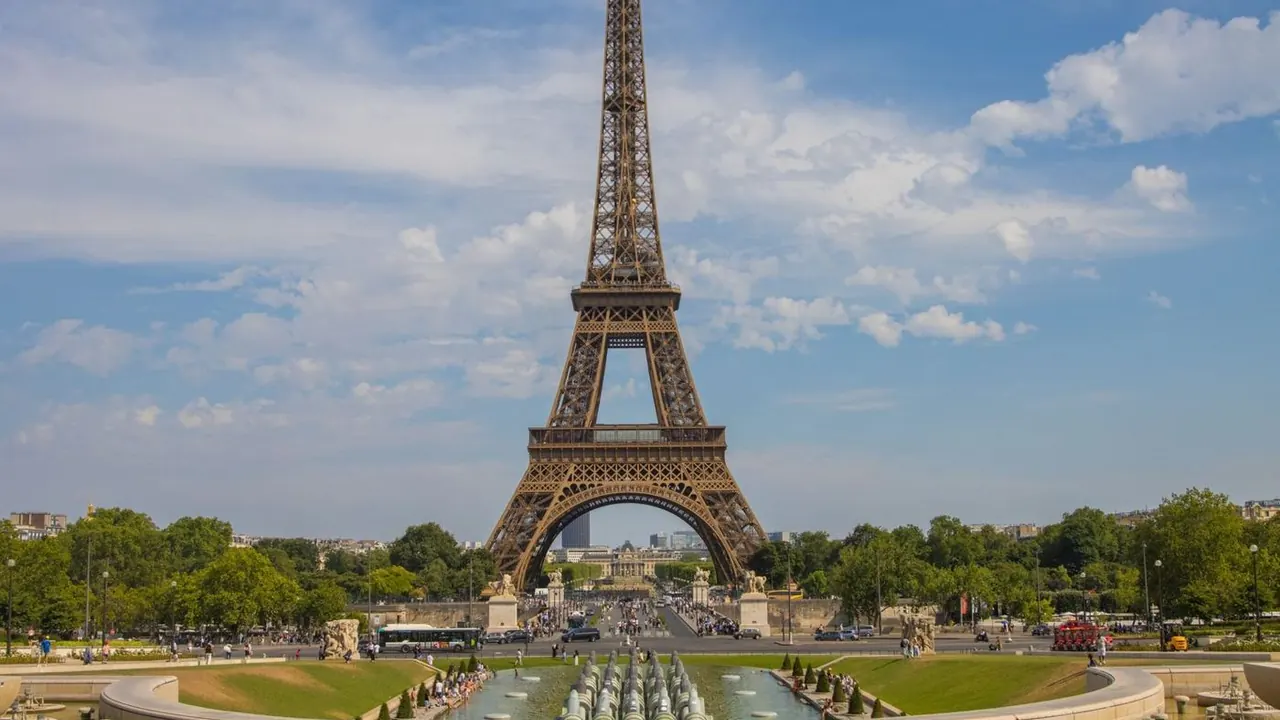
Photos: Arles by Martin Kraft, CC BY-SA 3.0, cropped; Paris by Efrem Efre, Pexels License.
Arles or Paris?
Our verdict in twelve categories, each scored against the same fixed benchmark cities, and the climate month by month, so you can choose for your trip.
Choose Arles for
- beaches
- prices
- nature and the outdoors
Arles suits a slower trip built around Roman stones, the Camargue and the towns of Provence. It is for travellers who want a smaller, cheaper base, wild delta country and a day at the sea within a drive, and who are happy for evenings to end after dinner on a square. Bring or hire a car and it opens up half of southern France.
Choose Paris for
- shopping
- nightlife
- live music and the arts
Paris is the choice for anyone who wants a great city at full stretch. It has the major museums, serious eating at every level, nights that run past 2am, opera and concerts, and the best shopping in France, all reached on foot or by metro. It costs more and has no sea, but there is far more to fill a week, and children are much better catered for.
Scoreboard
Twelve categories on one fixed scale from 0 to 100. The shaded stretch is the gap between the two.
Your match
Pick a travel style or drag the sliders, and both match scores follow your weighting.
Wins on beaches and prices with your weighting.
Wins on shopping and nightlife with your weighting.
What matters to you?
Category by category
What the scores mean for a trip.
Beaches & swimming
Neither is a beach resort, but Arles at least has the Mediterranean within reach. The sand and dunes around Saintes-Maries-de-la-Mer and the wide, empty strands of Piémanson and Beauduc are a drive across the Camargue, with shallow, warm water in high summer. Treat it as a day at the sea, with a car, your own shade and insect repellent.
Paris has only the summer sand laid on the riverbanks, the swimming spots on the Bassin de la Villette and the Seine, and its handsome public pools. The real coast, the cool Channel at Deauville and Trouville, is two hours away by train.
Food & drink
Arles eats well, but within narrow limits. The things to try are gardiane of Camargue bull, red rice, tellines and saucisson d'Arles. The long Saturday market on the Boulevard des Lices is the town's real feast, and the best meal is an unhurried lunch on a square with local rosé. A few days are enough to work through its restaurants, and many close in winter.
Paris is one of the world's great places to eat, and the gap is wide. Every quarter has bakeries, cheese shops and street markets. On top of that come the inventive neo-bistros of the east, haute cuisine, natural-wine bars and the North African, Vietnamese and West African kitchens of Belleville and the outer districts, so every meal of a long stay can be different.
Culture & sights
Arles holds a remarkable amount for its size. The arena, the antique theatre, the cryptoporticus, the Alyscamps and the cloister of Saint-Trophime are all a short walk apart, along with the Museum of Ancient Arles, the Van Gogh foundation and Gehry's tower at Luma. Two full days see it properly.
Paris works on another scale entirely. The Louvre, the Orsay, the Pompidou, the Orangerie and Cluny, the Gothic of the Sainte-Chapelle and Notre-Dame and the Haussmann boulevards themselves could fill a fortnight. The big names come with queues of a kind Arles never has.
Nightlife
Arles goes to bed after dinner. A usual evening is a drink on the Place du Forum, perhaps a few bars or the occasional music night. The town only stays up late for the ferias at Easter and in September, when bodegas open in the streets.
Paris has the full range. There are crowded bars in Oberkampf, along the Canal Saint-Martin and in Belleville, cocktail bars in South Pigalle and the gay scene in the Marais, and clubs play house and techno until dawn. It is stylish rather than wild, and doors can be selective.
Nature & outdoors
Arles has the better outdoors because the Camargue starts at the edge of town. Flamingos feed on the lagoons, white horses and black bulls graze the marshes and migrating birds pass through in spring and autumn, and you can explore on horseback, by bike along the dykes or on foot. The Alpilles add proper hiking among olive groves and pines.
Paris offers parks and woods instead: the Luxembourg, the Buttes-Chaumont and the Bois de Boulogne and Bois de Vincennes, with the boulders and trails of Fontainebleau forty minutes out by train. This is gentle green space rather than wild country.
Day trips
Both are superb bases, and the difference is in kind. Trips from Arles are Roman and Provençal: Avignon and Nîmes by train, the Pont du Gard, Les Baux, Saint-Rémy and walled Aigues-Mortes. You need a car for the villages.
From Paris the trips are mostly to châteaux and cathedrals, and nearly all go by train. Versailles, Fontainebleau, Chartres and Giverny are close, and fast lines reach Reims and its Champagne houses, Rouen and the Loire. No car is needed.
Good for families
Paris is far easier with children. Disneyland and Parc Astérix are close, and in town the Cité des Sciences, the Jardin d'Acclimatation, the natural history galleries, the zoo and the carousels and toy boats of the Luxembourg fill the days in any weather. Metro stairs and small hotel rooms are a nuisance with a pushchair, but there is plenty to do.
Arles suits older children who like history and animals. They can climb the arena, ride ponies at Camargue ranches and watch flamingos near Saintes-Maries. Little is made for children, though, and summer heat, mosquitoes and the need for a car wear families down.
Getting around
Both centres are walkable, but Paris is far better connected. The dense metro, the RER to Versailles and the airports, buses and bike-share mean you never need a car, though stairs and rush-hour crowds are the price.
Arles is a fifteen-minute town with a free shuttle and a station close to the centre for trains to Avignon, Nîmes and Marseille. The trouble starts beyond it. Buses to the villages are sparse, and the Camargue really needs a hire car or a bike.
Shopping & style
Paris is one of the great shopping cities. It has the couture houses of Avenue Montaigne, Galeries Lafayette and Le Bon Marché, independent designers in the Marais, the old covered passages, the Saint-Ouen flea market and long-established food specialists.
Arles is for small Provençal finds: printed cottons, santons, gardian shirts, Camargue salt and rice from the Saturday market, and photography books from its good bookshops. For fashion, you have to go to Aix or Marseille.
Affordability
Arles is the cheaper stay. Rooms and lunch menus cost what they do anywhere in provincial France, and one pass covers most of the sights. July, the ferias and the photography festival push prices up, and a hire car adds to the bill.
Paris is expensive in nearly every way: small, costly hotel rooms, terrace drinks and full-price museum tickets. Walking, bakeries, set lunches, free city museums and a room in the outer arrondissements all help, but not enough to close the gap.
Live music & performing arts
Paris has a year-round calendar that Arles cannot approach. There is ballet at the Palais Garnier, opera at the Bastille, orchestras at the Philharmonie and the Maison de la Radio, chamber concerts in the Sainte-Chapelle, jazz cellars and cabaret in Pigalle. Most theatre is in French.
In Arles, live performance mostly happens outdoors in summer. There are concerts in the Roman theatre and the arena, world music at Les Suds in July, and brass bands and the course camarguaise around the ferias. Out of season there is little beyond a modest town theatre.
Wellness & relaxation
Neither is a spa destination, but Paris has more to offer. The tiled hammam of the Grande Mosquée with its mint tea, the smaller neighbourhood hammams, hotel and day spas and the old public pools all offer real treatments, even if the city's noise means rest comes in short spells.
Arles has no bathing tradition and only a few hotel spas. Its calm is of another sort: siestas, shaded squares, evenings by the Rhône and farmhouse retreats with pools in the Camargue or the Alpilles.
When should you go?
Pick your month. The climate figures are measured averages, not a forecast.
Arles in July
Paris in July
Daytime high, °C
Rainfall in the month, mm
Where the figures come from
Arles's temperatures are measured 28 km from the centre, at Nimes / Courbessac.
Arles has no rain gauge within 25 km of the centre, so its rainfall comes from a gridded climate dataset read at the city rather than from a gauge further away.
Temperature and rainfall are climate normals, averaged over the years shown. Arles: 1991-2020 (sunshine 1981-2010) normals, Nimes / Courbessac (28 km from centre). Paris: 1991-2020 (sunshine 1961-1990) normals, Paris-Montsouris (4.6 km from centre).
Arles has a hot, bright southern summer. Highs reach 31°C in July and August, and July is almost dry. The sea off the Camargue is warm enough to swim from June to September, peaking at about 22°C in August. The midday heat makes walking the Roman sites hard work, so May, June and September are more comfortable for sightseeing. Autumn brings the heaviest rain, with October the wettest month at 105mm, and winters are mild and fairly sunny.
Paris is cooler and greyer all year. Summer highs sit in the mid-20s, which is good walking weather, and the rain is spread fairly evenly across the months rather than falling in one wet season. From November to February it is cold and dull, with highs around 8°C and little sunshine, so late spring to early autumn is the best time for the streets and parks. In winter Arles is both milder and far sunnier.
Which traveller are you?
On a beach and sun trip, Arles is the better of the two, though only for days at the sea. You get reliable heat and long sunny days, and a car brings the Camargue shore within reach, but you sleep in town and come back to cobbles each evening. In Paris the sea is simply out of reach.
For a food and nightlife trip, Paris wins easily. You can eat somewhere different at every meal and stay out long after midnight, and the metro or a walk gets you home. In Arles you get market mornings and slow lunches instead, and evenings end early outside the feria weeks.
On an outdoors trip, Arles is the better base. A week can mix riding, birdwatching and cycling through the delta with hill walks, all from a small town that costs less to stay in. From Paris, green days are woodland walks and park runs between museums, pleasant but never the reason to go.
Before you go
| Measure | Arles | Paris |
|---|---|---|
| Official language | French | French |
| Currency | Euro (EUR) | Euro (EUR) |
| Sockets | CE230 V, 50 Hz | CE230 V, 50 Hz |
| Driving side | Right | Right |
| Time zone | UTC+1, UTC+2 in summer | UTC+1, UTC+2 in summer |
| Emergency number | 112 | 112 |
| Elevation | 0 m | 27 m |
| Main airport | Marseille Provence Airport (MRS)54 km from centre126 non-stop destinations | Charles de Gaulle International Airport (CDG)22 km from centre277 non-stop destinations |
| Public holidays this year | 11 days | 11 days |
By the numbers
| Measure | Arles | Paris |
|---|---|---|
| City population | 51,811 | 2,103,778 |
| People per km² | 68 | 19,960 |
| Museums within 10 km | 3 | 251 |
| UNESCO World Heritage sites within 50 km | 5 | 5 |
| Swim season, months above 21 °C | 2 months | - |
Where else could you go?
Every comparison below shares a destination with this one, so you can follow Arles or Paris somewhere new.
- Avignonvs Arles
- Montpelliervs Arles
- Aix-en-Provencevs Arles
- Marseillevs Arles
- Saint-Tropezvs Arles
- Carcassonnevs Arles