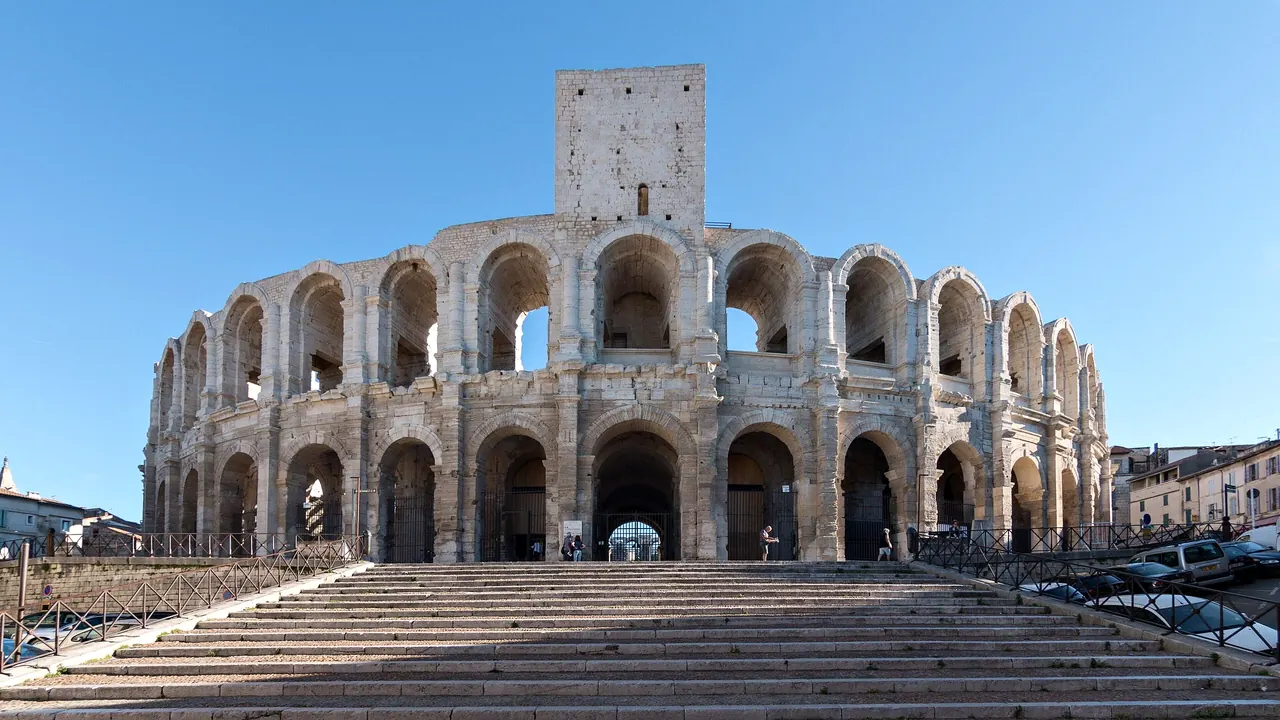
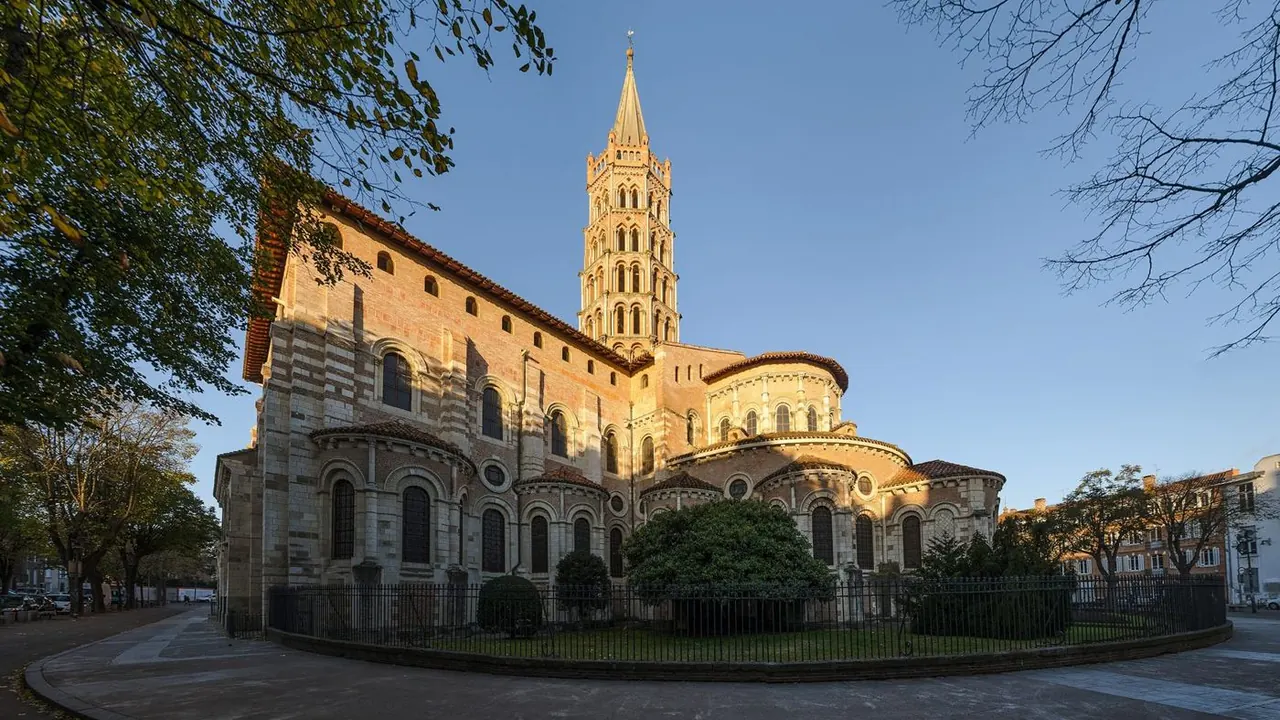
Photos: Arles by Martin Kraft, CC BY-SA 3.0, cropped; Toulouse by ZbebVial, CC BY-SA 3.0, cropped.
Arles or Toulouse?
Our verdict in twelve categories, each scored against the same fixed benchmark cities, and the climate month by month, so you can choose for your trip.
Choose Arles for
- beaches
- day trips
- nature and the outdoors
Choose Arles for a slow trip through Roman Provence and the Camargue. You get a compact UNESCO-listed old town, flamingo marshes at the edge of town, wild delta beaches for a day by the sea, and Avignon, Nîmes and Les Baux all close by. It suits travellers who will hire a car to explore and are happy with quiet evenings.
Choose Toulouse for
- nightlife
- live music and the arts
- families
Toulouse is the better pick if you want a real city that feeds you well and stays up late. It has cassoulet and the Victor Hugo market, student bars around Place Saint-Pierre, and opera and a respected orchestra at the Capitole. Families have more to do here, and the metro and flat centre mean you can manage without a car. The trade-off is that the sea is far away.
Scoreboard
Twelve categories on one fixed scale from 0 to 100. The shaded stretch is the gap between the two.
Your match
Pick a travel style or drag the sliders, and both match scores follow your weighting.
Wins on beaches and day trips with your weighting.
Wins on nightlife and live music and the arts with your weighting.
What matters to you?
Category by category
What the scores mean for a trip.
Beaches & swimming
Arles has real sea within reach and Toulouse does not. The Camargue shore around Saintes-Maries-de-la-Mer, about 40km away, and the open strands of Piémanson and Beauduc have long, wild sand and shallow water. You need a car, though, and there is little shade or service.
From Toulouse the nearest coast is around Gruissan and Narbonne, two hours each way. In practice, swimming there means the supervised lakes at Sesquières and La Ramée or a hotel pool.
Food & drink
Toulouse is the stronger place to eat. As the capital of south-western cooking it has cassoulet, foie gras and magret, the Victor Hugo covered market with its upstairs lunch counters, and cheap student eating as well. That gives you more choice through the week and through the year.
Arles has a distinct table of its own, with gardiane bull stew, Camargue rice and tellines, and its Saturday market on the Boulevard des Lices is a superb morning out. But the restaurant range is narrow and many places close in winter.
Culture & sights
Both reward about two days, but Arles packs more into less space. The working Roman arena, the antique theatre, the cryptoporticus and the Alyscamps are all UNESCO-listed and a short walk apart, and Saint-Trophime's carving and the Van Gogh connection add to them.
Toulouse is more a medieval and Renaissance city. Its rose-brick streets lead to Saint-Sernin, the palm-tree vault of the Jacobins and the woad merchants' mansions, with the aerospace museums as an unusual extra. Both cities have fine Romanesque buildings, but only Arles has the Roman monuments.
Nightlife
Toulouse is far livelier after dark. Its large student population keeps Place Saint-Pierre and the river quays busy, there are wine bars in Carmes and the Daurade, and clubs carry on later, although things thin out in July and August.
In Arles an evening means dinner on a square and a drink on the Place du Forum, and then the town goes quiet. Only the Easter and September ferias keep its streets up late.
Nature & outdoors
Arles has the more striking landscape on its doorstep. The Camargue begins at the edge of town, with flamingos, white horses, black bulls and migrating birds, and you can explore it on horseback, by bike along the dykes or on foot. The Alpilles add hill walking among olive groves and pines.
The countryside around Toulouse is gentle farmland, best seen from the shaded Canal du Midi towpaths. Its big asset, the Pyrenees, is one and a half to two hours away, which is good for hikers and skiers ready for the journey. The everyday outdoors near the city is tamer.
Day trips
Both make excellent bases, but Arles has more within a short hop. Avignon and Nîmes are each well under an hour by train, and the Pont du Gard, Les Baux, Saint-Rémy and Aigues-Mortes are all close, with Marseille and Aix about an hour away.
Toulouse has two outstanding outings about an hour away by train, Carcassonne's walled Cité and Albi's cathedral, with Moissac's cloister and Montauban nearby. Beyond those the choices are further apart and depend more on a car.
Good for families
Arles keeps children busy with ruins and animals rather than attractions built for them. They can climb the arena towers and explore the dark cryptoporticus, and outside town they can ride ponies at the Camargue ranches and watch flamingos, which suits older children. Cobbled streets, summer mosquitoes and the need for a car make it harder with small ones.
A full-size Ariane rocket and a Mir module to walk through give Toulouse a whole day at the Cité de l'espace alone. On top of that, children can step inside a Concorde at the aircraft museum, and there are playgrounds at the Jardin des Plantes, the natural history museum and a drive-through safari park. For families, and especially those with younger children, Toulouse is the easier choice.
Getting around
Inside Arles you can walk everywhere. The arena, the theatre and the quays are about fifteen minutes apart, a free shuttle loops the centre, and the station is close by for trains to Avignon and Nîmes. Beyond the town it is another matter. Buses to the villages are infrequent, and the Camargue, its beaches and the hill villages really need a car or a bike, so most people staying a few days hire a car.
With two automated metro lines, trams, a bike scheme and a flat centre inside the ring of boulevards, Toulouse can be managed without a car for the whole stay. You only need one for the Pyrenees and the rural villages, which makes it the easier city of the two to get around.
Shopping & style
Toulouse offers the fuller shopping trip. There are chains and a department store on Rue d'Alsace-Lorraine, independent boutiques and antiques around Saint-Étienne, and violet sweets, Armagnac and jars of cassoulet at the markets.
Arles is about souvenirs with character rather than range: Provençal printed cottons, santons, gardian shirts, Camargue salt, and photography books from a town known for publishing. For fashion, Arles shoppers go to Aix or Marseille.
Affordability
The two cost about the same overall, but the money goes in different places. Arles is a reasonable base by Provençal standards and has a combined pass for its sights, but rooms are scarcer during the summer festival and the ferias, and you will almost certainly pay for a hire car.
Toulouse saves you money on getting about, with cheap public transport and student-priced bars and simple food. Hotel rates go up during the big trade fairs.
Live music & performing arts
Toulouse has the year-round programme. The Théâtre du Capitole stages opera and ballet with its own company, the Orchestre National du Capitole plays in the round Halle aux Grains, and small theatres and jazz bars fill the rest of the calendar.
In Arles most live performance happens in summer, with concerts in the Roman theatre and arena, world music at Les Suds and the brass bands of the ferias. Outside the warm months there is little beyond a modest town theatre.
Wellness & relaxation
Neither is a spa destination, and in both the real pleasure is the pace: long lunches and shaded squares. Arles leans towards rural retreats, with converted farmhouses and pools in the Camargue and the Alpilles. Toulouse has hammam-style day spas and big open-air pools in town, and proper thermal baths in the Pyrenees, a trip best made with an overnight stay.
When should you go?
Pick your month. The climate figures are measured averages, not a forecast.
Arles in July
Toulouse in July
Daytime high, °C
Rainfall in the month, mm
Where the figures come from
Arles's temperatures are measured 28 km from the centre, at Nimes / Courbessac.
Arles has no rain gauge within 25 km of the centre, so its rainfall comes from a gridded climate dataset read at the city rather than from a gauge further away.
Temperature and rainfall are climate normals, averaged over the years shown. Arles: 1991-2020 (sunshine 1981-2010) normals, Nimes / Courbessac (28 km from centre). Toulouse: 1991-2020 normals, Toulouse / Blagnac (7 km from centre).
In summer Arles is the hotter, sunnier and drier of the two. July and August reach about 31°C with very little rain, and the sea off the Camargue warms to around 22°C, so this is the time for the beaches. The midday heat makes walking the Roman sites hard work, though, so May, June and September are better for sightseeing and the marshes. Autumn turns wet, with October the rainiest month at 105mm. Winters are cool but still fairly bright.
Toulouse stays a few degrees cooler through the summer, peaking around 29°C in August, and its rain is spread more evenly through the year, with late spring the wettest stretch. It gets clearly less sunshine than Arles, especially in winter, when highs sit around 10°C and many days are dull. Spring and early autumn are the most pleasant times to walk the city.
Which traveller are you?
On a beach and sun trip, Arles is the clear choice. The long sandy strands of Saintes-Maries, Piémanson and Beauduc are a short drive away and the summers are hotter and sunnier. From Toulouse the Mediterranean is two hours away.
For a food and nightlife trip, Toulouse wins easily. Cassoulet, duck and the Victor Hugo market make for a richer table. The student crowd keeps Place Saint-Pierre and the Carmes wine bars busy late, while Arles goes quiet after dinner.
On a family trip with children, Toulouse has far more to do. The Cité de l'espace, the walk-through Concorde and the giant mechanical creatures fill whole days, and the flat centre suits pushchairs. Arles appeals mainly to older children who love horses and history.
Before you go
| Measure | Arles | Toulouse |
|---|---|---|
| Official language | French | French |
| Currency | Euro (EUR) | Euro (EUR) |
| Sockets | CE230 V, 50 Hz | CE230 V, 50 Hz |
| Driving side | Right | Right |
| Time zone | UTC+1, UTC+2 in summer | UTC+1, UTC+2 in summer |
| Emergency number | 112 | 112 |
| Elevation | 0 m | 115 m |
| Main airport | Marseille Provence Airport (MRS)54 km from centre126 non-stop destinations | Toulouse-Blagnac Airport (TLS)7 km from centre84 non-stop destinations |
| Public holidays this year | 11 days | 11 days |
By the numbers
| Measure | Arles | Toulouse |
|---|---|---|
| City population | 51,811 | 514,819 |
| People per km² | 68 | 4,352 |
| Museums within 10 km | 3 | 24 |
| UNESCO World Heritage sites within 50 km | 5 | 2 |
| Swim season, months above 21 °C | 2 months | - |
Where else could you go?
Every comparison below shares a destination with this one, so you can follow Arles or Toulouse somewhere new.
- Avignonvs Arles
- Montpelliervs Arles
- Aix-en-Provencevs Arles
- Marseillevs Arles
- Carcassonnevs Toulouse
- Andorra la Vellavs Toulouse