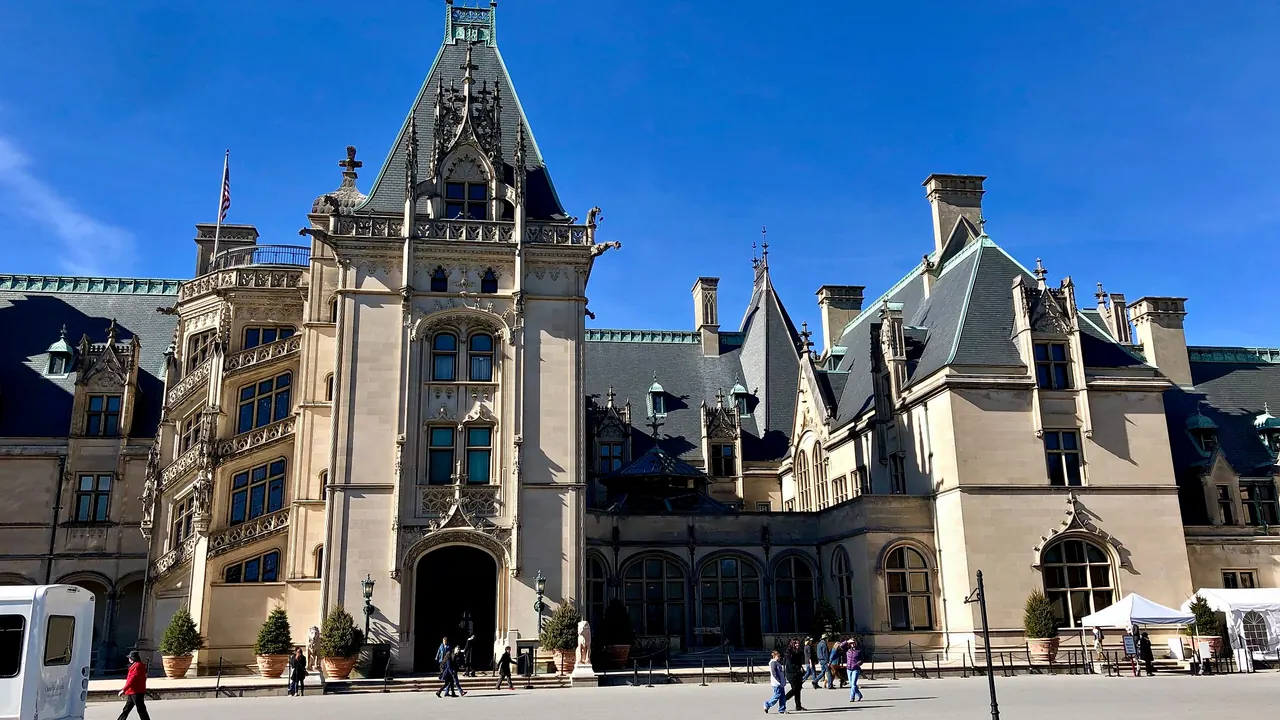
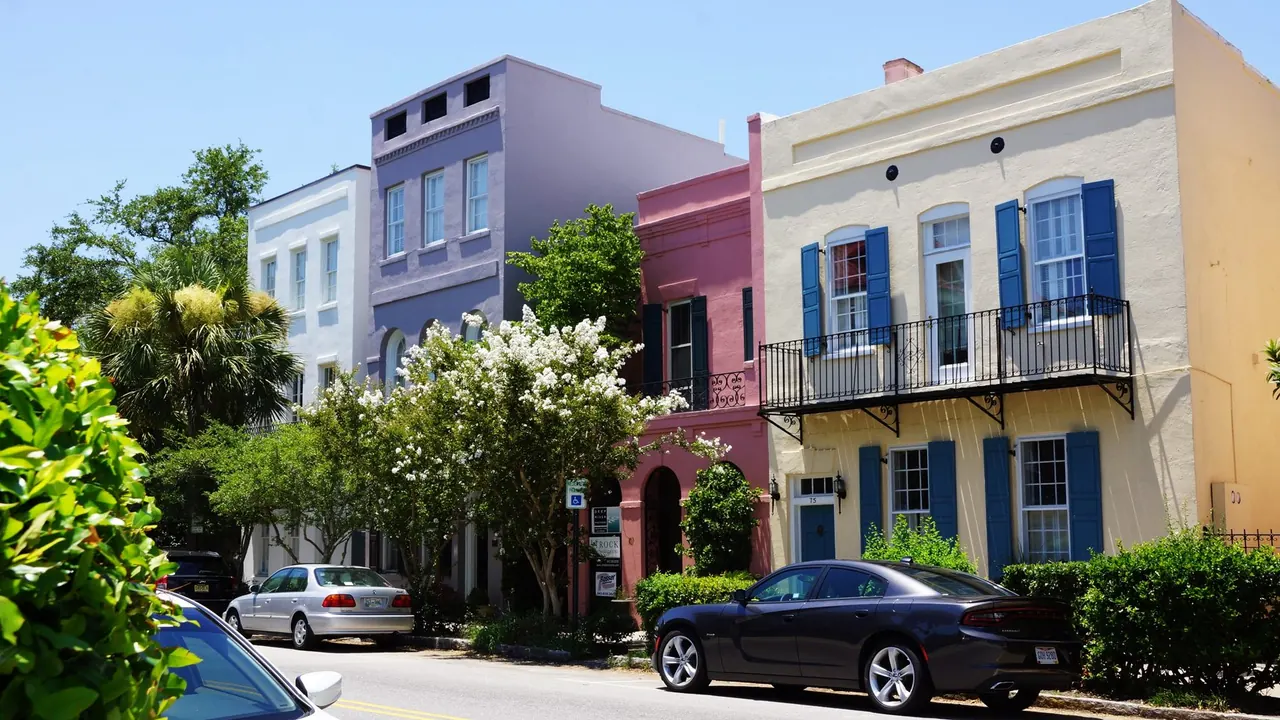
Photos: Asheville by Warren LeMay, CC0; Charleston by NealVickers, CC BY-SA 4.0, cropped.
Asheville or Charleston?
Our verdict in twelve categories, each scored against the same fixed benchmark cities, and the climate month by month, so you can choose for your trip.
Choose Asheville for
- nature and the outdoors
- wellness
- live music and the arts
Asheville is for travellers who want to spend their days outside. Choose it for ridge hikes off the Blue Ridge Parkway, waterfalls and rafting, evenings of craft beer and bluegrass, and a slower, restorative pace in mountain air. You will need a car, and the sea is far away.
Choose Charleston for
- beaches
- getting around
- day trips
Pick Charleston if you want a handsome historic town and a beach on the same trip. Its peninsula of antebellum streets, its history museums that face slavery directly and its Lowcountry cooking fill the days. The Atlantic islands are close for swimming, and the flat old town is easy on foot, though a stay there costs more.
Scoreboard
Twelve categories on one fixed scale from 0 to 100. The shaded stretch is the gap between the two.
Your match
Pick a travel style or drag the sliders, and both match scores follow your weighting.
Wins on nature and the outdoors and wellness with your weighting.
Wins on beaches and getting around with your weighting.
What matters to you?
Category by category
What the scores mean for a trip.
Beaches & swimming
Charleston is the only one of the two with a real beach. Folly Beach, Sullivan's Island and Isle of Palms are all within about half an hour of the old town, and the summer Atlantic is warm enough for long swims. That makes it easy to split a stay between the town and the sand, though the water is tidal and greenish rather than clear.
Asheville is several hours from the sea. Swimming there means mountain water: waterfall pools in Pisgah, the natural rock slide at Sliding Rock, tubing on the French Broad and a small sandy beach at Lake Lure. All of it is cold, and it makes a summer afternoon out rather than a beach trip.
Food & drink
Both cities eat well above their size, but Charleston has the stronger and more distinctive food. Lowcountry cooking, with its shrimp and grits, she-crab soup, Carolina Gold rice and winter oyster roasts, has Gullah Geechee and West African roots that give the city a cuisine of its own. You can eat it anywhere from townhouse dining rooms on the peninsula to seafood shacks on Shem Creek.
Asheville is stronger on drink. It has more breweries than Charleston, spread across downtown, the South Slope and West Asheville, and its kitchens rely on Appalachian farm produce such as trout, heirloom beans, ramps and sorghum. In both cities international cooking is thin and the best tables need booking.
Culture & sights
In Charleston the whole historic peninsula is the sight, with street after street of Georgian and antebellum houses south of Broad. Its museums deal directly with slavery and the Civil War, from Fort Sumter out in the harbour to the International African American Museum, which gives a visit weight as well as beauty.
Asheville has one great showpiece, the Biltmore Estate, which fills a full day. Its downtown of Art Deco and Beaux-Arts buildings is also worth an unhurried walk. Beyond those the list is short, and in both cities two or three days covers the main sights.
Nightlife
Neither city is made for a late night, and both run on bars rather than clubs. The difference is the mood. Asheville's evenings are spent in taprooms, cocktail bars and dives on the South Slope and Haywood Road, and they are relaxed and mostly over by midnight. Charleston's upper King Street is louder and younger, with rooftop bars and weekend groups out until about 2am.
Nature & outdoors
For time outdoors, Asheville is far ahead. The Blue Ridge Parkway, Pisgah National Forest and the Great Smoky Mountains are all within about an hour. There are ridge hikes over grassy balds, the summit of Mount Mitchell, serious mountain biking, and whitewater rafting on the Nantahala and Pigeon rivers.
Charleston's landscape is flat Lowcountry of marsh, tidal creeks and live oaks, best seen from a kayak and often with dolphins nearby. It is lovely and gentle, but there are no hills, and the summer heat and mosquitoes leave spring and autumn as the good seasons.
Day trips
Charleston has the better choice of day trips. The Ashley River plantations, including Middleton Place, Magnolia and Drayton Hall, are about half an hour away. Savannah and Beaufort each make a full day out, with Savannah's squares, Beaufort's antebellum streets and the Gullah culture of the sea islands.
From Asheville most outings are into the mountains themselves, passing small towns such as Brevard, Black Mountain and Hendersonville. The standout is Cherokee, where the Museum of the Cherokee Indian gives the region's deepest look at its original people. Both cities need a car for day trips.
Good for families
Both cities are calm and easy with children, though Charleston has a little more laid on for them. The South Carolina Aquarium, the Children's Museum of the Lowcountry and the aircraft carrier at Patriots Point are all close to the harbour, and the beaches are a short drive away.
Asheville is better for active children, with the black bears and red wolves at the Western North Carolina Nature Center, river tubing, Sliding Rock and zip lines. Neither city has a theme park close by, and Asheville's sights are more spread out.
Getting around
Charleston is the easier city without a car, at least on the peninsula. It is flat and compact, with pedicabs and a free shuttle, so a stay in the old town can be managed almost entirely on foot. The beaches and plantations still need a car or a ride.
Asheville's walkable downtown is small and hilly. Almost everything visitors come for, from Biltmore to the trailheads on the Parkway, lies along slow mountain roads that the buses barely reach, so plan on hiring a car.
Shopping & style
Charleston has the more varied shopping street. King Street runs from antiques dealers and galleries through national fashion brands to independent boutiques. At City Market, Gullah artisans weave and sell sweetgrass baskets, the city's signature craft.
Asheville is the better place to buy something handmade, with pottery, glass, weaving and woodwork from the River Arts District studios and the Folk Art Center, and vintage shops and outdoor gear around Lexington Avenue. Neither city has much in the way of luxury shopping.
Affordability
Neither city is cheap, but Asheville is easier on the budget. Its inns are expensive on autumn weekends, and Biltmore and a hire car add up. Midweek and winter stays cost less, though, and the trails and the Parkway are free.
Charleston's hotels on the peninsula charge what much larger cities do, its well-known restaurants are priced to match, and tours, parking and taxis mount up. Staying in Mount Pleasant saves money but means driving in every day.
Live music & performing arts
Asheville has more live music on an ordinary night. Touring rock and Americana acts play its downtown venues, bluegrass and old-time jams fill the pubs, and Shindig on the Green brings fiddle music and clogging outdoors in summer. The Mountain Dance and Folk Festival has run since 1928.
Charleston's year centres on Spoleto Festival USA, which fills late spring with opera, dance, theatre and jazz. Outside the festival, the Dock Street Theatre, the Gaillard Center and Gullah storytelling make up a smaller programme.
Wellness & relaxation
Asheville grew partly on visitors seeking rest cures in its mountain air. That history lives on in its retreats, yoga studios, alternative therapies and large resort spas on the hillsides. Hot Springs, about forty minutes away, has mineral water in riverside tubs.
Charleston has hotel spas and resort spas on Kiawah Island but no bathing tradition. Its calm comes instead from shaded gardens, quiet church courtyards and evenings at White Point Garden.
When should you go?
Pick your month. The climate figures are measured averages, not a forecast.
Asheville in July
Charleston in July
Daytime high, °C
Rainfall in the month, mm
Where the figures come from
Asheville's temperatures are measured 50 km from the centre, at Asheville Regional Airport.
Asheville has no rain gauge within 25 km of the centre, so its rainfall comes from a gridded climate dataset read at the city rather than from a gauge further away.
Temperature and rainfall are climate normals, averaged over the years shown. Asheville: 1991-2020 (sunshine 1981-2010) normals, Asheville Regional Airport (50.3 km from centre). Charleston: 1991-2020 (sunshine 1981-2010) normals, Charleston Airport (16.1 km from centre).
Asheville sits high enough to stay fairly mild in summer, with July highs around 29°C, so June to September suits hiking and river days. Rain is spread evenly through the year, and October is the driest month as well as one of the most pleasant. Winters are cold for sightseeing, with January highs near 9°C.
Charleston is warmer in every month. The sea reaches 28°C in July and August and is warm enough for swimming from May into October, but summer days climb to about 33°C, too hot for long walks at midday. June to September is also the wettest stretch, with around 170mm a month at its peak. Spring and autumn are best for walking the old town, and Charleston's mild, sunnier winters make it the better choice of the two for a cool-season break.
Which traveller are you?
On an outdoors trip, Asheville is the clear choice. Days can run from a walk over a grassy bald to mountain-biking trails or a morning of whitewater, with a taproom waiting afterwards. Charleston's flat marsh suits a gentle paddle, not days this varied.
For a relaxing and wellness trip, Asheville is the gentler fit. Picture a mountain inn with a quiet porch, a massage or a yoga class, and cool evenings that make sleep easy. Charleston's humid summers and pricier rooms make unwinding harder work.
For a beach and sun trip, Charleston is the only real option. Spend mornings in the old town's shaded streets, afternoons swimming in the warm Atlantic and evenings over shrimp and grits. Asheville offers only cold mountain water.
Before you go
| Measure | Asheville | Charleston |
|---|---|---|
| Currency | US Dollar (USD) | US Dollar (USD) |
| Sockets | AB120 V, 60 Hz | AB120 V, 60 Hz |
| Driving side | Right | Right |
| Time zone | UTC-5, UTC-4 in summer | UTC-5, UTC-4 in summer |
| Emergency number | 911 | 911 |
| Elevation | 650 m | 6 m |
| Main airport | Asheville Regional Airport (AVL)18 km from centre27 non-stop destinations | Charleston International Airport (CHS)16 km from centre56 non-stop destinations |
| Public holidays this year | 14 days | 12 days |
By the numbers
| Measure | Asheville | Charleston |
|---|---|---|
| City population | 94,589 | 150,227 |
| People per km² | 796 | 532 |
| Museums within 10 km | 4 | 19 |
| UNESCO World Heritage sites within 50 km | 0 | 0 |
| Swim season, months above 21 °C | - | 6 months |
Where else could you go?
Every comparison below shares a destination with this one, so you can follow Asheville or Charleston somewhere new.
- Gatlinburgvs Asheville
- Pigeon Forgevs Asheville
- Savannahvs Charleston
- Myrtle Beachvs Charleston
- Wilmingtonvs Charleston
- Atlantavs Asheville