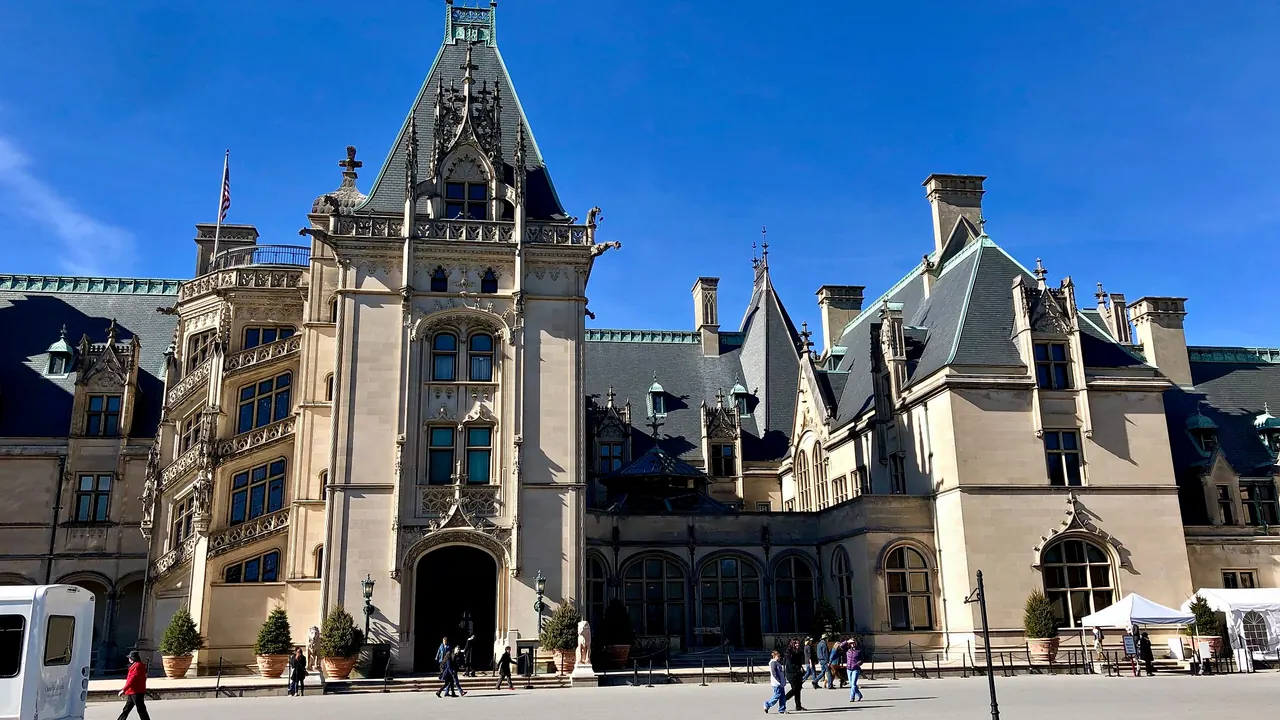
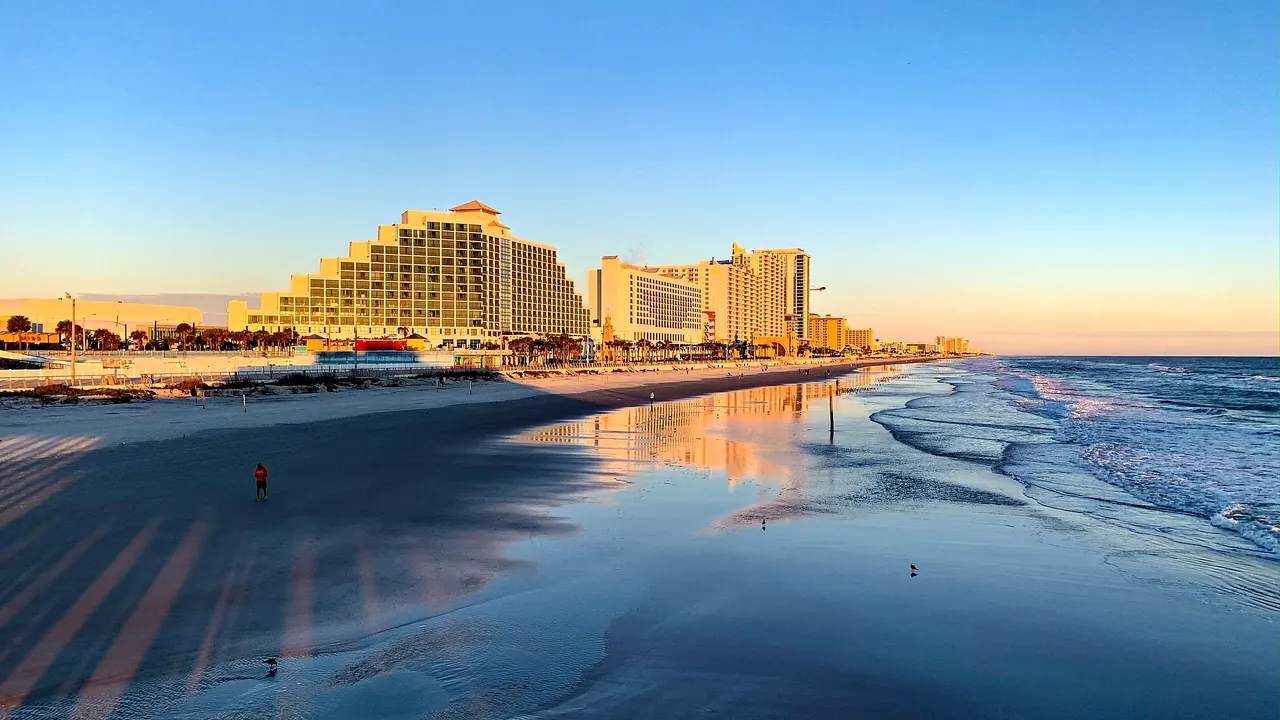
Photos: Asheville by Warren LeMay, CC0; Daytona Beach by Han Zheng, CC BY-SA 2.0, cropped.
Asheville or Daytona Beach?
Our verdict in twelve categories, each scored against the same fixed benchmark cities, and the climate month by month, so you can choose for your trip.
Choose Asheville for
- food and drink
- nature and the outdoors
- culture and sights
Asheville is the choice for travellers who want mountains rather than sea. The Blue Ridge Parkway, Pisgah National Forest and the Smokies are all close by, and a hike or a river run fits easily around a day at Biltmore or a walk through the Art Deco downtown. The evenings are the other reason to go: brewery taprooms, Appalachian cooking and bluegrass jams. It suits active couples, walkers and anyone who wants a restful break in cool air, provided they don't mind going without a beach.
Choose Daytona Beach for
- beaches
- day trips
- prices
Daytona Beach is a trip built around sand and warm water. The wide, hard-packed shore and an Atlantic that stays warm from late spring to autumn are the whole point, and rooms cost less than in the mountains. St Augustine, Kennedy Space Center and Orlando are all an easy drive away for days off the beach. Beach families, race and motorcycle fans, and anyone happy to keep the trip simple will do well here. People who travel for food, museums or a sense of place will find little to hold them.
Scoreboard
Twelve categories on one fixed scale from 0 to 100. The shaded stretch is the gap between the two.
Your match
Pick a travel style or drag the sliders, and both match scores follow your weighting.
Wins on food and drink and nature and the outdoors with your weighting.
Wins on beaches and day trips with your weighting.
What matters to you?
Category by category
What the scores mean for a trip.
Beaches & swimming
On beaches the two are far apart. Asheville's swimming is cold mountain water: the rock slide at Sliding Rock, pools under the Pisgah waterfalls, floats on the French Broad and a small sandy beach at Lake Lure. Each makes a refreshing summer half-day, but none of it adds up to beach life.
Daytona Beach is built around its shore, 37km of flat, hard-packed sand where cars can drive on marked stretches and the sea is warm through the summer months. Waves and rip currents mean swimming near the lifeguards. For quieter sand, head north to Ormond Beach or south towards Ponce Inlet and New Smyrna Beach.
Food & drink
Asheville is clearly the better place to eat and drink. Dozens of breweries line downtown and the South Slope, and chef-driven kitchens cook from Appalachian farms with trout, heirloom beans, foraged ramps and serious barbecue. Its weakness is a thin international range.
Daytona's best meals are fried shrimp, smoked fish dip and oysters, eaten on a deck over the Halifax River at an old fish camp. Away from the water, chain restaurants dominate the main roads. In Daytona you eat between beach days, whereas in Asheville the meals are a reason to go.
Culture & sights
Asheville has more to see. The Biltmore Estate, the Vanderbilts' Gilded Age château with Olmsted gardens, fills a whole day. Downtown has one of the South's best-preserved groups of Art Deco buildings, including the domed City Hall and the tiled Basilica of St Lawrence, and the Folk Art Center adds the region's craft heritage.
Daytona's culture centres on speed. The main sights are a tour of the Speedway, the Cuban art and planetarium at the Museum of Arts and Sciences, and the climb up the Ponce de Leon Inlet Lighthouse. A day or two covers it all.
Nightlife
Neither town is for a long night of dancing, and the difference is in the kind of night out. Asheville offers taprooms, cocktail bars and dive bars within walking distance downtown and along Haywood Road, a small long-standing LGBTQ scene and a relaxed crowd that has mostly gone home by midnight.
Daytona's evenings are beach bars, tiki decks at sunset and the biker saloons of Main Street. Those saloons spill onto the street during Bike Week, Biketoberfest and race weeks and are much quieter the rest of the year.
Nature & outdoors
This is Asheville's great strength. Mount Mitchell, the highest peak in the eastern United States, and the Great Smoky Mountains are each about an hour away. Pisgah is right on the edge of town for waterfall walks and mountain biking, and the French Broad and Nantahala rivers are good for rafting.
Daytona's landscape is flat and watery but rich in wildlife. You can kayak the Mosquito Lagoon among dolphins, go birding at Merritt Island and see manatees at Blue Spring in winter. It has no hills, and summer heat pushes most outings into the early morning.
Day trips
Daytona Beach is better placed for day trips, with three major outings each about an hour away. St Augustine has its Spanish fort and old streets, Kennedy Space Center has rockets and launch history, and Orlando has its theme parks, while New Smyrna Beach and DeLand make shorter trips.
From Asheville, the outings are mostly into the landscape or to small towns such as Brevard, Black Mountain and Hendersonville. The deepest of them is Cherokee, home to the Museum of the Cherokee Indian.
Good for families
Both work for families, but for different children. Asheville suits active ones, with black bears and red wolves at the Western North Carolina Nature Center, river tubing, Sliding Rock and treetop zip lines. The nearest theme park, Dollywood, is two hours away over the mountains.
Daytona offers a classic beach stay: wide sand, boardwalk arcades, condos with pools and Orlando's parks within an hour. In return, parents have to watch for rip currents and should avoid the noisy event weeks.
Getting around
Both towns are easier with a car. Asheville at least has a compact, walkable downtown, and the South Slope and River Arts District are a short stroll or ride away, although Biltmore, the Parkway and the trailheads all need a car.
Daytona is spread along long, wide roads on both sides of the river, and the buses are too infrequent to rely on. The hard sand is pleasant for walking and cycling, but nearly everything else means driving.
Shopping & style
Asheville is the better place to buy something worth taking home. Its shopping is Appalachian craft: pottery, glass and weaving from the working studios of the River Arts District and from the Folk Art Center, plus independent bookshops and vintage clothing around the Grove Arcade and Lexington Avenue.
Daytona's shopping is practical. It has an outlet centre and a mall, swimwear and souvenir shops on the shore, and motorcycle gear on Main Street.
Affordability
Daytona Beach is the easier trip on a budget. It has plenty of older oceanfront motels and condo rentals, and casual seafood keeps meals reasonable. Rates jump during the Daytona 500 and Bike Week.
Asheville's inns and downtown hotels are expensive by American standards, especially on autumn leaf weekends, and Biltmore is a costly day out. Its trails, waterfalls and the Parkway are free, though, and midweek or winter stays cost noticeably less. Both places add tipping and a hire car to the bill.
Live music & performing arts
Asheville's music has roots. Bluegrass and old-time jams fill pubs and porches, Shindig on the Green holds free summer evenings of fiddling and clogging, the Mountain Dance and Folk Festival dates back to 1928, and touring Americana and indie acts play downtown most nights.
Daytona's best live performance is classical, with visiting orchestras on a winter series run by the local symphony society. The rest is touring Broadway shows at the Peabody Auditorium and free summer concerts at the oceanfront bandshell.
Wellness & relaxation
Asheville is the more restful choice and has a long history of it. It grew as a mountain retreat for people recovering their health, and it still has yoga studios, retreats, large spas in the hillside resort hotels and riverside mineral tubs at Hot Springs.
Daytona's calm is simpler: early walks on the hard sand, an afternoon by the pool and a few resort spas. That calm disappears when the engines arrive for race weeks and Bike Week.
When should you go?
Pick your month. The climate figures are measured averages, not a forecast.
Asheville in July
Daytona Beach in July
Daytime high, °C
Rainfall in the month, mm
Where the figures come from
Asheville's temperatures are measured 50 km from the centre, at Asheville Regional Airport.
Asheville has no rain gauge within 25 km of the centre, so its rainfall comes from a gridded climate dataset read at the city rather than from a gauge further away.
Temperature and rainfall are climate normals, averaged over the years shown. Asheville: 1991-2020 (sunshine 1981-2010) normals, Asheville Regional Airport (50.3 km from centre). Daytona Beach: 1991-2020 normals, Daytona Beach / Mansfield Mobile Home Park (4.9 km from centre).
Asheville has four clear seasons. Summer highs reach about 29°C, which is pleasant for walking at this altitude, and late spring and October are ideal for hiking. Winter days are cold, around 9°C, and better for cosy inns than long trails. Rain is spread evenly through the year with no dry season, though October is a little drier than the rest. Early summer is the sunniest time.
Daytona Beach is warm all year, and its seasons run the other way. The sea is warm enough for swimming from May to October and peaks at about 28°C in high summer. Those same summer months bring daytime heat of up to 33°C and heavy thunderstorm rain, about 180mm a month in early autumn, so walking and sightseeing are best kept to the morning. From November to April the air is mild and drier, good for being outdoors but too cool for most swimmers. Overall, Asheville is at its best in spring and autumn, and Daytona Beach in early summer for the sea or in winter for gentle sunshine.
Which traveller are you?
On a beach and sun trip, Daytona Beach is the only real option. It has kilometres of firm, wide sand and a warm Atlantic from late spring to autumn. Asheville's swimming means cold mountain pools and river floats, hours from any coast.
For an outdoors trip, choose Asheville. Ridge hikes over grassy balds, the trails of Pisgah, some of the country's best mountain biking and whitewater rivers are all near town. Daytona offers flat lagoon paddling and birding, which is pleasant but much more limited.
On a relaxing and wellness trip, Asheville makes slowing down easier. Cool mountain evenings, quiet inn porches and an unhurried pace help you rest even in midsummer. Daytona can be restful too, but its sticky summer heat and loud event weeks mean you have to choose your dates carefully.
Before you go
| Measure | Asheville | Daytona Beach |
|---|---|---|
| Currency | US Dollar (USD) | US Dollar (USD) |
| Sockets | AB120 V, 60 Hz | AB120 V, 60 Hz |
| Driving side | Right | Right |
| Time zone | UTC-5, UTC-4 in summer | UTC-5, UTC-4 in summer |
| Emergency number | 911 | 911 |
| Elevation | 650 m | 4 m |
| Main airport | Asheville Regional Airport (AVL)18 km from centre27 non-stop destinations | Daytona Beach International Airport (DAB)5 km from centre8 non-stop destinations |
| Public holidays this year | 14 days | 11 days |
By the numbers
| Measure | Asheville | Daytona Beach |
|---|---|---|
| City population | 94,589 | 72,647 |
| People per km² | 796 | 440 |
| Museums within 10 km | 4 | 6 |
| UNESCO World Heritage sites within 50 km | 0 | 0 |
| Swim season, months above 21 °C | - | 9 months |
Where else could you go?
Every comparison below shares a destination with this one, so you can follow Asheville or Daytona Beach somewhere new.
- St. Augustinevs Daytona Beach
- Orlandovs Daytona Beach
- Gatlinburgvs Asheville
- Pigeon Forgevs Asheville
- Cocoa Beachvs Daytona Beach
- Tampavs Daytona Beach