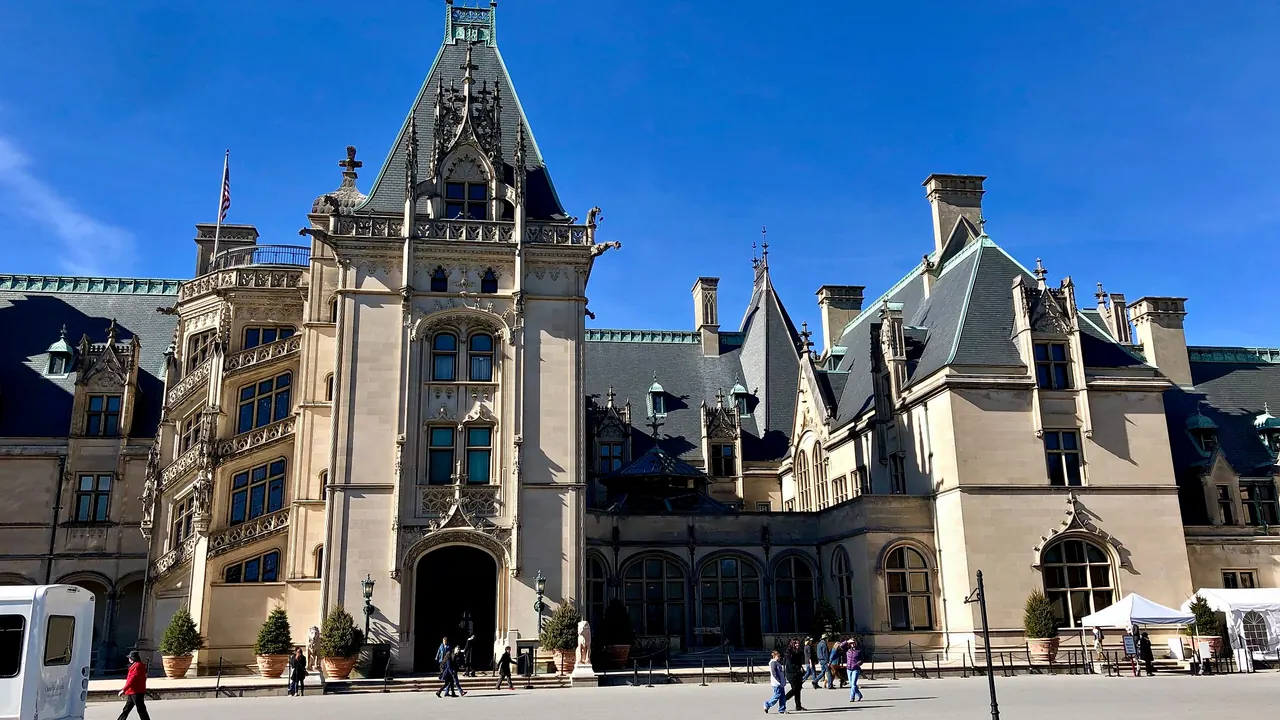
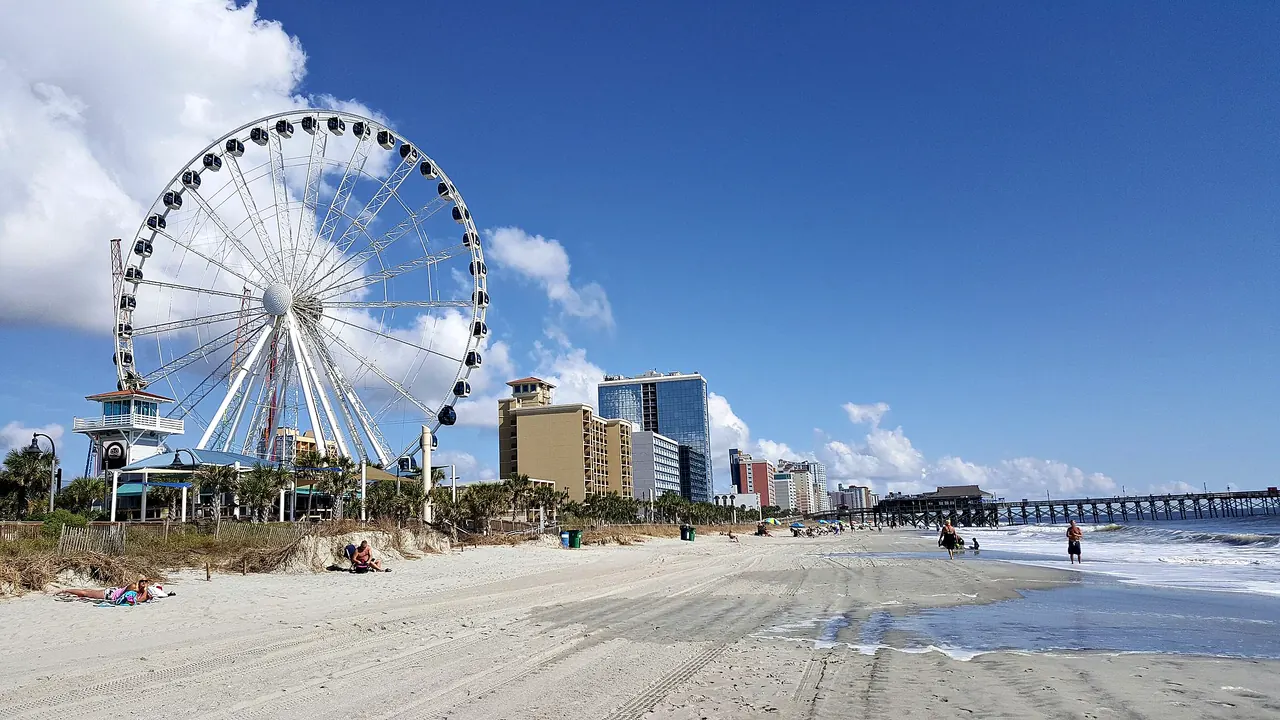
Photos: Asheville by Warren LeMay, CC0; Myrtle Beach by The ed17, CC BY-SA 4.0, cropped.
Asheville or Myrtle Beach?
Our verdict in twelve categories, each scored against the same fixed benchmark cities, and the climate month by month, so you can choose for your trip.
Choose Asheville for
- nature and the outdoors
- culture and sights
- wellness
Asheville suits travellers who want mountains on the doorstep and a small city with real substance between hikes. You get waterfall trails in Pisgah and drives along the Blue Ridge Parkway, a full day at the Biltmore Estate, an Art Deco downtown, and evenings of local beer and Appalachian fiddle music. It costs more, and the sea is hours away, so it is a better fit for active couples and friends than for anyone chasing sun and sand.
Choose Myrtle Beach for
- beaches
- families
- prices
Pick Myrtle Beach for a warm-weather stay built around the beach. The Grand Strand's long, shallow shore, plenty of condos with kitchens and an almost endless run of water parks, aquariums and mini-golf make it the easier family vacation and the cheaper of the two. Come for the sand and the sea. History, serious cooking and culture are thin here, and most of what the town offers ends at the water's edge.
Scoreboard
Twelve categories on one fixed scale from 0 to 100. The shaded stretch is the gap between the two.
Your match
Pick a travel style or drag the sliders, and both match scores follow your weighting.
Wins on nature and the outdoors and culture and sights with your weighting.
Wins on beaches and families with your weighting.
What matters to you?
Category by category
What the scores mean for a trip.
Beaches & swimming
These two could hardly be further apart. Myrtle Beach sits on about 100km of wide, flat sand, and from June to September the sea is warm enough to stay in for hours. It ranges from crowded central blocks by the boardwalk to calmer, dune-backed stretches at Surfside and the state parks.
Asheville is a mountain city several hours from any coast. Its water fun is Sliding Rock, cold pools in Pisgah, tubing on the French Broad and the small beach at Lake Lure. These make pleasant summer half-days, but they are no substitute for a seaside trip.
Food & drink
Asheville eats and drinks far better. Its breweries fill downtown, the South Slope and West Asheville. The cooking draws on Appalachian farms, with trout, ramps, heirloom beans and proper barbecue and biscuits, and chef-led dining rooms make it a good destination for food.
Myrtle Beach is built to feed crowds, so the strip is mostly buffets, pancake houses and chains. The best meals are a short drive away, fresh shrimp and oysters at Murrells Inlet or Calabash-style fried fish over the state line, and an evening or two covers them.
Culture & sights
Asheville has much more to see. The Biltmore Estate alone fills a day, and the downtown of Art Deco and Beaux-Arts buildings, the Basilica of St Lawrence and the Thomas Wolfe Memorial add another day or two.
Myrtle Beach is a twentieth-century resort with little past on show. Brookgreen Gardens, with its sculpture among the live oaks and its account of plantation slavery, is genuinely worth a visit, and Atalaya sits next door, but that is a single day out.
Nightlife
Neither is a big night-out city, but the evenings feel very different. Asheville means relaxed taprooms, cocktail bars and dive bars within walking distance on the South Slope and along Haywood Road, and most of it winds down around midnight.
Myrtle Beach is louder and more seasonal. It has beach bars and rooftop decks by the boardwalk, dance clubs in the entertainment complexes that stay open late, and shag dancing in North Myrtle Beach. Outside summer much of it closes early.
Nature & outdoors
This is Asheville's great strength. It has the Blue Ridge Parkway, Pisgah National Forest and Mount Mitchell, the highest peak in the eastern United States, with the Great Smoky Mountains an hour away. There is serious hiking, mountain biking and whitewater, plus spring rhododendron and October colour.
Myrtle Beach offers gentler, flatter pleasures: birdwatching on the marsh boardwalks at Huntington Beach State Park, kayaking through the cypress swamps of the Waccamaw, dolphin cruises and a great deal of golf. Summer heat limits all of it to early mornings.
Day trips
Both offer a fair handful of outings, but the shape differs. From Myrtle Beach one long drive stands out: Charleston, two hours south, with its antebellum streets and harbour forts. Georgetown, Wilmington and Southport are smaller extras.
Asheville's excursions are mostly into the landscape and to small mountain towns such as Brevard and Black Mountain. The richest is Cherokee, whose museum and Oconaluftee village tell the story of the region's original people.
Good for families
Myrtle Beach is the easier place with children. Gentle surf, resort pools with lazy rivers, condo suites with kitchens, an aquarium, water parks, a wooden roller coaster and endless pirate-themed mini-golf keep every age busy.
Asheville rewards outdoorsy families instead, with black bears and red wolves at the Nature Center, tubing, Sliding Rock, zip lines and the Biltmore farmyard. There is no big park closer than Dollywood, and much of the day is spent in the car.
Getting around
Neither works well without a car, but Asheville is a little kinder on foot. Its compact downtown, the South Slope and the River Arts District can be walked, even though Biltmore and the trailheads need wheels.
Myrtle Beach is spread along 100km of multi-lane highway with few pavements. Walking only makes sense within the oceanfront blocks or along the sand itself, and summer traffic on Kings Highway can crawl.
Shopping & style
Handmade craft against outlet malls sums up the difference. In Asheville, Appalachian pottery, glass, weaving and woodwork fill the working studios of the River Arts District and the craft guild's showcase at the Folk Art Center. The Grove Arcade and the streets around Lexington Avenue add independent boutiques, bookshops and vintage clothing, so it is the place to bring home something made locally.
Myrtle Beach shops in bulk, with two big outlet centres, chain stores in the waterfront complexes and vast highway beach shops full of swimwear and inflatables. The Market Common feels more like a town centre, and the sweetgrass baskets sold along the coast road south are the one real local craft.
Affordability
Myrtle Beach is the cheaper stay. Its huge supply of motels and condos keeps rooms affordable outside July and long weekends, and a kitchen in the unit cuts food costs.
Asheville's downtown inns and Biltmore-area hotels are expensive, and autumn weekends push them higher still. Biltmore admission adds up too. Free trails and waterfalls help, and a midweek or winter visit softens the bill.
Live music & performing arts
Asheville has the richer music life by a long way. Touring Americana and indie acts play its downtown venues, there are bluegrass and old-time jams and buskers, and Shindig on the Green and the Mountain Dance and Folk Festival, running since 1928, carry a living tradition.
Myrtle Beach offers polished variety theatre instead: country and gospel revues, Christmas spectaculars and dinner shows with knights or pirates. They make a fun family evening but have little depth.
Wellness & relaxation
For a restful trip, Asheville is the better choice by some way. Slowing down has been part of the town's character since invalids came for the mountain air, so yoga classes, massage and retreat programmes are easy to find, and the big resort hotels on the slopes have full spas. For a proper soak, Hot Springs is under an hour away, with mineral water filling tubs on the riverbank, and the cool mountain evenings make it easier still to switch off.
Myrtle Beach can offer a massage in a resort hotel but little more. It has no hot springs or bathing tradition, and in summer the strip is noisy and choked with traffic. Rest there comes down to timing and place: a spring or autumn week at the calmer southern end near Pawleys Island, where an early walk along the empty sand does more good than any treatment room.
When should you go?
Pick your month. The climate figures are measured averages, not a forecast.
Asheville in July
Myrtle Beach in July
Daytime high, °C
Rainfall in the month, mm
Where the figures come from
Asheville's temperatures are measured 50 km from the centre, at Asheville Regional Airport.
Asheville has no rain gauge within 25 km of the centre, so its rainfall comes from a gridded climate dataset read at the city rather than from a gauge further away.
Myrtle Beach has no rain gauge within 25 km of the centre, so its rainfall comes from a gridded climate dataset read at the city rather than from a gauge further away.
Temperature and rainfall are climate normals, averaged over the years shown. Asheville: 1991-2020 (sunshine 1981-2010) normals, Asheville Regional Airport (50.3 km from centre). Myrtle Beach: 1971-2000 (rainfall 1991-2020) normals, Myrtle Beach Air Force Base (5.5 km from centre).
Myrtle Beach is a summer place. From June to September the Atlantic is warm enough to swim in for hours, reaching about 28°C, and May and October are good shoulder months for the beach. Summer days reach around 31°C and feel heavy with humidity, and July and August are also the wettest months, with up to 187mm falling mostly in storms. From November to April the sea is too cold for most people, though the mild winter days are fine for walking and golf.
Asheville sits higher and stays cooler. Late spring and autumn are its best times, with comfortable days for trails and town and October the driest month at 72mm. Summer is warm and humid, with afternoon storms, but it is still easier for walking than the coast, and June brings the most sunshine. Rain falls steadily all year rather than in one wet season. Winter highs around 9°C make it a quiet, chilly time to visit.
Which traveller are you?
On a beach and sun trip, Myrtle Beach is the only real choice. It has wide pale sand along the Grand Strand and a warm, gently shelving sea through the summer. Asheville's swimming means cold waterfall pools and river floats.
For an outdoors trip, Asheville wins clearly. Ridge hikes over the grassy balds, mountain biking in Pisgah, rafting on the French Broad and Nantahala, and the Smokies an hour away beat Myrtle Beach's flat marsh boardwalks and golf courses.
On a family trip with young children, Myrtle Beach makes life easier. It has small waves, resort pools with lazy rivers, an aquarium, water parks and themed mini-golf. Asheville suits active older children who enjoy hiking and tubing more than rides and shows.
Before you go
| Measure | Asheville | Myrtle Beach |
|---|---|---|
| Currency | US Dollar (USD) | US Dollar (USD) |
| Sockets | AB120 V, 60 Hz | AB120 V, 60 Hz |
| Driving side | Right | Right |
| Time zone | UTC-5, UTC-4 in summer | UTC-5, UTC-4 in summer |
| Emergency number | 911 | 911 |
| Elevation | 650 m | 8 m |
| Main airport | Asheville Regional Airport (AVL)18 km from centre27 non-stop destinations | Myrtle Beach International Airport (MYR)5 km from centre60 non-stop destinations |
| Public holidays this year | 14 days | 12 days |
By the numbers
| Measure | Asheville | Myrtle Beach |
|---|---|---|
| City population | 94,589 | 35,682 |
| People per km² | 796 | 591 |
| Museums within 10 km | 4 | 2 |
| UNESCO World Heritage sites within 50 km | 0 | 0 |
| Swim season, months above 21 °C | - | 6 months |
Where else could you go?
Every comparison below shares a destination with this one, so you can follow Asheville or Myrtle Beach somewhere new.
- Gatlinburgvs Asheville
- Pigeon Forgevs Asheville
- Wilmingtonvs Myrtle Beach
- Charlestonvs Myrtle Beach
- Atlantavs Asheville
- Savannahvs Myrtle Beach