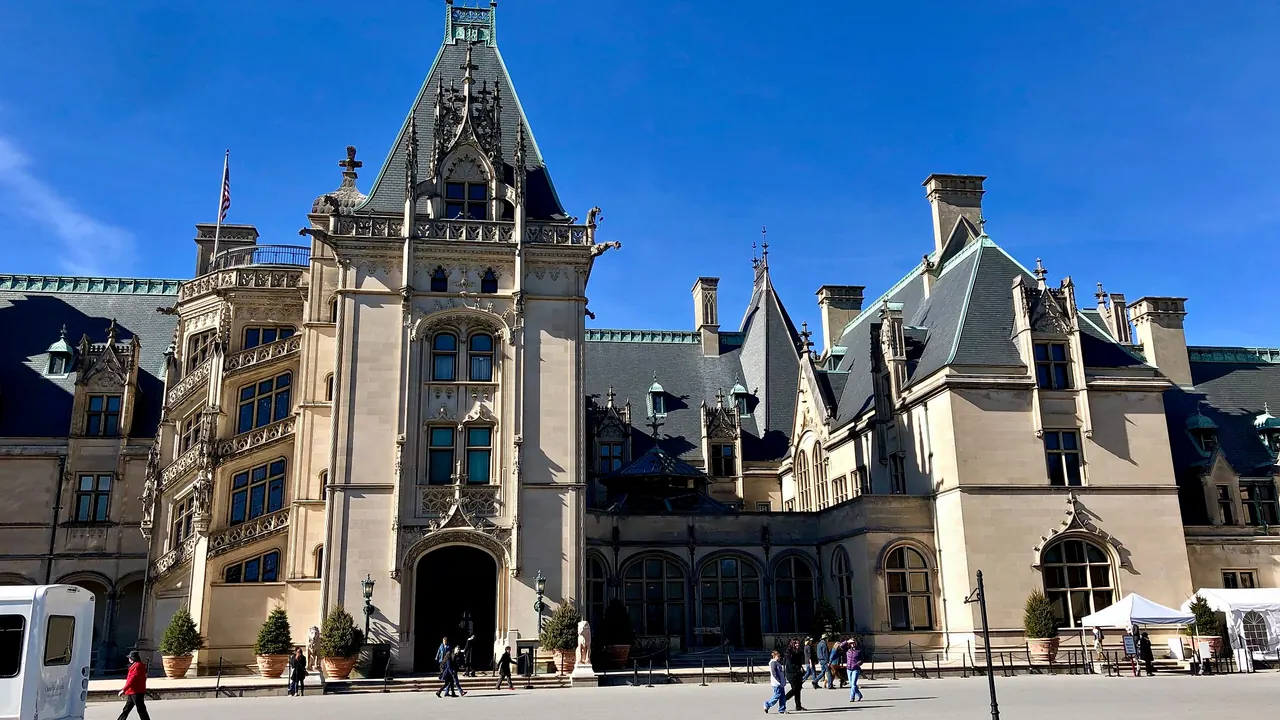
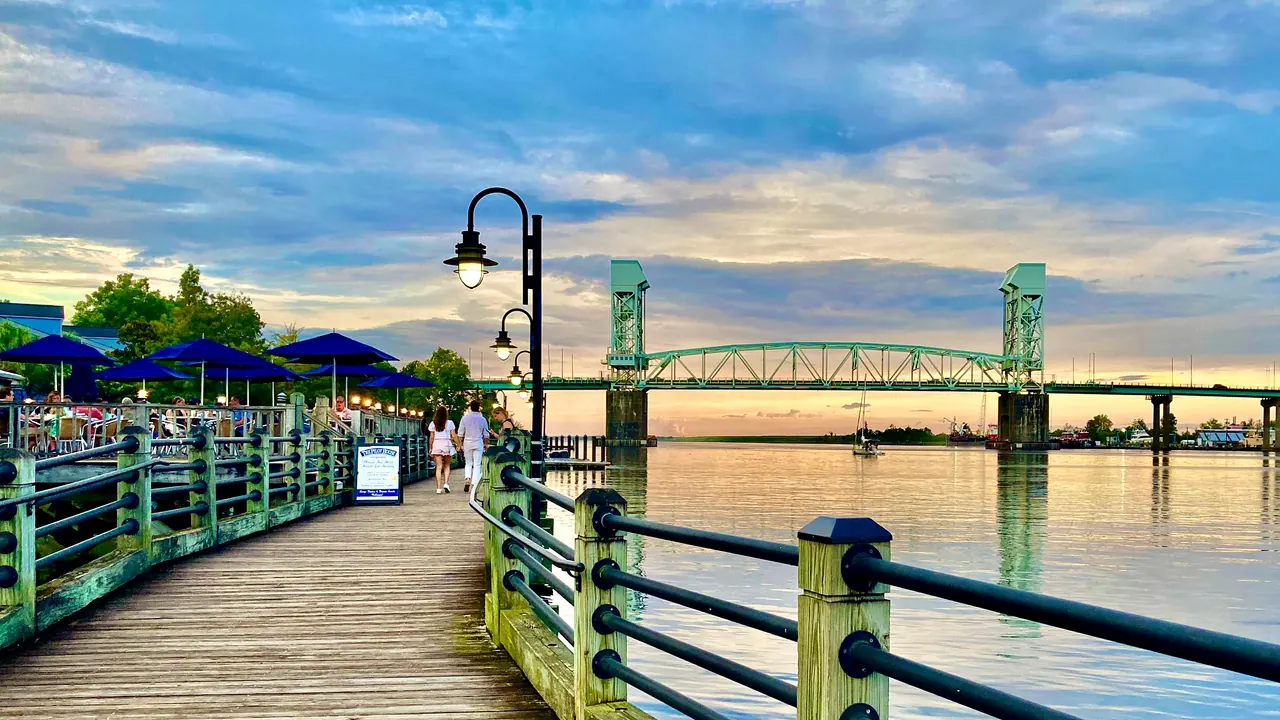
Photos: Asheville by Warren LeMay, CC0; Wilmington by Unexpected Snacks, CC BY-SA 4.0, cropped.
Asheville or Wilmington?
Our verdict in twelve categories, each scored against the same fixed benchmark cities, and the climate month by month, so you can choose for your trip.
Choose Asheville for
- nature and the outdoors
- wellness
- food and drink
Asheville is the pick for travellers who want mountains on the doorstep: ridge hikes, waterfalls, mountain biking and river trips by day, then brewery taprooms, Appalachian music and a good dinner in town. The Biltmore Estate, the Art Deco downtown and a craft scene worth buying from give it more to do than its size suggests. There is no sea anywhere near, though.
Choose Wilmington for
- beaches
- families
- prices
Wilmington makes more sense when the trip is built around sand and salt water. Three beach towns lie within half an hour, the Atlantic is warm enough to swim in all summer, and the aquarium, the battleship and the boardwalk rides keep children happy. It is a slightly cheaper and gentler base, with an old river town to stroll in the evening, but it has less to offer in food, the arts and sightseeing.
Scoreboard
Twelve categories on one fixed scale from 0 to 100. The shaded stretch is the gap between the two.
Your match
Pick a travel style or drag the sliders, and both match scores follow your weighting.
Wins on nature and the outdoors and wellness with your weighting.
Wins on beaches and families with your weighting.
What matters to you?
Category by category
What the scores mean for a trip.
Beaches & swimming
Asheville is a mountain city several hours from the sea, so there is no real comparison here. Swimming means cold plunges below waterfalls, the natural rock slide at Sliding Rock, tubing on the French Broad River or the small sandy beach at Lake Lure.
Wilmington has three beach towns to choose from: polished Wrightsville with its fishing pier, Carolina Beach with its boardwalk, and quieter Kure. You need a car and some patience with summer parking, and rip currents call for care. From late May to October, though, the sea is warm enough for proper beach days.
Food & drink
Asheville eats and drinks better. Its breweries are the main event, spread across downtown, the South Slope and West Asheville. The kitchens draw on Appalachian farm produce, from trout, heirloom corn and ramps to biscuits and barbecue, and the farmers' markets show where it comes from.
Wilmington's strength is the coast: shrimp, flounder and oysters, shrimp and grits, and the eastern style of vinegar-sauced whole-hog barbecue, with its own breweries in the north end of downtown. Beyond that it has fewer standout restaurants, and in both cities the international choice is thin.
Culture & sights
Asheville has the bigger single sight in the Biltmore Estate, a Gilded Age house with Olmsted gardens that fills a full day. Its downtown of Art Deco and Beaux-Arts buildings, from the domed City Hall to the Grove Arcade, adds a second strong reason to look around.
Wilmington's appeal is quieter. Its large historic district has antebellum houses under live oaks, the Bellamy Mansion tells the story of the old port's wealth and enslaved labour, and the Battleship North Carolina sits across the river. The museums are modest, and the old port suits an afternoon's stroll more than a full programme of sightseeing.
Nightlife
Neither is a late-night city, and the difference is one of mood. Asheville's evenings revolve around brewery taprooms and cocktail bars downtown and on the South Slope, with a looser local strip on Haywood Road, and most places wind down around midnight. Wilmington's Front Street fills with students and visitors on weekend nights, rooftop terraces look over the river, beach bars take over in summer, and bars stay open until 2am.
Nature & outdoors
This is Asheville's great advantage. The Blue Ridge Parkway, Pisgah National Forest, Mount Mitchell and the Great Smoky Mountains are all within about an hour. Between them they offer walks over grassy balds, waterfall trails, serious mountain biking and whitewater rafting.
Wilmington's outdoors are flat and watery. You can paddle out to undeveloped Masonboro Island, surf and sail off Wrightsville, fish from the piers or offshore, and walk the pine savanna of Carolina Beach State Park, where Venus flytraps grow wild. It suits birdwatchers and paddlers, but there is nothing to climb.
Day trips
Both offer pleasant small-town outings rather than famous destinations, and the difference is mountains against coast. From Asheville the drives lead to Brevard's waterfall country, Hendersonville and Flat Rock, Black Mountain and Cherokee, whose museum and Oconaluftee village give the best introduction to the region's first people. Greenville's riverside downtown is about an hour away.
From Wilmington the best day runs south past Fort Fisher and Brunswick Town to Southport, then by ferry to car-free Bald Head Island. New Bern, Beaufort and the resort strip at Myrtle Beach are further out.
Good for families
Wilmington is the easier family choice, mainly because of its beaches. Carolina Beach has a boardwalk with rides and arcades, and the aquarium at Fort Fisher, the battleship decks and the Children's Museum fill rainy days. Beach rental houses make self-catering simple.
Asheville suits active children who love animals and the outdoors. There are bears and red wolves at the Nature Center, Sliding Rock, river tubing, zip lines and the Biltmore farmyard. With no aquarium or theme park in town, and Dollywood two hours away, younger children may run out of things to do sooner.
Getting around
In both cities a car is close to essential, and walking works only in a compact centre. The difference is the terrain. Asheville's downtown is hilly in places, and beyond it the mountain roads are slow and winding, with heavy traffic on October weekends. Wilmington's historic district is flat and linked by the riverwalk, and the slow driving comes on the suburban roads out to the beaches on summer weekends.
Shopping & style
Asheville gives you a real reason to shop: the Appalachian craft tradition. Pottery, glass and weaving are sold in the River Arts District studios, the downtown galleries and the Folk Art Center, and there are independent shops in the Grove Arcade and around Lexington Avenue.
Wilmington's Front Street and the Cotton Exchange have pleasant boutiques, bookshops and antique dealers, and the beach towns sell surf wear. There is no local craft worth seeking out, though, and neither city has luxury brands.
Affordability
Wilmington is a little kinder on the budget. Off-season rooms in the city are reasonable and casual seafood and barbecue are fair value, though beachfront rentals cost more in summer.
Asheville's inns and hotels near downtown and Biltmore are expensive, especially on autumn weekends when the leaves turn, and a visit to Biltmore is a costly day out. The trails and the Parkway are free. In both cities you will need a hire car, and tax and tip are added to every meal.
Live music & performing arts
Asheville's music is the more distinctive draw. There are bluegrass and old-time jams, street buskers, touring Americana and indie acts most nights, and free summer fiddle music and clogging at Shindig on the Green. The Mountain Dance and Folk Festival has run since 1928.
Wilmington's centrepiece is Thalian Hall, a restored 19th-century opera house. Alongside it are a larger performing arts centre, a community symphony, summer stages by Greenfield Lake and the river, and long-standing jazz and blues festivals. It makes for a pleasant evening out, but the city has no musical tradition of its own to match Asheville's.
Wellness & relaxation
Asheville grew up as a place to recover in the mountain air. That shows in its yoga studios, retreats and alternative therapies and in the large spas of the hillside resort hotels. About forty minutes away, Hot Springs has mineral water piped into outdoor tubs beside the French Broad.
Wilmington has day spas, resort spas near the beaches and a slow waterfront pace, but no bathing tradition and no proper retreats. Out of season it is a restful place to stay, but not one to visit for treatments.
When should you go?
Pick your month. The climate figures are measured averages, not a forecast.
Asheville in July
Wilmington in July
Daytime high, °C
Rainfall in the month, mm
Where the figures come from
Asheville's temperatures are measured 50 km from the centre, at Asheville Regional Airport.
Asheville has no rain gauge within 25 km of the centre, so its rainfall comes from a gridded climate dataset read at the city rather than from a gauge further away.
Temperature and rainfall are climate normals, averaged over the years shown. Asheville: 1991-2020 (sunshine 1981-2010) normals, Asheville Regional Airport (50.3 km from centre). Wilmington: 1991-2020 normals, Wilmington / The Palms Mobile Home Park (5.3 km from centre).
Asheville's height keeps it milder than the coast. Summer highs sit around 28°C, warm but still comfortable for hiking and walking the streets, and spring and autumn are cooler and pleasant. October is the driest month and the time of the turning leaves. Winters are chilly, around 9°C by day. Rain falls fairly evenly through the year, so no month is reliably dry.
Wilmington is warmer and sunnier than Asheville all year, and sunniest from April to June. The sea is warm enough to swim in from late May into October, and it peaks at about 28°C in August. High summer is hot and sticky, though, and the rain builds from June to a peak in August and September, when more than 200mm falls each month. The best times to go are late spring and October, when the air is warm, the sun is out and the sea is still pleasant early in the month. Winter is mild enough for walking around town but too cool for the sea.
Which traveller are you?
For a beach and sun trip, Wilmington is the clear choice. Wrightsville, Carolina and Kure beaches are a short drive from downtown and the Atlantic stays warm all summer. In Asheville, swimming means chilly waterfall pools, river floats and a small lake beach.
On an outdoors trip, Asheville is the stronger base. The Blue Ridge Parkway, Pisgah and the Smokies offer ridge hikes, waterfalls, mountain biking and whitewater rafting. Wilmington's flat marshes and coast suit paddling, fishing and surfing, but there are no hills to climb.
For a relaxing and wellness trip, Asheville has the deeper tradition. It has a past as a health resort, a strong yoga and retreat culture, big hotel spas and riverside mineral tubs at Hot Springs. Wilmington is slow and easy-going but has only ordinary day and resort spas.
Before you go
| Measure | Asheville | Wilmington |
|---|---|---|
| Currency | US Dollar (USD) | US Dollar (USD) |
| Sockets | AB120 V, 60 Hz | AB120 V, 60 Hz |
| Driving side | Right | Right |
| Time zone | UTC-5, UTC-4 in summer | UTC-5, UTC-4 in summer |
| Emergency number | 911 | 911 |
| Elevation | 650 m | 9 m |
| Main airport | Asheville Regional Airport (AVL)18 km from centre27 non-stop destinations | Wilmington International Airport (ILM)5 km from centre25 non-stop destinations |
| Public holidays this year | 14 days | 14 days |
By the numbers
| Measure | Asheville | Wilmington |
|---|---|---|
| City population | 94,589 | 115,451 |
| People per km² | 796 | 839 |
| Museums within 10 km | 4 | 2 |
| UNESCO World Heritage sites within 50 km | 0 | 0 |
| Swim season, months above 21 °C | - | 6 months |
Where else could you go?
Every comparison below shares a destination with this one, so you can follow Asheville or Wilmington somewhere new.
- Gatlinburgvs Asheville
- Pigeon Forgevs Asheville
- Myrtle Beachvs Wilmington
- Charlestonvs Wilmington
- Atlantavs Asheville
- Virginia Beachvs Wilmington