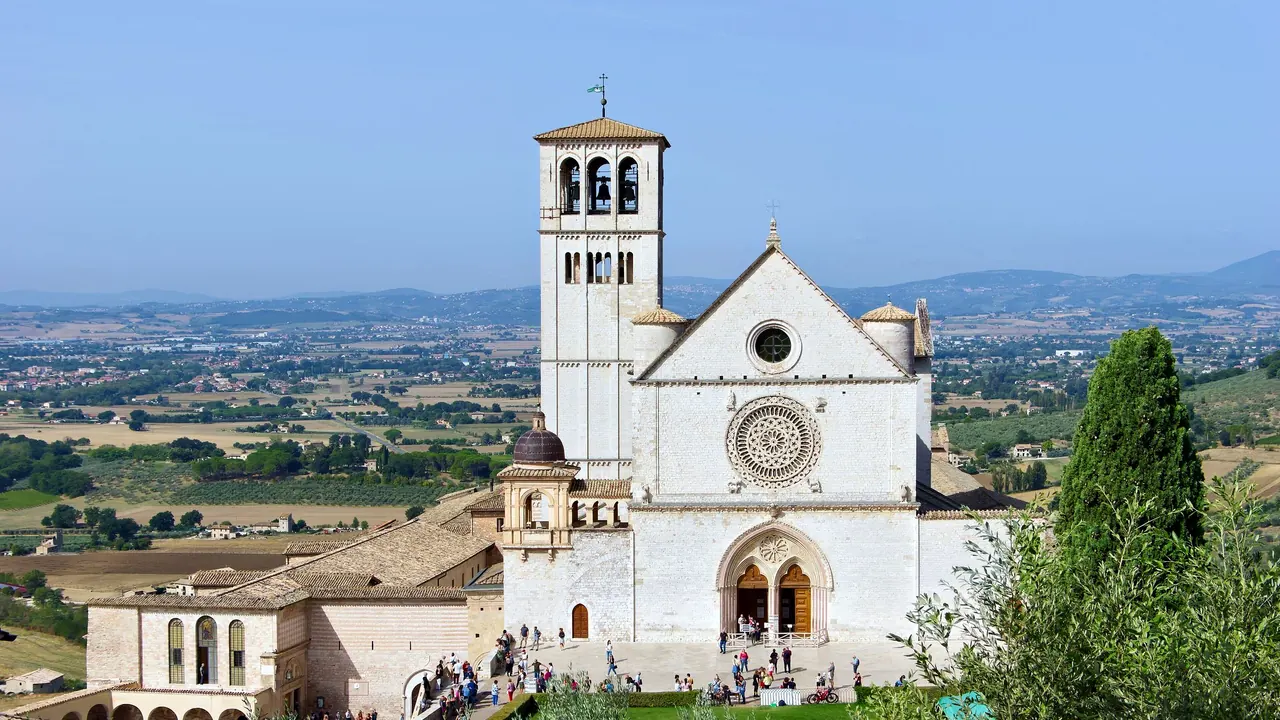
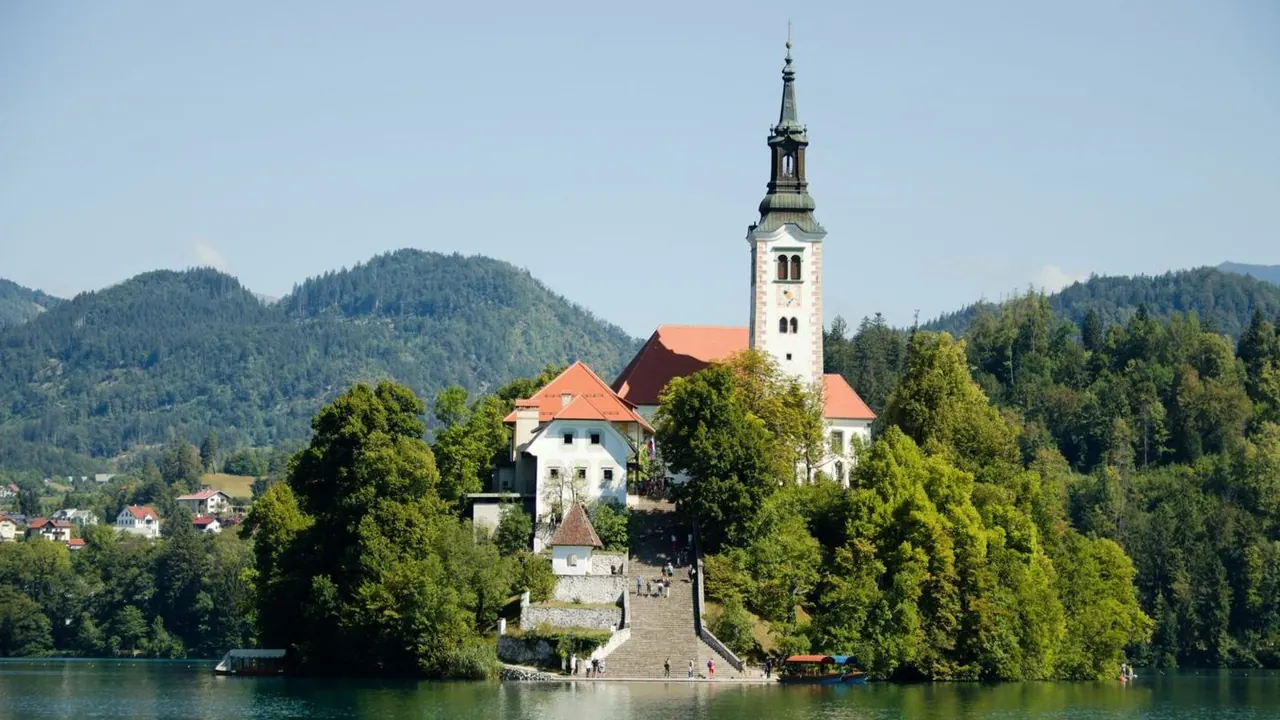
Photos: Assisi by Berthold Werner, CC BY-SA 4.0, cropped; Bled by Luka Peternel, CC BY-SA 4.0, cropped.
Assisi or Bled?
Our verdict in twelve categories, each scored against the same fixed benchmark cities, and the climate month by month, so you can choose for your trip.
Choose Assisi for
- culture and sights
- food and drink
- shopping
Assisi is for travellers who come for art, faith and Italian hill towns. The two-storey Basilica of San Francesco, with its Giotto and Cimabue frescoes, rewards slow looking. The town is also an excellent base for Umbria, with Spello, Perugia, Spoleto, Gubbio and Orvieto all within reach and truffle pasta and Sagrantino waiting at the end of the day. It costs less than Bled, and its evenings have the quiet of a pilgrimage town.
Choose Bled for
- beaches
- families
- nature and the outdoors
Choose Bled if the trip is mainly about being outdoors. It offers summer swimming in the lake, the Vintgar Gorge, Triglav National Park and short climbs to views over the island. That means far more walking, rowing and rafting than Monte Subasio can give, and much more for children to do. The sights and the food are thin, so it suits people who are happy with a castle, an island church and a cream slice in place of museums.
Scoreboard
Twelve categories on one fixed scale from 0 to 100. The shaded stretch is the gap between the two.
Your match
Pick a travel style or drag the sliders, and both match scores follow your weighting.
Too close to call, 1 point apart
Wins on culture and sights and food and drink with your weighting.
Wins on beaches and families with your weighting.
What matters to you?
Category by category
What the scores mean for a trip.
Beaches & swimming
Neither has a sea, but Bled has swimming right on the doorstep. In high summer Lake Bled warms to about 24°C, and you can swim from grassy lidos below the castle, from the shallow western end at Velika Zaka, or out to the island. Lake Bohinj adds colder water and wilder pebble shores.
From Assisi, the nearest swim is at Lake Trasimeno, about three quarters of an hour by car. Its small lido beaches at Passignano and Castiglione del Lago have shallow, cloudy water. Most visitors simply use the pool at an agriturismo.
Food & drink
Assisi eats noticeably better, thanks to Umbrian produce: strangozzi with black truffle, Castelluccio lentils, wild boar, torta al testo, olive oil from Monte Subasio and Sagrantino from Montefalco. The best meals are in trattorias on the side lanes and in valley agriturismi, not in the set-menu places near the basilica.
In Bled, eating out mostly means hotel dining rooms and pizzerias. A few inns serve trout, žlikrofi dumplings and buckwheat dishes, and kremšnita is eaten on the lake terraces. A traveller who cares about food will soon head for the farm inns in the valleys or for Ljubljana.
Culture & sights
This is where the two differ most. Assisi has a UNESCO-listed basilica with frescoes by Giotto, Cimabue, Simone Martini and Lorenzetti. Around it are a Roman temple on the main piazza, the striped church of Santa Chiara, the Rocca Maggiore castle and the tiny Porziuncola chapel below the walls, enough for two unhurried days.
Bled has a cliff-top castle with a small museum and a baroque island church reached by pletna boat. Both are memorable and take less than a day, and anyone wanting museums or architecture goes elsewhere.
Nightlife
Both towns go to bed early, and a real night out means travelling, to Perugia from Assisi or to Ljubljana from Bled. What differs is the kind of evening. In Assisi it is a long dinner, a glass of Sagrantino in a small wine bar and a walk through empty floodlit lanes; in Bled it is a hotel bar or pub, a drink on a lakeside terrace and a stroll along the lit shore.
Nature & outdoors
Bled is by far the stronger outdoor base, because the Julian Alps begin at the edge of the lake. Within easy reach are the walkways of the Vintgar Gorge, the high pastures of Pokljuka, hut-to-hut routes in Triglav National Park, rafting on the Sava and winter skiing at Vogel, with the Soča valley over the Vršič pass.
Assisi's countryside is gentler and more farmed. Monte Subasio rises straight behind the town, with a path past the Eremo delle Carceri to summit meadows. The olive-covered valley floor suits easy cycling to Spello and Bevagna, while the Valnerina and the Sibillini need a car and a full day.
Day trips
Both make good bases, but Assisi has more places worth a day close by. Spello is ten minutes away, Perugia and Spoleto are well under an hour, and Gubbio, Todi, Orvieto and Deruta are all within easy reach. Cortona and Montepulciano lie just over the Tuscan border, and each of these towns has its own cathedral, piazza or craft.
From Bled the trips are more varied but fewer. Ljubljana is under an hour away and medieval Radovljica is close by. The Postojna cave, the Venetian harbour of Piran and the Austrian lakes through the Karawanks tunnel each take a longer day.
Good for families
Bled is much easier with children. Swimming at shallow lidos, the toboggan run and rope park on Straža hill and the Vintgar walkways for older children fill several days, though a rainy day is hard to fill.
Assisi is safe and welcoming, but it is built for quiet reflection. Its churches need silence and its stepped streets defeat pushchairs. Older children enjoy the Rocca Maggiore, and most families stay at a valley agriturismo with a pool and visit the town in short trips.
Getting around
In both places a car opens up the surrounding area, but the two centres feel very different on foot. Assisi is small but steep, with stairs and slopes from the basilica up to Piazza del Comune. Its station is 4km below in Santa Maria degli Angeli, with regional trains along the valley.
In Bled the centre is flat and the sights sit along a level lakeshore path. Buses run to Ljubljana and Bohinj, and there are two stations nearby. Trailheads, Pokljuka and the Soča valley are poorly served, though, and summer parking by the lake is tight.
Shopping & style
Neither suits a shopping trip, but Assisi has more worth bringing home. Among the rosaries and Tau crosses are hand-woven linens with Assisi embroidery, Deruta ceramics, truffle products and Sagrantino. In Bled there are only a few lakeside stalls selling honey, lace and painted beehive panels, and anything more means a trip to Ljubljana.
Affordability
Assisi is the cheaper place to stay. The basilicas and most churches are free to enter, and convent guesthouses and valley agriturismi keep rooms affordable, except around Easter and the big feast days.
Bled charges for being Slovenia's best-known resort. Lakeside hotels and terraces add a premium for the view, and summer rooms are hard to find. The walking is free, but the island boat, castle and gorge all charge entry, so budget travellers usually sleep in Radovljica, Bohinj or at the lakeside campsite.
Live music & performing arts
Assisi has more live performance, though mostly of a sacred kind. There are organ recitals and choral concerts in the basilicas around feast days, the medieval costume and song of Calendimaggio in spring, and a theatre in Santa Maria degli Angeli for touring shows. Perugia, half an hour away, adds opera and its summer jazz festival.
Bled has no venue of its own. It offers only occasional summer concerts and folk evenings, so theatre or opera means going to Ljubljana.
Wellness & relaxation
Bled has the stronger claim as a place to rest. It began as Arnold Rikli's health resort in the nineteenth century, and several lakeside hotels run spas and indoor pools fed by mild springs, some open to day guests. Slow boat rides and early walks by still water add to the calm.
Assisi has few spas, mostly in country hotels. Its quiet is spiritual instead: convent retreats, a silent walk to the Eremo delle Carceri and the stillness of the lanes once the tour groups have gone.
When should you go?
Pick your month. The climate figures are measured averages, not a forecast.
Assisi in July
Bled in July
Daytime high, °C
Rainfall in the month, mm
Where the figures come from
Assisi's temperatures are measured 51 km from the centre, at Frontone.
Assisi has no rain gauge within 25 km of the centre, so its rainfall comes from a gridded climate dataset read at the city rather than from a gauge further away.
Bled's temperatures are measured 36 km from the centre, at Klagenfurt.
Bled has no rain gauge within 25 km of the centre, so its rainfall comes from a gridded climate dataset read at the city rather than from a gauge further away.
Temperature and rainfall are climate normals, averaged over the years shown. Assisi: 1991-2020 normals, Frontone (50.5 km from centre). Bled: 1991-2020 normals, Klagenfurt (35.5 km from centre).
Assisi is warmer and much drier for most of the year. May and September are the best months for its steep lanes and for walking on Monte Subasio. July and August reach about 30°C, which is too hot for afternoons on stone steps, although July is the driest month. Rain builds through autumn, and winters are cool and grey rather than harsh.
Bled is cooler and far wetter. Summer highs of around 27°C and the year's longest sunshine make late June to early September the time for lake swimming and high trails, but even then rain runs at about 150mm a month. Autumn is the wettest season, with over 200mm in November. Winter days hover near freezing, which suits skiing and sledging better than strolling.
Which traveller are you?
For a culture and arts trip, Assisi is the clear choice. The frescoed Basilica of San Francesco, Santa Chiara and the Temple of Minerva fill two calm days, and Perugia, Spoleto and Orvieto add more art nearby. Bled offers a castle, an island church and little more.
On an outdoors trip, Bled wins easily. From the village you can reach Triglav National Park, the Vintgar Gorge, Lake Bohinj and the Soča valley for hiking, rafting, canyoning and paragliding, with skiing in winter. Monte Subasio above Assisi gives lovely walks, but on a gentler scale.
On a family trip with children, Bled is much easier. The flat lake path suits pushchairs. Children can row out to the island and ring the bell, swim at shallow lidos and ride the summer toboggan. Assisi's stepped lanes and silent churches ask far more patience of young visitors.
Before you go
| Measure | Assisi | Bled |
|---|---|---|
| Official language | Italian | Slovene |
| Currency | Euro (EUR) | Euro (EUR) |
| Sockets | CFL230 V, 50 Hz | CF230 V, 50 Hz |
| Driving side | Right | Right |
| Time zone | UTC+1, UTC+2 in summer | UTC+1, UTC+2 in summer |
| Emergency number | 112 | 112 |
| Elevation | 424 m | 501 m |
| Main airport | Perugia San Francesco d'Assisi – Umbria International Airport (PEG)9 km from centre17 non-stop destinations | Ljubljana Jože Pučnik Airport (LJU)31 km from centre32 non-stop destinations |
| Public holidays this year | 13 days | 21 days |
By the numbers
| Measure | Assisi | Bled |
|---|---|---|
| City population | 27,605 | 4,969 |
| People per km² | 147 | 26 |
| Museums within 10 km | 14 | 4 |
| UNESCO World Heritage sites within 50 km | 2 | 3 |
Where else could you go?
Every comparison below shares a destination with this one, so you can follow Assisi or Bled somewhere new.