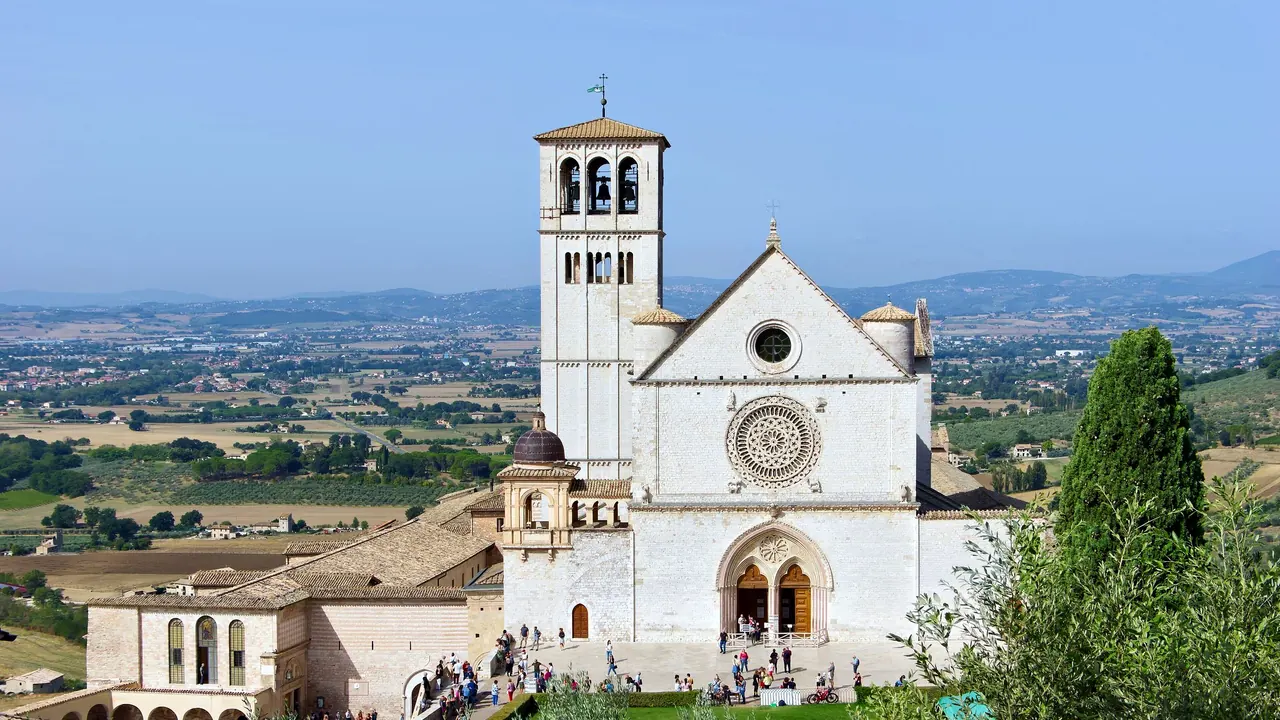
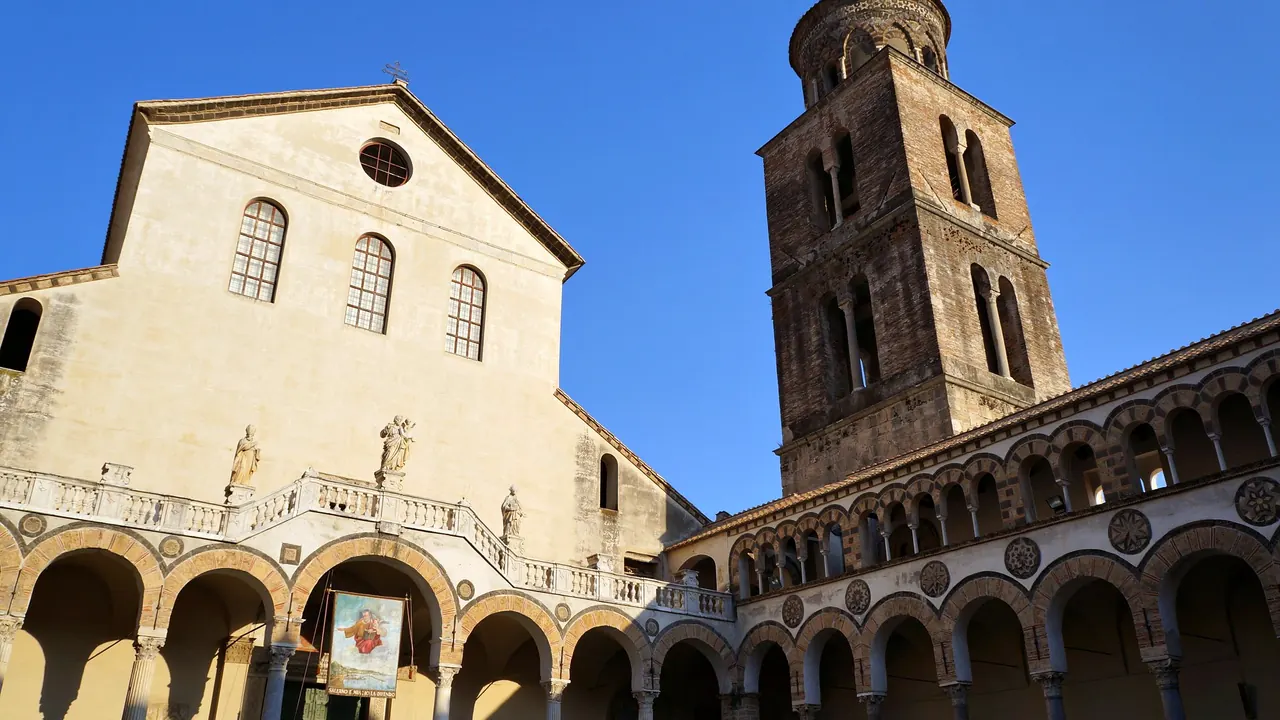
Photos: Assisi by Berthold Werner, CC BY-SA 4.0, cropped; Salerno by Leandro Neumann Ciuffo, CC BY 2.0, cropped.
Assisi or Salerno?
Our verdict in twelve categories, each scored against the same fixed benchmark cities, and the climate month by month, so you can choose for your trip.
Choose Assisi for
- culture and sights
- wellness
Assisi suits a slower, more reflective trip. Choose it if you are coming for the Basilica of San Francesco and its frescoes, want quiet evenings in pink stone lanes and plan to use the town as a base for Spello, Perugia, Spoleto and the other Umbrian hill towns. Walkers on Monte Subasio will love it too, as will anyone happy to give up beaches and nightlife in return for stillness.
Choose Salerno for
- beaches
- nightlife
- families
Salerno is the better pick for a summer trip that mixes the sea, good food and sightseeing. It has its own beaches and the long sands towards Paestum, and its old town is lively in the evenings. It also eats better, and the Amalfi Coast, Pompeii and Naples are all easy to reach by train or ferry. Families and travellers without a car will also find it the easier of the two.
Scoreboard
Twelve categories on one fixed scale from 0 to 100. The shaded stretch is the gap between the two.
Your match
Pick a travel style or drag the sliders, and both match scores follow your weighting.
Wins on culture and sights and wellness with your weighting.
Wins on beaches and nightlife with your weighting.
What matters to you?
Category by category
What the scores mean for a trip.
Beaches & swimming
There is no real contest here. Assisi is an inland hill town, and its nearest swimming is the shallow, slightly murky water of Lake Trasimeno, so for most visitors a pool at an agriturismo in the valley is the realistic option.
Salerno is on the sea itself. Its grey-sand city beaches are fine for a quick swim. The long sandy shore towards Paestum and the clear coves of the Amalfi Coast give it proper beach days from June to September.
Food & drink
Assisi serves honest Umbrian country food: strangozzi with black truffle, Castelluccio lentils, olive oil from Monte Subasio and Sagrantino from Montefalco. But the choice is narrow, and the restaurants near the basilica lean towards set menus for tour groups.
Salerno eats better and more widely. Seafood, wood-fired pizza and buffalo mozzarella made that day on the plain towards Paestum sit alongside the friggitorie and pastry shops of the old town. Eating out here is a daily local habit, not something arranged around visitors.
Culture & sights
Here Assisi is clearly ahead. The Basilica of San Francesco is two churches stacked on the hillside and covered in frescoes by Giotto, Cimabue, Simone Martini and Lorenzetti. It is one of the great monuments of Europe, and the Temple of Minerva, Santa Chiara and the tiny Porziuncola chapel fill out two unhurried days.
Salerno's sights are pleasant but on a smaller scale: the Norman cathedral with Saint Matthew's crypt, the medicinal Giardino della Minerva and the Arechi Castle. Its most important heritage lies outside the city, at Pompeii and Paestum.
Nightlife
An evening in Assisi means dinner, a glass of Sagrantino and a walk home through empty, floodlit lanes, and for anything more you go to Perugia, half an hour away. Salerno has a real if modest scene. On weekends and summer nights, young locals drink outside the wine bars around Largo Campo and Via dei Mercanti until late, though for clubbing you have to head along the coast or to Naples.
Nature & outdoors
Both have good walking, but Salerno's landscapes are more dramatic. Assisi has Monte Subasio right behind the town, with a path through holm-oak woods to the Eremo delle Carceri and open summit meadows above it. The gentle valley below is ideal for cycling between wine villages.
Salerno has the cliffs and terraced lemon groves of the Amalfi Coast, the Path of the Gods in the Lattari mountains, and the gorges and headlands of the Cilento. The sea adds boat trips, kayaking and sailing.
Day trips
Both towns are excellent bases, and the difference lies in what surrounds them. Around Assisi are Umbrian hill towns: Spello, Perugia, Spoleto, Gubbio, Todi and Orvieto. It is a run of medieval centres, and for the smaller ones a car is easier than the valley railway.
Salerno has the edge for variety and ease. Paestum's Greek temples and Pompeii are each about half an hour away by train, Naples is close by fast train, and in summer ferries run to Amalfi and Positano. Ancient sites, a big city and the coast all fit into a single stay.
Good for families
Assisi is safe and welcoming, but there is little for children beyond the Rocca Maggiore castle and a walk on Monte Subasio. Its frescoed churches need silence and its stepped streets are hard with a pushchair, so families usually stay at an agriturismo with a pool in the valley.
Salerno is the easier choice with children. Its flat, car-free seafront promenade has playgrounds and gelato, the sandy beaches south of the city are shallow, and the Luci d'Artista Christmas lights make winter visits fun.
Getting around
Assisi's centre is compact but steep, a twenty-minute walk of stairs and slopes. Its railway station is 4km below the old town in Santa Maria degli Angeli, and once you leave the valley railway a hire car is close to essential.
Salerno is flatter and better connected. The station, the shopping street, the seafront and the old town all lie in one walkable strip, and trains run direct to Naples, Pompeii and Paestum. In summer the ferries take care of the Amalfi Coast, so most visitors never need a car.
Shopping & style
Neither town is a shopping destination. Assisi's streets are full of rosaries and Franciscan souvenirs, and the buys worth looking for among them are embroidered Umbrian linens, Deruta ceramics and truffle products.
Salerno offers more. Corso Vittorio Emanuele is a proper pedestrian high street that is busiest at passeggiata time, and Vietri majolica, limoncello and Cetara's colatura are all close at hand.
Affordability
Costs are much the same in both, but you save in different ways. In Assisi the basilicas are free, convent guesthouses offer cheap, simple rooms, and prices rise mainly on feast days and in the restaurants next to the basilicas.
Salerno's savings come every day: pizzerias that charge local prices, cheap regional trains and rooms well below the prices of the Amalfi villages. Summer costs more, as ferries, lido sunbeds and entry to Pompeii and Paestum add up.
Live music & performing arts
Assisi's music is mostly sacred: organ recitals and choral concerts in the basilicas, plus the medieval song and processions of Calendimaggio each spring. For opera or jazz, people go to Perugia.
Salerno has more of its own. The gilded Teatro Verdi runs a proper season of opera, concerts and ballet. In summer, the Ravello Festival's concerts on cliff-top terraces above Amalfi make a memorable evening out.
Wellness & relaxation
Neither town has a bathing culture, and both offer calm that comes from their pace rather than from treatments. Assisi's quiet runs deeper: still mornings after the tour groups leave, retreats in convent guesthouses and silent walks to the Eremo delle Carceri.
Salerno's calm is seaside ease, with sunset walks along the palm-lined promenade and long lunches, though traffic on its main roads stops it feeling like a retreat. For thermal water, Contursi Terme is about an hour inland.
When should you go?
Pick your month. The climate figures are measured averages, not a forecast.
Assisi in July
Salerno in July
Daytime high, °C
Rainfall in the month, mm
Where the figures come from
Assisi's temperatures are measured 51 km from the centre, at Frontone.
Assisi has no rain gauge within 25 km of the centre, so its rainfall comes from a gridded climate dataset read at the city rather than from a gauge further away.
Salerno's temperatures are measured 71 km from the centre, at Grazzanise.
Salerno has no rain gauge within 25 km of the centre, so its rainfall comes from a gridded climate dataset read at the city rather than from a gauge further away.
Temperature and rainfall are climate normals, averaged over the years shown. Assisi: 1991-2020 normals, Frontone (50.5 km from centre). Salerno: 1991-2020 normals, Grazzanise (71.3 km from centre).
Assisi is at its best in spring and early autumn. Its inland hillside position makes winters cold, with January highs of around 7°C. By July the afternoons reach about 30°C, which makes the steep lanes and the climb up Monte Subasio hard work except early in the morning. May, June and September are the comfortable months for walking. The rain picks up from September, and late autumn is the wettest part of the year, with November the rainiest month.
Salerno is milder all year and made for summer. From June to August the days are long, hot and sunny, there is very little rain, and the sea warms to about 25°C, which is warm enough to swim every day. The water stays warm into September, but that is when the rain returns. Its winters are softer than Assisi's but much wetter, and November is the rainiest month at about 154mm. May and September suit a trip that combines the beach with sightseeing.
Which traveller are you?
For a culture and arts trip, Assisi is the stronger choice. The Basilica of San Francesco, with frescoes by Giotto, Cimabue and Simone Martini, is a monument of European importance, and Spello, Perugia and Orvieto add more art close by.
On a beach and sun trip, Salerno wins easily. Its city beaches are right there, the sandy shore towards Paestum is good for whole days by the sea, and the clear Amalfi coves are a ferry ride away. Assisi is two hours from either coast.
For a food and nightlife trip, Salerno is again the answer. Fresh buffalo mozzarella, Cetara's colatura and wood-fired pizza beat Assisi's narrower choice of restaurants, and the squares around Largo Campo stay busy late, while Assisi's lanes are empty by eleven.
Before you go
| Measure | Assisi | Salerno |
|---|---|---|
| Official language | Italian | Italian |
| Currency | Euro (EUR) | Euro (EUR) |
| Sockets | CFL230 V, 50 Hz | CFL230 V, 50 Hz |
| Driving side | Right | Right |
| Time zone | UTC+1, UTC+2 in summer | UTC+1, UTC+2 in summer |
| Emergency number | 112 | 112 |
| Elevation | 424 m | 4 m |
| Main airport | Perugia San Francesco d'Assisi – Umbria International Airport (PEG)9 km from centre17 non-stop destinations | Naples International Airport (NAP)46 km from centre131 non-stop destinations |
| Public holidays this year | 13 days | 13 days |
By the numbers
| Measure | Assisi | Salerno |
|---|---|---|
| City population | 27,605 | 127,186 |
| People per km² | 147 | 2,123 |
| Museums within 10 km | 14 | 9 |
| UNESCO World Heritage sites within 50 km | 2 | 5 |
| Swim season, months above 21 °C | - | 5 months |
Where else could you go?
Every comparison below shares a destination with this one, so you can follow Assisi or Salerno somewhere new.
- Amalfivs Salerno
- Positanovs Salerno
- Sorrentovs Salerno
- Naplesvs Salerno
- San Marinovs Assisi
- Sienavs Assisi