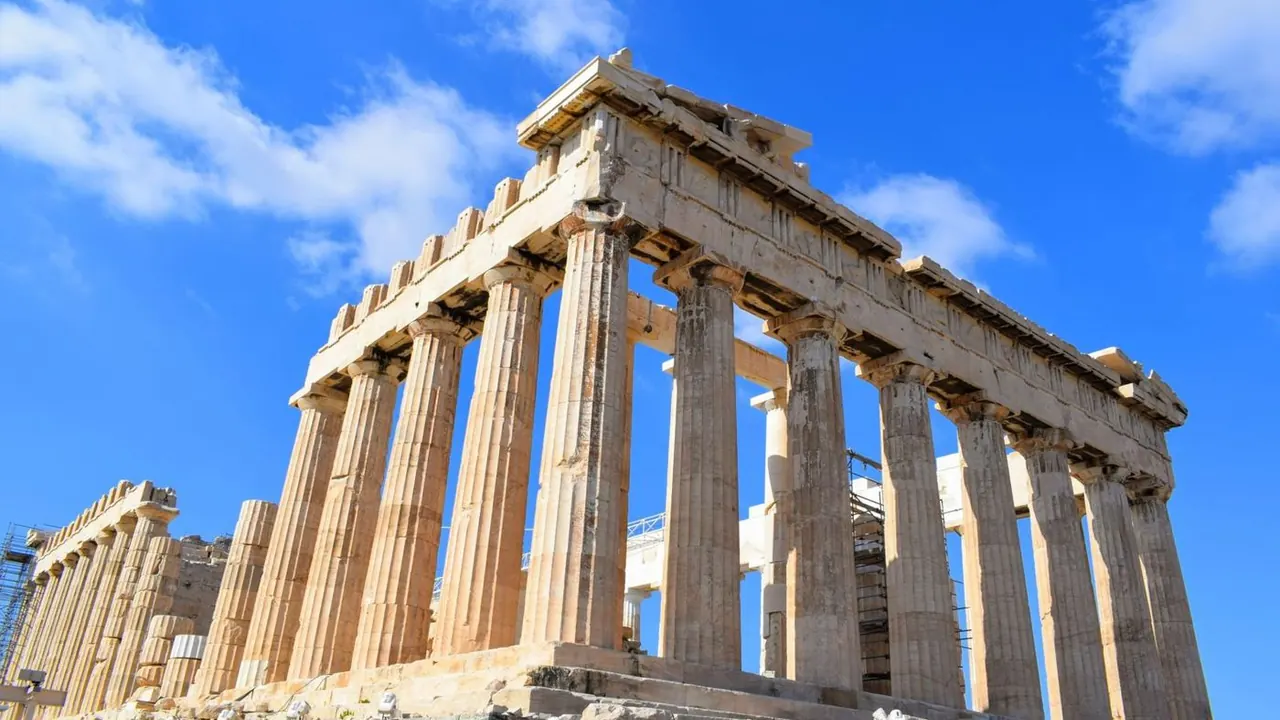
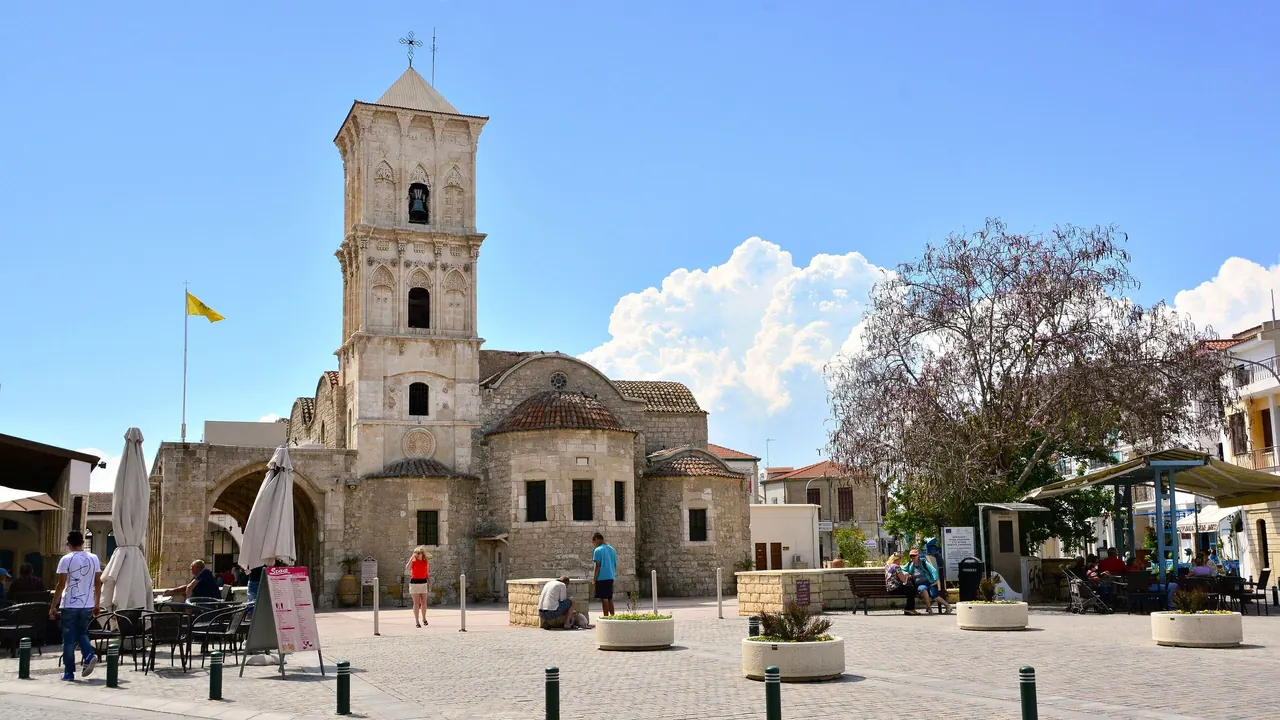
Photos: Athens by Ranjeet Kumar Singh, Pexels License; Larnaca by Mike McBey, CC BY 2.0, cropped.
Athens or Larnaca?
Our verdict in twelve categories, each scored against the same fixed benchmark cities, and the climate month by month, so you can choose for your trip.
Choose Athens for
- culture and sights
- nightlife
- live music and the arts
Athens is the better choice for a trip built around the ancient world and long evenings out. The Acropolis, the Agora and the great museums lie within a walk of one another, neighbourhood tavernas in Psyrri and Pangrati feed you well, and the bars run until dawn. Delphi, Mycenae and the Saronic islands are all within a day. The beaches are a pleasant extra rather than the reason to come.
Choose Larnaca for
- beaches
- families
If you want a slow seaside stay where the beach shapes the day, pick Larnaca. Finikoudes lies right in front of the old town with shallow, calm water, the sea stays warm for longer, and the small, flat centre and nearby airport make it easy with children. The town's own sights fill a day or two, so anyone wanting more relies on the rest of Cyprus, ideally with a hire car.
Scoreboard
Twelve categories on one fixed scale from 0 to 100. The shaded stretch is the gap between the two.
Your match
Pick a travel style or drag the sliders, and both match scores follow your weighting.
Wins on culture and sights and nightlife with your weighting.
Wins on beaches and families with your weighting.
What matters to you?
Category by category
What the scores mean for a trip.
Beaches & swimming
In Larnaca the beach comes first. Finikoudes runs right along the old town, its fine grey sand shelving so gently that you can wade a long way out, and Mackenzie Beach adds beach bars. The sea is a degree or two warmer than near Athens and swimmable later into the autumn, and Nissi Beach and Fig Tree Bay are within an hour for clearer water.
Athens has more coast than people expect, but it is something you add to a city stay. The Riviera from Faliro to Vouliagmeni means a tram or bus ride, the better coves lie farther south, and much of the shore is given over to lidos with rocky free stretches in between. A ferry to Aegina or Agistri gives a calmer swim.
Food & drink
Athens offers far more to eat. Tavernas and mezedopoleia in Psyrri, Koukaki, Pangrati and Exarchia serve grilled octopus, fava and slow-cooked dishes with assyrtiko or agiorgitiko. The Varvakios market shows the raw ingredients, and there is a serious modern Greek fine-dining scene if you want it.
Larnaca does one thing well: a long Cypriot meze of halloumi, sheftalia and kleftiko, plus fresh fish near the old harbour and in village tavernas inland. Beyond that the choice is narrow, and the promenade is mostly international menus aimed at visitors.
Culture & sights
The two are not in the same league here. Athens has the Parthenon above the city, the Ancient Agora, the Kerameikos and the Temple of Olympian Zeus along one walkable promenade. The Acropolis Museum, the National Archaeological Museum, the Benaki and the Cycladic collection could fill a week on their own.
Larnaca has a handful of rewarding places: the ninth-century Church of Saint Lazarus, Hala Sultan Tekke beside the Salt Lake, the Phoenician remains of Kition and the pottery lanes of Skala. They make a pleasant day or two rather than the reason for the trip.
Nightlife
Athens is a proper late-night city. Dinner starts after nine, Psyrri and Monastiraki fill with bars and Acropolis-view rooftops, and Gazi has the bigger clubs and a long-established gay scene. In summer the clubs move to open-air venues on the coast, and bouzouki nightclubs keep going until morning.
Larnaca's evenings are gentler: cocktail bars and cafés along Finikoudes, and DJs at the Mackenzie beach bars in summer. The town goes quiet in winter, and anyone after real clubbing heads forty minutes east to Ayia Napa.
Nature & outdoors
Athens has the better outdoors close at hand. Lycabettus and Filopappou give quick views, Hymettus has pine trails, and Mount Parnitha, an hour away, offers fir forest and proper hiking. Sailing, windsurfing and day charters on the Saronic Gulf are easy to arrange.
Larnaca's surroundings are flatter and drier, but they have their own appeal: flamingos on the Salt Lake in winter and the Zenobia, one of the world's best-known wreck dives, just offshore. Cape Greco's sea caves and the Troodos forests take an hour or more by car. In both places summer hiking is a dawn affair.
Day trips
From Athens you can reach the headline sites of ancient Greece in a day: Sounion at sunset, Mycenae, Epidaurus and Nafplio across the Corinth Canal, and Delphi on Parnassos. Ferries from Piraeus add Aegina, Poros and car-free Hydra.
Larnaca's central position puts much of Cyprus within reach. Divided Nicosia is forty minutes away, Lefkara and Neolithic Choirokoitia are closer still, and Kourion, Paphos and Famagusta's walled town are further out. The list is shorter and less famous, and the bus network is thin, so these trips mostly need a car.
Good for families
With children the two come out about even, but for different reasons. Larnaca is simply easier: a small, calm town, a beach where toddlers can paddle safely, playgrounds on the promenade and an airport minutes away. The trade-off is that there is little made for children in town beyond the Salt Lake flamingos and a camel park.
Athens has more to fill the days, with the zoo, the planetarium, Hellenic Cosmos and the park at the Stavros Niarchos centre. However, broken pavements, steep steps and a hot Acropolis climb make it harder work with a pushchair or younger children.
Getting around
Athens is the easier city to get around without a car. The metro runs from the airport and Piraeus into a compact centre, the tram reaches the coast, and taxis are plentiful. The catches are cracked, cluttered pavements, hills and heavy traffic.
Larnaca's flat little centre is a pleasure on foot, and the airport is a short ride away. Once you leave town, though, Cyprus has no railway and few useful buses, so most visitors hire a car and get used to driving on the left.
Shopping & style
Athens gives shoppers more range: chain fashion on Ermou, Greek designers and labels in Kolonaki, and the Monastiraki flea market for antiques and records at weekends. The best souvenirs are leather sandals, herbs and honey from around Athinas, and jewellery based on ancient designs.
Larnaca's high streets and edge-of-town mall are modest. Its better buys are crafts: Lefkara lace and silver filigree, Skala pottery and a bottle of Commandaria. Serious fashion means a trip to Nicosia or Limassol.
Affordability
Overall costs are similar, but the money goes in different places. In Athens, cheap souvlaki and transport are offset by entry fees at the archaeological sites and expensive Acropolis-view hotels in summer, so staying in Koukaki or Pangrati helps.
Larnaca's sights cost little or nothing, and meze a few streets back from the promenade is generous for the price. A rental car is the big extra. Winter rooms are much cheaper, which matters more here because Larnaca's winter is mild enough to enjoy.
Live music & performing arts
Athens has the stronger programme by a wide margin. Summer festival nights bring opera and ancient drama to the Odeon of Herodes Atticus and the theatre at Epidaurus. The Greek National Opera and the Megaron run all year, and late rebetiko sessions in small tavernas are the city's own music.
Larnaca offers Greek-language plays at the municipal theatre, open-air summer festival evenings at the fort and the odd bouzouki night in a taverna. For anything larger, people go to Nicosia.
Wellness & relaxation
Neither city is a spa destination, and they are much alike here. Athens has one real draw in Lake Vouliagmeni, spring-fed and mild all year beneath its limestone cliff, but the centre itself is loud and hot.
Larnaca has no bathing tradition, and its spas are in the resort hotels east of town. What it offers instead is an unhurried pace: seafront coffees, evening strolls and quiet winter sun.
When should you go?
Pick your month. The climate figures are measured averages, not a forecast.
Athens in July
Larnaca in July
Daytime high, °C
Rainfall in the month, mm
Temperature and rainfall are climate normals, averaged over the years shown. Athens: 1991-2020 normals, Athens / Athenai / Pláka (2.2 km from centre). Larnaca: 1991-2020 normals, Larnaca Airport (3.7 km from centre).
Both cities have long, dry summers, but Athens runs hotter and Larnaca stays milder at either end of the year. In Athens, July and August reach about 35°C, which makes climbing the Acropolis or walking between sites hard work around midday. May, June, September and early October are the best months for combining sightseeing with a swim, when the sea is warm and the streets are bearable. Winter is cool, with highs near 13°C in January, and the wettest weather comes in November and December.
Larnaca is the warmer and sunnier place outside summer. Winter days still reach about 17°C with plenty of sun, though December and January bring the heaviest rain, close to 98mm in December. The sea peaks around 27°C in August and September and is still warm enough for swimming in November, so the beach season runs a good month longer than in Athens. Midsummer is very hot in both cities.
Which traveller are you?
On a culture and arts trip, Athens wins easily. The Acropolis, the Acropolis Museum and the National Archaeological Museum are world-class, summer brings performances at the Odeon of Herodes Atticus, and Delphi and Epidaurus are day trips. Larnaca's sights fill a day or two.
For a beach and sun trip, Larnaca is the better base. The town beach starts at the promenade, the water is shallow and calm, the sea is warmer and swimmable into November, and Ayia Napa's white sand is within an hour.
On a food and nightlife trip, choose Athens. Tavernas and mezedopoleia in Psyrri, Koukaki and Pangrati, good Greek wine and late nights in Gazi or on Monastiraki rooftops beat Larnaca's meze and quiet promenade bars, where serious clubbing means going to Ayia Napa.
Before you go
| Measure | Athens | Larnaca |
|---|---|---|
| Official language | Greek | Turkish, Greek, Modern Greek |
| Currency | Euro (EUR) | Euro (EUR) |
| Sockets | CF230 V, 50 Hz | G240 V, 50 Hz |
| Driving side | Right | Left |
| Time zone | UTC+2, UTC+3 in summer | UTC+2, UTC+3 in summer |
| Emergency number | 112 | 112 |
| Elevation | 74 m | 26 m |
| Main airport | Athens Eleftherios Venizelos International Airport (ATH)20 km from centre173 non-stop destinations | Larnaca International Airport (LCA)5 km from centre112 non-stop destinations |
| Public holidays this year | 15 days | 17 days |
By the numbers
| Measure | Athens | Larnaca |
|---|---|---|
| City population | 643,452 | 59,200 |
| People per km² | 16,499 | 1,868 |
| Museums within 10 km | 88 | 4 |
| UNESCO World Heritage sites within 50 km | 2 | 2 |
| Swim season, months above 21 °C | 5 months | 6 months |
Where else could you go?
Every comparison below shares a destination with this one, so you can follow Athens or Larnaca somewhere new.
- Limassolvs Larnaca
- Nafpliovs Athens
- Paphosvs Larnaca
- Alanyavs Larnaca
- Izmirvs Athens
- Thessalonikivs Athens