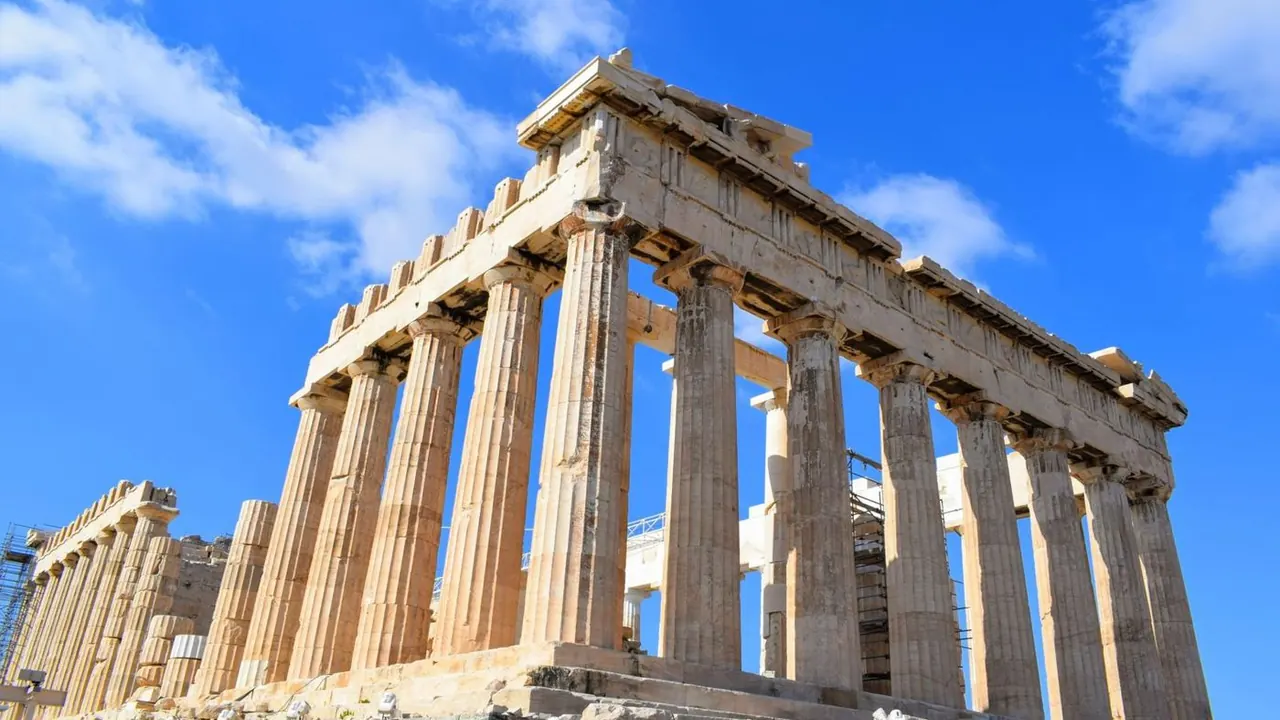
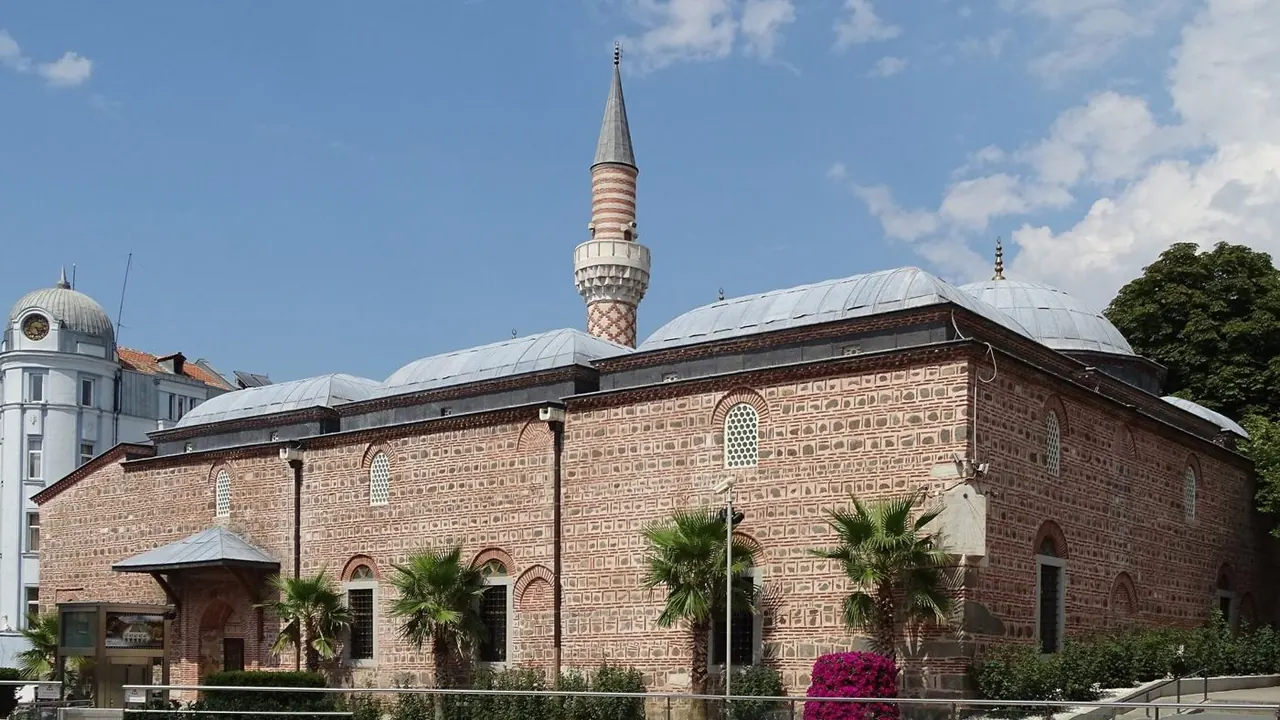
Photos: Athens by Ranjeet Kumar Singh, Pexels License; Plovdiv by Ad Meskens, CC BY-SA 4.0, cropped.
Athens or Plovdiv?
Our verdict in twelve categories, each scored against the same fixed benchmark cities, and the climate month by month, so you can choose for your trip.
Choose Athens for
- beaches
- nightlife
- food and drink
Athens is the better pick for a trip that wants a lot, all at full scale. You get the Acropolis and two of the world's great museums of ancient art, late taverna dinners and bars that run until dawn, a sea coast you can reach by tram, and day trips to Delphi, Mycenae and the Saronic islands. It suits a first visit to Greece, friends and couples who eat and go out late, and anyone who wants to swim on a city break.
Choose Plovdiv for
- prices
- nature and the outdoors
- wellness
Choose Plovdiv for a smaller, slower and much cheaper city. A Roman theatre, painted Revival houses and the wine bars of Kapana can all be enjoyed on foot in two or three days. It rewards travellers watching their budget, wine lovers curious about Thracian reds, and drivers happy to explore the Rhodope foothills. Expect no sea and a far quieter night out.
Scoreboard
Twelve categories on one fixed scale from 0 to 100. The shaded stretch is the gap between the two.
Your match
Pick a travel style or drag the sliders, and both match scores follow your weighting.
Wins on beaches and nightlife with your weighting.
Wins on prices and nature and the outdoors with your weighting.
What matters to you?
Category by category
What the scores mean for a trip.
Beaches & swimming
This is the widest gap between the two cities. Athens has a real coastline on the Saronic Gulf. The Riviera runs from Faliro down to Vouliagmeni and Varkiza, and the water gets clearer the farther south you go. Aegina and Agistri are a short ferry ride away. It is a city with beaches rather than a beach vacation, but you can swim most afternoons from late May to October.
Plovdiv is about 250km from the Black Sea, so the sea is a separate trip of its own. On hot days you would join the locals at outdoor pools, the rowing canal or the reservoirs up in the Rhodopes.
Food & drink
Athens has much more range and depth. Its tavernas and mezedopoleia, the Varvakios market and the good-value cooking in Koukaki, Pangrati and Exarchia sit alongside a serious modern Greek fine-dining scene. Greek wine from assyrtiko to xinomavro comes with every meal.
Plovdiv keeps to hearty Bulgarian home cooking: shopska salad, kebapche and clay-pot kavarma in Old Town mehanas, with modern bistros in Kapana. Its strong point is Thracian Valley wine, especially Mavrud and Rubin reds, but there is little beyond Balkan cooking and almost no fine dining.
Culture & sights
Both are ancient cities with Roman stones in their streets, but Athens works on another scale. The Acropolis, the Ancient Agora and the Kerameikos line the archaeological promenade, and the Acropolis Museum and the National Archaeological Museum could fill several days on their own.
Plovdiv's Roman theatre, the stadium beneath the main street and the mosaics in the basilicas are a fine set of sights. Its Old Town of painted National Revival houses also keeps more of its historic streets than the postwar blocks of Athens. Two or three days covers it comfortably.
Nightlife
Athens goes out much later and harder. There are rooftop bars facing the lit Acropolis in Psyrri and Monastiraki, clubs and a long-standing gay scene in Gazi, open-air clubs on the coast in summer and bouzouki nights that last until morning.
Plovdiv's evenings fill the pavements of Kapana with craft beer, wine and cocktails. It is livelier in term time and on summer weekends, but with only a handful of clubs it suits a long glass of local red better than a night of dancing.
Nature & outdoors
The two are roughly even here, but the landscapes are quite different. Athens has dry limestone hills, with Lycabettus and Filopappou for city views and the fir forests of Parnitha an hour north. Its real outdoor asset is the sea: sailing, paddleboarding and day charters on the Saronic Gulf.
Plovdiv looks to greener mountains. The forested gorges of the Rhodopes begin about 20km south, the higher Central Balkan range is an hour north, and Pamporovo has skiing in winter. In both places a car helps, and spring and autumn are the seasons for walking.
Day trips
Both make good bases, but the Athens list is the more famous. It includes Delphi, Mycenae, Epidaurus and Nafplio in the Argolid, sunset at Sounion, and ferries to Hydra, Poros and Aegina, each with a real harbour town.
Plovdiv's circuit is quieter and more Bulgarian: Bachkovo Monastery, the Thracian tombs and temples at Kazanlak and Starosel, the Valley of Roses, Koprivshtitsa and Sofia. Buses and trains there are slow, so a hire car matters even more than it does in Attica.
Good for families
Athens has more to fill a family week. There are calm Riviera beaches for small children, the Attica Zoological Park, the planetarium, Hellenic Cosmos and the park and lake at the Stavros Niarchos Foundation Cultural Centre. For older children who know the myths, the ancient sites come alive.
Plovdiv is relaxed, and its long car-free street is easy with a pushchair. Beyond the singing fountains, Lauta park and the rowing canal, though, little is made for children. Both cities are hard going with little ones in midsummer.
Getting around
Both centres are compact and best seen on foot. What differs is the help you get beyond them. Athens has a metro from the airport and Piraeus and a tram to the coast, but walking there means broken, cluttered pavements, hills and heavy traffic.
Plovdiv has no metro and its buses are of little use to a visitor, but it hardly needs them. One long car-free street links the station side, the Roman ruins, Kapana and the foot of the Old Town, where slippery cobbles are the main obstacle.
Shopping & style
Athens has more to browse. There is chain fashion on Ermou, designer labels and Greek designers in Kolonaki, and the Monastiraki flea market at weekends, along with leather sandals, olive oil and jewellery based on ancient designs. Plovdiv is a smaller affair: high-street chains, design studios and craft shops in Kapana, and rose oil cosmetics and embroidered textiles as the typical things to take home. Neither offers real luxury shopping.
Affordability
Plovdiv is far easier on the wallet. Guesthouses near the Old Town, mehana meals with local wine and taxis all cost little. Many of the best moments, such as the ruins along the main street and evenings in Kapana, are free.
Athens is a little cheaper than most Western European capitals, and souvlaki and the metro are good value. Central hotels in summer and the entry fees at the archaeological sites add up, though, so it is a mid-priced city rather than a budget one.
Live music & performing arts
A summer evening in Athens can mean ancient drama, opera or dance in the Odeon of Herodes Atticus, with the Acropolis rising behind the stage, or a tragedy in the theatre at Epidaurus itself. In winter, the Greek National Opera and the Megaron keep up a solid classical programme. Late at night in small tavernas you can still hear rebetiko, the bouzouki blues of Piraeus. The large spoken theatre scene is almost all in Greek.
Plovdiv's Roman theatre also hosts opera and concerts on summer nights, on the hillside above the rooftops, and the city has a long-running jazz festival. For the rest of the year its opera company, philharmonic and drama theatre give a modest local programme, mostly in Bulgarian. A visit is worth timing for the summer season.
Wellness & relaxation
Neither city is a place for a spa break, and they offer different kinds of rest. Athens has Lake Vouliagmeni, a lake fed by mineral springs that is mild enough to bathe in all year, but the centre itself is loud and hot. Plovdiv's calm lies in its pace, the local habit of aylyak and long coffees under the plane trees. For proper mineral pools you drive out to Hisarya or Velingrad.
When should you go?
Pick your month. The climate figures are measured averages, not a forecast.
Athens in July
Plovdiv in July
Daytime high, °C
Rainfall in the month, mm
Where the figures come from
Plovdiv has no rain gauge within 25 km of the centre, so its rainfall comes from a gridded climate dataset read at the city rather than from a gauge further away.
Plovdiv's sunshine is measured 75 km from the centre, at Kurdjali.
Temperature and rainfall are climate normals, averaged over the years shown. Athens: 1991-2020 normals, Athens / Athenai / Pláka (2.2 km from centre). Plovdiv: 1997-2020 (sunshine 1991-2020, rainfall 1991-2020) normals, Plovdiv (1.2 km from centre).
Athens has a long warm season. The sea is warm enough to swim from late May into October and reaches about 26°C in August. From May to September there is hardly any rain and the days are long and very sunny. The catch is July and August, when highs of around 35°C make midday sightseeing punishing. April, May and October are the best months for walking the ruins. The rain comes in November and peaks in December at about 86mm, but winters stay mild.
Plovdiv has a continental year and no sea to soften it. Summers are hot, with highs of about 31°C in July and August, a little easier than Athens for walking the streets. Winters are much colder, with January highs around 5°C and noticeably less sunshine. Rain falls fairly evenly all year rather than mostly in winter, and May and December are among the wettest months. Late April to early June and September to October are the most comfortable times for both the town and the hills.
Which traveller are you?
On a beach and sun trip, Athens is the only real choice of the two. The tram and coastal buses run to the Riviera coves at Glyfada and Vouliagmeni, and ferries add swims off Aegina. Landlocked Plovdiv has only pools and a rowing canal.
For a food and nightlife trip, Athens wins clearly. Taverna dinners after nine, meze with tsipouro, and bars in Psyrri and Gazi that run until dawn go well beyond Plovdiv's evenings. Those are pleasant but small, and centred on Kapana's wine bars.
On a trip on a tight budget, Plovdiv makes your money go much further. Old Town guesthouses, mehana meals with local wine and taxis all cost little, and the ruins along the main street are free. Central Athens in summer charges what a typical European capital does.
Before you go
| Measure | Athens | Plovdiv |
|---|---|---|
| Official language | Greek | Bulgarian |
| Currency | Euro (EUR) | Euro (EUR) |
| Sockets | CF230 V, 50 Hz | CF230 V, 50 Hz |
| Driving side | Right | Right |
| Time zone | UTC+2, UTC+3 in summer | UTC+2, UTC+3 in summer |
| Emergency number | 112 | 112 |
| Elevation | 74 m | 172 m |
| Main airport | Athens Eleftherios Venizelos International Airport (ATH)20 km from centre173 non-stop destinations | Plovdiv International Airport (PDV)12 km from centre8 non-stop destinations |
| Public holidays this year | 15 days | 15 days |
By the numbers
| Measure | Athens | Plovdiv |
|---|---|---|
| City population | 643,452 | 333,994 |
| People per km² | 16,499 | 3,274 |
| Museums within 10 km | 88 | 18 |
| UNESCO World Heritage sites within 50 km | 2 | 0 |
| Swim season, months above 21 °C | 5 months | - |
Where else could you go?
Every comparison below shares a destination with this one, so you can follow Athens or Plovdiv somewhere new.