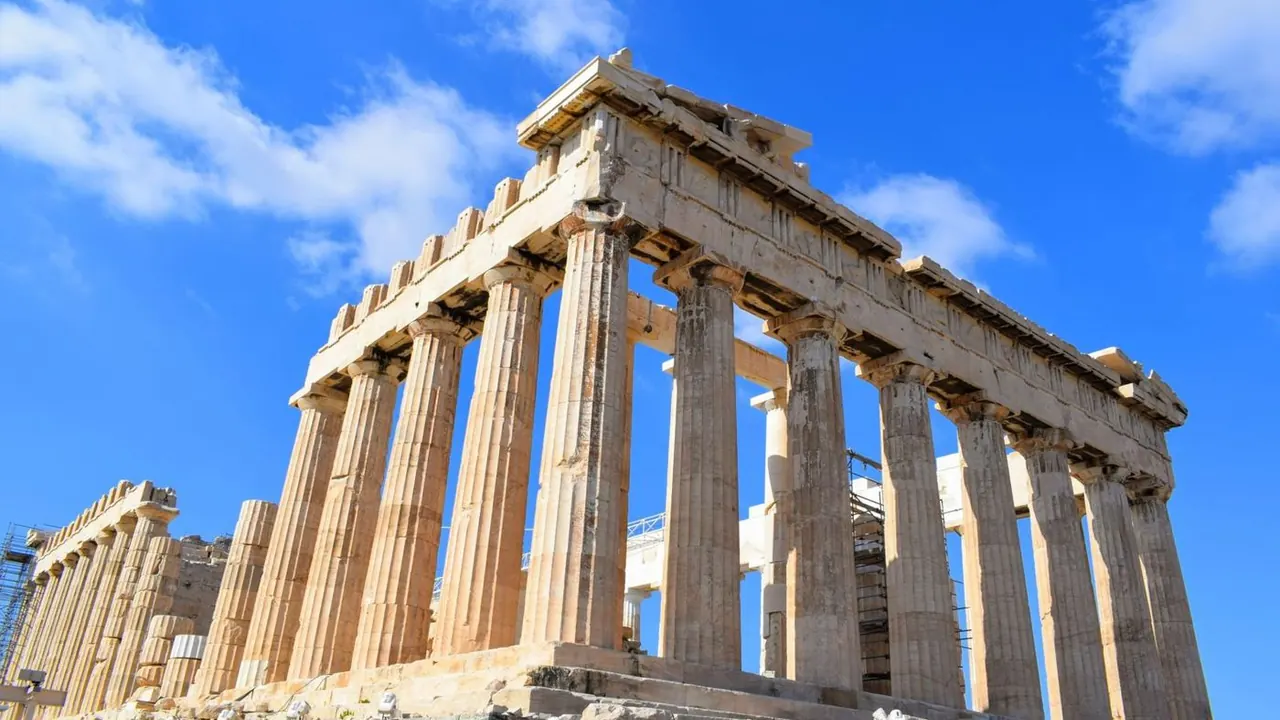
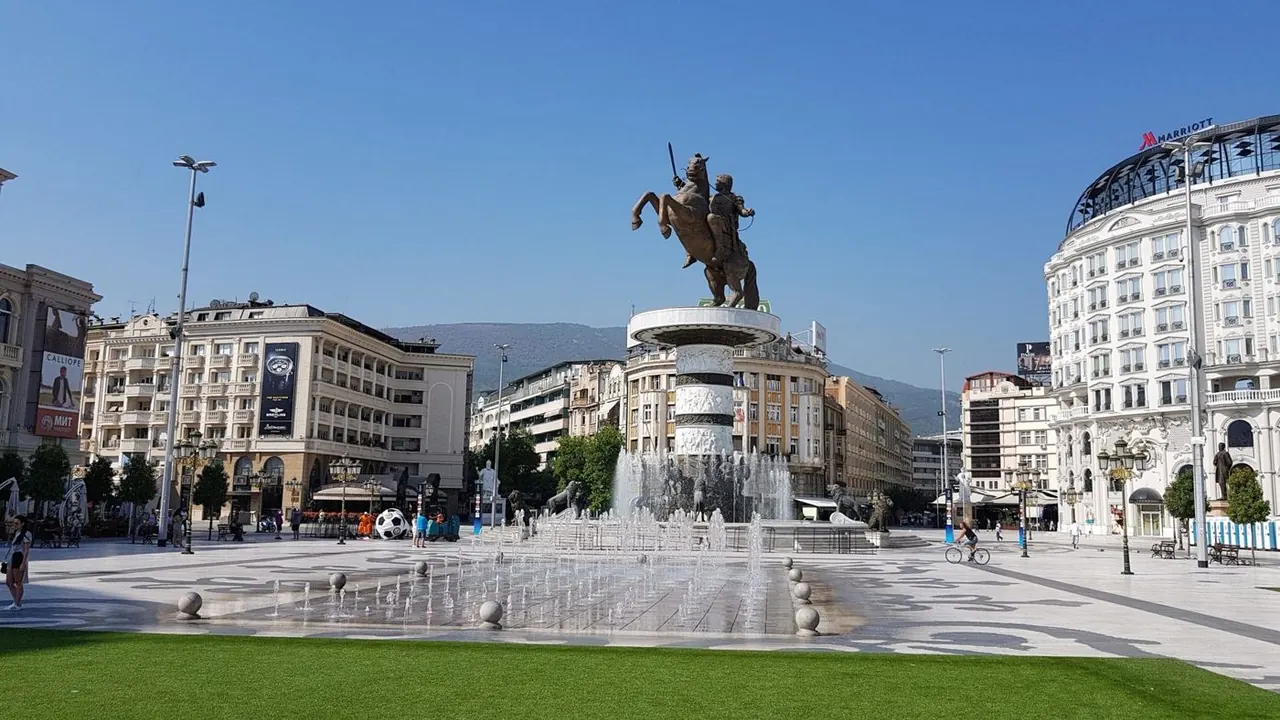
Photos: Athens by Ranjeet Kumar Singh, Pexels License; Skopje by George M. Groutas, CC BY 2.0, cropped.
Athens or Skopje?
Our verdict in twelve categories, each scored against the same fixed benchmark cities, and the climate month by month, so you can choose for your trip.
Choose Athens for
- beaches
- nightlife
- culture and sights
Athens is the choice for a trip built on history and the evening. The Acropolis, the Agora and two of Europe's great museums are all within a walk of each other, and Delphi, Mycenae and the Saronic islands make easy day trips. It adds a real swimming coast on the tram line, a deep taverna culture and nights that run until dawn. It suits travellers who want a lot packed into each day and don't mind heat, crowds and a bigger bill.
Choose Skopje for
- prices
- nature and the outdoors
Skopje rewards a slower, cheaper and more local few days. Its Ottoman bazaar, the earthquake story and the statue-filled square south of the river make an odd and absorbing mix, and the mountains start at the edge of town, with Vodno and Matka Canyon a short taxi ride away. Food, wine and hotels cost little. There is no beach and the nightlife is modest, but it suits walkers, curious travellers and anyone on a budget who likes to see a capital few people visit.
Scoreboard
Twelve categories on one fixed scale from 0 to 100. The shaded stretch is the gap between the two.
Your match
Pick a travel style or drag the sliders, and both match scores follow your weighting.
Wins on beaches and nightlife with your weighting.
Wins on prices and nature and the outdoors with your weighting.
What matters to you?
Category by category
What the scores mean for a trip.
Beaches & swimming
These two are about as far apart as it gets on swimming. Athens has a proper coastline along the Saronic Gulf, where the coves and water get better as you head south towards Vouliagmeni and Varkiza. Aegina and Agistri are a short ferry ride away for a quieter swim.
Skopje has no sea at all. Summer swimming there means hotel or public pools, because the water at Matka is too cold for bathing. If you want time on the water, Lake Ohrid needs a stay of its own.
Food & drink
Both cities eat in a shared, generous Balkan and Mediterranean way, but Athens has more range and more depth. Meze tables with octopus, fava and horta, souvlaki counters, the Varvakios market and a serious modern Greek fine-dining scene give you plenty for a week. Pangrati, Koukaki and Exarchia cook better and cheaper than Plaka.
Skopje's cooking is heartier and narrower: tavche gravche, stuffed peppers, kebapi in the Old Bazaar and long tavern tables in Debar Maalo. Its pleasant surprise is wine, with Vranec reds and Temjanika whites, though a few days covers the local menu.
Culture & sights
Athens has some of the most important sights in the world. The Parthenon, the Temple of Hephaestus, the Kerameikos and the Panathenaic Stadium are linked by one pedestrian promenade, and the Acropolis Museum, the National Archaeological Museum and the Benaki could each fill a day.
Skopje is smaller in scale, but it holds its own story. One of the Balkans' largest Ottoman bazaars, with its caravanserais and the carved iconostasis of the Church of the Holy Saviour, sits across the Stone Bridge from a centre rebuilt in bronze and neoclassical facades. The stopped clock of the old station is a reminder of the 1963 earthquake. Two or three days is enough there, where Athens rewards far longer.
Nightlife
Athens is a real night-out city. Bars fill at midnight, rooftops in Psyrri and Monastiraki look onto the lit Acropolis, Gazi has the big clubs and the gay scene, and in summer the party moves to open-air venues on the coast. Bouzouki clubs add something you won't find elsewhere.
Skopje's evenings centre on cafe-bars, especially the terraces of Debar Maalo, which switch from coffee to rakija as the night goes on. Weekends and summer courtyards in the Old Bazaar get busy, but weeknights are quiet and the clubs are few.
Nature & outdoors
Skopje has the edge for walkers because the mountains start at the city's edge. You can hike or ride the cable car up Vodno from the suburbs, and Matka Canyon, with its cliff monasteries, kayaking and Vrelo Cave, is half an hour out. Further away, the Sar ridges and the beech forests of Mavrovo give real high-country hiking in summer and skiing in winter.
Athens has city hills such as Lycabettus and Filopappou, and fir forest on Parnitha about an hour north, but the landscape is drier and barer. Its outdoor strength is the sea: sailing, paddleboarding and day charters on the Saronic Gulf.
Day trips
Few cities can match the day trips from Athens. Delphi, Mycenae, Epidaurus and Nafplio are each within about two hours, Sounion makes a fine sunset drive, and Hydra, Poros and Aegina are easy ferry trips with real harbour towns.
From Skopje the trips are less famous but varied: the Painted Mosque in Tetovo, the mosaics at Stobi on the way to Tikves wineries, the crater town of Kratovo, and Prizren across the Kosovo border. Ohrid, the country's star, is too far to do in a day.
Good for families
With children along, the real gap is in what fills the hours away from the monuments. Athens gives you plenty of ways to break up a day: calm water on the Riviera for younger ones, a planetarium show, a virtual-reality trip through ancient Greece at Hellenic Cosmos, or the park and lake at the Stavros Niarchos centre when everyone has had enough of ruins.
Children who know the myths get more from the Acropolis, but go early, and spring or autumn is far kinder than July.\n\nSkopje has fewer of these fall-backs. Its best family moments are outdoors, swinging up Vodno by cable car or gliding into Matka Canyon by boat, and once those are done the evening stroll by the Vardar is most of what remains. In the hot months there is no sea to cool off in, so two or three days here followed by a stay at a lake works better than a week in the city.
Getting around
Athens has a metro and a tram, and Skopje has neither. The Athens metro runs from the airport and Piraeus into the centre, with antiquities on display in its stations, and the tram takes you down to the Riviera. The archaeological promenade is a pleasure on foot, but narrow, blocked pavements and steep hills make the rest of the centre harder going.
Skopje's core is flatter and easier to walk, from the Old Bazaar over the Stone Bridge to Macedonia Square and Debar Maalo along the Vardar. Beyond that, the red double-decker buses are hard for a newcomer to work out, so cheap taxis do the work for Vodno, Matka and the bus station.
Shopping & style
Athens has more variety: chain fashion on Ermou, Greek designers in Kolonaki, the weekend flea market around Avissynias Square, and leather sandals, honey and jewellery based on ancient designs.
Skopje's shopping is mainly in the bazaar, with silver filigree workshops, copperware and the Bit Pazar produce market. Ohrid pearls and wine are the usual things to take home, and beyond that it's malls.
Affordability
Skopje is clearly the cheaper of the two. Tavern dinners with wine, coffee and burek, central rooms and taxis all cost very little, and the main sights are free or close to it. Even its smarter riverside places are modest by Western standards.
Athens is good value on souvlaki, neighbourhood tavernas and the metro, but central hotels in summer and archaeological site fees push the total up. Staying in Koukaki or Pangrati helps.
Live music & performing arts
Athens has the bigger and more striking stage. Summer festival opera and ancient drama at the Odeon of Herodes Atticus and at Epidaurus are hard to match, the Greek National Opera keeps a year-round season, and rebetiko in small tavernas is the city's own music.
Skopje's programme is that of a small capital, with opera, ballet and the Philharmonic at low ticket prices. Its standout is the long-running autumn jazz festival, alongside starogradska songs in Debar Maalo.
Wellness & relaxation
Neither is a restful city, but Athens has one real asset: Lake Vouliagmeni, a lake fed by mild mineral springs beneath a limestone cliff where you can swim all year. Otherwise rest means hotel spas or a long coffee in the shade.
Skopje's Ottoman hamams are now galleries. Its thermal option, Katlanovska Banja, is an old-style sanatorium rather than a polished spa, so slow cafe hours by the river are the best way to unwind there.
When should you go?
Pick your month. The climate figures are measured averages, not a forecast.
Athens in July
Skopje in July
Daytime high, °C
Rainfall in the month, mm
Where the figures come from
Skopje has no rain gauge within 25 km of the centre, so its rainfall comes from a gridded climate dataset read at the city rather than from a gauge further away.
Skopje's sunshine is measured 68 km from the centre, at Stip.
Temperature and rainfall are climate normals, averaged over the years shown. Athens: 1991-2020 normals, Athens / Athenai / Pláka (2.2 km from centre). Skopje: 1991-2020 (sunshine 1961-1990) normals, Skopje-Petrovec (18.3 km from centre).
Athens is the summer city of the two. The sea is warm enough for swimming from late May into October and reaches about 26°C in August. The same months are punishing in the streets, though, with highs near 35°C, so sightseeing in July and August is best done early or late. Rain is rare from May to September and comes in late autumn and winter, peaking at about 86mm in December. Winter stays mild enough for walking the sites.
Skopje has a sharper inland climate. January highs sit around 5°C, so winter is a time for the ski slopes rather than for strolling. July and August reach about 32°C in the valley, slightly cooler than Athens but still heavy going. Rain is spread more evenly through the year, with late spring the wettest time. May, June, September and early October are the months for walking the city and the hills around it. For both cities, spring and autumn are the easiest months to explore.
Which traveller are you?
On a beach and sun trip, Athens is the only real option. The Riviera from Glyfada to Vouliagmeni is a tram ride away and the islands are an hour by ferry, while landlocked Skopje has only pools and a lake three hours off.
For a culture and arts trip, Athens has far more to offer. The Acropolis, the Acropolis Museum and the National Archaeological Museum can fill several days, and summer drama at the Odeon of Herodes Atticus adds performances in an ancient setting.
On a trip with a tight budget, Skopje stretches your money much further. Tavern meals with Tikves wine, burek breakfasts, central hotels and taxis all cost little, and most of the main sights are free, whereas Athens charges like a mainstream European capital in summer.
Before you go
| Measure | Athens | Skopje |
|---|---|---|
| Official language | Greek | Albanian, Macedonian |
| Currency | Euro (EUR) | Denar (MKD) |
| Sockets | CF230 V, 50 Hz | CF230 V, 50 Hz |
| Driving side | Right | Right |
| Time zone | UTC+2, UTC+3 in summer | UTC+1, UTC+2 in summer |
| Emergency number | 112 | 112 |
| Elevation | 74 m | 251 m |
| Main airport | Athens Eleftherios Venizelos International Airport (ATH)20 km from centre173 non-stop destinations | Skopje International Airport (SKP)16 km from centre52 non-stop destinations |
| Public holidays this year | 15 days | 12 days |
By the numbers
| Measure | Athens | Skopje |
|---|---|---|
| City population | 643,452 | 422,540 |
| People per km² | 16,499 | 739 |
| Museums within 10 km | 88 | 17 |
| UNESCO World Heritage sites within 50 km | 2 | 0 |
| Swim season, months above 21 °C | 5 months | - |
Where else could you go?
Every comparison below shares a destination with this one, so you can follow Athens or Skopje somewhere new.