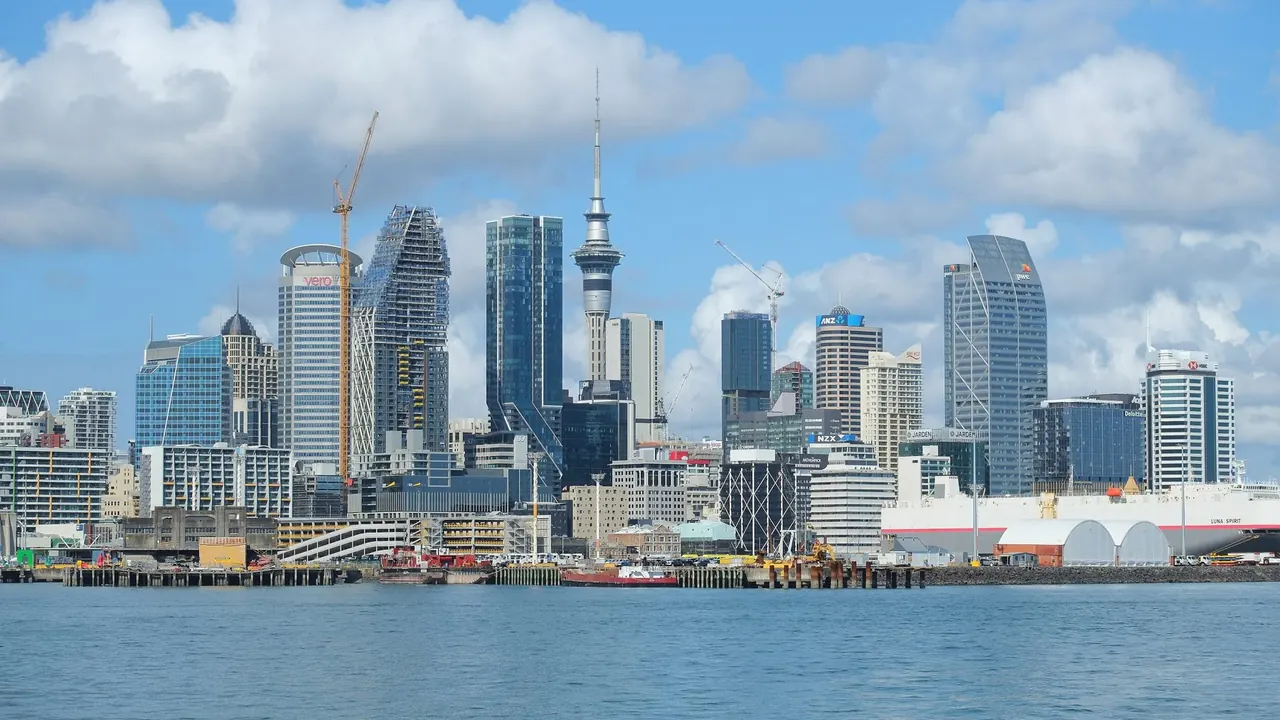
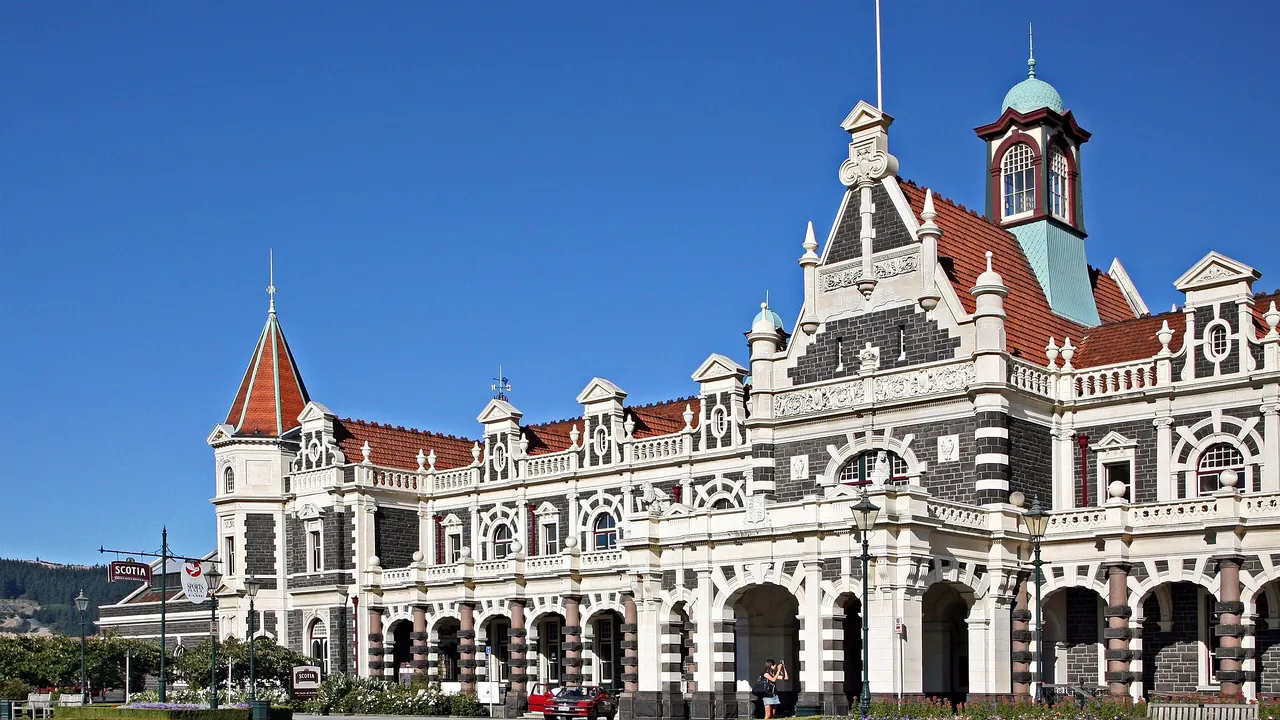
Photos: Auckland by Pseudopanax at English Wikipedia, Public domain; Dunedin by W. Bulach, CC BY-SA 4.0, cropped.
Auckland or Dunedin?
Our verdict in twelve categories, each scored against the same fixed benchmark cities, and the climate month by month, so you can choose for your trip.
Choose Auckland for
- beaches
- food and drink
- families
Auckland is the better pick for a summer trip built around the water. It has warm, sheltered bays along Tamaki Drive and on the North Shore, ferries out to Waiheke and Rangitoto, and a much wider spread of Asian and Pacific cooking. There is also more to keep children busy. It costs more and sprawls further, but a week here is fuller and more varied.
Choose Dunedin for
- culture and sights
- prices
Choose Dunedin if a well-preserved Victorian streetscape and close-up wildlife matter more to you than swimming or evenings out. The albatross and penguins of the Otago Peninsula, the railway station and Larnach Castle make for a quieter, cooler and somewhat cheaper stay. It suits travellers who are happy to wrap up and walk.
Scoreboard
Twelve categories on one fixed scale from 0 to 100. The shaded stretch is the gap between the two.
Your match
Pick a travel style or drag the sliders, and both match scores follow your weighting.
Wins on beaches and food and drink with your weighting.
Wins on culture and sights and prices with your weighting.
What matters to you?
Category by category
What the scores mean for a trip.
Beaches & swimming
This is the widest gap between the two. Auckland's eastern bays, from Mission Bay to St Heliers and across to Takapuna and Long Bay, are sheltered, sandy and warm enough for a proper swim from January to March. Piha and Muriwai add surf, and Waiheke has quieter coves.
Dunedin has real sand at St Clair and St Kilda, but the water there comes up from the Southern Ocean and stays cold even in high summer, with swell and rips to match. A beach day in Dunedin means surfing in a wetsuit, a walk along the esplanade or the heated saltwater pool, not an afternoon of swimming.
Food & drink
Auckland has far more variety. Its immigrant communities bring regional Chinese, Korean, Malaysian and Indian cooking to Dominion Road and the suburbs, Ponsonby and Britomart have the polished restaurants, and the vineyards on Waiheke and around the city make wine easy to fit in.
Dunedin is smaller and plainer. Its strengths are the Saturday farmers' market by the railway station, a long brewing tradition and southern dishes such as blue cod and the cheese roll. Both cities have Bluff oysters in season and good flat whites, but only Auckland gives you real choice at dinner.
Culture & sights
Dunedin is the better city to explore for its buildings. Gold-rush wealth left a largely intact Victorian and Edwardian centre, from the Flemish-style railway station and First Church to the university clocktower. Olveston and Larnach Castle let you see inside, and Otago Museum and Toitū complete the picture.
Auckland has little historic streetscape, but its best sight is outstanding: the Māori and Pacific collections of the Auckland War Memorial Museum, including the carved meeting house and the war canoe. With the art gallery, the Maritime Museum and the pā earthworks on the volcanic cones, it fills two good days, but it is not a city to wander for its architecture.
Nightlife
Neither is a clubbing city, but Auckland has more choice in the evening. There are wine and cocktail bars on Ponsonby Road, late bars and the queer scene on Karangahape Road, and a harbourside crowd at the Viaduct, so somewhere is usually busy at the weekend, even if you need a taxi between them.
Dunedin's nights follow the university term. Bars around the Octagon and George Street are full from Thursday to Saturday, the craft-beer pubs in the warehouse streets are quieter, and outside term the city goes quiet early.
Nature & outdoors
Both are excellent for the outdoors, but in different ways. Auckland's landscape is volcanic and coastal: grassy cones inside the city, Rangitoto a ferry ride away, the kauri forest and cliff tracks of the Waitākere Ranges, and the Hauraki Gulf for sailing, kayaking and whale watching.
Dunedin is about seeing wildlife at very close range. The Otago Peninsula has the mainland royal albatross colony at Taiaroa Head, yellow-eyed penguins coming ashore at dusk and sea lions on the beaches. Tunnel Beach and the hill tracks are there for walking, but expect cooler, more changeable weather than in Auckland.
Day trips
Auckland's day trips are easier and more varied. Waiheke's vineyards and beaches are a short ferry ride away and Devonport is closer still. Matakana's wineries and market lie to the north, and Hobbiton makes a long but manageable day to the south.
Dunedin's best day out is Oamaru, with its limestone Victorian harbourfront and little blue penguins, stopping at Moeraki on the way. Port Chalmers is close by. Beyond those, the Central Otago gold towns and vineyards mean long drives through open country.
Good for families
Auckland is the stronger choice with children. The zoo, the aquarium tunnel under sharks and rays, the trams and planes at MOTAT, Rainbow's End and the calm swimming beaches give plenty of variety. The mild climate makes days outdoors easy, though you will usually drive between attractions.
Dunedin's appeal for children is animals in the wild: albatross over Taiaroa Head, sea lions and dusk penguin tours. Otago Museum adds a science centre and a butterfly house. The city is small and safe, but cold, wet days and steep streets are hard going with young children, and there is no big purpose-built attraction.
Getting around
Both cities have walkable centres and both push visitors towards a car, but for different reasons. Auckland's downtown is hilly and the city sprawls, with heavy traffic on the motorways. Its compensation is the harbour ferries, which take you to Devonport, Waiheke and Rangitoto without driving.
Dunedin's centre is small and mostly flat between the Octagon, the railway station and the university, and buses run out to St Clair, but the hills rise steeply beyond it. The real obstacle is the Otago Peninsula, where the wildlife sites lie along narrow, winding roads that buses barely serve.
Shopping & style
Auckland has more to offer, mostly New Zealand design. Local labels and boutiques line Ponsonby Road and Newmarket, Britomart has upmarket stores in old warehouses, and pounamu, Pacific art and the Ōtara market are good for things to take home.
Dunedin's shopping is mostly chain stores on George Street, with the more interesting finds at the edges: second-hand bookshops, vintage stores, local designers who favour dark, practical clothing, and merino. Neither city is worth visiting for its shops, but Auckland fills more of an afternoon.
Affordability
Dunedin is the cheaper of the two, mainly because rooms cost less and the student population keeps cafés and casual food affordable. Its museums, art gallery and Botanic Garden are free, though the wildlife tours and a hire car eat into the savings.
Auckland's hotels in the centre and on the waterfront are expensive, especially in summer, and Waiheke wine, ferries and tours add up. The free beaches and volcanic cones and the cheap Asian food courts help, but it remains the costlier stay.
Live music & performing arts
Auckland has the fuller calendar. The Auckland Philharmonia plays in the Town Hall, New Zealand Opera stages seasons and touring musicals play under the starry ceiling of the Civic. The Arts and Pasifika festivals give a visitor even more to book.
Dunedin is best known for the Dunedin Sound, the jangly indie rock of the 1980s, which lives on in small pubs and venues. Touring shows play at the Regent and the regional orchestra performs at the Town Hall. It suits an evening at a gig rather than a trip planned around opera or theatre.
Wellness & relaxation
Neither city has a bathing culture, but Auckland gives you more options. There are hot-spring pools at Parakai about an hour away, a good choice of day spas and yoga studios in Ponsonby, and retreats and a slower pace on Waiheke.
Dunedin's appeal here is mainly its calm. The heated saltwater pool at St Clair, facing the surf, is the one memorable place to swim. Otherwise, relaxing means a morning in the Botanic Garden and a slow café lunch rather than spa treatments.
When should you go?
Pick your month. The climate figures are measured averages, not a forecast.
Auckland in July
Dunedin in July
Daytime high, °C
Rainfall in the month, mm
Where the figures come from
Auckland's station stands 189 m below the city centre, so the centre is likely a little cooler than the figures say.
Dunedin has no weather station within reach, so its figures come from a gridded climate model rather than a measured record, and read a broad area rather than the city itself.
Temperature and rainfall are climate normals, averaged over the years shown. Auckland: 1961-1990 (sunshine 1981-2010, rainfall 1991-2020) normals, Auckland Aerodrome Aws (17 km from centre). Dunedin: 2001-2020 normals, NASA POWER reanalysis grid, no weather station within 90 km.
Auckland is a true summer destination. From December to March the days reach about 24°C, the sea in the sheltered bays warms to around 21°C and the sunshine is at its longest, so these are the months for swimming and island ferries. April is still pleasant for walking. From May to September the rain sets in, at up to 129mm a month, and the sea turns cool, though the city never gets truly cold.
Dunedin is never hot and rarely warm. Even in January the highs sit around 16°C and the sea barely reaches 14°C, so summer is for walking and wildlife rather than the beach. Rain is spread fairly evenly through the year and is in fact lightest in winter, but June to August is chilly for long days outdoors. For both cities the best window is roughly December to March, when Auckland is at its warmest and Dunedin at its mildest.
Which traveller are you?
On a beach and sun trip, Auckland wins easily. Its east-coast bays and North Shore beaches are calm and warm enough for swimming in late summer, and Waiheke adds white sand. Dunedin's cold, surf-churned water is better for a walk along the esplanade.
For a food and nightlife trip, Auckland has more depth. You can eat regional Chinese and Korean cooking on Dominion Road, try Pacific stalls and drink Waiheke wine, then go on to cocktails on Ponsonby Road or late bars on K Road. Dunedin's evenings depend on students and end early.
On a trip on a tight budget, Dunedin makes your money go a little further. Rooms are cheaper than in Auckland and the student cafés keep casual meals affordable. The wildlife tours and a hire car for the peninsula still need room in the budget.
Before you go
| Measure | Auckland | Dunedin |
|---|---|---|
| Official language | English, New Zealand Sign Language, Māori | English, New Zealand Sign Language, Māori |
| Currency | New Zealand Dollar (NZD) | New Zealand Dollar (NZD) |
| Sockets | I230 V, 50 Hz | I230 V, 50 Hz |
| Driving side | Left | Left |
| Time zone | UTC+12, UTC+13 in summer | UTC+12, UTC+13 in summer |
| Emergency number | 111 | 111 |
| Elevation | 196 m | 19 m |
| Main airport | Auckland International Airport (AKL)18 km from centre62 non-stop destinations | Dunedin International Airport (DUD)24 km from centre4 non-stop destinations |
| Public holidays this year | 12 days | 12 days |
By the numbers
| Measure | Auckland | Dunedin |
|---|---|---|
| City population | 1,470,100 | 106,200 |
| People per km² | 2,630 | 32 |
| Museums within 10 km | 15 | 11 |
| UNESCO World Heritage sites within 50 km | 0 | 0 |
| Swim season, months above 21 °C | 1 month | None |
Where else could you go?
Every comparison below shares a destination with this one, so you can follow Auckland or Dunedin somewhere new.
- Queenstownvs Dunedin
- Rotoruavs Auckland
- Christchurchvs Dunedin
- Wellingtonvs Auckland
- Wellingtonvs Dunedin
- Christchurchvs Auckland