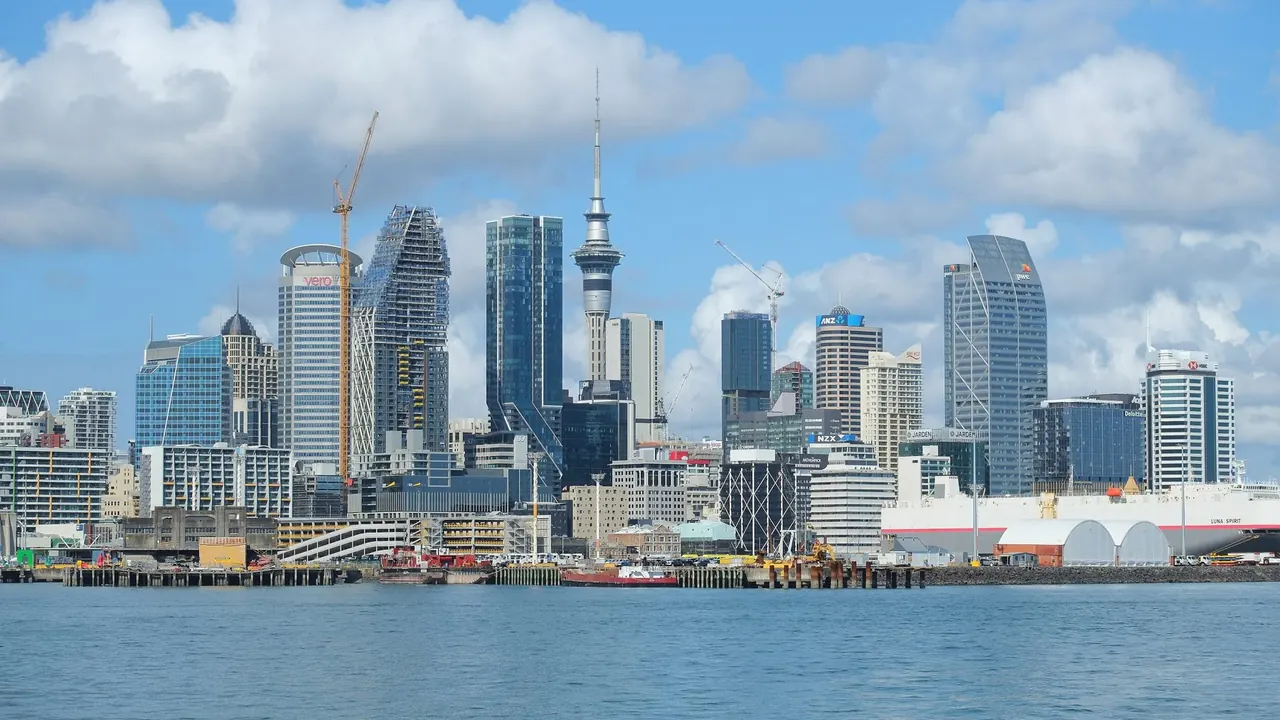
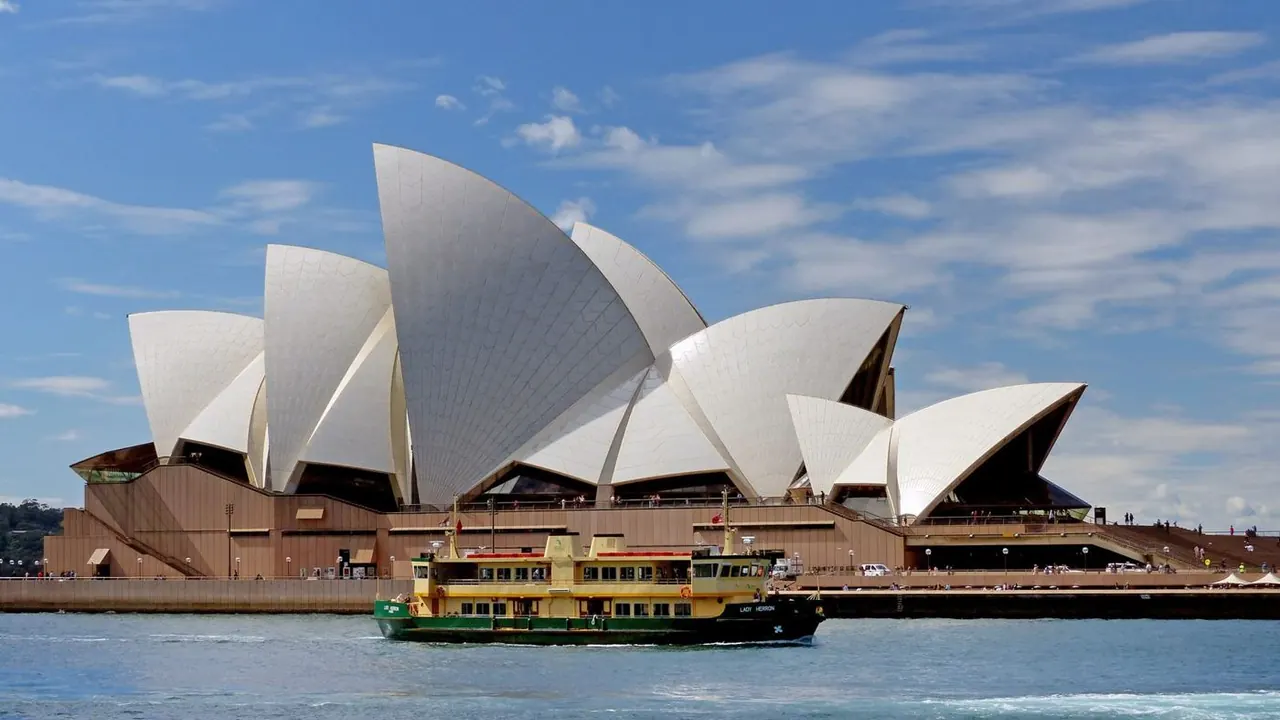
Photos: Auckland by Pseudopanax at English Wikipedia, Public domain; Sydney by Bernard Spragg, CC0.
Auckland or Sydney?
Our verdict in twelve categories, each scored against the same fixed benchmark cities, and the climate month by month, so you can choose for your trip.
Choose Auckland for
- prices
- day trips
Auckland suits travellers who want the outdoors close at hand and a slower pace. Ferries run out to volcanic islands, bird sanctuaries and Waiheke's vineyards, and the Auckland Museum's Māori and Pacific collections are reason enough to stay a day longer. It is expensive, but less so than Sydney, and it works best if you are happy to hire a car for the west coast and the wine country.
Choose Sydney for
- getting around
- live music and the arts
- beaches
Sydney is the stronger choice for a fuller city trip. Its ocean beaches are warmer and stretch further, the Opera House is a working stage rather than just a landmark, and the food, bars and shops have more depth. An integrated network of trains and ferries lets you do most of it without a car. You pay more for all of this, but the beaches, coastal walks and main galleries cost nothing.
Scoreboard
Twelve categories on one fixed scale from 0 to 100. The shaded stretch is the gap between the two.
Your match
Pick a travel style or drag the sliders, and both match scores follow your weighting.
Wins on prices and day trips with your weighting.
Wins on getting around and live music and the arts with your weighting.
What matters to you?
Category by category
What the scores mean for a trip.
Beaches & swimming
Auckland's best swimming is in the sheltered sandy bays along Tamaki Drive and on the North Shore, where the water is calm and good for children. They are pleasant local beaches rather than a draw in their own right, and the sea is cool outside the late-summer months. The black-sand west coast at Piha and Muriwai is wilder and better for watching than for swimming.
Sydney's beaches are a main reason to go. A chain of real surf beaches runs from Bondi through Bronte to Coogee, Manly and the Northern Beaches go on beyond the harbour, and calm coves such as Balmoral and Camp Cove sit inside it. The water is warmer and stays swimmable well into autumn.
Food & drink
Both cities eat best through their immigrant communities and their seafood, and neither has a cuisine of its own. Auckland's strengths are the regional Chinese, Korean and Malaysian cooking along Dominion Road, Pacific Island food stalls and green-lipped mussels, with Waiheke wine never far away.
Sydney has more of everything and covers more ground. Each suburb has its own speciality: Vietnamese in Cabramatta, Lebanese in Lakemba, Italian in Leichhardt. Add the Pyrmont fish market and a serious fine-dining scene in Surry Hills and Potts Point, and it is the better city to plan meals around.
Culture & sights
Auckland's sights are few, but one is outstanding: the War Memorial Museum on the Domain holds a carved meeting house, a war canoe and some of the finest Māori and Pacific treasures anywhere. Beyond that there are pā earthworks on the volcanic cones and Devonport's villas, and little old streetscape.
Sydney has more to see. The Opera House and Harbour Bridge are world landmarks, and you can climb the bridge. The Rocks keeps the colony's oldest streets, and Hyde Park Barracks tells the convict story. The Art Gallery of New South Wales is the place for Aboriginal art.
Nightlife
Both cities lean towards bars over clubs, but Sydney gives you more choice. Its evenings move between laneway cocktail bars in the CBD, the old pubs of The Rocks, Oxford Street's LGBTQ scene and the later, scruffier inner west around Newtown and Enmore. Auckland's going-out is spread across Ponsonby Road, Karangahape Road and the Viaduct. It runs late on K Road at weekends, but much of the city is quiet by midnight during the week.
Nature & outdoors
The two are well matched outdoors, but the landscapes are very different. Auckland is volcanic: grassy cones to climb inside the city, Rangitoto's lava fields a ferry away, takahē walking in the open on Tiritiri Matangi and kauri rainforest in the Waitākere Ranges. The Hauraki Gulf is among the great sailing waters.
Sydney's setting is sandstone and bush. Clifftop walks such as Bondi to Coogee start in the suburbs, the Royal National Park has wild coastal trails, and the Blue Mountains' eucalyptus valleys are about two hours west. Add surfing at Manly and humpback whales passing the heads in winter and spring.
Day trips
The day-trip lists are about the same length, but you reach them differently. Auckland's best outings are by boat: Waiheke's vineyards and beaches are about forty minutes away by ferry, and Devonport is a short crossing. Matakana's wineries lie to the north, and Hobbiton makes a long day to the south. Sydney's outings mostly mean a drive of a couple of hours, to the Hunter Valley's cellar doors, the Blue Mountains towns of Katoomba and Leura, or the Southern Highlands. Newcastle and Wollongong are easy by train.
Good for families
Both cities are easy with children, and each has a zoo, an aquarium and calm beaches. In Auckland, MOTAT's trams and planes and the gentle Rainbow's End theme park stand out, but you often have to drive between attractions.
Sydney links its outings by water. The ferry ride to Taronga Zoo is part of the fun, and Luna Park, the koala parks and the netted harbour beaches fill the other days. The fierce summer sun means hats and sunscreen all day.
Getting around
Sydney is far easier without a car. Trains, metro, light rail, buses and ferries all take one card or a contactless bank card, and a base near the harbour puts most of the city within reach, though Bondi needs a bus.
In Auckland, the central streets and the harbour ferries work well, but buses and a thin train network are all you have on land. Getting to the west-coast beaches, the Waitākere Ranges and the wineries usually means hiring a car or booking a tour.
Shopping & style
Sydney is the better city for shopping. International flagships line Pitt Street Mall, the restored Queen Victoria Building and Strand Arcade hold Australian designers, and Paddington adds local fashion and a weekend market. Australian swimwear and resort clothing are worth looking for.
Auckland's shopping is smaller and more local: New Zealand labels in Ponsonby and Newmarket, merino knitwear and pounamu carvings to take home, and the Pacific stalls of the Ōtara market.
Affordability
Neither city is cheap, but Auckland is easier on the budget. Hotel rooms, restaurant meals and drinks in Sydney cost noticeably more, especially near the harbour and the beaches in summer.
Both cities make up for it with free outdoor pleasures, the volcanic cones and bays in Auckland, the coastal walks and main galleries in Sydney. Sydney's fare caps help on transport, while in Auckland, ferries and car hire add to most itineraries.
Live music & performing arts
Sydney has the deeper arts scene. The Opera House has performances in its halls nearly every night, home to Opera Australia and the Sydney Symphony Orchestra, and Belvoir, Sydney Theatre Company, Bangarra and the Australian Chamber Orchestra mean there is serious theatre, dance and music on most evenings.
Auckland's calendar is steadier and smaller: the Philharmonia in the fine-sounding Town Hall, touring shows under the starry ceiling of the Civic, and the Pasifika Festival with Pacific Island music and dance.
Wellness & relaxation
Auckland's best way to unwind lies outside the city. The hot-spring pools at Parakai, about an hour northwest, make an easy half day, and Sydney has nothing like them. In town, though, rest comes down to day spas, yoga studios around Ponsonby and the slower rhythm of Waiheke's retreats, and proper geothermal bathing means an overnight stay in Rotorua.
Sydney is the better city for relaxing, because the coast is part of every day. Saltwater pools, topped up by the waves, sit on the headlands from Bondi to Coogee and are open for a morning swim in any season. The old Wylie's Baths and the women-only McIver's keep a gentle, old-fashioned pace, and Korean-style bathhouses offer steam and a hot soak on cooler days.
When should you go?
Pick your month. The climate figures are measured averages, not a forecast.
Auckland in July
Sydney in July
Daytime high, °C
Rainfall in the month, mm
Where the figures come from
Auckland's station stands 189 m below the city centre, so the centre is likely a little cooler than the figures say.
Temperature and rainfall are climate normals, averaged over the years shown. Auckland: 1961-1990 normals, Auckland Aerodrome Aws (17 km from centre). Sydney: 1991-2020 normals, Sydney Airport (3.7 km from centre).
Both cities are in the southern hemisphere, so summer runs from December to March. Auckland is beach weather only from January to March, when days reach about 24°C and the bays are at their mildest. From May the city turns cool and wet, and July brings around 135mm of rain. Winter suits museum days and volcano walks between showers more than swimming.
Sydney is warmer all year round. January reaches about 28°C, which can make the middle of the day hard going on exposed paths, and the sea holds near 23°C from January to March and stays swimmable into autumn. February and June are its wettest months. Late winter and spring, from August to October, are drier and very sunny with mild days, which makes them the best time for clifftop walks and sightseeing. The sea never drops much below 18°C, so keen swimmers can carry on even when Auckland's water has turned cold.
Which traveller are you?
On a beach and sun trip, Sydney is the clear pick. Its surf beaches run from Bondi to Coogee and on past Manly, with calm harbour coves in between, and the sea stays warm for far longer than Auckland's gulf bays.
For a culture and arts trip, Sydney gives you much more. The Opera House stages opera, symphony and dance most nights, and Belvoir, Bangarra and the colonial streets of The Rocks fill the days. Auckland's sights take about two days.
On a trip with a tight budget, Auckland is the gentler choice of two costly cities. Rooms and meals are a little less expensive, the volcanic cones and beaches are free, and Dominion Road's Asian restaurants keep dinners cheap.
Before you go
| Measure | Auckland | Sydney |
|---|---|---|
| Official language | English, New Zealand Sign Language, Māori | English |
| Currency | New Zealand Dollar (NZD) | Australian Dollar (AUD) |
| Sockets | I230 V, 50 Hz | I230 V, 50 Hz |
| Driving side | Left | Left |
| Time zone | UTC+12, UTC+13 in summer | UTC+10, UTC+11 in summer |
| Emergency number | 111 | 000 |
| Elevation | 196 m | 6 m |
| Main airport | Auckland International Airport (AKL)18 km from centre63 non-stop destinations | Sydney Kingsford Smith International Airport (SYD)9 km from centre99 non-stop destinations |
| Public holidays this year | 12 days | 11 days |
By the numbers
| Measure | Auckland | Sydney |
|---|---|---|
| City population | 1,470,100 | 5,450,496 |
| People per km² | 2,630 | 449 |
| Museums within 10 km | 15 | 38 |
| UNESCO World Heritage sites within 50 km | 0 | 2 |
| Swim season, months above 21 °C | 1 month | 6 months |
Where else could you go?
Every comparison below shares a destination with this one, so you can follow Auckland or Sydney somewhere new.