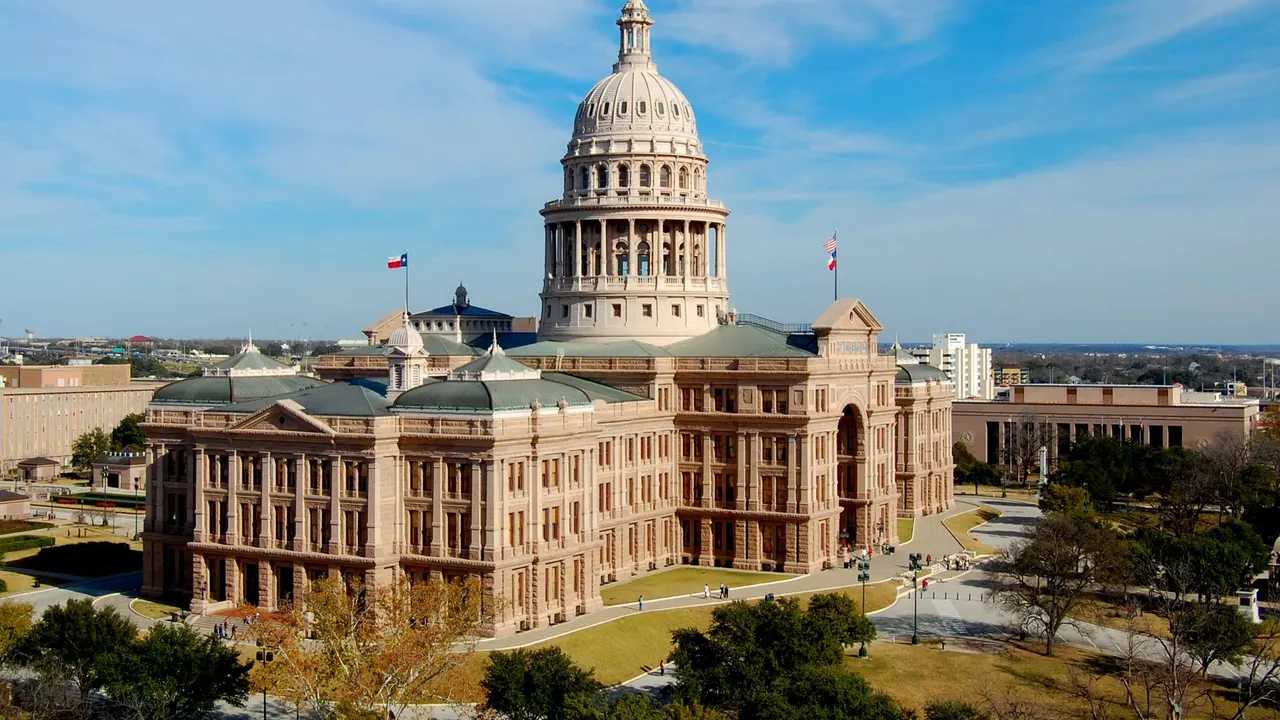
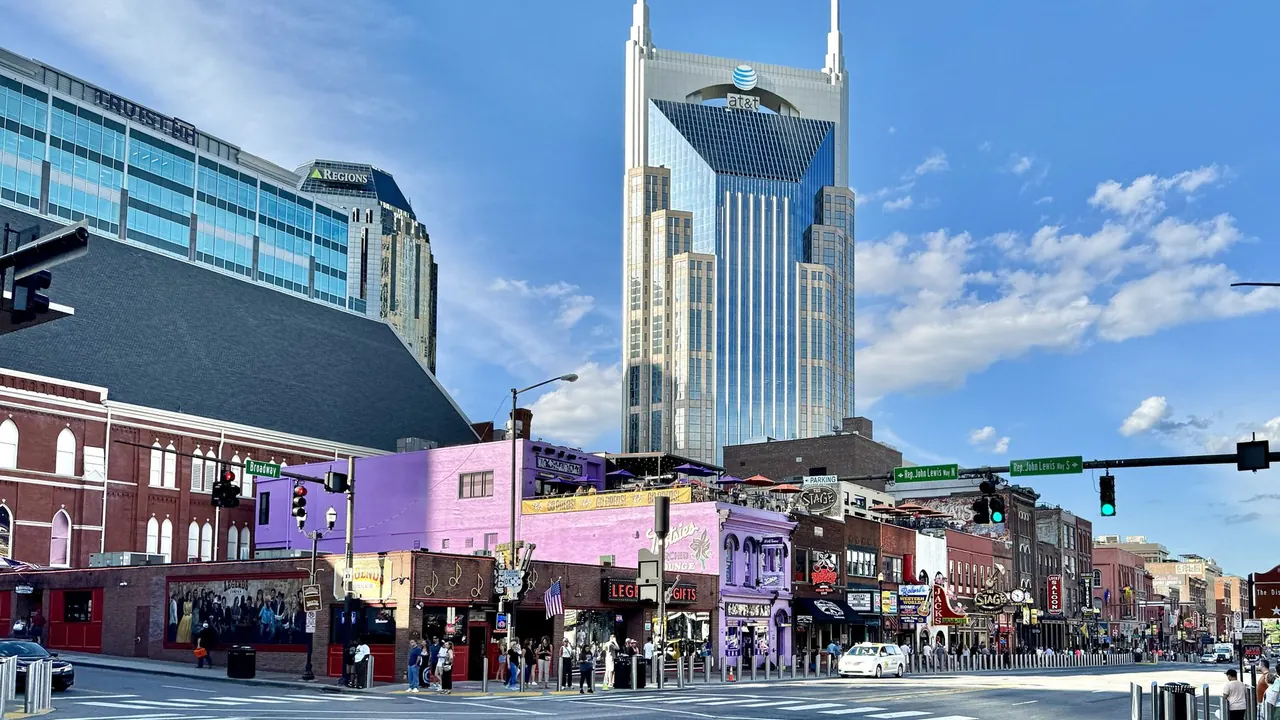
Photos: Austin by LoneStarMike, CC BY 3.0, cropped; Nashville by Warren LeMay, CC BY-SA 2.0, cropped.
Austin or Nashville?
Our verdict in twelve categories, each scored against the same fixed benchmark cities, and the climate month by month, so you can choose for your trip.
Choose Austin for
- wellness
- beaches
- nature and the outdoors
Austin suits travellers who want music at night and something active by day: cold spring-fed pools, the Greenbelt canyon, boat days on Lake Travis and Hill Country towns reached by hire car. Its winters are milder, it is easier to slow down in, and brisket and breakfast tacos give the trip its own food identity.
Choose Nashville for
- culture and sights
- nightlife
- live music and the arts
Pick Nashville if music is the whole point and you want its history as well as live shows. The Country Music Hall of Fame, the Ryman and the Opry give the city a set of sights that Austin lacks, and Lower Broadway makes for a louder, more communal night out. Groups celebrating something will feel at home here. Anyone hoping to rest will find it harder.
Scoreboard
Twelve categories on one fixed scale from 0 to 100. The shaded stretch is the gap between the two.
Your match
Pick a travel style or drag the sliders, and both match scores follow your weighting.
Wins on wellness and beaches with your weighting.
Wins on culture and sights and nightlife with your weighting.
What matters to you?
Category by category
What the scores mean for a trip.
Beaches & swimming
Neither city has a coast, but Austin has the better swimming by a distance. Barton Springs and Deep Eddy, both cold spring-fed pools, are part of everyday summer life in town, and Lake Travis adds rocky coves and boat days out in the Hill Country.
In Nashville, swimming means the reservoirs at Percy Priest and Old Hickory, with small swimming areas and pontoon boats. That fills a hot summer afternoon and not much more, and nothing in town compares with a spring pool in a city park.
Food & drink
Both cities eat well within a Southern frame, so the difference is in the signature dishes. In Austin these are Central Texas brisket, Tex-Mex and breakfast tacos, much of it served from trucks and trailers parked beside beer gardens. In Nashville they are hot chicken and the meat-and-three cafeteria, with biscuits at breakfast and Tennessee whiskey at the bar.
Nashville has more range beyond its own classics, thanks to the Kurdish, Mexican and Vietnamese kitchens along Nolensville Pike. Austin has the barbecue pilgrimage out to Lockhart. In both cities the more ambitious cooking is in the east side neighbourhoods, not downtown.
Culture & sights
Austin's sights are a short, mostly academic list: the pink granite State Capitol and the university museums, from the Blanton to the Harry Ransom Center with its Gutenberg Bible. They fill a day or two well, but they are rarely the reason for the trip.
Nashville has more to see, and almost all of it is about music: the Country Music Hall of Fame, the National Museum of African American Music and a daytime tour of the Ryman. Beyond music, the Parthenon replica in Centennial Park, the Frist in its Art Deco post office, and the Hermitage and Belle Meade, which deal with the region's harder history, give it the broader set of sights.
Nightlife
Austin's nights are spread across several districts, each with its own crowd: Sixth Street for shot bars and packed patios, Rainey Street's old bungalows with big yards for a slightly older set, and the dive bars, mezcal bars and beer gardens of the east side that locals favour. A large student population keeps the mood young, and the festival weeks of spring and autumn turn the whole centre into one long party.
Nashville puts its night in one place. Lower Broadway's honky-tonks rise several storeys with a band on every floor and doors open to the street, rooftop bars look down on it, and hen and stag groups keep it full into the small hours. East Nashville's dive bars and cocktail lounges are the quieter alternative. In neither city is this a clubbing trip, since the night is about bars and live bands rather than DJs.
Nature & outdoors
Austin gets you outdoors more easily and more actively. The Barton Creek Greenbelt runs through a limestone canyon with climbing walls and creek crossings, kayaks and paddleboards fill Lady Bird Lake, and Enchanted Rock and Pedernales Falls are within a couple of hours. The evening bat flight from the Congress Avenue Bridge has no equal in Nashville.
Nashville's countryside is gentler: quiet trails at Radnor Lake, forest walks in the Warner Parks, easy paddling on the Harpeth and the Natchez Trace Parkway for cycling. It is pleasant rather than memorable, and at its best with spring wildflowers and autumn colour.
Day trips
Austin has the stronger day out in San Antonio, with the Alamo, the River Walk and the UNESCO-listed Spanish missions. Closer in are Fredericksburg, founded by German settlers and surrounded by wineries, the old dance hall at Gruene and the river at New Braunfels.
Nashville's outings are closer and quieter. Franklin, half an hour away, has a preserved Main Street and Civil War battlefields, and there are the village of Leiper's Fork and the whiskey distilleries around Lynchburg. Chattanooga is the one larger destination, and it sits at the very edge of a day trip.
Good for families
Children do about equally well in both, but the days look different. In Austin they centre on Zilker Park, with its miniature train and Barton Springs, plus the Thinkery and the bat flight, and the theme parks and waterparks are an hour or so away. Nashville has more conventional attractions in town: a good zoo at Grassmere, the planetarium at the Adventure Science Center and the Lane Motor Museum.
The drawback differs too. In Austin it is the summer heat. In Nashville it is Lower Broadway, which is built for adult drinking and best avoided with children in the evening.
Getting around
Away from a small walkable core, both cities are built around the car. Austin's core covers downtown, the Capitol and Rainey Street, and the lakeside hike-and-bike trail, rental bikes and scooters stretch it to South Congress and East Austin. The buses and the single commuter rail line are rarely the easy option, and for the lakes, the Greenbelt and the Hill Country a hire car is close to essential.
Nashville's core is tighter: Broadway, the Ryman, the Hall of Fame, the riverfront and the Gulch are a short walk apart, and the pedestrian bridge crosses to the east bank. Beyond that, with buses but no metro or tram, most visitors rely on ride-hailing or a hire car to reach the Opry, the Hermitage, Belle Meade and neighbourhoods such as 12 South.
Shopping & style
Both cities sell cowboy boots and Western wear, neither is a fashion destination, and both keep their luxury brands in malls away from the centre. Austin's strength is South Congress, with vintage clothing, antiques and independent boutiques, plus small design shops on the east side.
Nashville gives the Western theme a musical slant, with rhinestone shirts on Lower Broadway, letterpress concert posters and some of the best guitar browsing anywhere. 12 South and East Nashville are its quieter streets for local designers and records.
Affordability
Neither is a cheap trip, and the costs land in the same places: downtown hotels that climb during big events, tips and tax on every bill, and the expense of crossing spread-out cities. In Austin that last cost is car hire and parking. In Nashville it is mostly ride-hailing.
Where you save differs. In Austin it is food trucks, breakfast tacos and free outdoor sights from the Greenbelt to the bat flight. In Nashville it is honky-tonks with no cover charge and meat-and-three cafeterias, and staying midweek, away from the weekend groups, also helps.
Live music & performing arts
Austin puts on live music every night of the year, much of it with no cover: small clubs on Red River and Sixth Street, bars on South Congress and the east side, and honky-tonks where couples two-step to country bands. It runs from blues, rock and indie to Texas country and conjunto, Austin City Limits still records there, and the festival weeks bring hundreds of bands at once.
Nashville goes further. The Grand Ole Opry and the Ryman, with its pews and famous acoustics, are institutions Austin has no match for, and the songwriter nights, where the people who wrote the hits play them on acoustic guitars, are a reason to come in themselves. The formal arts are stronger too, with the Schermerhorn Symphony Center and the Tennessee Performing Arts Center well ahead of Austin's modest season at the Long Center.
Wellness & relaxation
Austin is the easier place to slow down. Away from the bar streets, its yoga culture, shaded patios and parkland set a calm pace, and the spa resorts on Lake Austin and in the Hill Country offer proper retreats with quiet grounds.
Nashville has hotel spas, day spas and leafy streets in Belmont and Hillsboro, but the city's energy goes into noise and late nights. Neither city has a thermal bath or hammam tradition.
When should you go?
Pick your month. The climate figures are measured averages, not a forecast.
Austin in July
Nashville in July
Daytime high, °C
Rainfall in the month, mm
Temperature and rainfall are climate normals, averaged over the years shown. Austin: 1991-2020 normals, Camp Mabry/Austin City Asos (3.7 km from centre). Nashville: 1991-2020 normals, Nashville Airport (9.6 km from centre).
Austin barely has a winter. Days in January reach about 17°C, mild enough for walking, and March, April, October and November are the most comfortable months for the streets and the trails. From June to September it is very hot and sunny, peaking at 36°C, and that is the season for the spring pools and the lakes rather than sightseeing. May is the wettest month at 130mm, and October is also showery.
Nashville runs cooler and wetter all year. January highs are around 9°C, and rain is spread evenly through the year at roughly 100mm a month, with no real dry season. Late April, May, September and October are the best months. Midsummer reaches about 32°C, below Austin's peak but humid. Austin is the better pick from November to March, and in spring and autumn both work well.
Which traveller are you?
On an outdoors trip, Austin is the clear choice. Between the Greenbelt canyon, paddling on Lady Bird Lake, cold swims at Barton Springs and Enchanted Rock within reach, there is far more to do than on Nashville's gentle trails and reservoirs.
For a culture and arts trip, Nashville wins. Its museums tell the story of country and African American music, the Ryman and the Opry are history you can sit inside, and its symphony hall outclasses anything in Austin's formal arts.
On a relaxing and wellness trip, Austin is the calmer bet. Lakeside spa resorts, yoga studios and shaded patios suit slow days, while Nashville's downtown is built around late nights and hen parties rather than rest.
Before you go
| Measure | Austin | Nashville |
|---|---|---|
| Currency | US Dollar (USD) | US Dollar (USD) |
| Sockets | AB120 V, 60 Hz | AB120 V, 60 Hz |
| Driving side | Right | Right |
| Time zone | UTC-6, UTC-5 in summer | UTC-6, UTC-5 in summer |
| Emergency number | 911 | 911 |
| Elevation | 149 m | 182 m |
| Main airport | Austin Bergstrom International Airport (AUS)13 km from centre91 non-stop destinations | Nashville International Airport (BNA)10 km from centre122 non-stop destinations |
| Public holidays this year | 13 days | 13 days |
By the numbers
| Measure | Austin | Nashville |
|---|---|---|
| City population | 961,855 | 689,447 |
| People per km² | 1,217 | 506 |
| Museums within 10 km | 21 | 12 |
| UNESCO World Heritage sites within 50 km | 0 | 0 |
Where else could you go?
Every comparison below shares a destination with this one, so you can follow Austin or Nashville somewhere new.