Australia
Hunter Valley
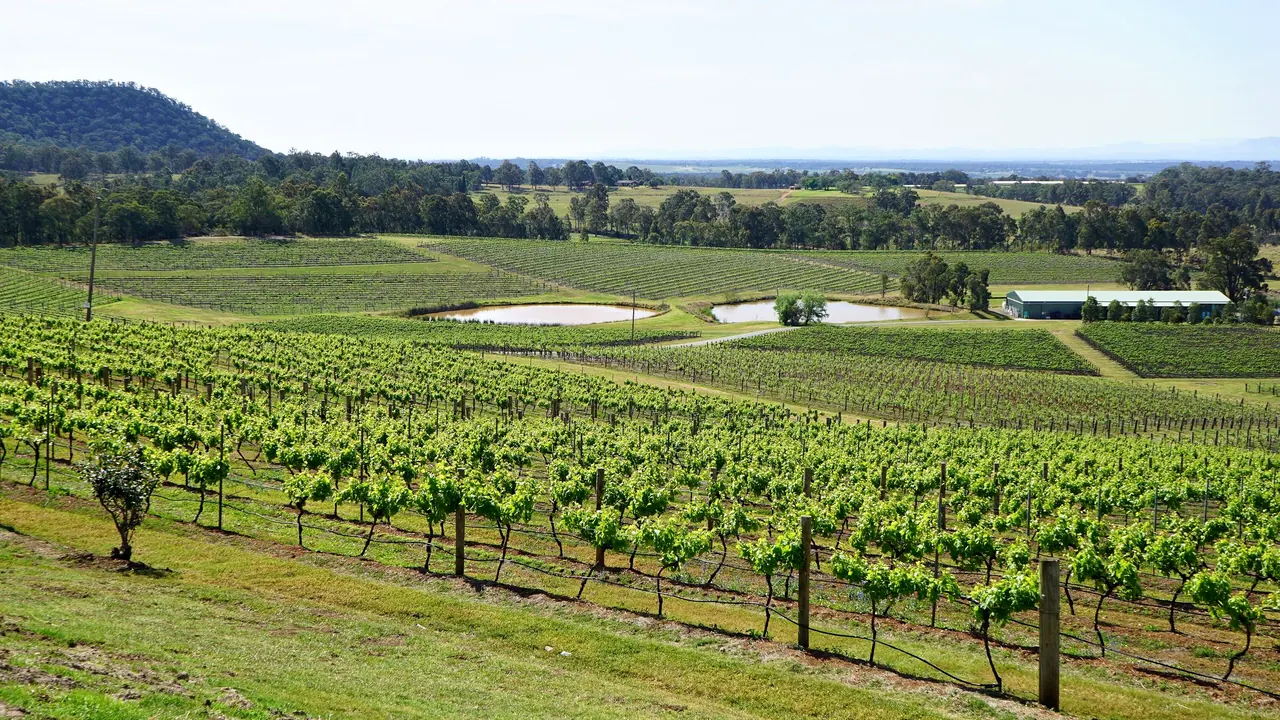
Green vines running down to dams and the ranges
- Food & drink68
- Nature & outdoors55
- Wellness & relaxation50
Photo: thinkrorbot, Public domain
Match
38
Every category weighted equally
- Beach & sun41
- Culture & arts37
- Food & nightlife37
- Family trip40
- Outdoors42
- Relax & unwind43
- Shopping & style37
- On a budget36
Hunter Valley in twelve categories
Our verdict on each, scored 0 to 100 against the same fixed benchmark cities, so a score means the same thing on every page.
Beaches & swimming. Scores 42 out of 100.
Food & drink. Scores 68 out of 100.
Culture & sights. Scores 27 out of 100.
Nightlife. Scores 12 out of 100.
Nature & outdoors. Scores 55 out of 100.
Day trips. Scores 38 out of 100.
Good for families. Scores 33 out of 100.
Getting around. Scores 45 out of 100.
Shopping & style. Scores 22 out of 100.
Affordability. Scores 28 out of 100.
Live music & performing arts. Scores 30 out of 100.
Wellness & relaxation. Scores 50 out of 100.
Hunter Valley category by category
Beaches & swimming
42The Hunter Valley is wine country, and its vineyards around Pokolbin and Cessnock are inland. The sea is a day out, not part of the stay. The nearest good beaches are at Newcastle, about an hour's drive down the valley: Merewether, Bar Beach and Nobbys are patrolled surf beaches, and the old ocean baths are carved into the rock shelf. Port Stephens is a little further and has calmer, clearer bays around Nelson Bay, which suit swimmers who don't want surf.
The water reaches about 22-23°C in late summer, and swimming is comfortable from December to April. For a beach-centred trip, stay on the coast and drive inland to the vineyards, not the other way round.
Food & drink
68This is Australia's oldest wine region, and eating and drinking is the reason most people come. The signature is Hunter Semillon, a lean, long-lived white found nowhere else in quite this style, together with earthy, medium-bodied Shiraz. Cellar doors line the roads of Pokolbin, Broke and Lovedale. Tastings are relaxed, and winemakers often pour for you themselves.
Around the wineries there are vineyard restaurants with long lunches looking over the vines, plus cheese makers, chocolate and olive producers, and farm-gate stalls. Range is what's missing. There is little casual or cheap eating, almost no international variety, and the evenings are quiet. Newcastle, an hour away, is the place for a broader restaurant scene.
Culture & sights
27The heritage here is modest and colonial. Morpeth was a river port and keeps a sandstone main street of nineteenth-century shopfronts. Maitland has Victorian civic buildings and a regional art gallery, and Wollombi is a tiny bush village with an old sandstone courthouse. A few wine estates go back to the 1800s, and their old slab-built cellars are part of their appeal. These make a pleasant afternoon, but there are no major museums or landmarks, and a visitor who has come for sights will soon run out.
Nightlife
12Days in the valley start and finish early. Cellar doors close in the late afternoon, and most evenings are a long dinner followed by a drink at your lodging. Cessnock and the country towns have old pubs that fill up on weekends, and the larger resorts have bars, but there is no late scene. Hen parties and group weekends make some Saturdays louder, without adding much. Anyone who wants a real night out has to go to Newcastle, which means a drive or a transfer.
Nature & outdoors
55The valley floor is pastoral country: rows of vines, paddocks and low ridges, with the Brokenback Range rising behind Pokolbin. It is at its best at dawn from a hot-air balloon, a classic Hunter morning, or at harvest in late summer and in the autumn colour. Cycling between the wineries is popular on the quieter back roads, and kangaroos graze the vineyard edges at dusk.
Wilder country is further out. The Watagan Mountains and Yengo National Park have bushwalks and lookouts in eucalypt forest. To the north, Barrington Tops is part of the Gondwana Rainforests World Heritage area, with high plateau, rainforest gullies and rivers, but it is a long drive and best given a whole day or more. Summers can be very hot, so spring and autumn are the best seasons for walking.
Day trips
38Day trips from the vineyards are short and easy, but modest. Newcastle, about an hour down the valley, is the main one. It is an old coal port with a large Gothic Revival brick cathedral on the hill above the city, a gun fort above the harbour mouth, Nobbys lighthouse at the end of a convict-built breakwater, and a working harbour you can watch from the foreshore. Closer in, Maitland has a Victorian main street and an old stone gaol that is open to visitors, and Morpeth makes a gentle hour among its river-port shopfronts.
Port Stephens, a little beyond Newcastle, means the small bay towns of Nelson Bay and Shoal Bay and the old wartime gun emplacements on Tomaree Head. The Upper Hunter around Scone and Denman is horse-stud country with a few quieter cellar doors. Sydney is too far for a comfortable return trip in a day. None of these is a reason to come on its own. They fill a spare day between tastings rather than shaping the trip.
Good for families
33The Hunter is set up for adults on a wine weekend, and children are an add-on. There are a few things for them. The big display gardens at Pokolbin put on a famous Christmas light show and have rides at that time of year. A small hands-on zoo lets children feed kangaroos, and some farms and chocolate and cheese producers make a short stop. Self-contained cottages with a pool help. Even so, families will find much of the day revolves around cellar doors and long lunches, and the coast at Newcastle or Port Stephens does more to keep children busy.
Getting around
45A car is the normal way to get around, and here it is easy. The wineries of Pokolbin, Broke and Lovedale are spread along quiet, well-kept country roads, and most hops between cellar doors take a few minutes, with little traffic outside the busiest weekends. Within the main Pokolbin cluster, some cellar doors are close enough to walk between, and the flatter back roads suit bicycles.
The real catch is wine. Someone has to stay sober, so many visitors book a small-group tour, a private driver or a winery shuttle for the tasting days and keep the car for everything else. Trains run from Newcastle up the valley through Maitland, but they stop at the towns, not the vineyards. Without a car or a driver, a visitor is largely stuck at their lodging.
Shopping & style
22Shopping here means wine. Buying bottles, and often cases sent home, at the cellar door is the main thing visitors take away, along with cheese, olive oil, chocolate and preserves from providores around Pokolbin. Morpeth has antique and craft shops in its old main street, and the resort villages have gift and homewares stores. For anything beyond that, go to Newcastle.
Affordability
28The Hunter is an expensive weekend. Vineyard cottages, boutique lodges and resorts charge the most on Friday and Saturday nights, which is when most people come, and minimum stays are common then. Long lunches at winery restaurants, balloon flights and the cost of a driver or tour add up quickly. Midweek is clearly cheaper, and many cellar doors pour tastings for little or nothing, but this isn't a place for travelling on a tight budget.
Live music & performing arts
30Live performance here mostly means big outdoor concerts. Through the warmer months, several wineries put up stages on their lawns for touring rock and pop acts and seasonal opera or orchestral evenings among the vines, and these draw crowds from Sydney and Newcastle. Outside those nights there is little to attend in the valley, apart from occasional music in pubs and at cellar doors. For theatre, Newcastle's Civic Theatre is about an hour away.
Wellness & relaxation
50The valley is slow by nature. Days drift between tastings, long lunches and a view over the vines, and evenings are quiet and dark. Several resorts and lodges have full day spas, with massages, treatments and pools, and couples' retreat weekends are a big part of the region's trade. There are no thermal springs or bathhouse traditions, so the wellness here is resort pampering and country calm, not a bathing culture.
Where to stay in Hunter Valley
Most visitors stay in Pokolbin, the heart of the wine country. Staying among the vines puts dozens of cellar doors a few minutes apart, a few close enough to walk between, and suits couples on a food and wine weekend, a spa break or a dawn balloon flight. Lovedale, just to the north-east, is a little quieter, with cottages set among the vineyards. Broke, further west, is the choice for a calm stay with smaller cellar doors and back roads for cycling. Wherever you stay in the vineyards, evenings mean dinner and a drink where you're staying. For families, a self-contained cottage with a pool works best.
Cessnock and Maitland are the practical bases. Cessnock sits at the southern edge of the vineyards and has old pubs and everyday shops. Maitland is on the railway from Newcastle and has Morpeth's river-port streets close by. Both suit travellers who book a driver or tour for tasting days and don't need vines outside the window.
For a beach-centred trip, or for children who need more to do, stay in Newcastle or around Nelson Bay at Port Stephens and drive about an hour inland for a day or two at the wineries. Newcastle also offers the restaurants, nightlife and theatre that the valley lacks. The valley is compact, so one base covers a short stay. Move only if you want both the coast and the vines.
When should you go?
Pick a month to see what it is like. The climate figures are measured averages, not a forecast.
Hunter Valley in July
Daytime high, °C
Rainfall in the month, mm
The whole year
Shaded against this destination’s own year: the deepest cell is its best month for that figure and the palest its weakest.
Where the figures come from
Hunter Valley's sunshine is measured 48 km from the centre, at Williamtown.
Temperature and rainfall are climate normals, averaged over the years shown. Hunter Valley: 1991-2020 normals, Cessnock Airport (1.5 km from centre).
Before you go
| Measure | Hunter Valley |
|---|---|
| Official language | English |
| Currency | Australian Dollar (AUD) |
| Sockets | I230 V, 50 Hz |
| Driving side | Left |
| Time zone | UTC+10, UTC+11 in summer |
| Emergency number | 000 |
| Main airport | Newcastle Airport (NTL)11 non-stop destinations |
| Public holidays this year | 11 days |
By the numbers
| Measure | Hunter Valley |
|---|---|
| Population | 620,530 |
| Swim season, months above 21 °C | 6 months |
Compare Hunter Valley with
Every comparison with a written verdict behind it.