Photos: Blue Mountains by Abracadebra68, CC BY-SA 4.0, cropped; Hunter Valley by thinkrorbot, Public domain.
Blue Mountains or Hunter Valley?
Our verdict in twelve categories, each scored against the same fixed benchmark cities, and the climate month by month, so you can choose for your trip.
Choose Blue Mountains for
- nature and the outdoors
- day trips
- families
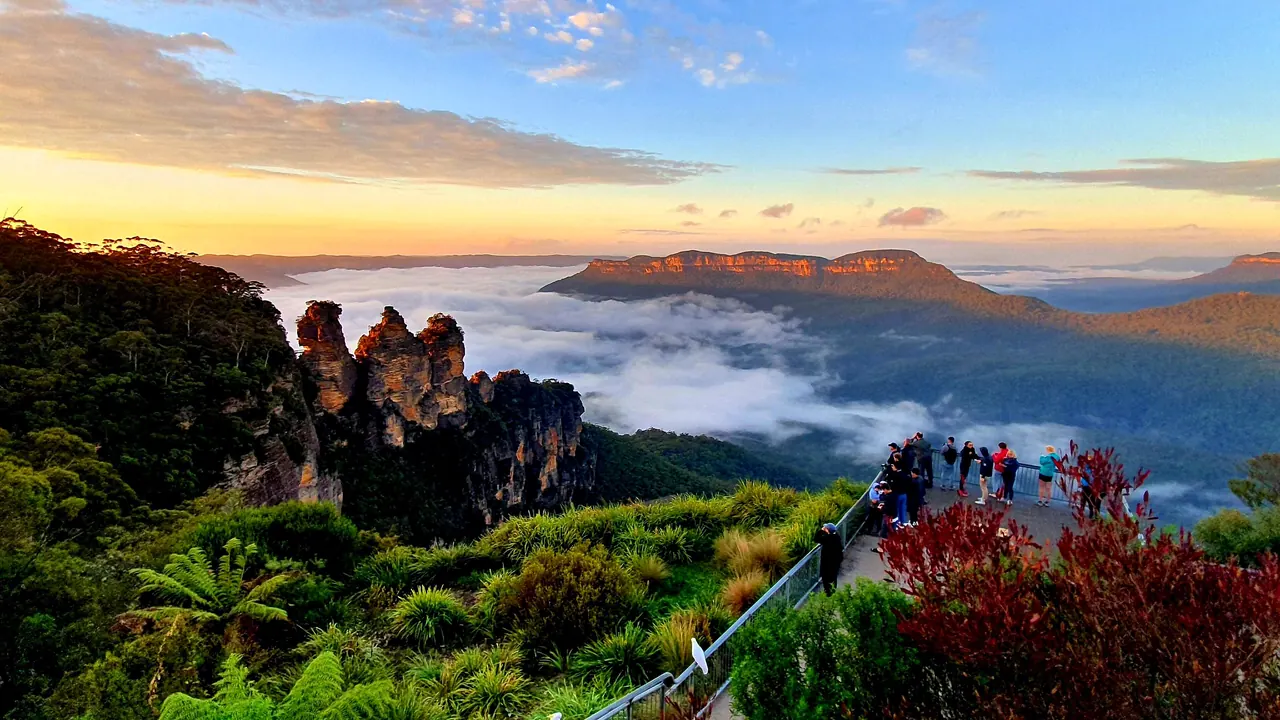
The Blue Mountains suit travellers who want to spend their days on foot. Clifftop tracks, stairways down to waterfalls and some of the best canyoning anywhere start from the edge of the villages, and the whole range sits on the train line from Sydney. Families, walkers and anyone who likes cool air and a fire in the evening will get more out of it, and Sydney is close enough for a day in the city.
Choose Hunter Valley for
- beaches
- food and drink
- live music and the arts
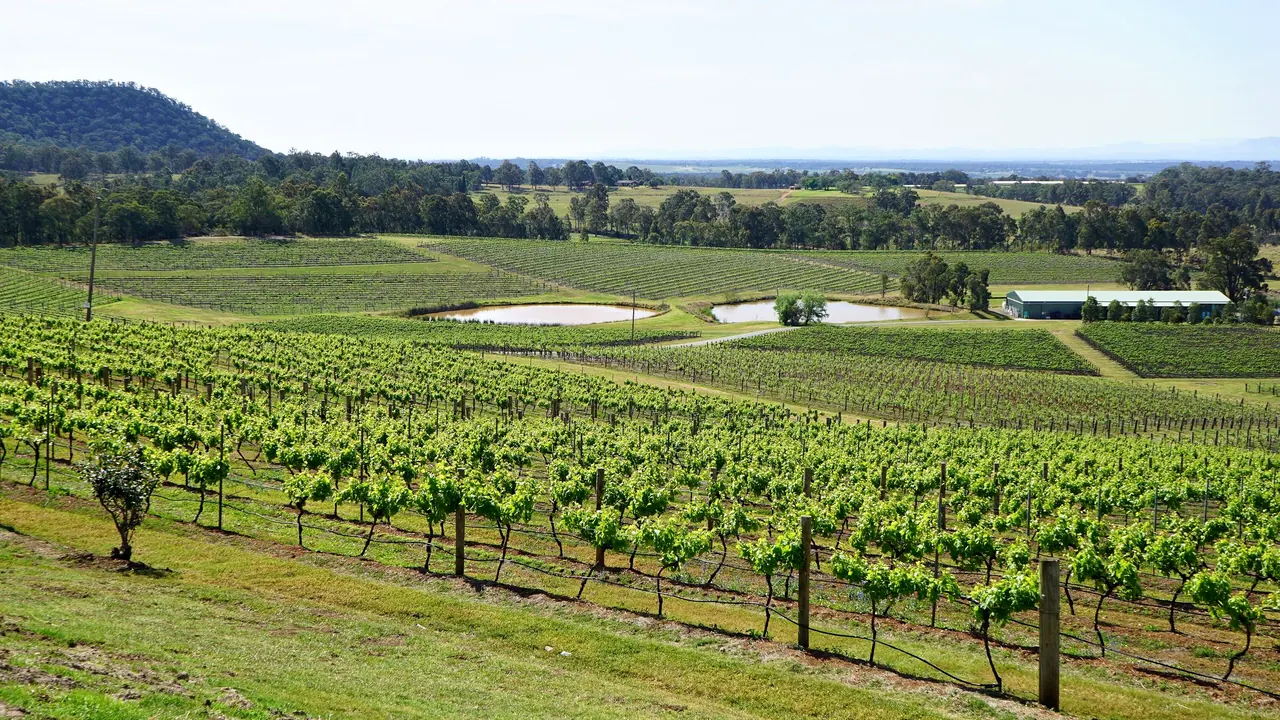
Pick the Hunter Valley if the trip is built around the glass and the table. Cellar doors pouring Hunter Semillon and Shiraz, long lunches over the vines, a dawn balloon flight and big concerts on winery lawns make it an adults' weekend of eating, drinking and sitting in the sun. It is warmer and drier, and the surf beaches at Newcastle are an hour down the valley, but you will need a car or a driver.
Scoreboard
Twelve categories on one fixed scale from 0 to 100. The shaded stretch is the gap between the two.
Your match
Pick a travel style or drag the sliders, and both match scores follow your weighting.
Too close to call, 1 point apart
Wins on nature and the outdoors and day trips with your weighting.
Wins on beaches and food and drink with your weighting.
What matters to you?
Category by category
What the scores mean for a trip.
Beaches & swimming
Neither place is on the coast, but the Hunter Valley is much closer to a real beach. Newcastle's patrolled surf beaches and rock-cut ocean baths are about an hour's drive away, and Port Stephens has calm, clear bays for swimmers who want to avoid the surf. A summer beach day fits easily into a wine weekend.
In the Blue Mountains, swimming means cold, shaded creek pools such as those near Glenbrook, or the water below a waterfall. The sea is a two-hour trip to Sydney and a separate outing.
Food & drink
The Hunter Valley is a destination for eating and drinking, and the mountains are not. Its lean, long-lived Semillon and earthy Shiraz are poured at cellar doors across Pokolbin, Broke and Lovedale, and around them sit vineyard restaurants, cheese makers and farm-gate stalls. The weak spot is range: cheap and international food is hard to find.
Eating in the Blue Mountains revolves around breakfasts, bakeries and afternoon tea with a valley view in the old guesthouses. Leura and Blackheath have a few serious restaurants, and Katoomba's pubs and cafés are cheaper than anything in the valley.
Culture & sights
Both have modest heritage that fills an afternoon or two, with no major museums, but the history is different. The mountains show their past as Sydney's resort: Art Deco shopfronts in Katoomba, Leura's Federation gardens, the Edwardian hotel on the cliff at Medlow Bath and the Norman Lindsay Gallery. Aboriginal rock engravings and hand stencils along some tracks add a much older layer.
The Hunter's heritage is colonial and agricultural. There is the sandstone river-port street at Morpeth, Maitland's Victorian civic buildings and gallery, the bush courthouse at Wollombi, and slab-built cellars on the older wine estates.
Nightlife
Both are early-to-bed places, and for a real night out you have to go to Sydney from the mountains or to Newcastle from the valley. In the mountains the evening is spent by a fire after a day on the tracks, with a few Katoomba pubs busy on weekends. The Hunter has country pubs in Cessnock and resort bars, and hen parties and group weekends make some Saturdays louder.
Nature & outdoors
This is the mountains' great strength, and the valley can't match it. Sheer sandstone cliffs drop into endless eucalypt forest, and walks to the Three Sisters, Govetts Leap and down rock-cut stairways to waterfalls start from the village edges. Slot canyons around Blackheath, the multi-day Six Foot Track and the Jenolan Caves add more.
The Hunter's landscape is pastoral: vines, paddocks and the Brokenback Range, best seen from a dawn balloon or by bike, with kangaroos at dusk. Wilder bush in the Watagans, Yengo and Barrington Tops is a drive away, and Barrington Tops needs a whole day.
Day trips
The Blue Mountains have better excursions, mainly because the train reaches Sydney Harbour in about two hours. On the way you pass Parramatta's World Heritage-listed Old Government House, and Bathurst's gold-rush streets, the Hawkesbury towns of Windsor and Richmond and the Mudgee wineries are all within reach by car.
From the Hunter, Sydney is too far for a comfortable day. The outings are to Newcastle's cathedral, harbour fort and Nobbys breakwater, Maitland's old gaol and the bay towns of Port Stephens. They are pleasant fillers between tastings rather than highlights.
Good for families
The mountains are easier with children. The steep Scenic Railway, the cableways and the guided cave tours at Jenolan are real highlights, and short walks like the Prince Henry Cliff Walk suit small legs. The catch is the unfenced drops at many lookouts and the hundreds of steps on longer tracks.
The Hunter is designed for adults on a wine weekend. A hands-on zoo where children feed kangaroos, the Christmas lights at the Pokolbin gardens and a cottage with a pool help, but the coast does more to keep children busy.
Getting around
The mountains are easier without a car. The villages follow the railway along a single ridge, trains from Sydney stop at Wentworth Falls, Leura, Katoomba and Blackheath, and many good walks start near a station. Only the Megalong Valley, Mount Wilson and Jenolan really need a car.
In the Hunter, the trains stop at the towns rather than the vineyards, so you need a car. The roads are quiet and the drives between cellar doors are short, but someone has to stay sober, which is why so many visitors book a driver or a tour for tasting days.
Shopping & style
Neither is a shopping destination, though the mountains offer a bit more to browse. Leura Mall's tree-lined boutiques, galleries and sweet shops, plus antiques, second-hand books and vintage goods in Katoomba and Blackheath, make for a slow afternoon. In the Hunter, what you take home is mostly wine, often by the case, along with cheese, olive oil and chocolate from the Pokolbin providores and a few antique shops in Morpeth.
Affordability
The mountains are the easier of the two on a budget, mostly because their main attraction costs nothing. Nearly every lookout and walking track is free, the train up from Sydney is cheap, and Katoomba has hostels and plain motels. The expensive parts are the cableways and cave tours.
In the Hunter, the cost comes from the way people visit: weekend minimum stays at vineyard lodges, winery lunches, balloon flights and paying for a driver. Many tastings cost little or nothing, though, and in either place staying midweek makes a clear difference.
Live music & performing arts
The Hunter puts on bigger nights. In the warmer months, wineries set up stages on their lawns for touring rock and pop acts and opera or orchestral evenings among the vines, which draw crowds from Sydney and Newcastle. Newcastle's Civic Theatre is an hour away.
The mountains are busiest in winter instead, with Katoomba's midwinter street festival and Christmas-in-July carols in the guesthouses. The rest of the year there is community theatre and acoustic music in pubs.
Wellness & relaxation
The mountains mean a cool-climate retreat, and the valley means warm resort pampering, though neither is more restful than the other and neither has thermal springs. Up on the ridge, rest comes with cottage fires, clifftop hotels with treatment rooms and small yoga and meditation retreats in the bush, and you can fit in a walk before the massage. In the Hunter it means full day spas, pools and couples' weekends among the vines, followed by dark, quiet evenings after a long lunch.
When should you go?
Pick your month. The climate figures are measured averages, not a forecast.
Blue Mountains in July
Hunter Valley in July
Daytime high, °C
Rainfall in the month, mm
Where the figures come from
Hunter Valley's sunshine is measured 48 km from the centre, at Williamtown.
Temperature and rainfall are climate normals, averaged over the years shown. Blue Mountains: 1991-2020 normals, Katoomba (1.4 km from centre). Hunter Valley: 1991-2020 normals, Cessnock Airport (1.5 km from centre).
The Blue Mountains are high, cool country. Summer days reach only about 24°C, which is pleasant for walking, but summer is also the wettest part of the year, with February the peak at around 195mm, and bushfires can close tracks. Winter is crisp and sometimes frosty, with highs near 10°C, better for a fireside stay than for long walks. Spring and autumn are the best seasons, mild and dry enough to spend whole days on the trails.
The Hunter Valley is much warmer all year, and its rain is lighter. January highs of about 31°C make midsummer hot for cycling between cellar doors, so spring and autumn are the best months there too, and winter days stay mild. The sea at Newcastle is warmest, about 23°C, from January to March, and only a degree or two cooler in December and April, so a beach day from the vineyards works for most of summer. For escaping summer heat, choose the mountains. For escaping winter cold, choose the valley.
Which traveller are you?
For an outdoors trip, the Blue Mountains are the clear choice. World Heritage cliffs and gorges, classic walks like the Grand Canyon track and the Grose Valley descent, canyoning, climbing and the Jenolan Caves start minutes from the villages, rather than a long drive away.
On a food and wine trip, the Hunter Valley wins easily. Australia's oldest wine region has cellar doors where winemakers pour for you, vineyard restaurants and cheese and olive producers. The mountains only offer good breakfasts and high tea, and both places go quiet after dinner.
On a family trip with children, the Blue Mountains work better. The Scenic Railway, the cableways, the lit cave chambers at Jenolan, easy cliff walks and Megalong Valley horse riding keep children busy, while the Hunter's days revolve around tastings and long lunches.
Before you go
| Measure | Blue Mountains | Hunter Valley |
|---|---|---|
| Official language | English | English |
| Currency | Australian Dollar (AUD) | Australian Dollar (AUD) |
| Sockets | I230 V, 50 Hz | I230 V, 50 Hz |
| Driving side | Left | Left |
| Time zone | UTC+10, UTC+11 in summer | UTC+10, UTC+11 in summer |
| Emergency number | 000 | 000 |
| Main airport | Sydney Kingsford Smith International Airport (SYD)99 non-stop destinations | Newcastle Airport (NTL)11 non-stop destinations |
| Public holidays this year | 11 days | 11 days |
By the numbers
| Measure | Blue Mountains | Hunter Valley |
|---|---|---|
| Population | 30,049 | 620,530 |
| People per km² | 21 | - |
| Swim season, months above 21 °C | - | 6 months |
Where else could you go?
Every comparison below shares a destination with this one, so you can follow Blue Mountains or Hunter Valley somewhere new.
- Sunshine Coastvs Hunter Valley
- Great Ocean Roadvs Blue Mountains
- Sunshine Coastvs Blue Mountains
- K'garivs Hunter Valley
- Great Ocean Roadvs Hunter Valley
- K'garivs Blue Mountains