Photos: Great Ocean Road by Joe Kent, Pexels License; Hunter Valley by thinkrorbot, Public domain.
Great Ocean Road or Hunter Valley?
Our verdict in twelve categories, each scored against the same fixed benchmark cities, and the climate month by month, so you can choose for your trip.
Choose Great Ocean Road for
- nature and the outdoors
- families
- day trips
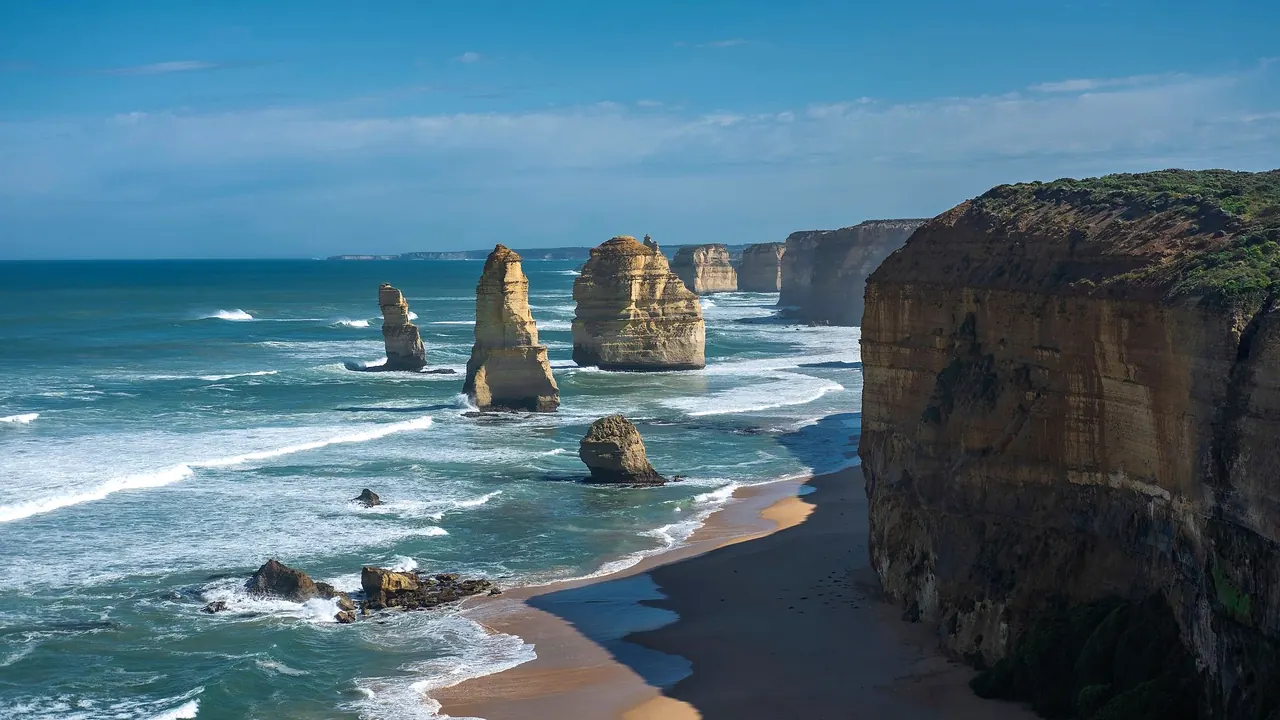
The Great Ocean Road suits travellers who want scenery and movement: a road trip past the limestone stacks of the Twelve Apostles, through the Otway rainforest and into beach towns where families spend the day between the flags. It is the better choice for walkers, surfers, wildlife watchers and anyone with children. You give up serious eating and drinking, and you have to accept long, winding drives and a sea that stays cool even in summer.
Choose Hunter Valley for
- food and drink
- getting around
- live music and the arts
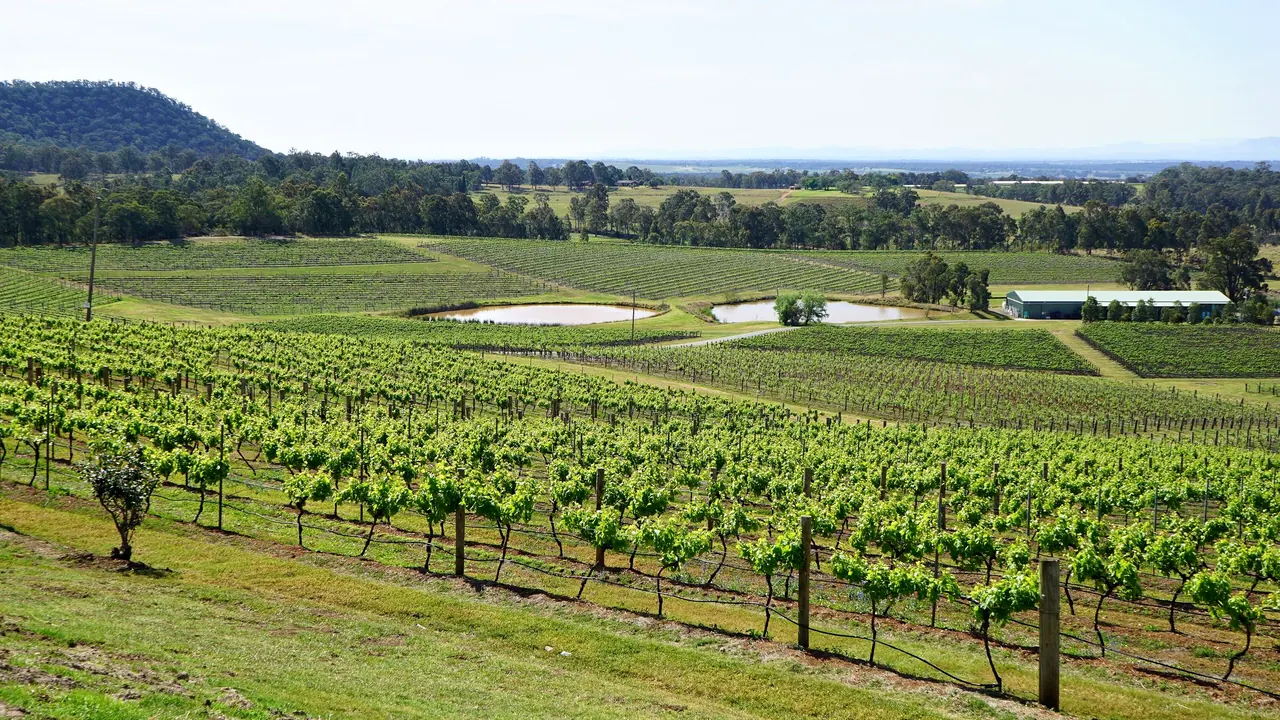
Couples planning a slow weekend of wine, long lunches and spa treatments should head for the Hunter Valley. You pick one base among the vineyards of Pokolbin and let the cellar doors come to you, a few minutes apart on quiet roads. The landscape is gentle and pastoral rather than dramatic, the beach is an hour's drive away at Newcastle, and children will find less to do.
Scoreboard
Twelve categories on one fixed scale from 0 to 100. The shaded stretch is the gap between the two.
Your match
Pick a travel style or drag the sliders, and both match scores follow your weighting.
Too close to call, 1 point apart
Wins on nature and the outdoors and families with your weighting.
Wins on food and drink and getting around with your weighting.
What matters to you?
Category by category
What the scores mean for a trip.
Beaches & swimming
The Great Ocean Road has the real beach towns. In Torquay, Anglesea, Lorne and Apollo Bay you stay right by patrolled sand, and Bells Beach and Jan Juc serve surfers. The catch is the water, which stays cool even in summer and is unsafe for swimming along the wildest stretches near Port Campbell.
In the Hunter Valley the sea is a day out, about an hour away at Newcastle's surf beaches and ocean baths, or at the calm bays of Port Stephens. The water there is actually warmer, but you have to drive to it each time.
Food & drink
The Hunter Valley is the place to go for food and drink. Australia's oldest wine region pours its distinctive Semillon and earthy Shiraz at cellar doors across Pokolbin, Broke and Lovedale, often served by the winemakers themselves. Between tastings there are long lunches overlooking the vines and stops at cheese, chocolate and olive producers.
On the Great Ocean Road, food is a pleasant extra rather than a reason to go: good coffee and brunch in Lorne and Torquay, fish and chips on the foreshore, crayfish in season and a few farm restaurants and breweries in the Otway hinterland. Both regions offer little variety, but only the Hunter is worth planning a trip around for what's on the plate.
Culture & sights
Neither region is a sightseeing destination, and both offer an afternoon of history rather than a list of landmarks. On the Great Ocean Road, the story is maritime and military: the road itself was built as a war memorial, Cape Otway Lightstation and Flagstaff Hill tell the history of the many ships wrecked here, and Port Fairy has bluestone cottages.
The Hunter's heritage is colonial and rural. There is the sandstone river-port street at Morpeth, Maitland's Victorian civic buildings and art gallery, Wollombi's old courthouse and slab-built cellars on the oldest wine estates.
Nightlife
Evenings are equally quiet in both places, and neither has a late scene. Torquay and Lorne get lively on summer weekends and at New Year, when young crowds drive down from Melbourne, but further west there is little beyond the hotel bar.
In the Hunter, the night is usually a long dinner and a drink back at your lodging, with weekend pubs in Cessnock, resort bars and the occasional hen party. For a proper night out you need Newcastle.
Nature & outdoors
The Great Ocean Road is the main reason to choose between these two if you care about landscape. It has limestone stacks and gorges along cliffs pounded by the Southern Ocean, cool rainforest with tree ferns and waterfalls in the Great Otway National Park, and plenty of wildlife: koalas, kangaroos and calving whales in winter. Be ready for wind and sudden rain.
The Hunter Valley is gentler, pastoral country of vines and paddocks beneath the Brokenback Range, at its best from a dawn balloon or a bicycle on the back roads. Its wilder country is further out, in the Watagans and at Barrington Tops, which need a long drive.
Day trips
The eastern end of the Great Ocean Road has better day trips. From there, Melbourne is about an hour and a half away, Geelong is close, and the Bellarine Peninsula has Queenscliff's fort and its wineries. Goldfields Ballarat is within reach for a long day. In the west, the Budj Bim Cultural Landscape adds an ancient Aboriginal site of real significance.
Day trips from the Hunter Valley are easy but modest. Newcastle has its cathedral, harbour fort and Nobbys lighthouse, Maitland has its old gaol, and Port Stephens has its bays and wartime gun emplacements. Sydney is too far for a comfortable return in a day.
Good for families
The Great Ocean Road gives children more to do, but it needs some planning. Small children find the sea cold even in midsummer, the cliff-top lookouts at the Apostles and Loch Ard Gorge need a firm hand, and the tight bends past Lorne can make a long drive a carsick one. Settle in one town and make short outings from it. The sound-and-light shipwreck show at Warrnambool's maritime village makes a good evening.
The Hunter Valley has fewer of these problems but much less to fill the days. A small zoo where children feed kangaroos, stops at chocolate and cheese makers and the Christmas lights at the Pokolbin gardens will cover a day or two. After that, the trip comes back to cellar doors and long lunches, and the warmer water is an hour's drive away on the coast.
Getting around
You need a car in both regions, but the driving is far easier in the Hunter Valley. The wineries sit a few minutes apart on quiet, well-kept roads, some in the Pokolbin cluster are walkable and the flat back roads suit bicycles. The complication is the wine itself, so many visitors book a driver or shuttle for tasting days.
The Great Ocean Road is the journey itself, but it is slow. There are tight bends between Lorne and Apollo Bay, caravans to follow in summer and three to four hours from Torquay to the Apostles with stops. It is best split over two or three nights.
Shopping & style
Neither region is a shopping destination, and each has one thing to take home. On the Great Ocean Road it is surfwear from the outlets in Torquay, where several big Australian surf brands began, plus galleries and summer makers' markets. In the Hunter it is wine, often by the case, along with cheese, olive oil and preserves, plus antique shops in Morpeth.
Affordability
Both are expensive, and they cost about the same. On the Great Ocean Road the costs are summer and Easter rates in Lorne and Torquay plus a hire car and fuel, though caravan parks, campgrounds and free national park walks keep costs down.
The Hunter's costs depend on the day of the week. Friday and Saturday nights carry the highest rates and minimum stays, while midweek is clearly cheaper and tastings can cost little.
Live music & performing arts
The Hunter Valley has more live performance. Through the warmer months, wineries set up stages on their lawns for touring rock and pop acts and opera or orchestral evenings among the vines, and Newcastle's Civic Theatre is an hour away.
The Great Ocean Road has one notable event, the Port Fairy Folk Festival over a long weekend in March, and otherwise only the odd pub band on summer weekends.
Wellness & relaxation
The Hunter Valley is the better place for a pampering break. Several resorts and lodges have full day spas with pools and treatments, and couples' retreat weekends are a large part of what the valley offers, alongside long, slow days among the vines.
On the Great Ocean Road you relax by slowing down rather than through treatments. It offers empty beaches out of season, forest cabins with fires in winter and a few day spas and yoga retreats. It is best avoided in the crowded summer weeks if rest is the aim.
When should you go?
Pick your month. The climate figures are measured averages, not a forecast.
Great Ocean Road in July
Hunter Valley in July
Daytime high, °C
Rainfall in the month, mm
Where the figures come from
Hunter Valley's sunshine is measured 48 km from the centre, at Williamtown.
Temperature and rainfall are climate normals, averaged over the years shown. Great Ocean Road: 1991-2020 normals, Aireys Inlet (12.2 km from centre). Hunter Valley: 1991-2020 normals, Cessnock Airport (1.5 km from centre).
The Great Ocean Road has a cool, mild climate. At the main resort towns, summer days from January to March peak at about 24°C. That is the beach season, though the sea never gets much past 19°C. Winter is grey and wet, with highs around 13°C in July and the heaviest rain from June to August. Those are months for forest cabins and wild coastal walks, not swimming. Spring and autumn are cool but fine for touring.
Around the vineyards, the Hunter Valley runs much hotter, and January highs reach 31°C, which makes walking and cycling hard work. Late summer is also the wettest time, with February bringing about 112mm. That leaves spring and autumn as the best seasons, warm and sunny, while winter stays mild and fairly bright. The warmer sea at Newcastle allows swimming from December to April. In short, the Hunter is better than the Great Ocean Road in the cooler half of the year, while the Great Ocean Road is the better choice when the valley is too hot.
Which traveller are you?
For an outdoors trip, choose the Great Ocean Road. It has cliff walks past the Twelve Apostles, the multi-day Great Ocean Walk, waterfalls and glow worms in the Otways, koalas in the gums and whales off Warrnambool. The Hunter's vineyards and distant Barrington Tops are tamer by comparison.
On a food and nightlife trip, go to the Hunter Valley for the food. It has Hunter Semillon at the cellar doors of Pokolbin and Broke, long vineyard lunches and local cheese and olive oil. Don't expect late nights in either place, as evenings in both end early.
On a family trip with children, the Great Ocean Road is the better choice. It has patrolled beaches within a short walk of caravan parks in Anglesea and Lorne, surf schools in Torquay, koalas at Kennett River and easy rainforest walks. In the Hunter, children mostly tag along to cellar doors.
Before you go
| Measure | Great Ocean Road | Hunter Valley |
|---|---|---|
| Official language | English | English |
| Currency | Australian Dollar (AUD) | Australian Dollar (AUD) |
| Sockets | I230 V, 50 Hz | I230 V, 50 Hz |
| Driving side | Left | Left |
| Time zone | UTC+10, UTC+11 in summer | UTC+10, UTC+11 in summer |
| Emergency number | 000 | 000 |
| Main airport | Melbourne Airport (MEL)70 non-stop destinations | Newcastle Airport (NTL)11 non-stop destinations |
| Public holidays this year | 13 days | 11 days |
By the numbers
| Measure | Great Ocean Road | Hunter Valley |
|---|---|---|
| Population | - | 620,530 |
| Swim season, months above 21 °C | None | 6 months |
Where else could you go?
Every comparison below shares a destination with this one, so you can follow Great Ocean Road or Hunter Valley somewhere new.
- Blue Mountainsvs Hunter Valley
- Tasmaniavs Great Ocean Road
- Barossa Valleyvs Great Ocean Road
- Kangaroo Islandvs Great Ocean Road
- Sunshine Coastvs Hunter Valley
- Blue Mountainsvs Great Ocean Road