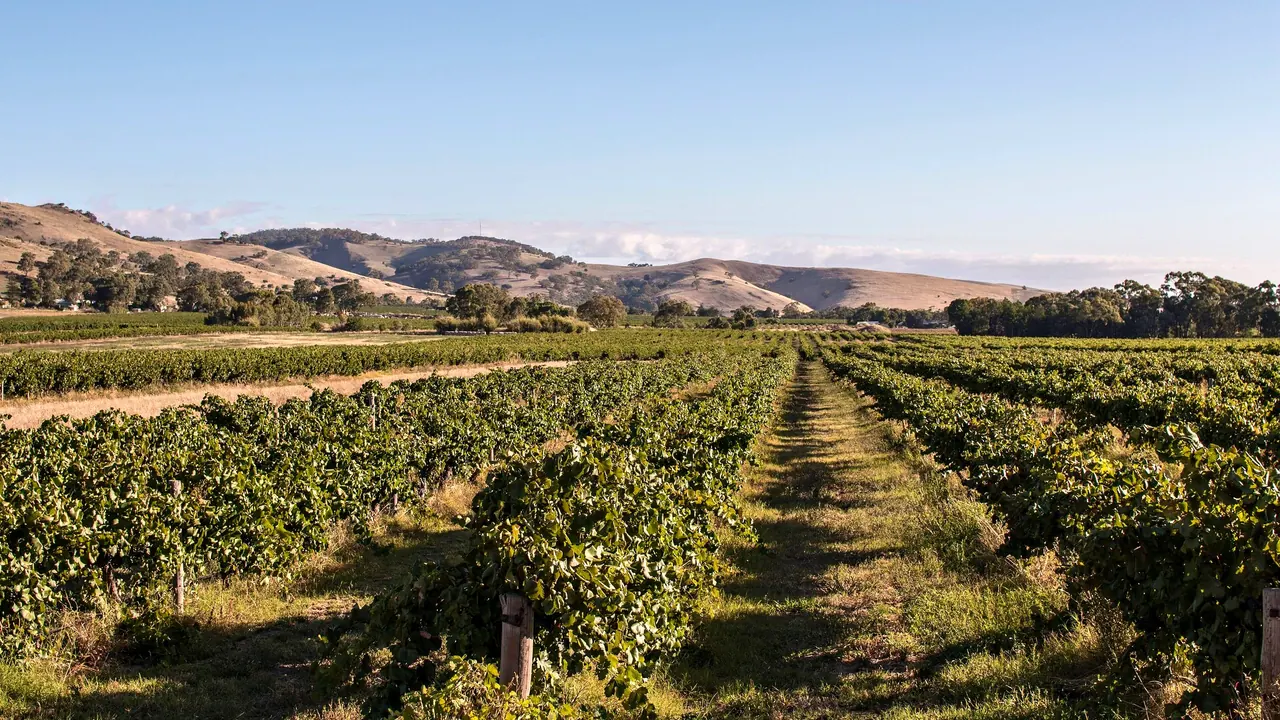
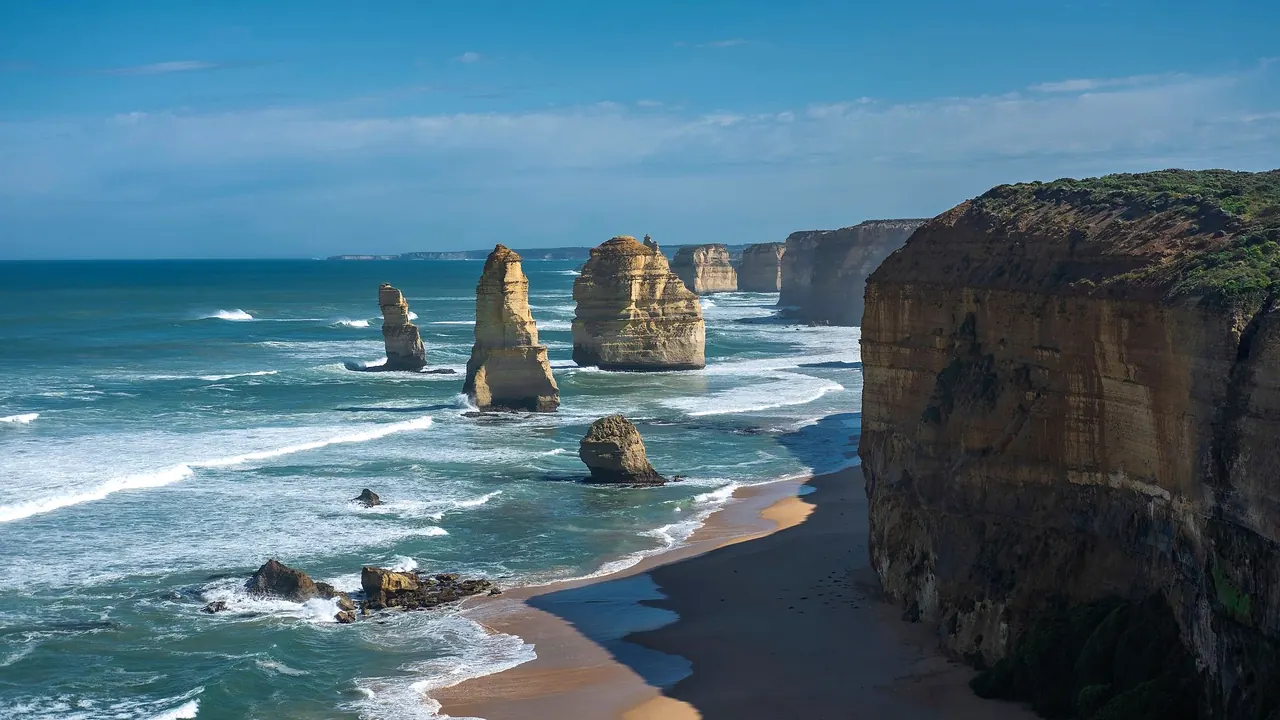
Photos: Barossa Valley by Olivier Lemoine, CC BY-SA 4.0, cropped; Great Ocean Road by Joe Kent, Pexels License.
Barossa Valley or Great Ocean Road?
Our verdict in twelve categories, each scored against the same fixed benchmark cities, and the climate month by month, so you can choose for your trip.
Choose Barossa Valley for
- food and drink
- getting around
- culture and sights
Choose the Barossa for a wine and food trip that stays in one place. Couples on a slow weekend get old-vine cellar doors, Lutheran bakeries and winery restaurants, all within a compact valley where the towns sit a short drive apart. You give up beaches, wild scenery and anything to do after dinner, and children will mostly be waiting for you.
Choose Great Ocean Road for
- nature and the outdoors
- beaches
- families
The Great Ocean Road suits travellers who come for landscape and are happy to spend the trip on the move. The Twelve Apostles, the Otway rainforest, koalas in the gums and patrolled summer beaches make it the better choice for families and anyone who wants to be outdoors. The price is long, winding drives spread over several nights, and food that is pleasant but nothing more.
Scoreboard
Twelve categories on one fixed scale from 0 to 100. The shaded stretch is the gap between the two.
Your match
Pick a travel style or drag the sliders, and both match scores follow your weighting.
Wins on food and drink and getting around with your weighting.
Wins on nature and the outdoors and beaches with your weighting.
What matters to you?
Category by category
What the scores mean for a trip.
Beaches & swimming
The Barossa has no beach of its own. Swimming means a motel pool, and the Adelaide sand at Glenelg or Henley Beach takes most of a day to reach and enjoy.
The Great Ocean Road gives you a proper beach vacation, though the water is cool. The patrolled town beaches at Torquay, Anglesea, Lorne and Apollo Bay fill up in summer, and surfers have Bells Beach and Jan Juc. The cliffs around Port Campbell are for looking at, not swimming.
Food & drink
Food and wine are the whole point of the Barossa. Cellar doors from Lyndoch to Angaston pour some of the world's oldest Shiraz and Grenache, Eden Valley adds Riesling, and the Silesian heritage shows in mettwurst, streusel cake and the Angaston farmers market. What it lacks is cheap or late eating.
On the Great Ocean Road, food goes with the trip rather than being the reason for it. Expect brunch cafés in Lorne and Torquay, fish and chips on the foreshore, crayfish in season and a few farm restaurants and breweries inland at Birregurra and Forrest. Near the Apostles, many places cater to coach tours.
Culture & sights
Neither destination is a sightseeing trip, but the Barossa's heritage hangs together better. It is a Lutheran farming settlement you can read in Bethany's strip fields, the church spires of Tanunda and Langmeil and the palm avenue to Seppeltsfield, with the pipe organ in the Tanunda gallery as a bonus.
The coast's history is maritime and spread along the drive: the memorial arch, Cape Otway Lightstation, Flagstaff Hill in Warrnambool and the bluestone streets of Port Fairy. Each makes a good stop, but together they add up to less.
Nightlife
Both are early-to-bed places. The coast has slightly more going on, because pubs and a few bars in Torquay and Lorne fill with young Melburnians on summer weekends and at New Year. The Barossa has country hotels pouring for locals and the odd winery evening, and anyone wanting a real night out goes to Adelaide.
Nature & outdoors
This is the widest gap between the two. The Barossa's landscape is farmed and gentle, best enjoyed from Mengler Hill, the granite outcrops of Kaiserstuhl, the vineyard cycle trail or a dawn balloon flight.
The Great Ocean Road is one of the country's great coastlines. It has limestone stacks battered by the Southern Ocean, tree-fern rainforest and waterfalls in the Otways, glow worms at Melba Gully, koalas and kangaroos everywhere, and whales off Warrnambool in winter. Walkers can spend several days on the Great Ocean Walk.
Day trips
Outings are about as good from either, but they work differently. From a single base in the Barossa you can reach everything: an Adelaide city day, Hahndorf and the Adelaide Hills, the motor museum at Birdwood, or the copper-mining history of Kapunda and Burra to the north.
On the coast, it depends on which end you are at. Torquay puts you close to Geelong, Queenscliff on the Bellarine and Melbourne. Port Fairy and Warrnambool are close to Budj Bim, an Aboriginal eel-trapping landscape that offers something the Barossa cannot match.
Good for families
The coast is far better for children. Beach houses and caravan parks sit near patrolled sand, Torquay has beginner surf schools, the Otway walks are short, and koalas and the shipwreck show at Warrnambool keep children interested. The catch is carsickness on the bends, so pick one town to stay in.
The Barossa is built around wine tasting. Children get the Whispering Wall, flat stretches of cycle path and cellar-door lawns, and families usually end up driving to Adelaide for the zoo or the beach.
Getting around
The Barossa is the easier place to get around. Its towns lie ten to twenty minutes apart on one quiet valley road, and the sealed Barossa Trail lets you cycle between cellar doors. The real problem is tasting and driving, which is why so many visitors book a driver or a tour.
The Great Ocean Road is a road trip. It takes three to four hours with stops from Torquay to the Apostles, the tight bends past Lorne are slow behind caravans, and the coach service is too sparse to rely on. You need a car and two or three nights.
Shopping & style
Neither is somewhere to go shopping, and there is little between them. The difference is in what ends up in the luggage. In the Barossa it is food and drink, above all wine in small lots you cannot buy away from the cellar door. On the coast it is clothing, from the surfwear outlets in Torquay, the town where several of the big Australian surf brands began.
Apart from that, both offer much the same: a few galleries, antique and gift shops along the main streets, and markets where local producers sell. For fashion or a proper day of shopping, both send you back to the city.
Affordability
Both are dear by most standards, and the Barossa is only a little easier on the budget. The real difference is where the money goes. In the valley it goes on the indulgence itself: boutique cottages and vineyard lodges for couples, winery restaurants, tasting fees and someone to drive you. Motels and caravan parks around Nuriootpa and Tanunda, bakery lunches and cycling between cellar doors bring the bill down.
On the coast, the costs come from the season and the distance. Lorne and Torquay are at their most expensive in summer and at Easter, and a hire car and fuel add up over several nights on the road. Caravan parks, campgrounds and self-catering outside the school vacations keep the trip affordable, and the coast's main sights, the lookouts and the national park walks, cost nothing to see.
Live music & performing arts
Neither has a regular stage, and for theatre or concerts you need Adelaide or Melbourne. The coast has a slight edge because of the Port Fairy Folk Festival, a long-established March weekend of roots music that is worth planning a trip around. The Barossa's music is linked to its heritage and seasons: Lutheran choirs, brass bands, organ recitals in Tanunda and concerts at the autumn Vintage Festival.
Wellness & relaxation
Both offer slowness rather than spas. Neither has a bathing tradition, and treatment rooms are few. In the Barossa, the calm comes from long lunches, unhurried tastings and a verandah over the vines, best away from vintage and festival weekends. On the coast, it comes from empty beaches out of season and forest cabins with a fire in winter, since the summer crowds take the peace away.
When should you go?
Pick your month. The climate figures are measured averages, not a forecast.
Barossa Valley in July
Great Ocean Road in July
Daytime high, °C
Rainfall in the month, mm
Where the figures come from
Barossa Valley's sunshine is measured 68 km from the centre, at Adelaide Airport.
Temperature and rainfall are climate normals, averaged over the years shown. Barossa Valley: 1991-2020 normals, Nuriootpa (4.5 km from centre). Great Ocean Road: 1991-2020 normals, Aireys Inlet (12.2 km from centre).
The Barossa is a dry, sunny valley with hot summers. January days reach 30°C and heatwaves go well beyond that, which makes long tasting afternoons hard going. March and April, and October and November, are the comfortable months for cycling, walking and touring the vines, while most of the rain falls in a cool winter. For a swim, the gulf beaches near Adelaide are warmest in January and February, at about 22°C.
The Great Ocean Road is cooler and wetter all year. Summer days peak around 24°C, pleasant for lookouts and walks, and the sea only reaches 18°C to 19°C from January to March, so beach days belong to those months. Rain comes in every season and builds to about 71mm in July, when wind and showers on the cliffs are part of the scene. Broadly, the Barossa is at its best in the shoulder seasons and the coast at the height of summer.
Which traveller are you?
For an outdoors trip, the Great Ocean Road is the clear choice. The Twelve Apostles and Loch Ard Gorge, waterfalls and glow worms in the Otways, koalas at Kennett River and the multi-day Great Ocean Walk easily outclass the Barossa's gentle vineyard trails and balloon flights.
On a food and nightlife trip, the Barossa wins on the food: old-vine Shiraz at the cellar doors, Eden Valley Riesling, Lutheran bakeries and winery restaurants. Neither destination has much of a night out, so plan on long dinners rather than late bars.
On a family trip with children, the Great Ocean Road works far better. Patrolled beaches, surf schools in Torquay and koalas in the trees give children a vacation of their own, while in the Barossa they get little more than playgrounds and the Whispering Wall.
Before you go
| Measure | Barossa Valley | Great Ocean Road |
|---|---|---|
| Official language | English | English |
| Currency | Australian Dollar (AUD) | Australian Dollar (AUD) |
| Sockets | I230 V, 50 Hz | I230 V, 50 Hz |
| Driving side | Left | Left |
| Time zone | UTC+9:30, UTC+10:30 in summer | UTC+10, UTC+11 in summer |
| Emergency number | 000 | 000 |
| Main airport | Adelaide International Airport (ADL)35 non-stop destinations | Melbourne Airport (MEL)70 non-stop destinations |
| Public holidays this year | 12 days | 13 days |
By the numbers
| Measure | Barossa Valley | Great Ocean Road |
|---|---|---|
| Swim season, months above 21 °C | 3 months | None |
Where else could you go?
Every comparison below shares a destination with this one, so you can follow Barossa Valley or Great Ocean Road somewhere new.
- Kangaroo Islandvs Barossa Valley
- Tasmaniavs Great Ocean Road
- Kangaroo Islandvs Great Ocean Road
- Blue Mountainsvs Great Ocean Road
- Hunter Valleyvs Great Ocean Road
- Blue Mountainsvs Barossa Valley