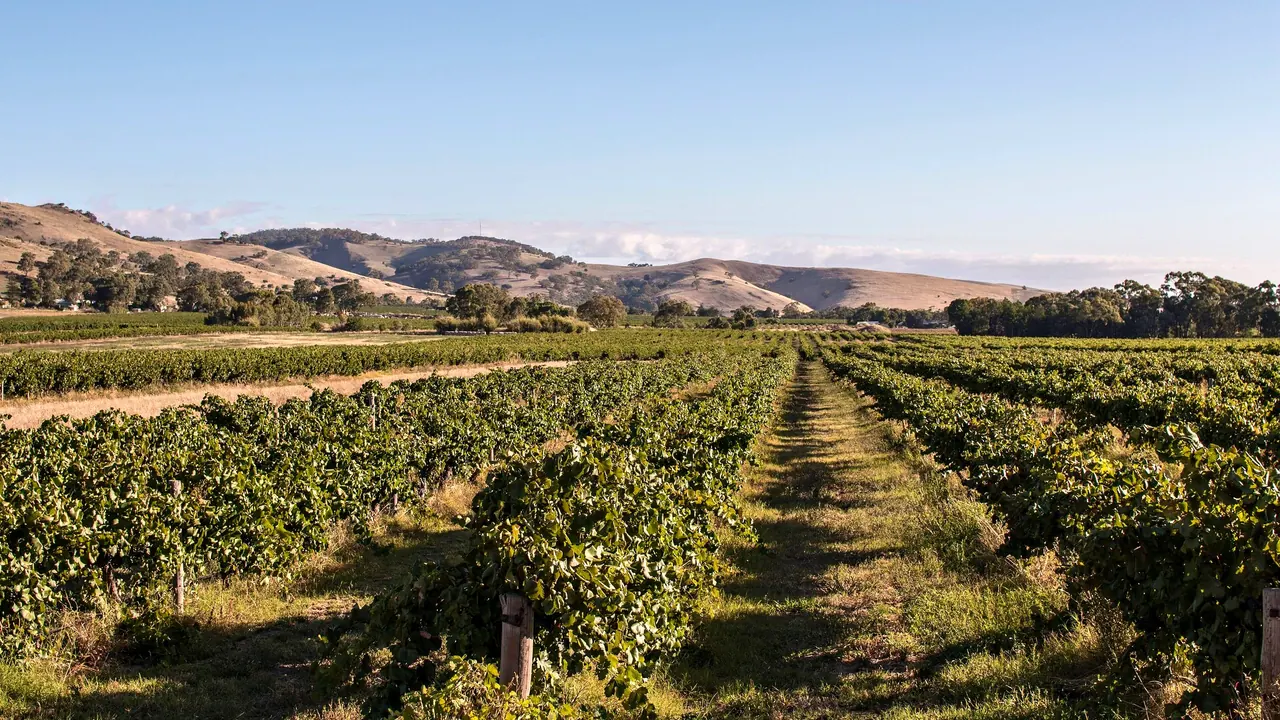
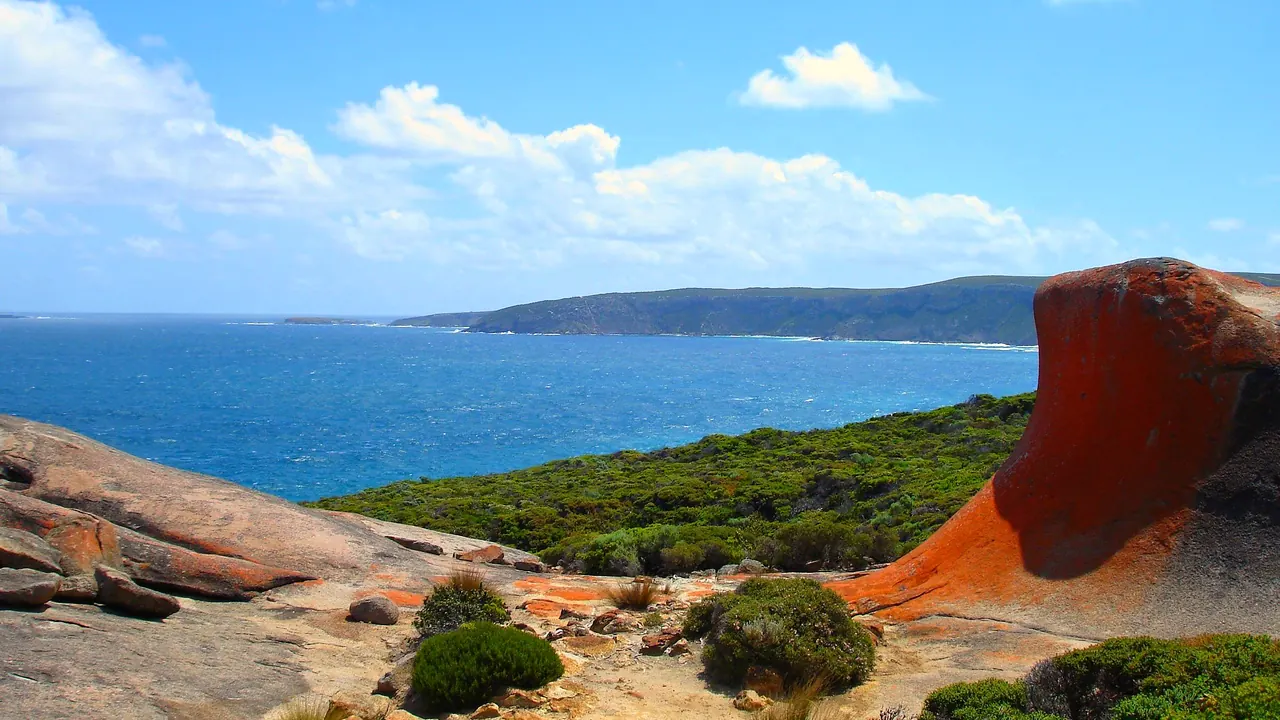
Photos: Barossa Valley by Olivier Lemoine, CC BY-SA 4.0, cropped; Kangaroo Island by Navin75, CC BY-SA 2.0, cropped.
Barossa Valley or Kangaroo Island?
Our verdict in twelve categories, each scored against the same fixed benchmark cities, and the climate month by month, so you can choose for your trip.
Choose Barossa Valley for
- day trips
- food and drink
- culture and sights
The Barossa Valley is the choice for a slow trip built around the table: old-vine Shiraz at cellar doors along the back roads, Silesian bakeries and butchers, and winery restaurants for long lunches. A base in Tanunda or Angaston also puts Adelaide, Hahndorf and the old mining towns to the north within easy reach for days off from tasting. It suits couples and wine lovers much better than children, and you need someone who isn't drinking to drive.
Choose Kangaroo Island for
- nature and the outdoors
- beaches
- families
Anyone who would rather see wild animals than taste wine should cross to Kangaroo Island. You can walk among sea lions at Seal Bay, see fur seals under Admirals Arch and watch kangaroos grazing at dusk, which makes it far stronger for the outdoors and for children. Its empty white beaches also beat a valley with no coast at all. In return you give up good restaurants, sights and easy travel: a ferry or flight, a hire car and long drives come with the island, and the whole trip costs more.
Scoreboard
Twelve categories on one fixed scale from 0 to 100. The shaded stretch is the gap between the two.
Your match
Pick a travel style or drag the sliders, and both match scores follow your weighting.
Wins on day trips and food and drink with your weighting.
Wins on nature and the outdoors and beaches with your weighting.
What matters to you?
Category by category
What the scores mean for a trip.
Beaches & swimming
Neither place is a beach destination, but only Kangaroo Island has a coast of its own. On its north shore, at Emu Bay, Stokes Bay and Snelling Beach, you get white sand and calm turquoise water, usually with nobody else there. The Southern Ocean swell on the south coast makes those beaches better for walking.
From the Barossa, a swim means a hotel pool or the Adelaide beaches at Glenelg and Henley Beach, more than an hour's drive away, which takes up most of a day. The water there is in fact slightly warmer than the island's, but on the island a swim fits in between wildlife stops.
Food & drink
Food and wine are the reason to go to the Barossa, and here it is well ahead. Cellar doors from Lyndoch to Angaston pour wine from some of the world's oldest Shiraz and Grenache vines, and Eden Valley adds Riesling. The Silesian heritage shows in mettwurst, streusel cake and rye bread, and winery restaurants add fine dining.
Kangaroo Island has excellent ingredients, including Ligurian honey, American River oysters, sheep's milk cheese and marron, but few places to eat them. It is better for buying at the farm gate and cooking for yourself, and an evening meal out in Kingscote or Penneshaw needs planning.
Culture & sights
Neither is worth travelling to for culture, but the Barossa has more to see. There are the Lutheran spires of Tanunda and Langmeil, the early village layout of Bethany, the palm avenue leading to Seppeltsfield's bluestone cellars and the pipe organ in the Tanunda gallery. Kangaroo Island's heritage comes down to the first settlement site at Reeves Point and the lighthouses at Cape Willoughby, Cape Borda and Cape du Couedic, good stops on a drive with keepers' cottages to tour.
Nightlife
Both go quiet after dark, and neither is a place for a night out. In the Barossa the evening is a long dinner, perhaps with a beer at an old country hotel in Tanunda or Nuriootpa, and Adelaide is the nearest place for anything later. On Kangaroo Island the night is for dusk wildlife walks and stargazing, and kangaroos on the roads keep most people in after sunset.
Nature & outdoors
For nature, Kangaroo Island is in a different league. You can see sea lions at Seal Bay, fur seals beneath Admirals Arch, koalas, echidnas and kangaroos by the roadside, and leafy sea dragons under the jetties. Add Remarkable Rocks, the Little Sahara dunes and the Kelly Hill caves, and few places anywhere match it for wildlife.
The Barossa's landscape is pleasant rather than wild: vineyards and red-gum paddocks below low ranges, the view from Mengler Hill, and kangaroos and birds in Kaiserstuhl Conservation Park. Its best outdoor moments are cycling the Barossa Trail and a balloon flight at dawn.
Day trips
The Barossa is a much better base for outings. Adelaide's museums on North Terrace and the Central Market, the German village of Hahndorf in the Adelaide Hills, the motor museum at Birdwood and the copper-mining heritage of Kapunda and Burra are all a comfortable drive away.
Kangaroo Island is an outing in itself, and once you are there, the only trips are drives between small towns such as Kingscote and American River. The Fleurieu Peninsula and McLaren Vale mean taking the ferry to Cape Jervis first, so most visitors see them on the way to or from Adelaide.
Good for families
Kangaroo Island suits children far better, especially children who love animals. They can walk among sea lions, watch kangaroos at dusk, slide down sand dunes and crawl through caves. The drawbacks are long drives between sights and few facilities, so slow days from a self-catering house work best.
The Barossa is built around adults tasting wine. The Whispering Wall at the reservoir, flat stretches of cycle path and lawns at the cellar doors help, but families often end up driving to Adelaide for the zoo and the beaches.
Getting around
You need a car for both, but the Barossa is far easier. Its towns sit ten to twenty minutes apart on one valley road, and the sealed Barossa Trail links them by bicycle. Drivers and small-group tours get around the problem of tasting and driving.
Getting to Kangaroo Island means a ferry or a flight, then a hire car on an island about 150km long, with gravel side roads and roughly two hours' drive from end to end. Kangaroos and wallabies on the roads make driving at dusk and after dark unwise, which shapes every day's plans.
Shopping & style
Neither is a shopping trip, but you will go home from the Barossa with a fuller boot. Wine is the main purchase, and buying it from the people who made it counts for something here, because some bottlings never reach a bottle shop. Smoked meats, cheese and preserves add to the load, and the two main streets in Tanunda and Angaston are good for an hour's browsing between tastings.
On Kangaroo Island you will bring back less, and finding it takes more effort. The honey from the island's Ligurian bees, the gin, the eucalyptus oil and the sheep's milk cheese are sold at farm gates spread along long roads, not gathered in a town. Kingscote and Penneshaw have a few galleries of local art, but otherwise sell mostly supplies. For clothes or anything wider, both trips end with a stop in Adelaide.
Affordability
Neither place is cheap. The real difference is how much of the bill you can control. In the Barossa, most of the cost comes from choices: boutique cottages, fine-dining lunches, tasting fees and drivers. You can trade each one down. Stay in a motel or caravan site instead of a vineyard lodge, picnic instead of eating at a winery restaurant, and ride a bicycle instead of taking a tour.
Kangaroo Island's costs are harder to avoid. You pay for the crossing and a hire car before you see a single animal, everyday basics cost more than on the mainland, and the best wildlife experiences are guided. Booking early and sharing a self-catering house helps. Even so, a careful trip to the island still costs more than a careful trip to the valley.
Live music & performing arts
For proper concerts and theatre you have to go to Adelaide from either place, but the Barossa has a little music of its own. Lutheran choirs and brass bands play at festivals, there are occasional recitals on the pipe organ in the Tanunda gallery, the Vintage Festival brings concerts in autumn, and outdoor gigs are sometimes held among the vines in summer. On Kangaroo Island, a band in a pub or an event in a town hall is the most you are likely to find.
Wellness & relaxation
The Barossa's calm is sociable and comfortable: long lunches, unhurried tastings and a cottage verandah looking over the vines, with villages that are very quiet outside vintage and festival weekends. Kangaroo Island offers solitude instead, with empty roads, dark night skies and days shaped by the light and the animals, best felt in a remote cottage near Flinders Chase.
Neither has a spa or bathing tradition. The valley has a few treatment rooms at country resorts, while on the island treatments are mostly found at the expensive clifftop lodges.
When should you go?
Pick your month. The climate figures are measured averages, not a forecast.
Barossa Valley in July
Kangaroo Island in July
Daytime high, °C
Rainfall in the month, mm
Where the figures come from
Barossa Valley's sunshine is measured 68 km from the centre, at Adelaide Airport.
Temperature and rainfall are climate normals, averaged over the years shown. Barossa Valley: 1991-2020 normals, Nuriootpa (4.5 km from centre). Kangaroo Island: 1991-2020 normals, Kingscote (13.4 km from centre).
The Barossa Valley is hot and very sunny from December to February. January highs average about 30°C and heatwaves go well beyond that, so it is best to walk or cycle the vineyards early in the morning. March and April are the comfortable autumn months, dry and mild while the vines turn gold. From May to September the valley is cooler, greyer and wetter, with around 50mm of rain most months. October and November bring spring back, with green vines, drier weather and warmth that suits walking. The Adelaide coast, the nearest sea, is warm enough for a swim from December to March.
Where most visitors stay on Kangaroo Island, summer runs a few degrees cooler, about 27°C in January, which makes long days of wildlife watching easier than in the heat inland. The sea is at its warmest from January to March at about 20°C, more bracing than warm, and the calm north coast is where to swim. The island's winter is wetter than the valley's, close to 70mm in June and July. For either place, aim for March to April or October to November. In high summer the island is the more comfortable of the two.
Which traveller are you?
On an outdoors trip, Kangaroo Island is the clear pick, and it rewards time. Plan to stay out west for a night or two, then fill the days with kayaking, fishing, snorkelling under the jetties and a creek walk at dusk in the hope of a platypus. The Barossa offers gentle half-days among the vines.
For a food and nightlife trip, the Barossa Valley wins on the food. Days here can revolve around a long winery lunch, a bakery stop and a market morning, with dinner as the main event of the evening. On the island you mostly cook for yourself. Neither place has nightlife.
On a family trip with children, Kangaroo Island is the better choice. Small wildlife parks and farm attractions give hands-on encounters, and the rock pool at Stokes Bay is reached through a tunnel of boulders. In the Barossa, children make do with playgrounds, farm shops and chocolate makers.
Before you go
| Measure | Barossa Valley | Kangaroo Island |
|---|---|---|
| Official language | English | English |
| Currency | Australian Dollar (AUD) | Australian Dollar (AUD) |
| Sockets | I230 V, 50 Hz | I230 V, 50 Hz |
| Driving side | Left | Left |
| Time zone | UTC+9:30, UTC+10:30 in summer | UTC+9:30, UTC+10:30 in summer |
| Emergency number | 000 | 000 |
| Main airport | Adelaide International Airport (ADL)35 non-stop destinations | Kingscote Airport (KGC)1 non-stop destination |
| Public holidays this year | 12 days | 12 days |
By the numbers
| Measure | Barossa Valley | Kangaroo Island |
|---|---|---|
| Population | - | 4,250 |
| Swim season, months above 21 °C | 3 months | None |
Where else could you go?
Every comparison below shares a destination with this one, so you can follow Barossa Valley or Kangaroo Island somewhere new.
- Great Ocean Roadvs Barossa Valley
- Great Ocean Roadvs Kangaroo Island
- Blue Mountainsvs Barossa Valley
- Tasmaniavs Kangaroo Island
- Hunter Valleyvs Barossa Valley
- Blue Mountainsvs Kangaroo Island