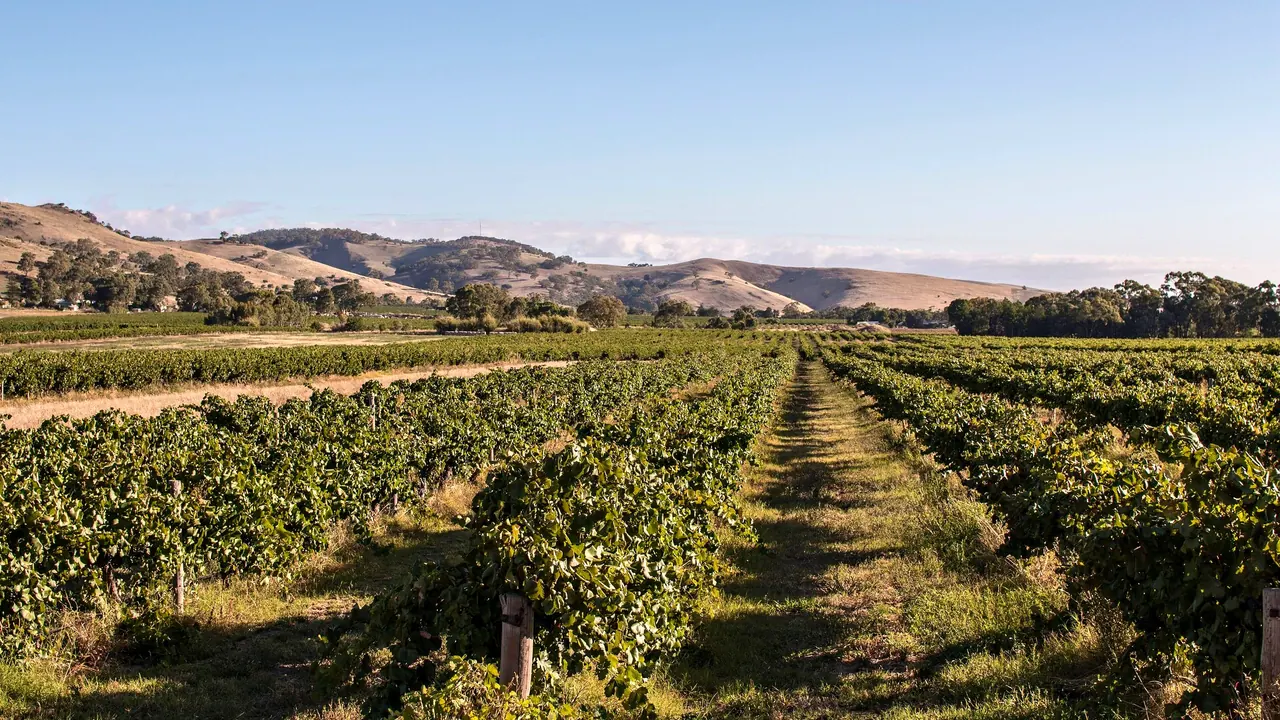
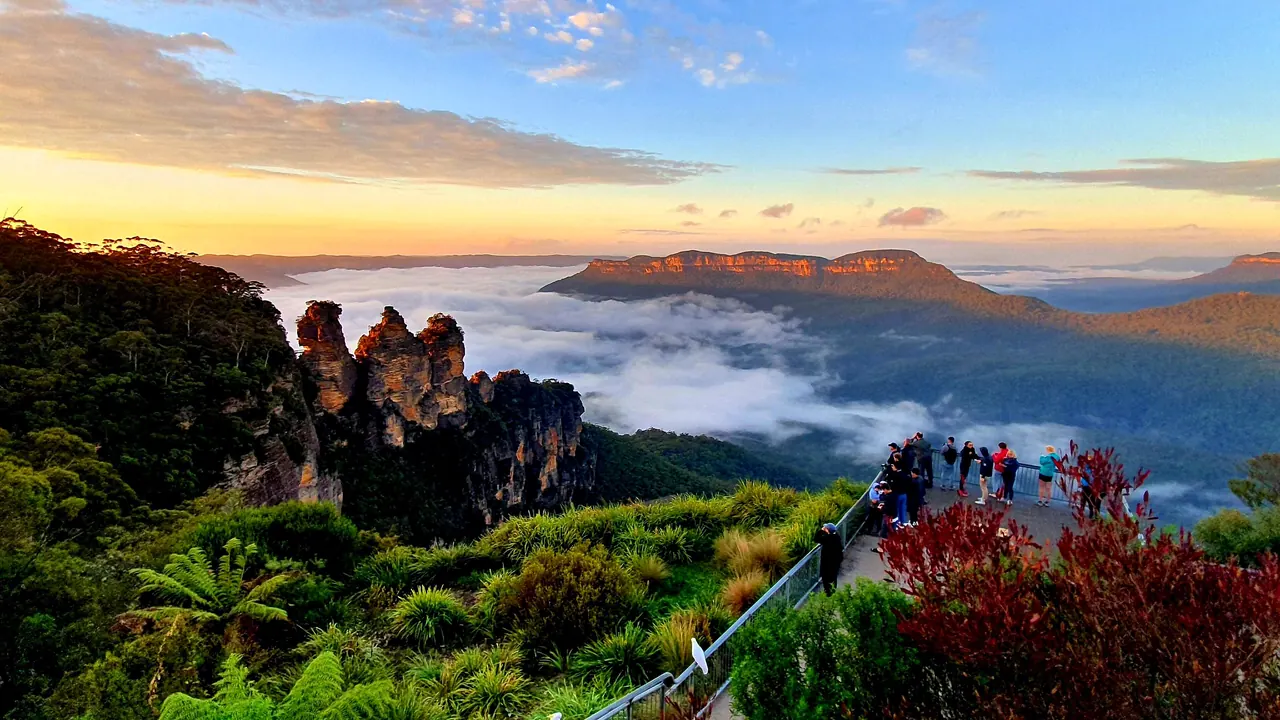
Photos: Barossa Valley by Olivier Lemoine, CC BY-SA 4.0, cropped; Blue Mountains by Abracadebra68, CC BY-SA 4.0, cropped.
Barossa Valley or Blue Mountains?
Our verdict in twelve categories, each scored against the same fixed benchmark cities, and the climate month by month, so you can choose for your trip.
Choose Barossa Valley for
- food and drink
- beaches
- culture and sights
The Barossa Valley is for travellers who plan their trip around the table. Old-vine Shiraz and Grenache are poured at cellar doors from Lyndoch to Angaston, there are Silesian bakeries and butchers, and the winery restaurants serve long lunches. It suits couples on a slow wine weekend who are happy to book a driver or cycle between tastings, and who don't need dramatic scenery or much to do after dinner.
Choose Blue Mountains for
- nature and the outdoors
- families
- getting around
Walkers, climbers and anyone who travels for landscape should pick the Blue Mountains. The sandstone cliffs and forested gorges begin at the edge of Katoomba and Blackheath, trains from Sydney stop close to the tracks, and children have the Scenic Railway and the Jenolan Caves. The food is cafés and high tea rather than a reason to come, so the choice comes down to wine country or wild country.
Scoreboard
Twelve categories on one fixed scale from 0 to 100. The shaded stretch is the gap between the two.
Your match
Pick a travel style or drag the sliders, and both match scores follow your weighting.
Wins on food and drink and beaches with your weighting.
Wins on nature and the outdoors and families with your weighting.
What matters to you?
Category by category
What the scores mean for a trip.
Beaches & swimming
Both regions lie inland, so neither is a beach destination. They differ in what you swim in. From the Barossa, the calm, sandy gulf beaches of Glenelg and Henley Beach are a drive of a little over an hour.
In the Blue Mountains, swimming means cold, shaded creek pools such as the Blue Pool near Glenbrook, and Sydney's surf is a two-hour trip.
Food & drink
This is where the Barossa clearly leads. People travel specifically for its old Shiraz and Grenache vines, Eden Valley Riesling and cellar doors ranging from trestle-table sheds to stone estates. The Lutheran heritage shows on the plate too, in mettwurst, bienenstich and rye bread, and the Angaston farmers market sells local produce.
In the Blue Mountains, eating is part of the retreat rather than the point of it. Expect long breakfasts, bakeries and high tea over the valleys, with a few serious kitchens in Leura and Blackheath.
Culture & sights
The Barossa's heritage comes from German-speaking Lutheran farmers who settled from the 1840s, while the Blue Mountains' comes from their years as Sydney's resort. In the valley that means Bethany's cottages behind long, narrow strip fields, the church spires at Tanunda and Langmeil, and the palm avenue leading to the bluestone cellars at Seppeltsfield.
In the mountains you'll find Art Deco shopfronts in Katoomba, Federation cottages and gardens in Leura and the Norman Lindsay house at Faulconbridge. They also have Darug and Gundungurra rock engravings and hand stencils along the walking tracks, which the valley has nothing to match. Either region fills a day or two of looking.
Nightlife
Neither region gives you a night out, and both send anyone who wants one to the capital, Adelaide from the valley and Sydney from the mountains. Katoomba's pubs and a small bar or two get a little busier on weekends than the Barossa's old country hotels. In both places, most evenings end with dinner, or by a fire.
Nature & outdoors
The Blue Mountains are in a different league. You can walk from town straight to the edge of World Heritage gorges: the Three Sisters, Govetts Leap, stairways down to waterfalls, and slot canyons around Blackheath for canyoning and abseiling. The Jenolan Caves and the lyrebirds add to it.
The Barossa's landscape is cultivated and gentle, with vine-covered slopes seen from Mengler Hill, kangaroos in Kaiserstuhl Conservation Park and dawn balloon flights. It is lovely as a backdrop to the wine, but it is not a reason to travel.
Day trips
The day trips are roughly equal, but they work differently. From the Barossa you need a car to reach Adelaide's North Terrace museums, the German village of Hahndorf, the motor museum at Birdwood or the copper-mining cottages of Burra.
The Blue Mountains have the bigger prize, Sydney's harbour, which is reachable by train in about two hours, with colonial Parramatta on the way. Gold-rush Bathurst and the Hawkesbury towns of Windsor and Richmond round out a shorter list.
Good for families
The Blue Mountains give children more of their own. They can ride the Scenic Railway and the cableways, walk through the lit chambers at Jenolan, try easy circuits like the Prince Henry Cliff Walk and go horse riding in the Megalong Valley. Unfenced lookouts mean toddlers need close watching.
The Barossa is safe and quiet, but it is designed for adults who taste wine. The Whispering Wall, flat sections of the cycle trail and winery lawns keep children busy for a while, and most families end up driving to Adelaide for the zoo or the beach.
Getting around
The Blue Mountains are easier without a car. The railway runs along the ridge through Wentworth Falls, Leura, Katoomba and Blackheath, many walks start near a station, and a sightseeing bus links the main lookouts. You only need to drive for the Megalong Valley, Mount Wilson or Jenolan.
The Barossa's towns are close together on one valley road, but public transport hardly exists and tasting and driving don't mix. That means a designated driver, a chauffeured tour or a hire bike on the Barossa Trail.
Shopping & style
Both are places for browsing rather than proper shopping, and both send you to the city for fashion. In the Barossa you mostly carry home things to eat and drink: cellar-door wine in small lots, smallgoods and market preserves. The Blue Mountains offer more objects, with boutiques and galleries along Leura Mall and antiques and second-hand books in Katoomba and Blackheath.
Affordability
In the Barossa the money goes on boutique cottages, winery restaurant lunches, tasting fees and a driver between cellar doors. You can bring the cost down with the motels and caravan parks around Nuriootpa, bakery lunches and picnics from the Angaston market.
The Blue Mountains cost as much on weekends, when visitors from Sydney fill Leura and Blackheath, and the cableways and cave tours are expensive. Nearly every lookout and track is free, though, and the train up from Sydney is cheap. That makes a midweek walking stay in Katoomba a little kinder on the wallet.
Live music & performing arts
The Barossa's music comes from Lutheran choirs and brass bands, recitals on the pipe organ in the Tanunda gallery and concerts during the autumn Vintage Festival, with the odd summer gig among the vines. The Blue Mountains are at their liveliest in winter instead, with Katoomba's midwinter street festival, Christmas-in-July carols in the guesthouses and community theatre in Katoomba and Springwood.
For opera, an orchestra or a proper night at the theatre, you'll need to go to Adelaide from the valley or Sydney from the mountains.
Wellness & relaxation
The Blue Mountains are better set up for a restful stay. They have been Sydney's retreat for well over a century, there are day spas in Leura, Katoomba and Blackheath, treatment rooms in the clifftop hotels and small yoga retreats in the bush.
The Barossa's calm comes from its slow pace instead: long lunches, unhurried tastings and a verandah over the vines, with only a few resort treatment rooms. Neither region has thermal waters.
When should you go?
Pick your month. The climate figures are measured averages, not a forecast.
Barossa Valley in July
Blue Mountains in July
Daytime high, °C
Rainfall in the month, mm
Where the figures come from
Barossa Valley's sunshine is measured 68 km from the centre, at Adelaide Airport.
Temperature and rainfall are climate normals, averaged over the years shown. Barossa Valley: 1991-2020 normals, Nuriootpa (4.5 km from centre). Blue Mountains: 1991-2020 normals, Katoomba (1.4 km from centre).
The Barossa is hot and dry in summer. January highs reach about 30°C with very little rain, which makes midday tasting tours heavy going and favours early starts. The shoulder seasons are the comfortable ones: March and April as the vines turn, and September to November when they are green. Winter is mild and the wettest time of year, but still fine for touring. For a beach day, the Adelaide coast is warm enough for swimming from December to March, with the sea at about 22°C, and the valley's long summer sunshine makes those outings easy to plan.
The Blue Mountains stay cooler at altitude, with January highs around 24°C. Summer is also their wettest season, though, and February brings about 195mm of rain. Winter turns that around: July is the driest month, but highs sit near 10°C and the days are crisp, sometimes frosty. September and October are the steadiest months for long walks, and April and May are good too, if a little wetter. In short, the Barossa is best in spring and autumn and too hot in high summer, while the mountains offer relief from the summer heat but bring frequent rain with it.
Which traveller are you?
On a food and nightlife trip, choose the Barossa Valley for the food. It has old-vine cellar doors, winery restaurants and German-rooted bakeries and smokehouses. Neither region offers much of a night out, so plan the evenings around long dinners rather than bars.
On a family trip with children, the Blue Mountains give children far more to do. They can ride the steep Scenic Railway and the cableways, tour the lit caverns at Jenolan and take short clifftop walks. The Barossa is built around wine tasting, and families end up driving to Adelaide.
For an outdoors trip, the Blue Mountains win clearly. World Heritage gorges, canyoning around Blackheath, climbing and the multi-day Six Foot Track all start from the towns. The Barossa offers gentle vineyard cycling and the granite outcrops of Kaiserstuhl, which make a pleasant morning rather than a full trip.
Before you go
| Measure | Barossa Valley | Blue Mountains |
|---|---|---|
| Official language | English | English |
| Currency | Australian Dollar (AUD) | Australian Dollar (AUD) |
| Sockets | I230 V, 50 Hz | I230 V, 50 Hz |
| Driving side | Left | Left |
| Time zone | UTC+9:30, UTC+10:30 in summer | UTC+10, UTC+11 in summer |
| Emergency number | 000 | 000 |
| Main airport | Adelaide International Airport (ADL)35 non-stop destinations | Sydney Kingsford Smith International Airport (SYD)99 non-stop destinations |
| Public holidays this year | 12 days | 11 days |
By the numbers
| Measure | Barossa Valley | Blue Mountains |
|---|---|---|
| Population | - | 30,049 |
| People per km² | - | 21 |
| Swim season, months above 21 °C | 3 months | - |
Where else could you go?
Every comparison below shares a destination with this one, so you can follow Barossa Valley or Blue Mountains somewhere new.
- Hunter Valleyvs Blue Mountains
- Kangaroo Islandvs Barossa Valley
- Great Ocean Roadvs Barossa Valley
- Great Ocean Roadvs Blue Mountains
- Sunshine Coastvs Blue Mountains
- K'garivs Blue Mountains