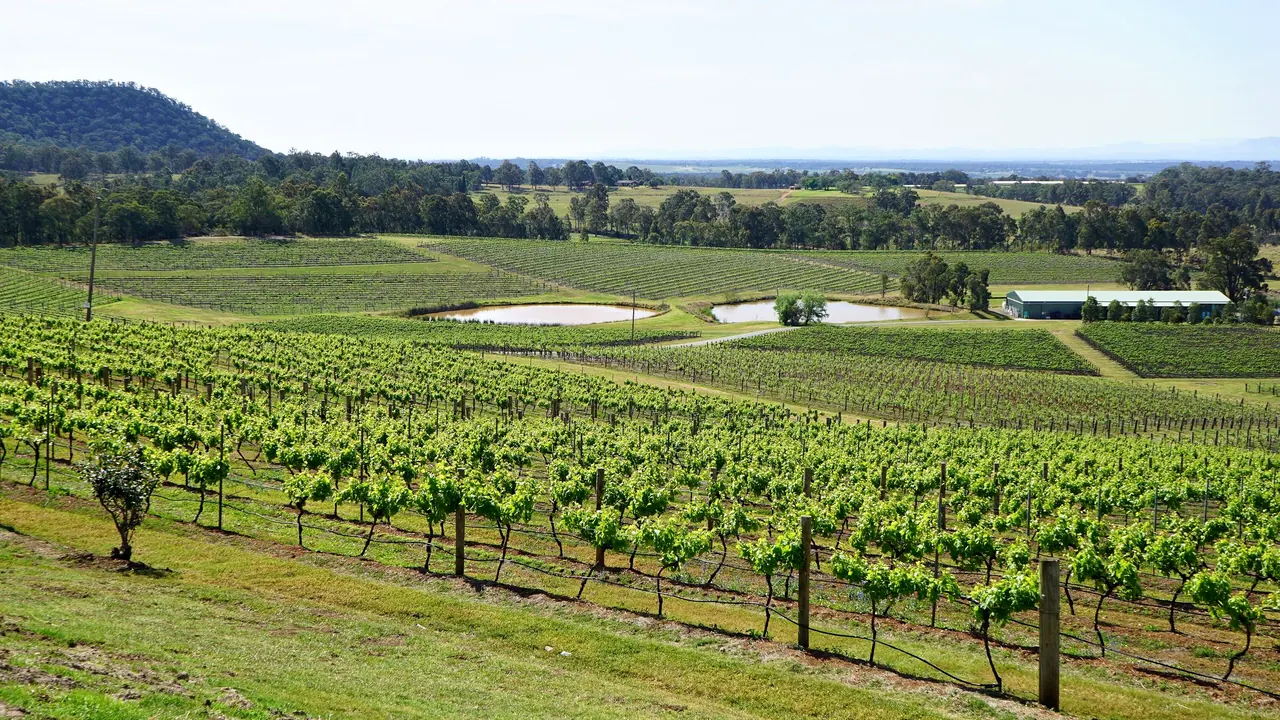
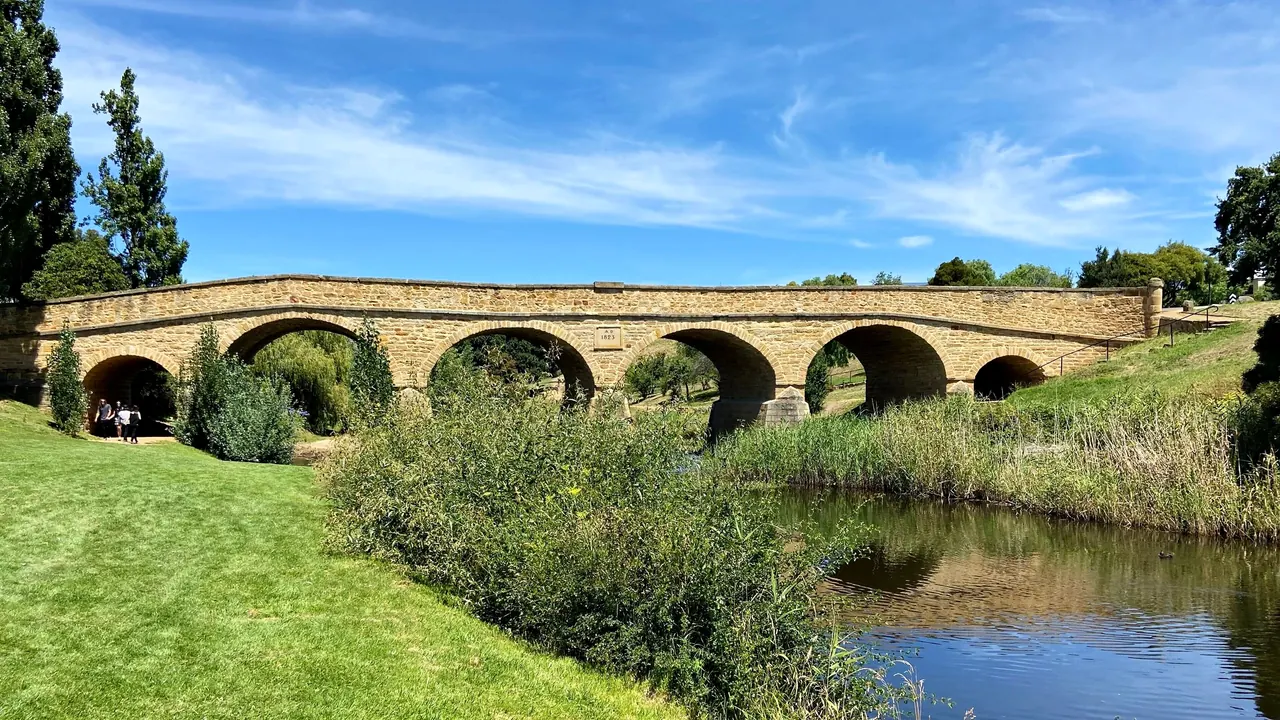
Photos: Hunter Valley by thinkrorbot, Public domain; Tasmania by jacobharrisau, CC BY-SA 2.0, cropped.
Hunter Valley or Tasmania?
Our verdict in twelve categories, each scored against the same fixed benchmark cities, and the climate month by month, so you can choose for your trip.
Choose Hunter Valley for
- getting around
- wellness
The Hunter Valley suits a slow, adult weekend built around wine. The cellar doors are a few minutes apart on quiet roads, and the days run through long lunches over the vines, a spa and an early night. It is compact, so little time goes on driving. It has few sights, almost no evening life and not much for children, though, so it works best as a short escape rather than a full vacation.
Choose Tasmania for
- nature and the outdoors
- culture and sights
- day trips
Choose Tasmania for a longer trip with far more range. Its wilderness, from Cradle Mountain to the Freycinet Peninsula, is in another league. MONA and the convict ruins at Port Arthur give it a cultural depth the Hunter lacks, and the seafood and cool-climate wine are a match for the valley's. The cost is distance: hours on winding roads, a cooler and changeable climate, and a sea too cold for long swims.
Scoreboard
Twelve categories on one fixed scale from 0 to 100. The shaded stretch is the gap between the two.
Your match
Pick a travel style or drag the sliders, and both match scores follow your weighting.
Wins on getting around and wellness with your weighting.
Wins on nature and the outdoors and culture and sights with your weighting.
What matters to you?
Category by category
What the scores mean for a trip.
Beaches & swimming
Neither is a beach destination, and each falls short in its own way. From the Hunter, the sea is an hour's drive away: Newcastle has patrolled surf beaches and old ocean baths, and Port Stephens has calm bays. In late summer the water there is warm enough for a proper swim.
Tasmania's beaches are far more beautiful, Wineglass Bay and the Bay of Fires above all, and you can stay right beside them. The water is so cold, though, that most visits are a walk or a quick dip. The Hunter's coast gives you warm water and Tasmania gives you the views.
Food & drink
Both take eating and drinking seriously, but in different ways. The Hunter is a wine trip first. Hunter Semillon and earthy Shiraz are poured at cellar doors around Pokolbin and Broke, with long vineyard lunches, cheese and chocolate on the side. There is little choice beyond that.
In Tasmania the produce comes first: oysters from Bruny Island, salmon, abalone and rock lobster. There is also a wider spread of restaurants in Hobart and Launceston. Its pinot noir and sparkling wine can stand up to the Hunter's, and the island adds whisky and cider.
Culture & sights
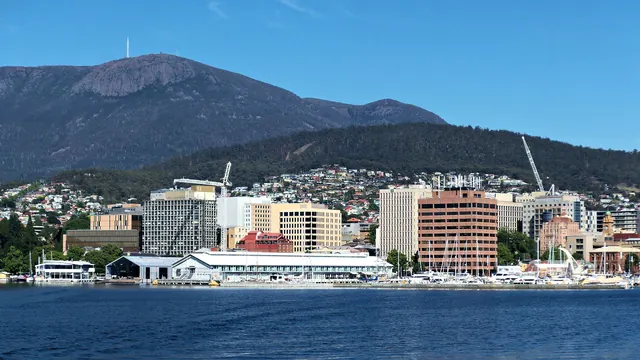
Tasmania is much the stronger here. MONA in its sandstone cliff above the Derwent, the ruins of Port Arthur and a string of UNESCO-listed convict sites give it material for several days. The Georgian streets of Battery Point and Salamanca add to that.
The Hunter's heritage is smaller and quieter: Morpeth's river-port shopfronts, Maitland's Victorian buildings and gallery, Wollombi's courthouse and a few old slab-built cellars. They make a pleasant afternoon, but nobody goes to the valley for them.
Nightlife
Neither is a place for late nights, but Tasmania at least has Hobart. There, the pubs and wine bars around Salamanca Place and along Elizabeth Street in North Hobart fill up at weekends until around midnight. In the Hunter, an evening means dinner and a drink back at your lodging. Cessnock's country pubs and the resort bars are the only other options, and a real night out means getting to Newcastle.
Nature & outdoors
This is the widest gap between the two. Tasmania's wilderness takes in Cradle Mountain and Dove Lake, the six-day Overland Track, the pink granite of Freycinet and the sea cliffs of the Three Capes. Devils, platypus and penguins turn up along the way, and kunanyi/Mount Wellington rises right above Hobart.
The Hunter's landscape is gentle and farmed: vines, paddocks and the Brokenback Range. It looks best from a balloon at dawn or from a bicycle on the back roads. Its wilder country, the Watagan Mountains and Barrington Tops, is a long drive away.
Day trips
Tasmania has more worth leaving your base for. From Hobart you can go to Richmond, take the ferry to Bruny Island or visit the orchards of the Huon Valley. From Launceston there is the Tamar wine route and the Georgian villages of Evandale and Ross.
Outings from the Hunter are shorter and slighter: Newcastle's cathedral, fort and harbour, Maitland's old gaol and the bay towns of Port Stephens. They fill a spare day between tastings. Tasmania's are good enough to plan a trip around, and many visitors split their stay between Hobart and Launceston to reach them.
Good for families
Tasmania suits children better, as long as they enjoy animals and being outdoors. Wildlife sanctuaries with devils and wombats, penguins coming ashore at dusk, the chairlift and pool at Cataract Gorge and short walks like Dove Lake make easy days. The long drives and cold sea are the drawbacks.
The Hunter is built around adults tasting wine. For children there is a hands-on zoo, a few farm stops and the Christmas lights at the Pokolbin gardens. Families staying there will probably drive to the coast to fill the days.
Getting around
The Hunter is the easier of the two. Its wineries are a few minutes apart on quiet roads, and some in the Pokolbin cluster are close enough to walk between. The catch is that someone has to stay sober, which is why so many visitors book a driver or a tour.
Tasmania needs a car too, but the distances are much greater. Cradle Mountain is four hours or more from Hobart on winding roads, with wildlife on them at dusk. Only central Hobart is easy to walk, and a ferry runs up the Derwent to MONA.
Shopping & style
In both places you take home food and drink rather than clothes. The Hunter's haul is cases of wine from the cellar door, plus cheese and olive oil, with antique shops in Morpeth. Tasmania gives you more to browse. The Saturday market at Salamanca Place sells Huon pine woodwork, knitwear and ceramics, and the farm gates sell leatherwood honey and whisky.
Affordability
Both are expensive, and neither suits a tight budget. In the Hunter, the cost comes from weekend room rates, minimum stays, winery lunches and paying for a driver, and coming midweek is the easiest way to save. Tasmania's costs build up over a longer trip: a hire car, fuel and park passes on top of scarce summer rooms. Cabins, campsites and travelling in spring or autumn bring them down.
Live music & performing arts
In the Hunter Valley, live performance comes as a few big occasions rather than a programme. On certain warm-season evenings a winery lawn becomes a concert ground for a rock or pop headliner, or for opera and an orchestra under the open sky, and the audience drives up from Sydney and Newcastle for the night. Between those dates you might hear a singer at a country pub or a cellar door, and the nearest proper stage is Newcastle's Civic Theatre, an hour's drive away.
Tasmania has a little more on offer, and it lasts beyond the summer. Hobart has its own symphony orchestra, with a regular season in its waterfront concert hall, and in the Theatre Royal it has the oldest working theatre in Australia, so a weekend in the city usually turns up a concert, a play or a comedy night. Its busiest stretch is midwinter, with the Festival of Voices in July and the solstice season, when the Hunter's lawns are empty. The Hunter suits a single summer concert among the vines, and Tasmania suits a night at the theatre or a winter festival.
Wellness & relaxation
The Hunter Valley has the slight edge for a restful break, mainly because the pampering is close at hand. Resorts and lodges across the valley run full day spas with massages, treatments and pools, so an afternoon treatment fits easily between a tasting and dinner, and nothing is more than a short drive away. There are no hot springs, so this is resort comfort rather than a bathing culture.
Tasmania's calm is more outdoors: long walks, small quiet towns and early nights. Its spas are mainly in upmarket lodges at Cradle Mountain and Freycinet, often using local botanicals, and its only natural hot water is the warm thermal pool at Hastings Caves, in the forest of the far south. Around Hobart, winter sea swims and wood-fired saunas by the water are a cold-water alternative.
When should you go?
Pick your month. The climate figures are measured averages, not a forecast.
Hunter Valley in July
Tasmania in July
Daytime high, °C
Rainfall in the month, mm
Where the figures come from
Hunter Valley's sunshine is measured 48 km from the centre, at Williamtown.
Temperature and rainfall are climate normals, averaged over the years shown. Hunter Valley: 1991-2020 normals, Cessnock Airport (1.5 km from centre). Tasmania: 1991-2020 normals, Hobart (3 km from centre).
The Hunter Valley is hot in summer, with highs around 31°C in January. Late summer is also its wettest stretch, with rain peaking at 112mm in February. That heat is good for the coast at Newcastle, where the sea stays near 23°C from January to March, but it makes walking and cycling among the vines hard work. Spring and autumn are the most comfortable seasons inland. Winter is mild, and late winter is dry and sunny, which suits a quiet weekend of tastings.
Where most visitors stay in Tasmania, it is cooler all year round. Summer highs sit in the low twenties, which is ideal for walking, and December and January are the sunniest months, but the sea never gets much above 17°C. Winter drops to around 13°C, August is the wettest month and the highlands can see snow, so December to March is the main window for the national parks.
Which traveller are you?
On an outdoors trip, Tasmania is the clear choice. A fifth of the island is World Heritage wilderness, with the Overland Track, the Three Capes sea cliffs and wildlife everywhere. The Hunter has balloon flights and cycling among the vines, but its bushwalks are a drive away.
For a culture and arts trip, Tasmania wins again. MONA on the Derwent, Port Arthur and the other convict sites, Hobart's Georgian streets and the Theatre Royal will fill several days. The Hunter's colonial towns, Morpeth and Wollombi, take an afternoon.
On a relaxing and wellness trip, the Hunter Valley has the edge. Its resorts and lodges run full day spas aimed at couples, the cellar doors are minutes apart and nothing calls for a long drive. In Tasmania, the calm comes with hours on winding roads.
Before you go
| Measure | Hunter Valley | Tasmania |
|---|---|---|
| Official language | English | English |
| Currency | Australian Dollar (AUD) | Australian Dollar (AUD) |
| Sockets | I230 V, 50 Hz | I230 V, 50 Hz |
| Driving side | Left | Left |
| Time zone | UTC+10, UTC+11 in summer | UTC+10, UTC+11 in summer |
| Emergency number | 000 | 000 |
| Main airport | Newcastle Airport (NTL)11 non-stop destinations | Hobart International Airport (HBA)9 non-stop destinations |
| Public holidays this year | 11 days | 9 days |
By the numbers
| Measure | Hunter Valley | Tasmania |
|---|---|---|
| Population | 620,530 | 539,590 |
| Swim season, months above 21 °C | 6 months | None |
Where else could you go?
Every comparison below shares a destination with this one, so you can follow Hunter Valley or Tasmania somewhere new.
- Blue Mountainsvs Hunter Valley
- Great Ocean Roadvs Tasmania
- Sunshine Coastvs Hunter Valley
- K'garivs Hunter Valley
- Great Ocean Roadvs Hunter Valley
- Blue Mountainsvs Tasmania