Austria
- Nature & outdoors93
- Live music & the arts92
- Culture & sights88
Match
72
Every category weighted equally
- Beach & sun67
- Culture & arts76
- Food & nightlife70
- Family trip71
- Outdoors74
- Relax & unwind73
- Shopping & style72
- On a budget68
Austria in twelve categories
Our verdict on the country as a whole, scored 0 to 100 against the same fixed benchmark cities as every destination, so a score means the same thing on every page.
Beaches & swimming. Scores 40 out of 100.
Food & drink. Scores 70 out of 100.
Culture & sights. Scores 88 out of 100.
Nightlife. Scores 50 out of 100.
Nature & outdoors. Scores 93 out of 100.
Day trips. Scores 82 out of 100.
Good for families. Scores 80 out of 100.
Getting around. Scores 82 out of 100.
Shopping & style. Scores 60 out of 100.
Affordability. Scores 40 out of 100.
Live music & performing arts. Scores 92 out of 100.
Wellness & relaxation. Scores 85 out of 100.
Austria category by category
Under each: where in Austria it is best, and our destinations in Austria that score highest on it.
Beaches & swimming
40Austria has no coast, but it does have a real summer lake culture. Carinthia in the south is the place for it. The Wörthersee, Millstätter See, Ossiacher See and Faaker See warm to around 25°C or more in July and August, and lakeside towns such as Velden and Pörtschach are built around wooden lidos, bathing jetties and lawns rather than sand. The Salzkammergut lakes are clearer and colder, in a more dramatic mountain setting, and the Attersee and Wolfgangsee are good for a swim on a hot day.
The season is short, from late June to early September, and the bathing spots are small. Lake swimming here is a pleasant part of a summer trip, not a beach vacation.
Where: Carinthian lakes, Wörthersee, Salzkammergut
Our top destinations in Austria
Food & drink
70Eating in Austria centres on Vienna, where the classic coffee houses with their marble tables, newspapers and long lingering are an institution in their own right. Add the pastry counters, the Naschmarkt, sausage stands for late snacks and the Heurigen, the wine taverns on the vineyard edges of the city that pour their own young wine. Viennese cooking is hearty and particular: schnitzel, boiled beef, goulash, dumplings and a deep tradition of cakes and strudel.
Beyond the capital the food follows the wine and the regions. The Wachau and Kamptal along the Danube make some of Europe's best Grüner Veltliner and Riesling. South Styria has rolling vineyards, pumpkin-seed oil and relaxed wine taverns, and the Bregenzerwald in Vorarlberg is known for mountain cheese. In the Alps, mountain huts serve simple, satisfying food at altitude. It is a cuisine of comfort and tradition rather than great range.
Where: Vienna, Wachau, South Styria, Bregenzerwald
Our top destinations in Austria
Culture & sights
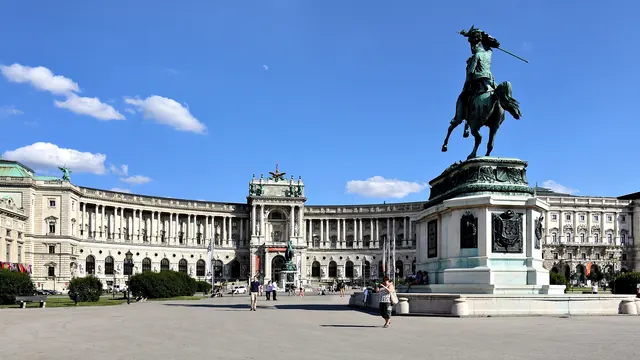
88Vienna is the heart of it: the Hofburg and the imperial treasury, Schönbrunn and the Belvedere palaces, St Stephen's Cathedral, the Kunsthistorisches Museum with one of the world's great painting collections, the MuseumsQuartier and a Ringstrasse lined with grand nineteenth-century buildings. Klimt, Schiele and the Secession buildings give the city a second artistic peak around 1900.
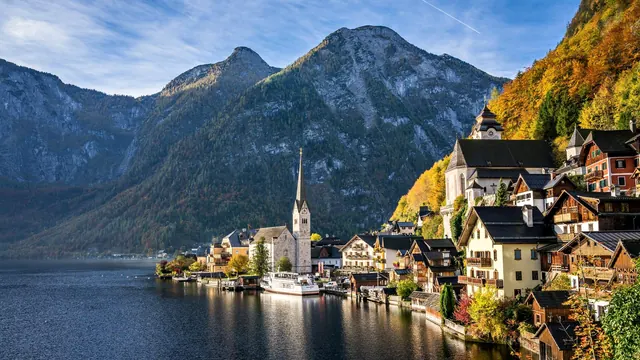
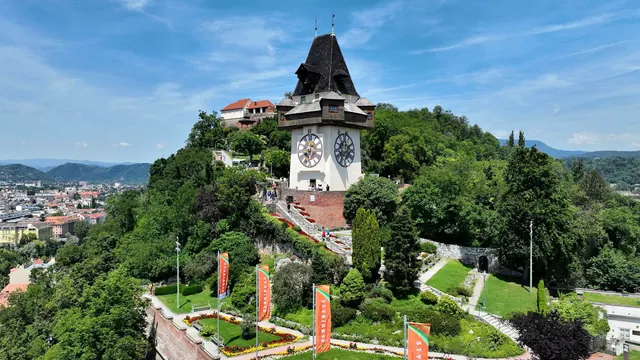
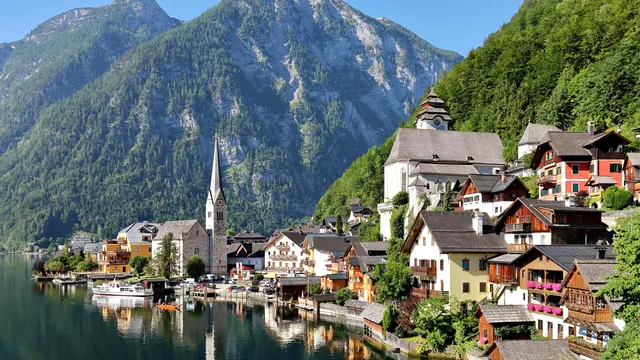
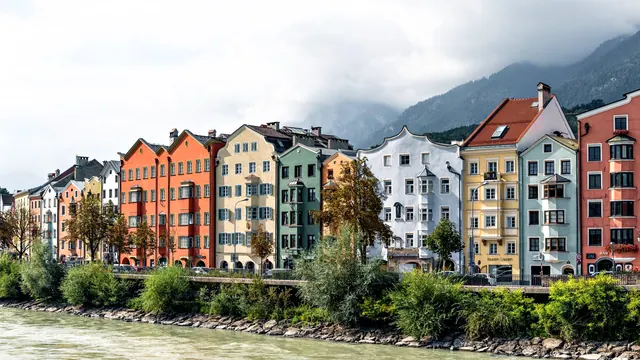
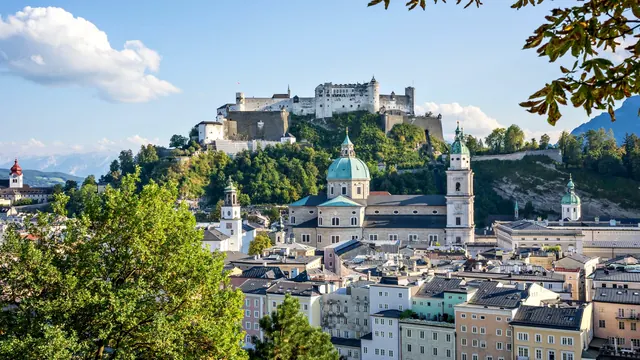
The rest of the country holds plenty too. Salzburg's baroque old town under its fortress and Mozart's birthplace are a UNESCO site. Graz has a well-kept Renaissance centre. Innsbruck has its imperial Hofburg and Golden Roof, and the Ambras castle is just outside town. Along the Danube the great abbey of Melk stands above the river, and Hallstatt's lakeside village has salt-mining heritage going back thousands of years.
Where: Vienna, Salzburg, Graz, Innsbruck
Our top destinations in Austria
Nightlife
50Vienna has the most varied night out: wine taverns on the city edge, bars in the arches under the Gürtel railway, cocktail bars in the inner districts and a respectable electronic club scene. In summer people drink outdoors along the Danube Canal. Graz has a student bar quarter, and Salzburg and Innsbruck are quiet by midnight for most of the year.
Austria's best-known nights out are in the ski resorts. Ischgl, St Anton, Sölden and Saalbach are famous for après-ski, which starts in slope-side bars in the late afternoon and carries on loudly into the night. That scene runs only in winter and suits groups more than couples looking for a cocktail bar.
Where: Vienna, Ischgl, St Anton am Arlberg, Graz
Our top destinations in Austria
Nature & outdoors
93Two thirds of Austria is mountain, and its Alps are among the easiest anywhere to get into. Tyrol is the centre. From Innsbruck, the Zillertal, the Ötztal or the Stubai valley, cable cars lift walkers and skiers to glaciers and high trails, and a dense network of staffed huts makes hut-to-hut hiking over several days simple to plan. The Hohe Tauern national park around the Grossglockner, the highest peak, has glaciers, alpine meadows, ibex and marmots.
The Salzkammergut sets lakes below limestone massifs such as the Dachstein, good for gentler walking and sailing. In the far west, Vorarlberg has the rolling pastures of the Bregenzerwald, the high valleys of the Montafon and the Arlberg's deep snow. Winter brings some of Europe's best skiing across hundreds of resorts, and summer suits mountain biking, via ferrata, rafting and paragliding. In the east, the Danube valley and Lake Neusiedl offer flat cycling and birdlife.
Where: Tyrol, Hohe Tauern National Park, Salzkammergut, Vorarlberg
Our top destinations in Austria
Day trips
82Austria works well for day trips from more than one base. From Vienna, the Wachau valley makes the classic outing: the abbey of Melk, the medieval wine towns of Dürnstein and Krems, and a boat on the Danube between them. The spa town of Baden and the Heurigen villages of the Vienna Woods are close, and Bratislava is about an hour away by train or boat.
Salzburg is the base for the Salzkammergut: Hallstatt, St Wolfgang and the imperial spa town of Bad Ischl, with Berchtesgaden just across the border. From Innsbruck, the old salt town of Hall, the castle at Ambras and the resort town of Kitzbühel are easy outings. From Graz, the wine villages of South Styria are close.
Where: Vienna, Salzburg, Innsbruck, Graz
Our top destinations in Austria
Good for families
80Austria is easy and safe with children, and the Alps have a whole industry built around family vacations. Resorts across Tyrol, Salzburgerland and Carinthia have hotels that specialise in families, with kids' clubs and play areas. In summer, mountain lifts lead to adventure playgrounds, toboggan runs, nature trails and petting farms, and in winter ski schools for small children are everywhere. Carinthia's warm lakes suit younger children in July and August.
Vienna adds the Prater with its giant Ferris wheel and rides, Schönbrunn Zoo, the oldest in the world, an aquarium inside a wartime flak tower, the dinosaurs of the Natural History Museum and the hands-on Technical Museum. The country has no big theme-park resort, and some Alpine drives and hikes are long for little legs.
Where: Tyrol, Salzburgerland, Carinthia, Vienna
Our top destinations in Austria
Getting around
82Moving around Austria is straightforward. Vienna has an excellent underground, tram and bus network and a walkable centre. Fast intercity trains run east to west along the main axis through Linz, Salzburg and Innsbruck, and on to Graz and Klagenfurt in the south, so the main cities are a few hours apart and no flights are needed. Salzburg, Innsbruck and Graz are compact and easy on foot.
In the mountains, regional trains and yellow postbuses reach most valleys and ski resorts, and many resorts run free ski buses. The connections thin out in the remoter side valleys and around some lakes, where a car gives much more freedom, and mountain roads in winter need care.
Where: Vienna, Salzburg, Innsbruck, Graz
Our top destinations in Austria
Shopping & style
60Shopping is concentrated in Vienna. The Kohlmarkt and Graben carry the luxury labels in baroque surroundings, Mariahilfer Strasse is the long high street, and the districts around Neubau have independent design and fashion shops. Specialities include Augarten porcelain, Viennese glassware and silver from long-established court suppliers, while the Naschmarkt and its Saturday flea market add a market side.
Elsewhere the offer is narrower. Salzburg's Getreidegasse, with its wrought-iron signs, and the old towns of Innsbruck and Graz are good for traditional dress such as dirndls and loden jackets, plus chocolate and local crafts. Christmas markets in every town add seasonal charm. Beyond that, the ski resorts mainly sell sports gear.
Where: Vienna, Salzburg, Innsbruck, Graz
Our top destinations in Austria
Affordability
40Austria is a mid-to-high priced country. Vienna is fair for a Western European capital, with good-value public transport, set lunch menus and simple wine taverns balancing the cost of central hotels. Salzburg costs noticeably more, especially in summer, and the famous ski resorts of Tyrol and the Arlberg are among the most expensive places in the Alps in winter once lift passes, lodging and après-ski are added up.
The countryside is easier on the budget. The wine country of Styria and Burgenland has family-run guesthouses and taverns at modest prices, and Carinthia's lakes give better value than the big Alpine names, above all outside the peak weeks of high summer. Less famous mountain valleys in summer are good value too.
Where: Styria, Burgenland, Carinthia, Vienna
Our top destinations in Austria
Live music & performing arts
92Austria is one of the great countries for classical music. Vienna is the centre: the State Opera has performances on most nights of its season, the Musikverein is home to the Vienna Philharmonic, and the Konzerthaus, the Volksoper for operetta, the Theater an der Wien and the Burgtheater fill out a deep calendar. The Vienna Boys' Choir sings Sunday Mass in the Hofburg chapel.
The Salzburg Festival each summer is one of the most prestigious in the world, with opera, concerts and drama staged across the city. Mozart's music is heard year-round in Salzburg too. On Lake Constance, the Bregenz Festival performs opera on a vast floating stage. Graz, Linz and Innsbruck all have their own opera houses and orchestras. Jazz and pop are a smaller part of the scene.
Where: Vienna, Salzburg, Bregenz, Graz
Our top destinations in Austria
Wellness & relaxation
85Taking the waters and sweating in a sauna are deep traditions in Austria. Bad Gastein, a belle époque spa town stacked around a waterfall in the Hohe Tauern, has radon-rich thermal springs and a healing gallery inside an old mine. Bad Ischl, where the emperor spent his summers, and Baden near Vienna, with its warm sulphur springs, are classic imperial spa towns. In the hills of eastern Styria a cluster of large thermal resorts, including one designed by Hundertwasser, makes a whole region for bathing.
Across the Alps, mountain hotels nearly always have saunas, steam rooms and pools, and the nude, quiet sauna culture is taken seriously. Combined with lake villages and slow mountain mornings, Austria is an easy place to unwind.
Where: Bad Gastein, Styrian thermal region, Bad Ischl, Baden bei Wien
Our top destinations in Austria
When should you go?
Austria has no single climate. Its months are measured at Vienna, Salzburg and Innsbruck; pick one to see it. The figures are measured averages, not a forecast.
Where in Austria
Vienna in July
Daytime high, °C
Rainfall in the month, mm
Temperature and rainfall are climate normals, averaged over the years shown. Vienna: 1991-2020 normals, Wien / Hohe Warte (4.7 km from centre).
Compare Austria with
Every comparison with a written verdict behind it.
Our destinations in Austria
Every place in Austria with its own page: its twelve scores, its texts and its months.