Austria
Vienna
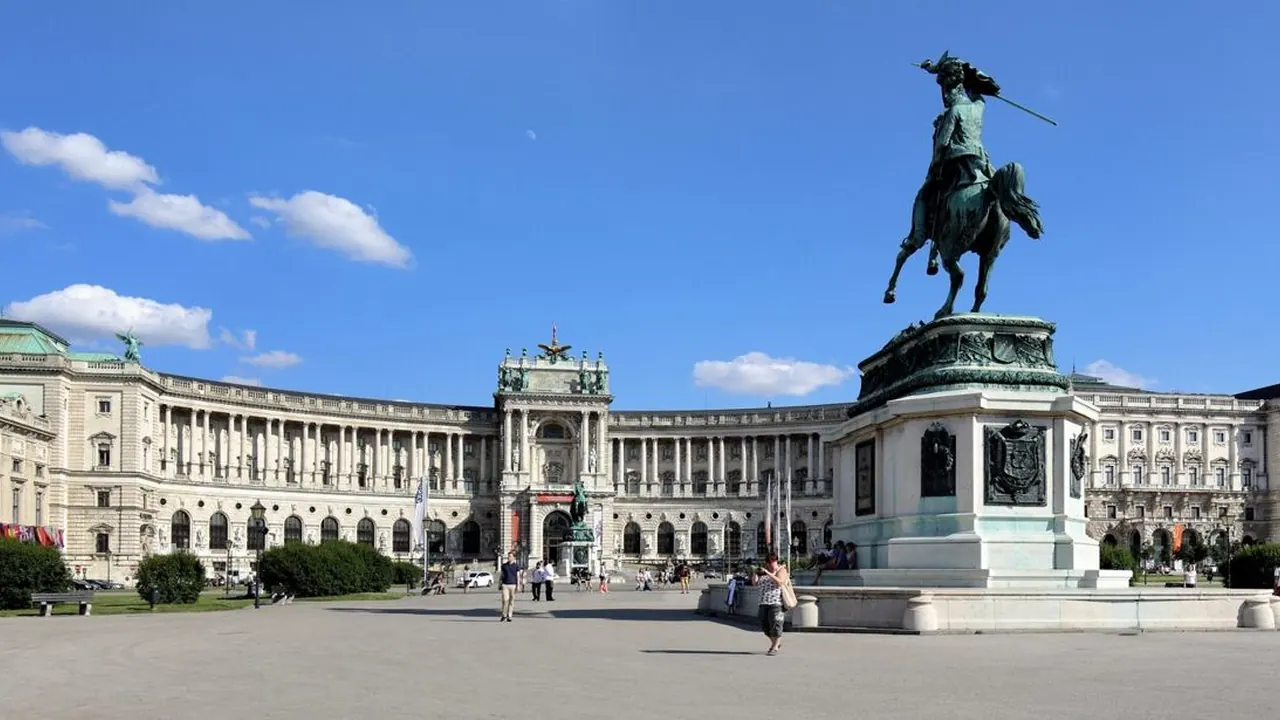
The Hofburg and Heldenplatz
- Live music & the arts96
- Getting around90
- Culture & sights89
Photo: C.Stadler/Bwag, CC BY-SA 3.0 AT, cropped
Match
66
Every category weighted equally
- Beach & sun59
- Culture & arts75
- Food & nightlife68
- Family trip65
- Outdoors65
- Relax & unwind63
- Shopping & style70
- On a budget64
Vienna in twelve categories
Our verdict on each, scored 0 to 100 against the same fixed benchmark cities, so a score means the same thing on every page.
Beaches & swimming. Scores 27 out of 100.
Food & drink. Scores 68 out of 100.
Culture & sights. Scores 89 out of 100.
Nightlife. Scores 50 out of 100.
Nature & outdoors. Scores 62 out of 100.
Day trips. Scores 74 out of 100.
Good for families. Scores 77 out of 100.
Getting around. Scores 90 out of 100.
Shopping & style. Scores 62 out of 100.
Affordability. Scores 44 out of 100.
Live music & performing arts. Scores 96 out of 100.
Wellness & relaxation. Scores 58 out of 100.
Vienna category by category
Beaches & swimming
27Vienna is landlocked, but it does have real summer bathing. The Danube Island runs for about 20km through the city, with grassy banks, gravel shores and free swimming spots. The Alte Donau, an old arm of the river, is calmer and warmer, reaching about 23°C in a hot July, and is lined with long-established lidos such as the Gänsehäufel. Locals ride the U-Bahn out after work to swim there.
The season runs roughly from June to early September. The shallow, reedy Neusiedler See is about an hour away for sailing and lake bathing. It all makes a pleasant afternoon in summer, but anyone who wants sand and sea will need to go elsewhere.
Food & drink
68Viennese food is its own cuisine, shaped by the old empire: Wiener schnitzel, Tafelspitz (boiled beef with horseradish and apple sauce), goulash, dumplings, and a pastry tradition built on strudel, Sachertorte and Kaiserschmarrn. Wood-panelled Beisl taverns serve the classics. The grand coffee houses, with marble tables, newspapers and waiters who leave you in peace, are as much a ritual as a place to eat.
Wine is grown inside the city. On the slopes of Grinzing, Nussdorf and Stammersdorf, Heuriger taverns pour the year's Grüner Veltliner and Gemischter Satz next to a cold buffet. Late at night there are sausage stands, and the Naschmarkt has market stalls and casual eating. The fine-dining tier is solid. What the city lacks is range: the international and street-food choice is thinner than its history might suggest.
Culture & sights
89Vienna is a capital built for an empire, and most of it still stands. The Hofburg holds the Habsburg apartments, the Treasury and the Spanish Riding School. Schönbrunn, the summer palace, has formal gardens that run up to the Gloriette. St Stephen's Cathedral, with its tiled roof, stands at the heart of a UNESCO-listed old town of baroque palaces and lanes, and the Ringstrasse circles it with parliament, city hall and university buildings in grand historicist style.
The museums are first rank. The Kunsthistorisches Museum holds the world's largest collection of Bruegel. The Belvedere has Klimt's The Kiss, and the Albertina is known for its graphic art. The MuseumsQuartier holds the Leopold's Schiele works and modern art. Jugendstil buildings, the Secession and Otto Wagner's stations add a second great period, and the Kapuzinergruft and the Karlskirche fill out a week easily.
Nightlife
50Going out in Vienna is relaxed and does the job without being a reason to come. Under the railway arches of the Gürtel there are bars and small clubs that stay open late. The Bermuda Triangle near the Ruprechtskirche is the old-town drinking quarter. In summer, deckchair bars line the banks of the Danube Canal. Many evenings run slowly instead, over wine at a Heuriger on the city's edge or in a dim, wood-panelled bar where the regulars have sat in the same corner for years.
The club scene is respectable, with electronic nights in former industrial spaces, but it is small for a capital. The distinctive moment is the winter ball season, when hundreds of formal balls fill the palaces and halls, and visitors can buy tickets to many of them.
Nature & outdoors
62Green land starts at the city's edge. The Vienna Woods roll over low, beech-covered hills to the west, and marked city hiking trails climb through vineyards to the Kahlenberg and Leopoldsberg for views over the Danube. The Prater's long chestnut avenue and its meadows reach far into the city. East of the centre, the Donau-Auen national park protects wild floodplain forest that you can explore by boat or on foot.
Cycling is easy along the flat Danube routes, and the path through the Wachau valley is a classic day ride. For real mountains, the Rax and Schneeberg on the eastern edge of the Alps are about 90 minutes away and offer high limestone plateaus and a rack railway. Winters are grey rather than snowy in town.
Day trips
74Being at the centre of Europe helps here. Bratislava, the Slovak capital, is about an hour away by train or by boat on the Danube. Up the river, the Wachau valley lines apricot orchards and terraced vineyards along the water, with the baroque abbey of Melk and the castle ruins at Dürnstein. Closer in, the abbey of Klosterneuburg and the Cistercian monastery of Heiligenkreuz are short trips. The spa town of Baden is half an hour away.
To the south-east, Eisenstadt holds the Esterházy palace where Haydn worked, and the wine villages around the Neusiedler See are good for a slow day. Brno, in the Czech Republic, is about an hour and a half by train. Budapest and Salzburg are better as overnight trips.
Good for families
77Vienna is a calm, safe city with plenty for children. Schönbrunn Zoo, the oldest zoo still running in the world, sits in the palace grounds next to a maze and a children's museum. The Prater has the giant Ferris wheel, rides that range from old-fashioned to stomach-turning, and huge open meadows. Haus des Meeres, an aquarium inside a wartime flak tower, has sharks and a tropical house.
Rainy days are well covered. The Natural History Museum has dinosaurs and meteorites, the Technical Museum is full of hands-on exhibits, and the ZOOM children's museum in the MuseumsQuartier runs play areas for each age. Parks and playgrounds are everywhere, trams are easy to use with prams, and summer bathing on the Danube Island rounds it out. Formal coffee houses and long concerts are less suited to small children.
Getting around
90Vienna is one of the easiest big cities to get around. The old town inside the Ring is compact and largely pedestrian, and most major sights are within a walk of each other or a short tram ride along the Ringstrasse. Five colour-coded U-Bahn lines, a dense tram network and buses run on one integrated ticket. The U-Bahn runs through the night at weekends.
Schönbrunn, the Prater, the Danube Island and even the vineyard villages are all reached by public transport. A car is a burden in the centre. Cycling is common on the flat districts and along the Danube Canal, though cobbles and tram tracks call for care.
Shopping & style
62Shopping centres on the old town's Golden U. The Kohlmarkt and Graben carry the international luxury houses beneath imperial facades, and Kärntner Strasse has the high-street brands. Mariahilfer Strasse, a long pedestrianised avenue, is where the locals shop for everyday fashion. In Neubau's side streets around Neubaugasse there are independent designers and concept stores.
The local crafts are the reason to shop here. Augarten porcelain, crystal and glassware from long-established makers, Loden coats and dirndls, and sweets packed in elegant tins all make good gifts. On Saturdays a flea market spreads out beyond the Naschmarkt, and the Christmas markets in front of the Rathaus and Schönbrunn are a seasonal draw. It is a pleasant, quality-focused offer rather than a deep fashion destination.
Affordability
44Vienna sits in the middle to upper range for Western Europe. Hotels are reasonable for a major capital outside the ball season and the Christmas market weeks. Eating out costs a little more than in Southern Europe, but set lunch menus, sausage stands and Heuriger buffets keep everyday meals manageable.
Public transport is good value, especially on day or week passes. Many parks, palace gardens and church interiors are free. The main costs are the major palaces and museums, which charge full admission, and a night at the opera, although standing places keep the State Opera within almost anyone's reach.
Live music & performing arts
96Music is the reason many people come to Vienna. The State Opera stages a different work on most nights of its long season, from a repertoire of dozens of productions, and its cheap standing places mean anyone can go. The Musikverein's Golden Hall, with its famous acoustics, is home to the Vienna Philharmonic. The Konzerthaus runs a full programme from symphonies to chamber music and jazz. The Volksoper covers operetta and musicals, and the Theater an der Wien stages opera in the house where Beethoven's Fidelio was first performed.
The Burgtheater is one of the great German-language stages, and the Vienna Boys' Choir sings Sunday Mass in the Hofburg chapel. In summer there are free opera films outside the Rathaus and open-air concerts at Schönbrunn. Mozart, Haydn, Beethoven, Schubert and the Strauss family all worked here, and the city plays their music every night of the year.
Wellness & relaxation
58Vienna is a slow city without trying. Long afternoons in a coffee house over a single coffee and a newspaper, walks through the palace gardens and evenings at a vineyard tavern are all part of ordinary life here. Thermal bathing is also within reach. Therme Wien in Oberlaa is a large complex of thermal pools and saunas fed by warm springs. The Amalienbad in Favoriten is an ornate Art Deco public bath with a tiled sauna hall.
The spa town of Baden bei Wien, about half an hour away, has drawn visitors to its warm sulphur springs since Roman times and still has a large thermal bath. Bathing is not woven into daily life here as it is in the great bath cities, but rest is easy to find.
When should you go?
Pick a month to see what it is like. The climate figures are measured averages, not a forecast.
Vienna in July
Daytime high, °C
Rainfall in the month, mm
The whole year
Shaded against this city’s own year: the deepest cell is its best month for that figure and the palest its weakest.
Temperature and rainfall are climate normals, averaged over the years shown. Vienna: 1991-2020 normals, Wien / Hohe Warte (4.7 km from centre).
Before you go
| Measure | Vienna |
|---|---|
| Official language | German, Austrian Sign Language |
| Currency | Euro (EUR) |
| Sockets | CF230 V, 50 Hz |
| Driving side | Right |
| Time zone | UTC+1, UTC+2 in summer |
| Emergency number | 112 |
| Elevation | 151 m |
| Main airport | Vienna International Airport (VIE)18 km from centre202 non-stop destinations |
| Public holidays this year | 16 days |
By the numbers
| Measure | Vienna |
|---|---|
| City population | 2,028,289 |
| People per km² | 4,890 |
| Museums within 10 km | 152 |
| UNESCO World Heritage sites within 50 km | 3 |
Compare Vienna with
Every comparison with a written verdict behind it.