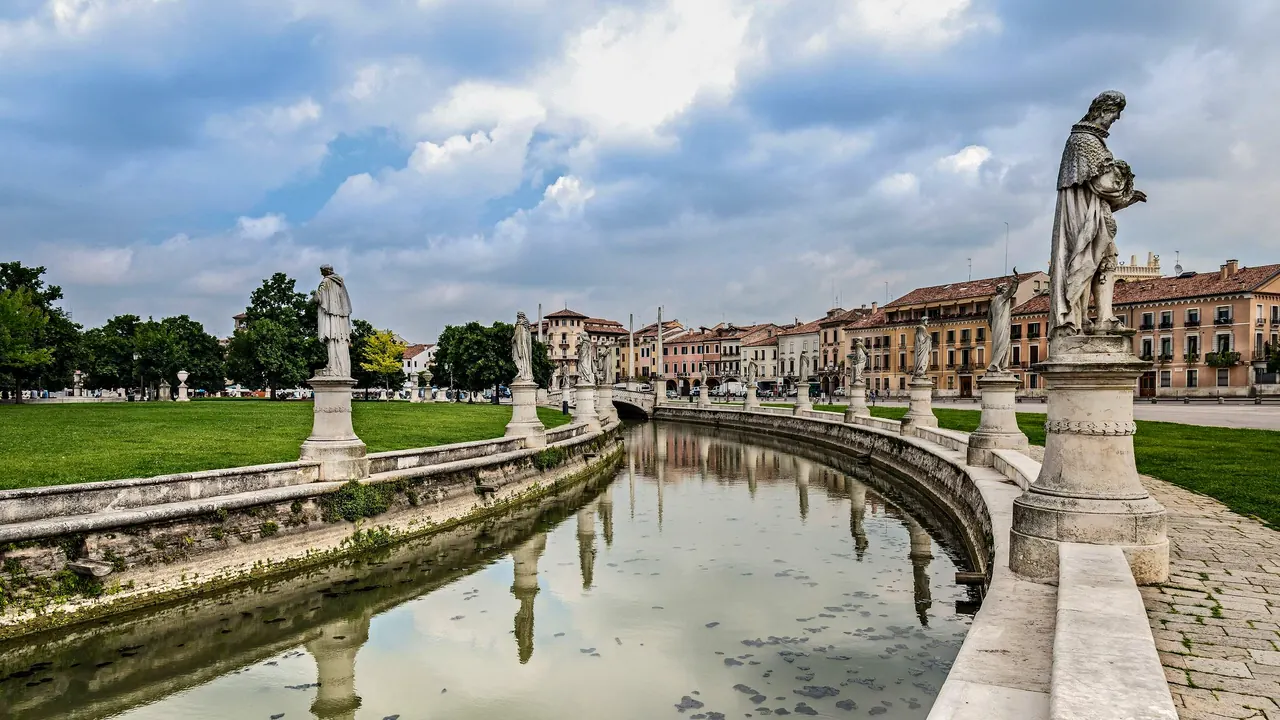
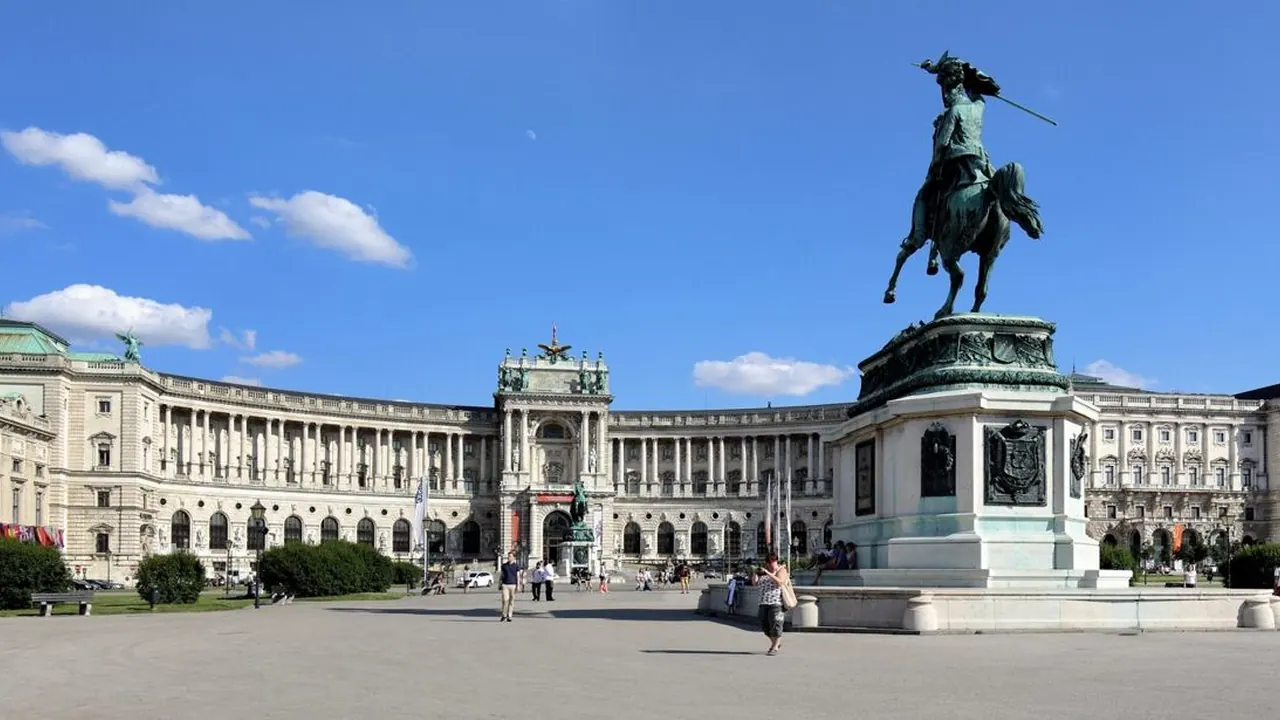
Photos: Padua by Didier Descouens, CC BY-SA 4.0, cropped; Vienna by C.Stadler/Bwag, CC BY-SA 3.0 AT, cropped.
Padua or Vienna?
Our verdict in twelve categories, each scored against the same fixed benchmark cities, and the climate month by month, so you can choose for your trip.
Choose Padua for
- day trips
- prices
- wellness
Padua suits travellers who want to see a whole region rather than one city. Venice, Vicenza, Verona and Bologna are all an easy train ride away, rooms cost less than in a capital, and the thermal pools of Abano are just outside town for a soak at the end of the day. Its own centre, with Giotto's Scrovegni frescoes and the Basilica of Saint Anthony, is worth a couple of days. After that the station takes over.
Choose Vienna for
- live music and the arts
- families
- shopping
Choose Vienna if the city itself is the trip. Imperial palaces, major galleries and above all its music, with opera and concerts almost every night, fill a week without leaving town, and the U-Bahn and trams make it all simple. Families do noticeably better here too, with the zoo at Schönbrunn, the Prater and hands-on museums, though the stay costs a little more.
Scoreboard
Twelve categories on one fixed scale from 0 to 100. The shaded stretch is the gap between the two.
Your match
Pick a travel style or drag the sliders, and both match scores follow your weighting.
Wins on day trips and prices with your weighting.
Wins on live music and the arts and families with your weighting.
What matters to you?
Category by category
What the scores mean for a trip.
Beaches & swimming
Neither city is a beach destination, and they differ in what takes the place of the sea. From Padua, the Adriatic at Sottomarina or the Venice Lido is about an hour away. The water is shallow and warm, but the shore is lined with umbrellas and bathing establishments, so it makes a day out rather than part of the stay.
Vienna has its swimming inside the city: grassy and gravel banks along the Danube Island and old lidos on the calmer Alte Donau, a U-Bahn ride from the centre. Pick Padua if you want the sea at some point, and Vienna if you want a quick river swim after an afternoon of sightseeing.
Food & drink
Both kitchens are regional and traditional, and both are short on international choice. Padua's appeal is a morning at the markets in Piazza delle Erbe and Piazza della Frutta, bigoli or baccalà for lunch, and a standing spritz in the squares at dusk, with wines from the Euganean Hills.
Vienna gives a little more to eat your way through. It has a whole cuisine of schnitzel, Tafelspitz and dumplings, a pastry tradition served in its grand coffee houses, and solid fine dining, which Padua largely lacks. On the city's edge, Heuriger taverns pour wine grown within the city limits.
Culture & sights
Padua has one of the great single sights of Italy in Giotto's Scrovegni Chapel. Alongside it are the UNESCO-listed fresco cycles, the Basilica of Saint Anthony and the anatomical theatre at the Bo. It is a rich centre, but two or three days cover it.
Vienna works on a different scale. It has the Hofburg, Schönbrunn, St Stephen's and the Ringstrasse, and museums from the Bruegels in the Kunsthistorisches to Klimt at the Belvedere and Schiele at the Leopold. Add the Jugendstil buildings and Otto Wagner's stations and it fills a week.
Nightlife
Neither is a big night out, and in both cities the evening is about drinks rather than dancing. Padua's version is the student aperitivo: crowds with spritz glasses fill Piazza delle Erbe and Piazza dei Signori, then move on to wine bars in the old ghetto. The town goes quiet in high summer and the university breaks.
Vienna has more variety late at night, with bars and small clubs under the Gürtel railway arches, electronic nights in old industrial spaces and deckchair bars on the Danube Canal. It also has the formal balls of winter, a kind of night out Padua doesn't have.
Nature & outdoors
Vienna has the greener doorstep. The Vienna Woods and the vineyard trails up to the Kahlenberg start at the city's edge, the Prater meadows reach into town, and the floodplain forest of the Donau-Auen lies just to the east. For longer days there are the Wachau cycle path and the plateaus of the Rax.
From Padua you need a short trip first. The Euganean Hills, about 15km away, have trails, vineyards and quiet cycling roads, and the Brenta towpaths make easy, flat rides. Real mountain walking on Monte Grappa or the Asiago plateau takes around an hour and a half by car.
Day trips
This is where Padua pulls clearly ahead. Venice is under half an hour away by train, Vicenza a quarter of an hour, and Verona, Treviso, Bologna and Ferrara around an hour. You can see much of north-east Italy without changing hotels, and the Brenta villas and the walled towns around the Euganean Hills are closer still.
Vienna's list is good but has fewer famous names: the Wachau and Melk, Bratislava an hour away, Klosterneuburg, Baden and the Neusiedler See. Budapest and Salzburg are better done with a night away.
Good for families
Padua is safe, flat and welcoming to children, and Prato della Valle is a good place for them to run about. Its sights, though, are frescoes and churches, so families tend to rely on Gardaland or the Adriatic, each around an hour or more away.
Vienna is much the easier choice with children. Schönbrunn Zoo, the Prater's rides and Ferris wheel, the aquarium in a wartime flak tower and the dinosaurs at the Natural History Museum fill days of sun or rain. Summer swimming on the Danube Island adds more.
Getting around
Both old centres are compact and largely closed to traffic, so most sights in either city are within walking distance. Padua's centre is smaller still. The Scrovegni Chapel and the Basilica of Saint Anthony are within a 20-minute walk of each other under the arcades, a tram runs from the station through the centre to Prato della Valle, and buses cover the rest. The town's real strength is its station, with quick trains in every direction, though the hills and villas are easier to reach by car.
Vienna is the easier city to get around overall. Five U-Bahn lines and a dense network of trams and buses all run on one ticket. They reach Schönbrunn, the Danube Island and even the vineyard villages without a car, and the U-Bahn runs all night at weekends.
Shopping & style
Padua's shopping is mostly fashion and shoe shops under the arcades and bookshops serving the university. The best things to take home are cheeses, cured meats and Euganean wine from the markets, and there is a large antiques market on Prato della Valle one Sunday a month.
Vienna is the better place to shop. Luxury houses line the Kohlmarkt and Graben, locals buy everyday fashion on Mariahilfer Strasse, and Neubau has independent designers. Local crafts such as Augarten porcelain, crystal and Loden coats make gifts you won't find elsewhere.
Affordability
Padua is the cheaper stay. It costs what a northern Italian city of its size usually does, and many visitors sleep there because it makes a cheaper base than Venice. A standing spritz and market food cost little, and you can walk everywhere.
Vienna costs more day to day, with dearer meals and full admission at the big palaces and museums. Transport passes, free palace gardens, set lunches and the State Opera's standing places keep it within reach.
Live music & performing arts
Padua has a modest programme: theatre and some opera at the Teatro Verdi, and chamber concerts in the Sala dei Giganti and the Basilica of Saint Anthony. For major opera, people take the train to the Fenice in Venice or to the summer Arena in Verona.
Vienna is in another league, and many people go there for the music alone. The State Opera stages a different work on most nights, with cheap standing places, and the Philharmonic plays in the Musikverein's Golden Hall. The Konzerthaus, the Volksoper, the Theater an der Wien and the Burgtheater fill out the week.
Wellness & relaxation
Padua is the better choice for rest, thanks to Abano Terme and Montegrotto about 12km away. Together they form one of Europe's largest thermal districts, with hot springs, mud treatments and dozens of spa hotels that welcome day visitors. A soak after a morning of sightseeing is easy, and the town's long lunches and quiet botanical garden add to the calm.
Vienna's calm comes from its coffee houses, palace gardens and vineyard taverns. It has thermal bathing too, at Therme Wien, the Art Deco Amalienbad and in Baden half an hour away, but on a smaller scale.
When should you go?
Pick your month. The climate figures are measured averages, not a forecast.
Padua in July
Vienna in July
Daytime high, °C
Rainfall in the month, mm
Where the figures come from
Padua's temperatures are measured 35 km from the centre, at Treviso / Istrana.
Padua has no rain gauge within 25 km of the centre, so its rainfall comes from a gridded climate dataset read at the city rather than from a gauge further away.
Padua's sunshine is measured 36 km from the centre, at Treviso / S. Angelo.
Temperature and rainfall are climate normals, averaged over the years shown. Padua: 1991-2020 normals, Treviso / Istrana (35.4 km from centre). Vienna: 1991-2020 normals, Wien / Hohe Warte (4.7 km from centre).
Padua is the warmer of the two all year. Midsummer highs reach about 31°C, hot and humid enough to make sightseeing tiring, although July is also the sunniest month. The Adriatic, an hour away, is warm enough for swimming from June to September and reaches around 25°C at its peak. The best months for walking are May, September and early October. Rain builds through autumn and peaks in November at 97mm, and winters are chilly.
Vienna runs cooler. Summer highs of around 27°C suit both walking the city and an afternoon swimming in the Danube from June to early September. Spring and early autumn are mild and comfortable, and the rain is heaviest from May to August. Winters are colder than in Padua, with January highs near 3°C and short, dim days.
Which traveller are you?
For a culture and arts trip, Vienna is the clear pick. Its palaces and major galleries fill the days, and in the evenings the State Opera, the Musikverein and the Konzerthaus put on music almost every night. Padua has Giotto's frescoes but can't match that.
On a family trip with children, Vienna again works better. Schönbrunn Zoo, the Prater, the aquarium and the hands-on museums cover any weather, and the trams are easy with a pram. Padua is safe and friendly, but beyond day trips it has little made for children.
For a relaxing and wellness trip, choose Padua. The thermal pools and mud treatments of Abano and Montegrotto are a short ride away and rooms cost less. The town's slow provincial pace and its mild spring and autumn also suit a restful stay.
Before you go
| Measure | Padua | Vienna |
|---|---|---|
| Official language | Italian | German, Austrian Sign Language |
| Currency | Euro (EUR) | Euro (EUR) |
| Sockets | CFL230 V, 50 Hz | CF230 V, 50 Hz |
| Driving side | Right | Right |
| Time zone | UTC+1, UTC+2 in summer | UTC+1, UTC+2 in summer |
| Emergency number | 112 | 112 |
| Elevation | 12 m | 151 m |
| Main airport | Venice Marco Polo Airport (VCE)39 km from centre103 non-stop destinations | Vienna International Airport (VIE)18 km from centre202 non-stop destinations |
| Public holidays this year | 13 days | 16 days |
By the numbers
| Measure | Padua | Vienna |
|---|---|---|
| City population | 206,496 | 2,028,289 |
| People per km² | 2,220 | 4,890 |
| Museums within 10 km | 29 | 152 |
| UNESCO World Heritage sites within 50 km | 5 | 4 |
| Swim season, months above 21 °C | 4 months | - |
Where else could you go?
Every comparison below shares a destination with this one, so you can follow Padua or Vienna somewhere new.
- Venicevs Padua
- Bratislavavs Vienna
- Veronavs Padua
- Bolognavs Padua
- Brnovs Vienna
- Cortina d'Ampezzovs Padua