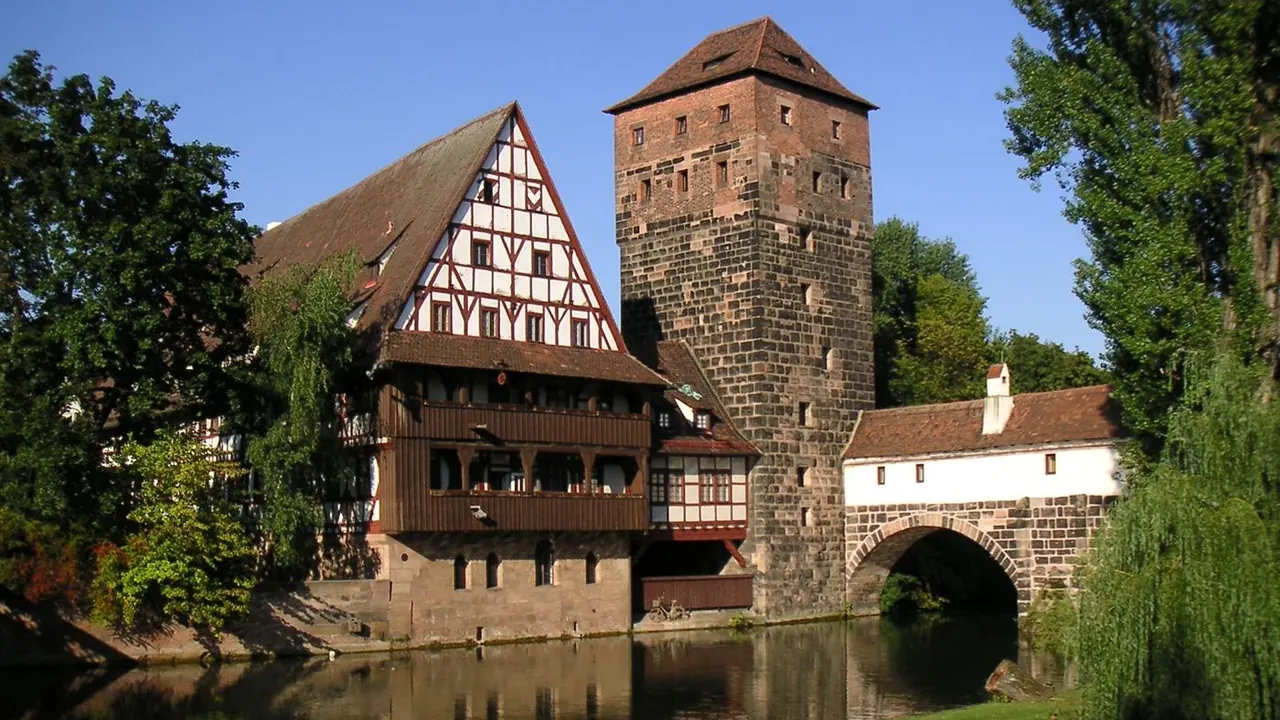
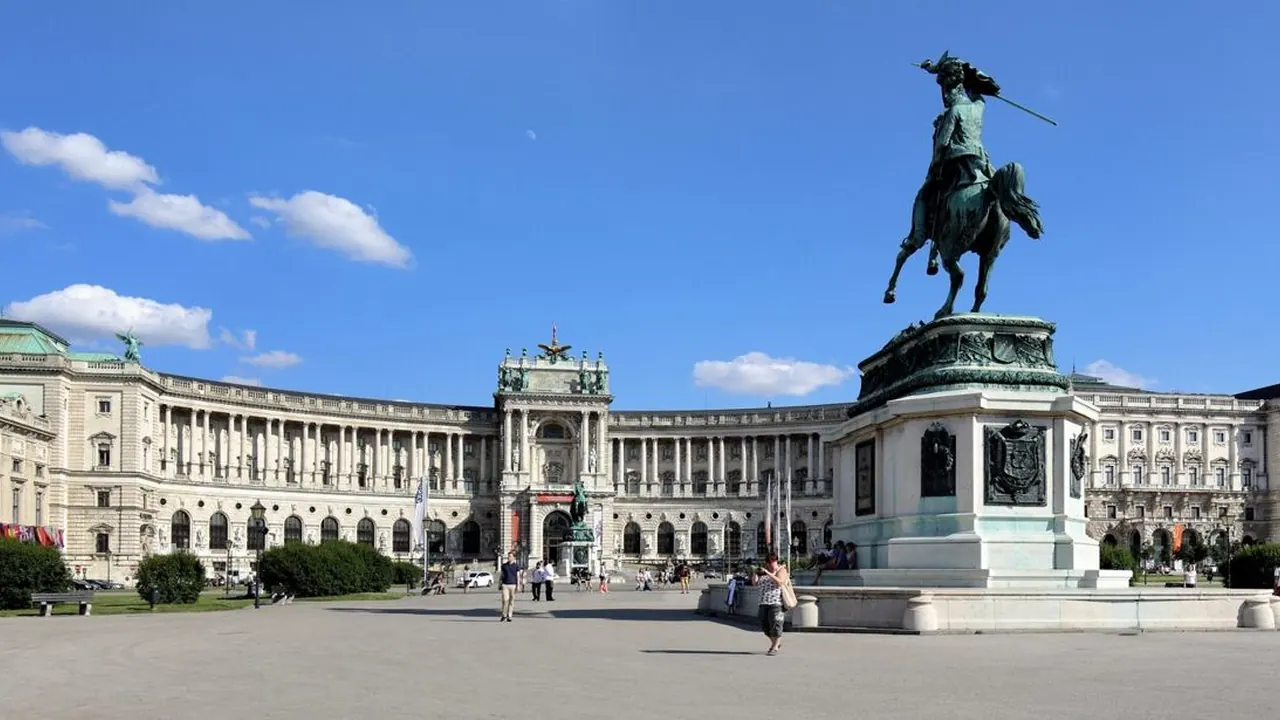
Photos: Nuremberg by Horst Gutmann, CC BY 2.0, cropped; Vienna by C.Stadler/Bwag, CC BY-SA 3.0 AT, cropped.
Nuremberg or Vienna?
Our verdict in twelve categories, each scored against the same fixed benchmark cities, and the climate month by month, so you can choose for your trip.
Choose Nuremberg for
- day trips
- prices
Nuremberg suits a shorter, cheaper trip built around Franconia rather than the city alone. The walled medieval centre takes a day or two, and the beer taverns are a real pleasure. Its strongest card is the string of old towns within easy train reach, from Bamberg to Rothenburg. Pick it if you like moving between small historic towns, drinking local beer and paying a little less than in a capital.
Choose Vienna for
- live music and the arts
- culture and sights
- shopping
Vienna is the better choice for a longer stay with plenty to fill it. An imperial capital with first-rank museums and one of the world's great musical traditions gives you far more to see and hear in the evenings. It is also easier with children, has its own swimming in summer and is simple to get around. If opera, concerts, palaces and coffee houses are the point of the trip, Nuremberg can't compete.
Scoreboard
Twelve categories on one fixed scale from 0 to 100. The shaded stretch is the gap between the two.
Your match
Pick a travel style or drag the sliders, and both match scores follow your weighting.
Wins on day trips and prices with your weighting.
Wins on live music and the arts and culture and sights with your weighting.
What matters to you?
Category by category
What the scores mean for a trip.
Beaches & swimming
Neither city is a beach destination, but Vienna lets you swim without leaving town. The Danube Island and the calmer Alte Donau, with its old lidos, are a U-Bahn ride from the centre, so a swim fits easily into a summer sightseeing day.
In Nuremberg, lake swimming means a trip of about an hour to the Franconian Lake District and reservoirs such as the Brombachsee. That is a fine outing with children but a separate trip. In town you only have the outdoor pools.
Food & drink
Vienna has a whole cuisine of its own: schnitzel and Tafelspitz in wood-panelled Beisl taverns, a deep pastry tradition and the long ritual of the grand coffee houses. It also grows wine inside the city limits, poured at Heuriger taverns on the vineyard slopes.
Nuremberg's table is narrower and heavier. Its pleasures are the small beechwood-grilled bratwurst, Schäufele on a Sunday and Lebkuchen. Where it holds its own is beer, as Franconia's many small breweries fill the taverns and beer gardens. Wine and cake lovers will prefer Vienna, while beer drinkers may prefer Nuremberg.
Culture & sights
Nuremberg is a fine medieval walled town. The Kaiserburg, the Gothic churches, Dürer's house and the Germanisches Nationalmuseum fill a couple of good days. The Rally Grounds and Courtroom 600 add a sobering twentieth-century layer that few cities can match.
Vienna works on a different scale. The Hofburg, Schönbrunn and the Ringstrasse show off an entire empire, and the Kunsthistorisches Museum, the Belvedere and the Albertina are among Europe's major collections. The Jugendstil and Secession buildings add a second great period. Nuremberg rewards a weekend, while Vienna can fill a week.
Nightlife
Both cities go out in a relaxed, bar-led way, but Vienna has more of it and more variety. You can drink under the Gürtel railway arches, sit in deckchair bars on the Danube Canal or end the night at an electronic club in a former industrial space. The winter ball season is something no other city offers.
Nuremberg's evenings centre on old-town taverns, students on the riverbanks and the small alternative bars of Gostenhof. It makes a pleasant night out, but there are few clubs.
Nature & outdoors
Both cities have green country close at hand, but of different kinds. Nuremberg has the pine forest of the Reichswald at the edge of town. About an hour away is Franconian Switzerland, with its limestone towers, caves and well-known rock climbing.
Vienna has a little more range and more of it inside the city. You can walk up through vineyards in the Vienna Woods to the Kahlenberg or explore the wild floodplain of the Donau-Auen. The Wachau cycle path is a classic day ride, and you can reach real Alpine plateaus on the Rax and Schneeberg in about an hour and a half.
Day trips
Nuremberg is the better base for day trips, because so many first-class old towns are so close. Bamberg, Regensburg and Würzburg are each about an hour by train or less, and the walled Romantic Road towns of Rothenburg and Dinkelsbühl are only a little further.
Vienna's choice is more varied but thinner. Bratislava is a different capital an hour away, the Wachau and Melk make a lovely river day, and Baden and Eisenstadt are close. The bigger names, Budapest and Salzburg, need an overnight stay.
Good for families
Vienna gives families more to do and more days of it. There is Schönbrunn Zoo next to a maze and a children's museum, the Prater's Ferris wheel and rides, and the sharks at Haus des Meeres. For rainy days there are the dinosaurs at the Natural History Museum and the hands-on Technical Museum.
Nuremberg's appeal is gentler and has a toy theme. It has the Toy Museum, locomotives at the railway museum, a woodland zoo and a play park in nearby Zirndorf. In Advent there is also a children's market with carousels. It is easy to manage, apart from the steep cobbled climb to the castle.
Getting around
You can walk both centres. Nuremberg's walled core is only about 1.5km across, with the station at its southern gate, so the cobbled climb to the castle is the only real effort.
Vienna's advantage is the city beyond the centre. Its colour-coded U-Bahn lines and dense trams take you to Schönbrunn, the Prater, the Danube Island and the vineyard villages, and the U-Bahn runs all night at weekends. It is a big capital that feels smaller than it is.
Shopping & style
Vienna is clearly the better place to shop. The Golden U around the Graben and Kohlmarkt has luxury houses under imperial facades, Mariahilfer Strasse covers everyday fashion and Neubau has independent designers. Augarten porcelain, crystal and Loden make gifts with real local roots.
Nuremberg's shopping streets are mostly chain stores. Outside Advent, it comes down to Lebkuchen tins, wooden toys and the craft workshops of the Handwerkerhof. In December, the Christkindlesmarkt makes it one of Germany's best places to buy Christmas things.
Affordability
Nuremberg is a little easier on the wallet. Tavern meals, local beer and transport all cost less, and the sights are modestly priced. The catch is the trade-fair and Advent weeks, when hotel rooms become scarce.
Vienna is a step dearer, mainly because the major palaces and museums charge full admission. Set lunches, sausage stands and Heuriger buffets keep meals manageable, and many gardens and churches are free. The opera's standing places make the city's greatest strength surprisingly affordable.
Live music & performing arts
This is where the two cities differ most. Vienna is one of the world's music capitals. The State Opera plays a different work most nights, the Philharmonic plays in the Golden Hall of the Musikverein, and the Konzerthaus, the Volksoper and the Burgtheater fill the rest of the week. Mozart, Beethoven and the Strauss family are played every night.
Nuremberg has a respectable regional programme. The Staatstheater stages opera and ballet, the open-air concert in the Luitpoldhain is a summer highlight, and the free Bardentreffen folk weekend fills the old town. It is enjoyable, but nobody plans a trip around it the way they do for Vienna.
Wellness & relaxation
Vienna makes it easier to slow down. Hours in a coffee house and evenings at a vineyard tavern are part of ordinary life. For bathing there is the large Therme Wien, the Art Deco Amalienbad, and the old sulphur springs of Baden half an hour away.
Nuremberg relies on its neighbours. There is a thermal spa with sauna gardens in Fürth, a short U-Bahn ride away, and floating in the saline pools at Bad Windsheim makes a good day out. In the city itself, a slow afternoon in a beer garden by the Pegnitz is the local way to relax.
When should you go?
Pick your month. The climate figures are measured averages, not a forecast.
Nuremberg in July
Vienna in July
Daytime high, °C
Rainfall in the month, mm
Temperature and rainfall are climate normals, averaged over the years shown. Nuremberg: 1991-2020 normals, Nuernberg (5.5 km from centre). Vienna: 1991-2020 normals, Wien / Hohe Warte (4.7 km from centre).
Nuremberg and Vienna follow the same Central European pattern, but Vienna runs a degree or two warmer and is noticeably sunnier all year. Both are pleasant for walking from May to September. Midsummer highs reach about 25°C in Nuremberg and 27°C in Vienna, which is warm but rarely too hot for sightseeing. Summer is also the wettest season in both, with short heavy showers. Nuremberg's wettest month is July and Vienna's is May. The lake and river swimming in both cities only really works from June to early September.
April and September are mild and the most comfortable months for long days on foot. April is fairly dry in both cities, and so is September in Nuremberg, but a September in Vienna still brings a fair amount of rain. November turns cool and grey. In December and January highs are only around 3°C to 4°C and there is little sun. Those months are better for museums, concert halls, taverns and coffee houses than for walking the streets.
Which traveller are you?
On a culture and arts trip, Vienna wins easily. Its palaces and great collections, from Bruegel to Klimt, could fill a week, and the State Opera, the Musikverein and the Burgtheater give you a serious performance almost every night.
On a tight budget, Nuremberg is the better bet. Tavern meals and local beer are cheap, transport costs little and the sights are modestly priced. Cheap regional trains also make Bamberg or Regensburg an inexpensive extra day, as long as you avoid the trade-fair weeks.
On a family trip with children, Vienna gives you more. It has Schönbrunn Zoo, the Prater's rides and meadows, an aquarium in a flak tower and hands-on museums for rainy days. Nuremberg's toy and railway museums are charming but fill fewer days.
Before you go
| Measure | Nuremberg | Vienna |
|---|---|---|
| Official language | German | German, Austrian Sign Language |
| Currency | Euro (EUR) | Euro (EUR) |
| Sockets | CF230 V, 50 Hz | CF230 V, 50 Hz |
| Driving side | Right | Right |
| Time zone | UTC+1, UTC+2 in summer | UTC+1, UTC+2 in summer |
| Emergency number | 112 | 112 |
| Elevation | 209 m | 151 m |
| Main airport | Nuremberg Airport (NUE)5 km from centre56 non-stop destinations | Vienna International Airport (VIE)18 km from centre202 non-stop destinations |
| Public holidays this year | 12 days | 16 days |
By the numbers
| Measure | Nuremberg | Vienna |
|---|---|---|
| City population | 531,159 | 2,028,289 |
| People per km² | 2,848 | 4,890 |
| Museums within 10 km | 50 | 152 |
| UNESCO World Heritage sites within 50 km | 1 | 3 |
Where else could you go?
Every comparison below shares a destination with this one, so you can follow Nuremberg or Vienna somewhere new.