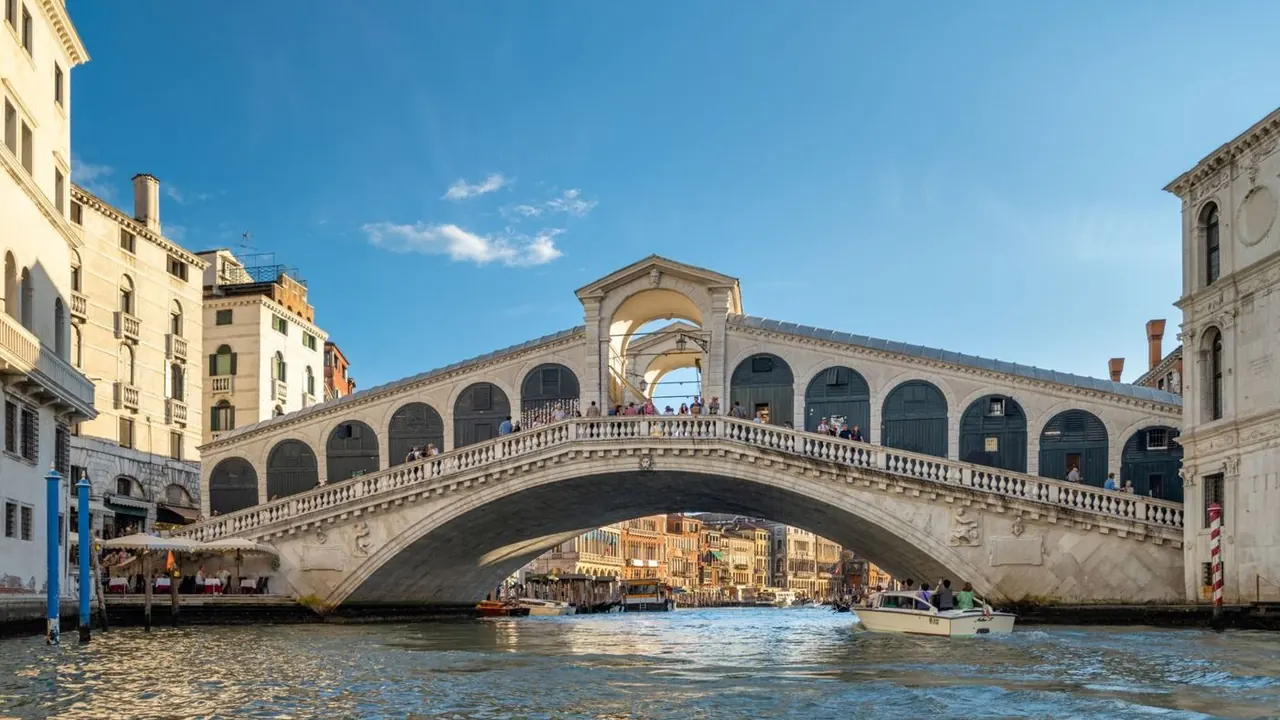
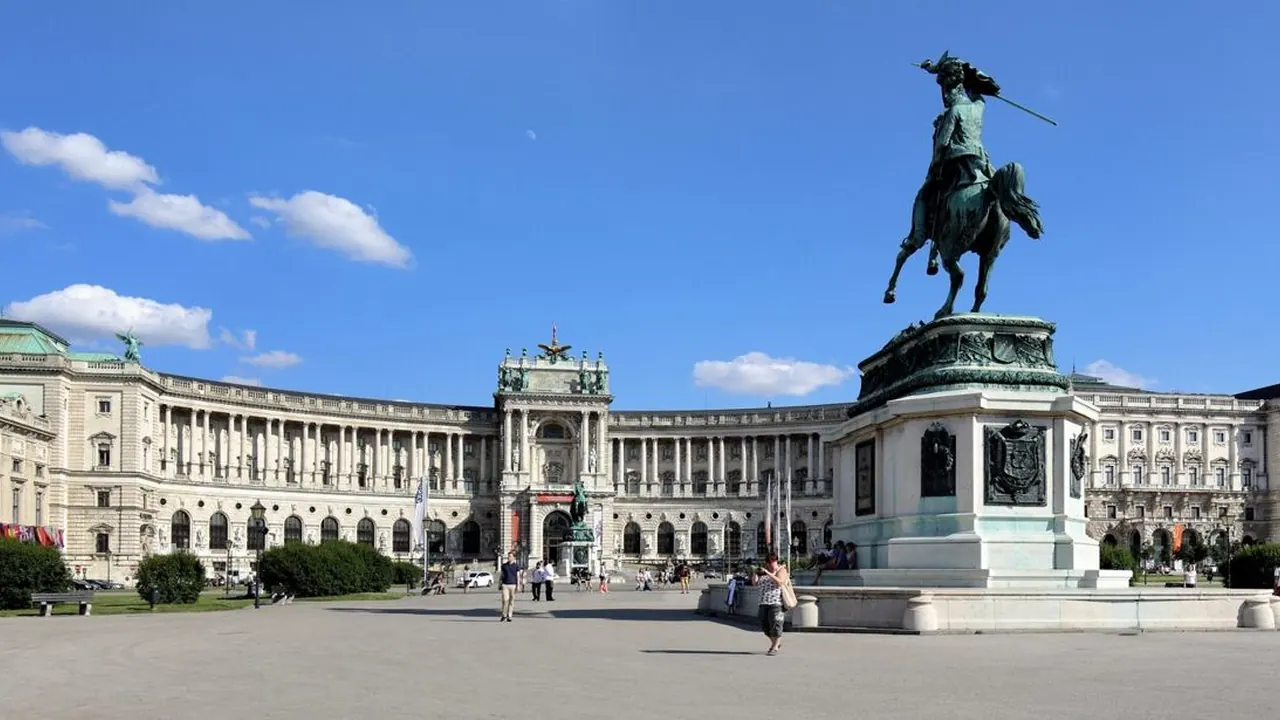
Photos: Venice by David Vives, Pexels License; Vienna by C.Stadler/Bwag, CC BY-SA 3.0 AT, cropped.
Venice or Vienna?
Our verdict in twelve categories, each scored against the same fixed benchmark cities, and the climate month by month, so you can choose for your trip.
Choose Venice for
- beaches
- day trips
- culture and sights
Venice suits travellers who want to spend their days looking: at the Grand Canal from a vaporetto, at Titian and Tintoretto in the churches where they hang, at a car-free city that has barely changed in centuries. It also has the better beach on its doorstep and the richer day trips, with Padua, Verona and the lagoon islands all close. Go for a few days of sightseeing and art, and accept that it is expensive, crowded on the main routes and quiet after dark.
Choose Vienna for
- live music and the arts
- families
- prices
Vienna is the easier, more rounded city to live in for a week. Opera, the Philharmonic and concerts every night are its great strength, and it beats Venice on getting around, family days, green space, evenings out and cost. The palaces and museums stand comparison with anything in Venice, and a coffee house or a vineyard tavern gives you a slower, cheaper rhythm than the lagoon allows.
Scoreboard
Twelve categories on one fixed scale from 0 to 100. The shaded stretch is the gap between the two.
Your match
Pick a travel style or drag the sliders, and both match scores follow your weighting.
Wins on beaches and day trips with your weighting.
Wins on live music and the arts and families with your weighting.
What matters to you?
Category by category
What the scores mean for a trip.
Beaches & swimming
Venice has an actual seaside. The Lido runs for kilometres of fine sand on the open Adriatic, mostly lined with cabanas but with free stretches at the ends, and the shallow, mild water suits children even if it is greenish. Quieter Pellestrina and the big resorts at Jesolo and Sottomarina add more choice.
Vienna swims in fresh water instead. The Danube Island's gravel banks and the warmer Alte Donau with its old lidos make a good summer evening, and the reedy Neusiedler See is an hour off, but there is no sand and sea. For a beach afternoon, Venice wins easily.
Food & drink
Vienna eats better on a typical visit. Its imperial cuisine of schnitzel, Tafelspitz and strudel is easy to find done well in wood-panelled Beisl taverns, the coffee houses are an institution, and the Heuriger in Grinzing and Nussdorf pour wine grown inside the city limits.
Venice's high point is the bacaro counter, cicchetti and a spritz around the Rialto, with lagoon seafood such as cuttlefish risotto from the market. The trouble is the mass of tourist restaurants on the main routes, so a good dinner takes more searching than it does in Vienna.
Culture & sights
Both are among Europe's great sightseeing cities, but in different ways. In Venice the whole city is the exhibit: San Marco, the Doge's Palace and the Grand Canal palazzi, with Venetian painting kept in the churches and scuole where it was meant to hang, and the Biennale in the Arsenale and Giardini.
Vienna's riches are imperial and kept in great institutions: the Hofburg and Schönbrunn, the Kunsthistorisches Museum's Bruegels, Klimt at the Belvedere and Schiele at the Leopold, plus a second golden age of Jugendstil and Otto Wagner. Venice is about atmosphere, Vienna about collections, and either will fill a week.
Nightlife
Vienna has more of a night. Bars and small clubs under the Gürtel arches stay open late, the Bermuda Triangle handles old-town drinking, the Danube Canal fills with deckchair bars in summer, and the winter balls are an experience Venice has no answer to.
In Venice the best of the evening is the aperitivo along the Fondamenta della Misericordia, with Campo Santa Margherita's student bars lasting a little longer. By midnight the canals are silent, which makes a lovely walk but sends club-goers to the mainland.
Nature & outdoors
The lagoon is Venice's countryside. Its salt marshes and fishing valleys around Torcello and Sant'Erasmo hold herons, egrets and flamingos, and you can explore them by kayak or on a lesson in standing rowing, with flat bike rides along the Pellestrina sea walls. The Euganean Hills and the Prosecco hills offer gentle walking about an hour away, but there are few parks in town and the Dolomites are a long trip.
Woods and vineyards begin at Vienna's own edge. The beech-covered Vienna Woods and the vineyard trails up to the Kahlenberg are close at hand, the Prater meadows reach well into the city and the Donau-Auen floodplain forest lies just to the east. The Rax and Schneeberg add real limestone mountains about 90 minutes out, which gives Vienna far more to do outdoors.
Day trips
Venice has the stronger set of excursions. Fast trains reach Padua's Scrovegni Chapel in half an hour, Vicenza's Palladio and Verona's arena soon after, with Bologna and Trieste also possible, and the lagoon adds Murano, Burano and Torcello without needing a train at all.
Vienna's options are good but fewer: Bratislava by boat or train, the Wachau with Melk and Dürnstein, the abbeys at Klosterneuburg and Heiligenkreuz, and Haydn's Eisenstadt. Its unusual advantage is a second capital an hour away, and Brno in another country.
Good for families
Vienna is much the better family base. Schönbrunn Zoo, the Prater's Ferris wheel and rides, the aquarium in a flak tower and the ZOOM children's museum keep children busy whatever the weather, with playgrounds everywhere and trams that take prams.
Venice works for children as an adventure, with boats instead of buses, Murano glass-blowing and the shallow Lido beach. But stepped bridges defeat pushchairs, summer is hot and packed, and there is little made for children, so it suits a short stay with older ones.
Getting around
In Venice you get around on foot and by boat, while Vienna has a full metro and tram network. With no cars, most of central Venice is within a forty-minute walk, vaporetti run out to the Lido and the islands, and traghetti cross the Grand Canal. The price is effort: alleys that get you lost, stepped bridges that are hard on luggage and pushchairs, and slow, crowded boats.
In Vienna the walking is easier and public transport covers the rest. The old town is compact and largely pedestrian, and the U-Bahn, trams and buses all run on one ticket. They reach everything from Schönbrunn to the vineyard villages, and the trains run all night at weekends.
Shopping & style
The two are fairly level, with different strengths. Venice is about crafts made on the spot, Murano glass, Burano lace, papier-mâché masks, marbled paper and furlane slippers, though you have to steer past imported copies on the main routes.
Vienna has broader ordinary shopping, from luxury on the Kohlmarkt and Graben to Mariahilfer Strasse and Neubau's independent designers, plus Augarten porcelain, Loden and the Christmas markets at the Rathaus and Schönbrunn.
Affordability
In Venice the expense starts with simply being there. A bed in the historic centre is the largest cost of the trip, sitting down at a café table on Piazza San Marco is notoriously dear, and the boats are priced for visitors, so every ride out to the Lido or Murano adds up. Many of the churches that hold the city's paintings also charge at the door. Eating at a bacaro counter, sleeping in Mestre and coming in late autumn or winter help, but they don't make Venice cheap.
Vienna's costs are in a different place. A night's sleep, a tram ride and a weekday lunch cost what you would expect in Western Europe, and the money goes on the big sights, Schönbrunn, the Hofburg and the Kunsthistorisches Museum, which charge full admission. Plenty of a Viennese day costs little or nothing, though: a church interior, a walk through the Prater, an hour over one coffee. Even the State Opera is open to anyone willing to stand, where in Venice the Titians in the Frari come with a ticket, so a week in Vienna leaves you with more money than a few days on the lagoon.
Live music & performing arts
This is where Vienna pulls furthest ahead. The State Opera plays a different work most nights, the Philharmonic is at home in the Musikverein's Golden Hall, and the Konzerthaus, Volksoper, Burgtheater and the Boys' Choir in the Hofburg chapel fill the rest of the week, with cheap standing places at the opera.
Venice has La Fenice, a great house where Verdi and Rossini had premieres, and the Biennale's festivals. Most visitors, though, end up at church concerts of Vivaldi, which can be moving in his own city but are often routine.
Wellness & relaxation
In Venice, rest comes from the quiet. With no traffic, early mornings in Castello, Cannaregio or on Giudecca are hushed, though the daytime crowds around San Marco are the opposite. Spas are mostly in hotels, and for real thermal baths you go to Abano Terme, about an hour away.
Slowing down is part of everyday life in Vienna, from long afternoons in a coffee house to evenings at a vineyard tavern. Therme Wien and the Art Deco Amalienbad are inside the city, and Baden's sulphur springs are half an hour away, so rest is easier to find here than on the lagoon.
When should you go?
Pick your month. The climate figures are measured averages, not a forecast.
Venice in July
Vienna in July
Daytime high, °C
Rainfall in the month, mm
Where the figures come from
Venice has no rain gauge within 25 km of the centre, so its rainfall comes from a gridded climate dataset read at the city rather than from a gauge further away.
Venice's sunshine is measured 26 km from the centre, at Treviso / S. Angelo.
Temperature and rainfall are climate normals, averaged over the years shown. Venice: 1991-2020 normals, Venezia / Tessera (6.7 km from centre). Vienna: 1991-2020 normals, Wien / Hohe Warte (4.7 km from centre).
Venice is the warmer of the two all year. From June to early September the days are hot, reaching about 30°C in July and August, and the Adriatic at the Lido is warm enough for a proper swim at around 25°C. That heat is humid and the alleys fill up, so May and late September are kinder for walking. Autumn brings the rain: September and November are the wettest months, and from November to February the days are cool, grey and short.
Vienna has a more continental year. Summers are a little milder, which makes July and August comfortable for sightseeing and good for swimming in the Danube, while winters are properly cold, around 3°C in January, with very little sun in December. Its wettest weeks fall in early summer rather than autumn, so October is often drier and brighter in Vienna than in Venice. Spring and early autumn suit both cities best for walking.
Which traveller are you?
For a beach and sun trip, Venice is the clear choice. The Lido gives you a long sandy shore on the open Adriatic a short boat ride from San Marco, with Pellestrina and Jesolo nearby, while Vienna can only offer river and lake bathing.
On a family trip with young children, Vienna is far easier. Schönbrunn Zoo, the Prater rides, playgrounds, hands-on museums and pram-friendly trams make the days simple, whereas Venice's stepped bridges, summer crowds and lack of parks wear families down quickly.
On a trip on a tight budget, Vienna stretches your money much further. Its hotels are fair for a capital, transport passes are good value, the palace gardens are free and opera standing places cost little, while Venice is among Italy's priciest places to sleep.
Before you go
| Measure | Venice | Vienna |
|---|---|---|
| Official language | Italian | German, Austrian Sign Language |
| Currency | Euro (EUR) | Euro (EUR) |
| Sockets | CFL230 V, 50 Hz | CF230 V, 50 Hz |
| Driving side | Right | Right |
| Time zone | UTC+1, UTC+2 in summer | UTC+1, UTC+2 in summer |
| Emergency number | 112 | 112 |
| Elevation | 2 m | 151 m |
| Main airport | Venice Marco Polo Airport (VCE)7 km from centre103 non-stop destinations | Vienna International Airport (VIE)18 km from centre202 non-stop destinations |
| Public holidays this year | 13 days | 16 days |
By the numbers
| Measure | Venice | Vienna |
|---|---|---|
| City population | 250,369 | 2,028,289 |
| People per km² | 602 | 4,890 |
| Museums within 10 km | 52 | 152 |
| UNESCO World Heritage sites within 50 km | 5 | 3 |
| Swim season, months above 21 °C | 4 months | - |
Where else could you go?
Every comparison below shares a destination with this one, so you can follow Venice or Vienna somewhere new.