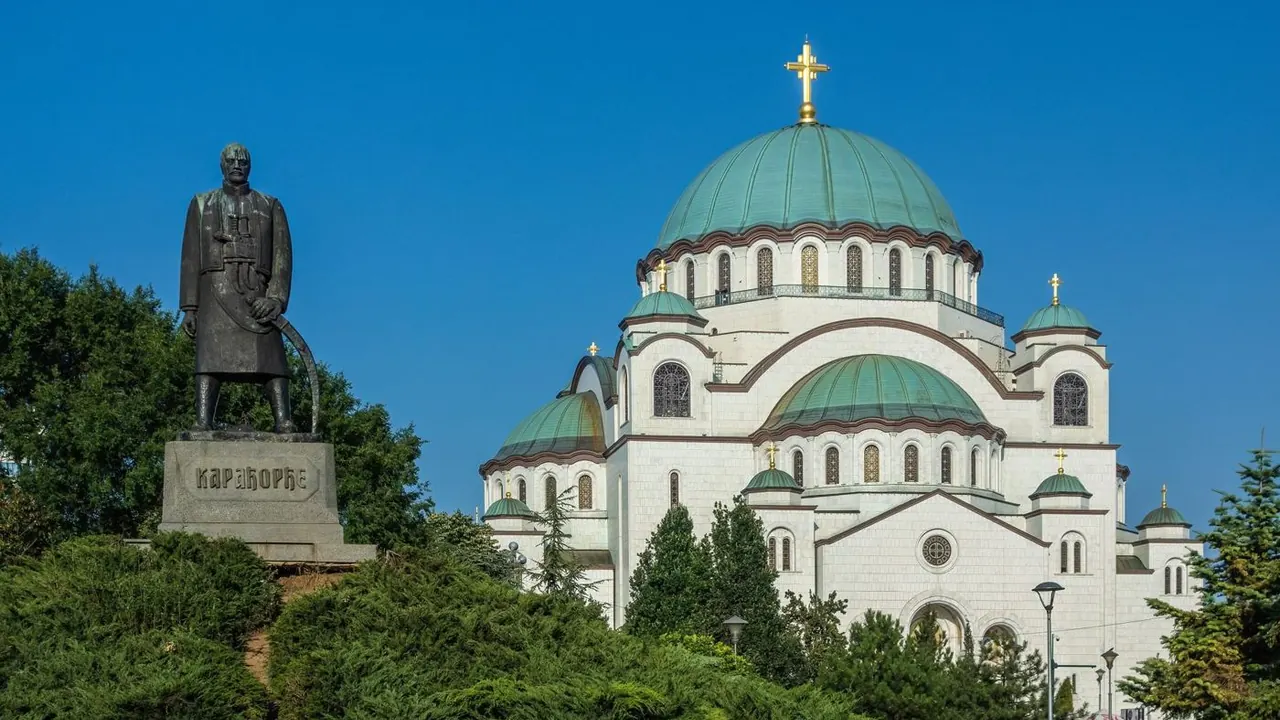
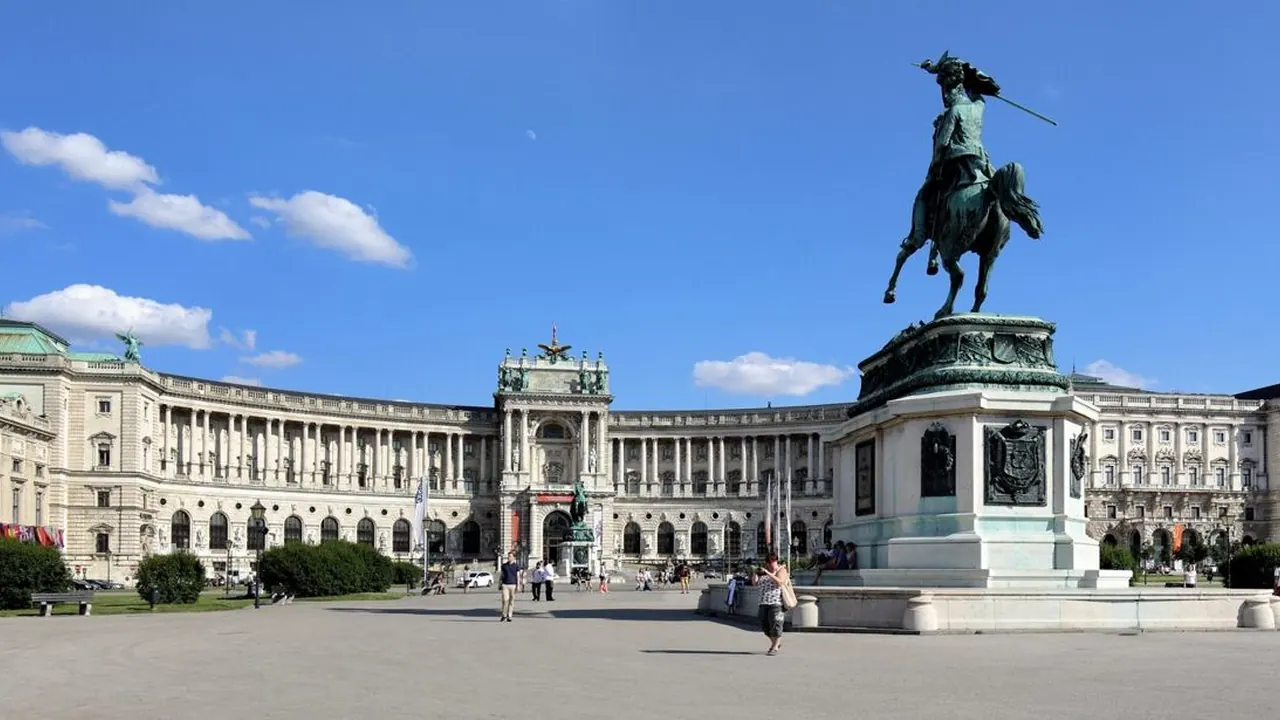
Photos: Belgrade by Petar Milošević, CC BY-SA 4.0, cropped; Vienna by C.Stadler/Bwag, CC BY-SA 3.0 AT, cropped.
Belgrade or Vienna?
Our verdict in twelve categories, each scored against the same fixed benchmark cities, and the climate month by month, so you can choose for your trip.
Choose Belgrade for
- nightlife
- prices
- beaches
Belgrade is the pick for travellers who want long nights out, generous grill-house dinners and a capital where the daily spend stays low. Floating splav clubs on the Sava and Danube and late kafana evenings over rakija give it a going-out life Vienna doesn't attempt, and a summer swim at Ada Ciganlija is easy to fit in. The sights take two or three days, so it suits groups, night owls and anyone who values atmosphere over monuments.
Choose Vienna for
- live music and the arts
- culture and sights
- getting around
If imperial palaces, first-rank art collections and serious music most nights of the year are the point of the trip, go to Vienna. It is also the calmer and easier city. The U-Bahn and trams reach almost everything, children are well looked after, and coffee houses and thermal baths make rest simple. The Wachau valley and Bratislava are easy days out. Expect to pay noticeably more for all of this.
Scoreboard
Twelve categories on one fixed scale from 0 to 100. The shaded stretch is the gap between the two.
Your match
Pick a travel style or drag the sliders, and both match scores follow your weighting.
Wins on nightlife and prices with your weighting.
Wins on live music and the arts and culture and sights with your weighting.
What matters to you?
Category by category
What the scores mean for a trip.
Beaches & swimming
Neither city is a beach destination, but Belgrade offers the better summer swim. Ada Ciganlija has about 7km of gravel beaches on a shallow, lifeguarded lake, with cafés and sports courts, and locals pour in after work. The sandy Lido on Great War Island, reached by boat, is the wilder alternative.
Vienna's swimming is spread along the Danube Island's grassy banks and the old lidos of the Alte Donau, which make a pleasant afternoon and are easy to reach by U-Bahn. The reedy Neusiedler See, an hour away, adds sailing rather than a better beach.
Food & drink
Belgrade eats generously and simply, around the grill. You get ćevapi and pljeskavica with kajmak and ajvar, burek for breakfast, long kafana menus in Skadarlija and Zemun, and fruit brandies taken seriously. The range thins quickly for vegetarians or anyone after refined cooking.
Vienna has the deeper and more distinctive table. Schnitzel and Tafelspitz come in wood-panelled Beisl taverns, there is a whole pastry tradition, the grand coffee houses are an institution, and Heuriger taverns pour wine grown inside the city. Neither city is strong on international or street food.
Culture & sights
Belgrade's sights are worth seeing but limited. Kalemegdan's layered fortress above the meeting of the rivers is the highlight. Beyond it there are the gold-mosaic Temple of Saint Sava, the Museum of Yugoslavia with Tito's mausoleum, and a patchwork of Austro-Hungarian, Ottoman and socialist streets left by repeated rebuilding.
Vienna is a different scale altogether. It has the intact imperial capital of the Hofburg, Schönbrunn and the Ringstrasse, a UNESCO-listed old town around St Stephen's, and collections such as the Kunsthistorisches Museum's Bruegels and Klimt's The Kiss at the Belvedere. Jugendstil adds a second great period. Vienna easily fills a week, while Belgrade is done in two or three days.
Nightlife
This is Belgrade's strongest card. Nights start late and end at dawn, on splavs moored along the rivers in summer and in basement clubs and old industrial spaces in winter. Dorćol's bar streets spill onto the pavement, and a kafana night of rakija rounds at a long table is an outing in itself. Bottle service and sharp dress are normal at the bigger clubs.
Vienna goes out more quietly. There are bars under the Gürtel railway arches, the Bermuda Triangle in the old town, deckchair bars on the Danube Canal and slow evenings at a Heuriger. Its one unique offer is the winter ball season in the palaces, which is formal rather than wild.
Nature & outdoors
Belgrade's outdoors is shaped by its two rivers. Promenades follow the Sava and Danube for kilometres and are good for a long walk or a bike ride. Great War Island is a protected wetland where herons and cormorants feed within sight of the fortress. For woodland there are the parks of Košutnjak and Topčider and the hill at Avala, and Fruška Gora, about an hour north, has gentle hiking among vineyards. Serbia's grander scenery, such as the Iron Gates gorge, is too far away for a comfortable day.
Vienna has wilder and more varied country on its doorstep. The beech-covered Vienna Woods begin at the city's edge, with marked trails climbing through vineyards to the Kahlenberg for views over the Danube. The Donau-Auen national park protects floodplain forest that you can explore by boat or on foot. Cyclists have the classic ride along the Wachau, and the Rax and Schneeberg put real Alpine plateaus within about 90 minutes.
Day trips
Belgrade's best outing is Novi Sad and its Petrovaradin fortress, under an hour by fast train. You can pair it with baroque Sremski Karlovci and the Fruška Gora monasteries for a day of churches and wine. Smederevo's medieval fortress and Roman Viminacium lie down the Danube, but most of these need a car or a tour.
Vienna offers more choice and makes it easier. Bratislava is about an hour away by train or boat, and the Wachau valley has the abbey at Melk and the ruins at Dürnstein. Closer in are Klosterneuburg, Heiligenkreuz, the spa town of Baden and Haydn's Eisenstadt, nearly all reachable by rail.
Good for families
Belgrade welcomes children warmly, and families eat out late together without fuss. Kalemegdan's ramparts, tanks and small zoo make a good afternoon, and Ada Ciganlija's shallow water works in summer. Beyond that little is built for children, and heavy traffic and crowded pavements make pushchairs hard work.
Vienna is far better set up. It has Schönbrunn Zoo beside a maze and a children's museum, the Prater's Ferris wheel and rides, the Haus des Meeres aquarium, and the Natural History and Technical Museums plus ZOOM for rainy days. Its trams are easy to use with prams.
Getting around
In both cities the main sights are within walking distance, but Vienna's compact, largely pedestrian old town is flat, while Belgrade climbs steeply up from the rivers. Beyond the centre the gap widens. Belgrade relies on crowded trams, trolleybuses and buses with no metro, so most visitors fall back on cheap taxis, agreeing a metered fare first.
Vienna's five U-Bahn lines, dense tram network and single ticket take you to Schönbrunn, the Danube Island and even the vineyard villages, with trains through the night at weekends.
Shopping & style
Belgrade is a city for browsing rather than a shopping trip. Knez Mihailova and the riverside malls cover the chains, and the better finds are young designers in Dorćol and Vračar and food gifts such as honey, ajvar and rakija from Kalenić market.
Vienna offers more, and at a higher quality. Luxury houses line the Graben and Kohlmarkt, Mariahilfer Strasse handles everyday fashion, and Neubau's side streets have independent designers. Its crafts, from Augarten porcelain and crystal to Loden coats, make lasting gifts, and the Christmas markets add a seasonal reason to come.
Affordability
Belgrade is much the cheaper city, and you notice it most in the small spending that fills a day. A long kafana dinner, burek from a bakery or an afternoon of terrace coffees costs far less than it would further west, so the daily total stays low. The gap closes at bedtime. A room in Dorćol or near Knez Mihailova costs about what it would in a Central European city, not what it would elsewhere in Serbia, and the clubs on the river and the international kitchens are the dearer end of a night out.
Vienna is dearer for almost everything, but rooms are the smaller jump. For a city of its standing they are fair, as long as you avoid the winter balls and the Christmas market weeks. It gives some of that back in other ways: one pass covers the U-Bahn and trams for a whole stay, and the parks, palace gardens and church interiors cost nothing to enter.
Live music & performing arts
Belgrade has a respectable calendar. The National Theatre stages opera and ballet, the Philharmonic plays at Kolarac, and the BITEF and BEMUS festivals fill the autumn. Its most characterful music is the tamburica bands playing at the kafana tables in Skadarlija and Zemun.
Vienna is one of the world's music capitals. The State Opera stages a different work on most nights, with cheap standing places, and the Vienna Philharmonic plays in the Musikverein's Golden Hall. Add the Konzerthaus, the Volksoper, the Burgtheater and the Boys' Choir, and the city where Mozart, Beethoven and Schubert worked can fill every evening of a stay.
Wellness & relaxation
Belgrade is a city to enjoy with energy rather than to rest in. It has no bathing culture, only hotel spas, and the centre is loud, smoky indoors and up late. Its calm moments are long terrace coffees and an afternoon by the lake at Ada Ciganlija.
Vienna slows you down without effort. There are unhurried coffee-house afternoons and walks in the palace gardens, and thermal water is easy to reach: the pools of Therme Wien, the Art Deco Amalienbad and the sulphur springs of Baden about half an hour out.
When should you go?
Pick your month. The climate figures are measured averages, not a forecast.
Belgrade in July
Vienna in July
Daytime high, °C
Rainfall in the month, mm
Temperature and rainfall are climate normals, averaged over the years shown. Belgrade: 1991-2020 normals, Beograd (2.1 km from centre). Vienna: 1991-2020 normals, Wien / Hohe Warte (4.7 km from centre).
Both cities have continental climates, with cold, grey winters and warm summers, but Belgrade runs a little hotter and sunnier. Its highs reach about 30°C in August, warm enough for the lake beaches at Ada Ciganlija but heavy going on the streets in the middle of the day. June is its wettest month, at around 95mm. Vienna peaks nearer 27°C, which makes July and August more comfortable for walking. Its summer rain is spread more evenly from May to August, mostly as showers rather than long wet spells.
For sightseeing, May and September are the sweet spot in both. Belgrade is already warm then, while Vienna is pleasantly mild. Winter is raw in both cities, and Vienna is slightly colder and darker, with January highs of about 3°C. That suits palaces, museums and concert halls far better than Belgrade's riverside life, which moves indoors once summer ends.
Which traveller are you?
For a culture and arts trip, Vienna is the clear choice: the Hofburg and Schönbrunn, Bruegel and Klimt in great museums, and opera or a Philharmonic concert almost every night. Belgrade's fortress and churches fill only a couple of days.
On a food and nightlife trip, Belgrade is more fun. Vienna's kitchen is more refined, but Belgrade's kafana evenings with bands and rakija, the summer splavs and clubs running until dawn give a night out it can't match.
On a tight budget, Belgrade goes much further. Grill meals, terrace coffees, drinks and taxis all cost little, and the fortress park is free. Vienna can be done carefully, with sausage stands and opera standing places, but every museum and palace charges full admission.
Before you go
| Measure | Belgrade | Vienna |
|---|---|---|
| Official language | Serbian | German, Austrian Sign Language |
| Currency | Serbian Dinar (RSD) | Euro (EUR) |
| Sockets | CF230 V, 50 Hz | CF230 V, 50 Hz |
| Driving side | Right | Right |
| Time zone | UTC+1, UTC+2 in summer | UTC+1, UTC+2 in summer |
| Emergency number | Police 92/192, ambulance 94/194, fire 93/193 | 112 |
| Elevation | 117 m | 151 m |
| Main airport | Belgrade Nikola Tesla Airport (BEG)12 km from centre125 non-stop destinations | Vienna International Airport (VIE)18 km from centre202 non-stop destinations |
| Public holidays this year | 11 days | 16 days |
By the numbers
| Measure | Belgrade | Vienna |
|---|---|---|
| City population | 1,197,714 | 2,028,289 |
| People per km² | 3,327 | 4,890 |
| Museums within 10 km | 65 | 152 |
| UNESCO World Heritage sites within 50 km | 0 | 3 |
Where else could you go?
Every comparison below shares a destination with this one, so you can follow Belgrade or Vienna somewhere new.