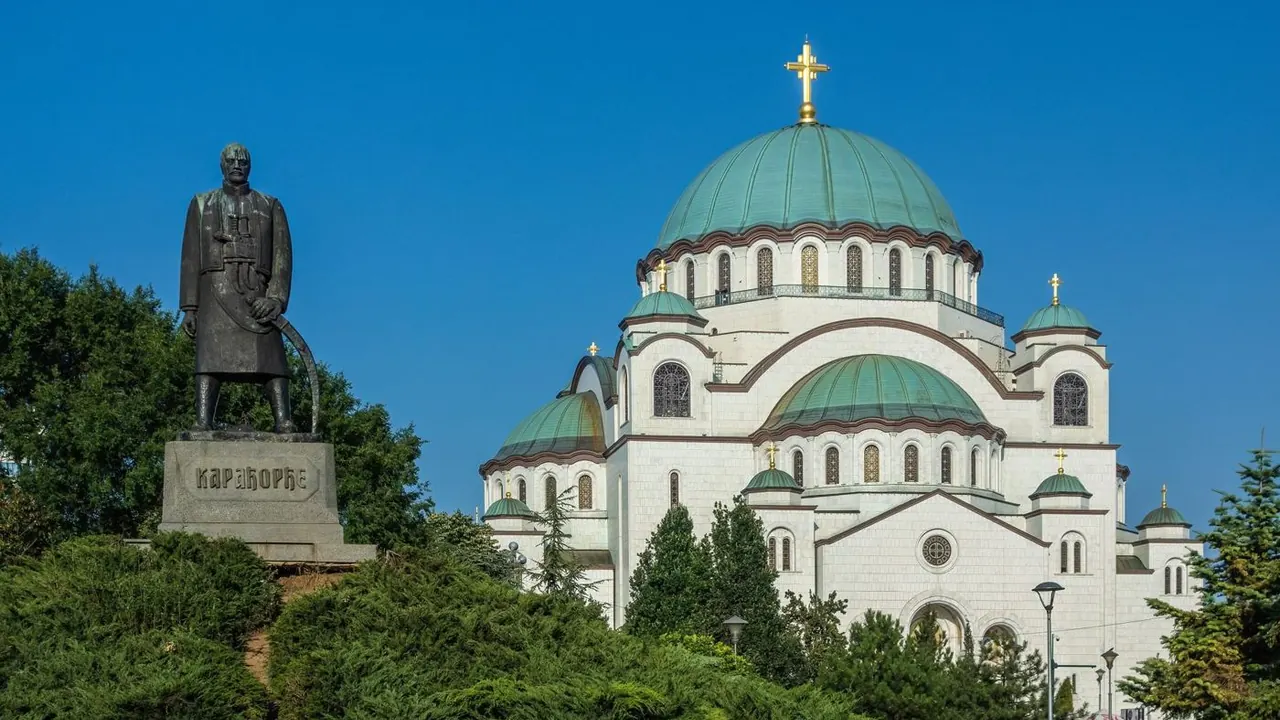
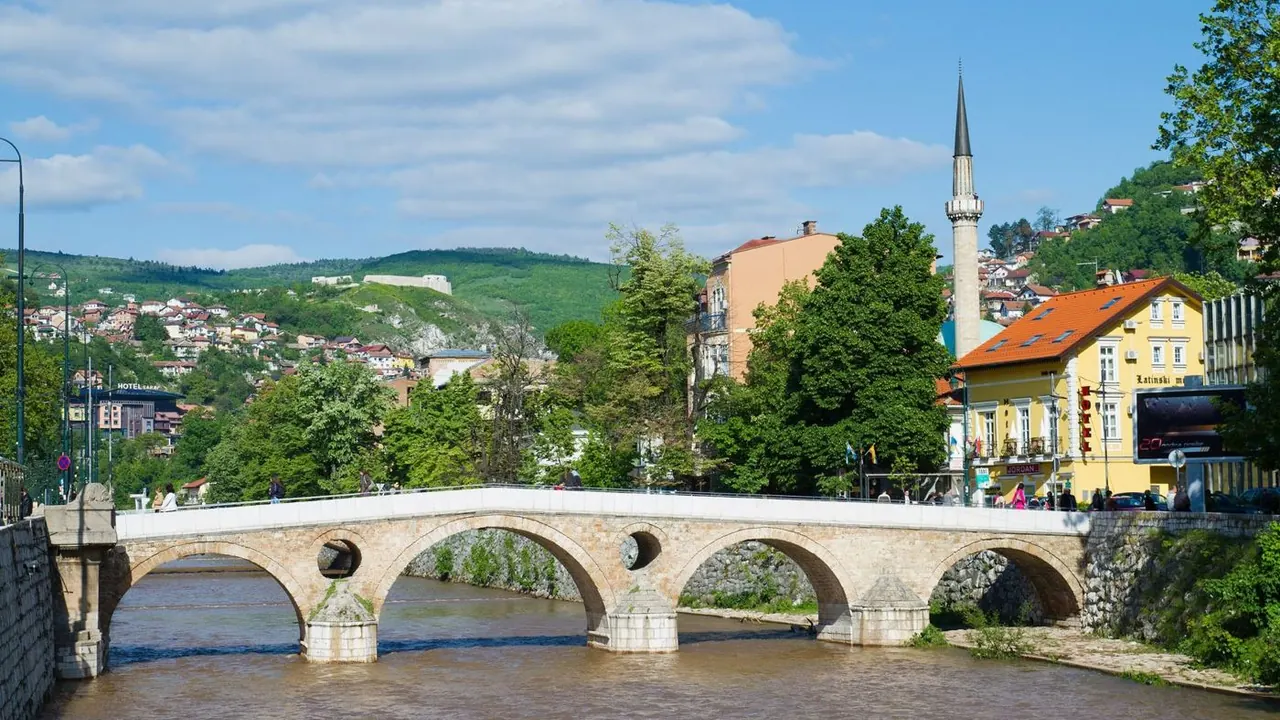
Photos: Belgrade by Petar Milošević, CC BY-SA 4.0, cropped; Sarajevo by Tumi-1983, CC0.
Belgrade or Sarajevo?
Our verdict in twelve categories, each scored against the same fixed benchmark cities, and the climate month by month, so you can choose for your trip.
Choose Belgrade for
- nightlife
- beaches
- live music and the arts
Belgrade is the pick for travellers who want their evenings to count. Its river clubs, late bars and long kafana nights make it one of the region's great places to go out. Summer adds a real swimming scene on Ada Ciganlija, and opera, ballet and concerts fill the calendar. The sights are interesting rather than moving, but the city rewards a group that wants energy, big plates of grilled meat and nights that run until dawn.
Choose Sarajevo for
- nature and the outdoors
- culture and sights
- wellness
Sarajevo suits the traveller who wants a place with more depth packed into fewer streets, and mountains close enough to reach by cable car. The Ottoman bazaar, the cathedrals and synagogue a short walk apart, and the memory of the siege give it a weight Belgrade lacks. Olympic ski slopes and high hiking country lie within an hour's drive. It is also the cheaper and calmer of the two, though nights out are quieter and there is nowhere real to swim.
Scoreboard
Twelve categories on one fixed scale from 0 to 100. The shaded stretch is the gap between the two.
Your match
Pick a travel style or drag the sliders, and both match scores follow your weighting.
Too close to call, 2 points apart
Wins on nightlife and beaches with your weighting.
Wins on nature and the outdoors and culture and sights with your weighting.
What matters to you?
Category by category
What the scores mean for a trip.
Beaches & swimming
Neither city has a sea, but Belgrade comes far closer to a bathing life. Ada Ciganlija gives it kilometres of lifeguarded lake shore that fills after work from June to September, and a boat crosses in summer to the sandy Danube beach on Great War Island.
Sarajevo has nothing comparable. Swimming there means cold mountain rivers, the lake at Jablanica on the road south, or a pool. Anyone who wants proper sea time should add a few days on the Adriatic coast.
Food & drink
The two eat well in much the same register, built on the grill, with ćevapi, kajmak, burek and fruit rakija on both tables. Belgrade leans heavier and more festive, with pljeskavica and roast meats served at long kafana tables in Skadarlija and Zemun, plus local wine from Fruška Gora.
Sarajevo is more Ottoman in character. Its Baščaršija grills serve ćevapi in somun bread, pita bakeries sell by weight, and a slow Bosnian coffee comes with rahat lokum and baklava. Vegetarians and anyone after refined international cooking will find both limited.
Culture & sights
Sarajevo has the richer and more affecting set of sights. In a few walkable streets you move from the Gazi Husrev-beg Mosque and the bazaar to the Catholic and Orthodox cathedrals and the Old Synagogue. The Latin Bridge, the Tunnel of Hope and the War Childhood Museum tie the city to the two great ruptures of the twentieth century.
Belgrade has been rebuilt too often to keep much of a continuous old town. Its highlights are the layered Kalemegdan fortress above the river confluence, the vast Temple of Saint Sava and the Museum of Yugoslavia with Tito's tomb. These are worth two or three days, but they are less moving.
Nightlife
This is Belgrade's strongest card and one of the sharpest differences between the two. Summer nights on the splavs moored along the Sava and Danube run from turbo-folk to house until dawn, and the bars around Strahinjića Bana spill onto the pavements. At the big clubs people book tables, order by the bottle and dress up.
Sarajevo's evenings are gentler and cheaper. Café-bars around Ferhadija get louder after dark, and a student crowd keeps a few cellar bars and small clubs open late at weekends. Many nights end over rakija rather than on a dancefloor.
Nature & outdoors
Sarajevo is ringed by real mountains, and they start at the edge of the Old Town. The Trebević cable car leads to forest trails and the abandoned Olympic bobsleigh track. Within an hour you reach Jahorina and Bjelašnica for skiing or ridge hiking, and the high village of Lukomir above the Rakitnica canyon.
Belgrade's outdoors is flatter and tamer, shaped by its rivers. You get long promenades for cycling, herons on the Great War Island wetland and rowing on Ada Ciganlija. For hills there are Avala and the low vineyard ridge of Fruška Gora.
Day trips
Both cities have rewarding day trips. Belgrade's are easier to reach and Sarajevo's are more striking. A fast train takes you from Belgrade to Novi Sad and Petrovaradin in under an hour, and baroque Sremski Karlovci and the Fruška Gora monasteries make a day of churches and wine. Smederevo's riverside fortress and Roman Viminacium lie to the south-east.
From Sarajevo the scenic Neretva railway runs to Mostar's famous bridge, with Konjic, Blagaj and Počitelj along the way. Travnik and the Višegrad bridge are also within reach, though roads are slow and winding.
Good for families
Belgrade is a little easier with children, mainly because of summer. Ada Ciganlija's shallow lake water, playgrounds and bike hire fill a day without effort, and Kalemegdan adds ramparts, tanks outside the military museum and a small zoo.
Sarajevo has a flat Old Town, the Trebević cable car and carriage rides to the streams of Vrelo Bosne, plus gentle skiing in winter. Its main sights deal with war, though, and grill smoke and winter smog are hard on small lungs. Both suit older children better than toddlers.
Getting around
Both centres are walkable, but the cities move differently. Sarajevo's narrow valley makes it easy to grasp: one tram line runs from Baščaršija to Ilidža along a flat floor, and taxis are cheap for anything beyond it.
Belgrade spreads across two rivers. Its core from Kalemegdan to Skadarlija is walkable but hilly, and reaching Zemun or New Belgrade means a bus or a long riverside walk. Neither city has a metro, and Belgrade's crowded trams and buses are harder to decode in its heavy traffic.
Shopping & style
Neither city is worth a trip for shopping, and they differ mostly in what you bring home. Sarajevo's draw is craft. Coppersmiths still hammer coffee sets on Kazandžiluk, and the Bezistan sells kilims, slippers and filigree, though you need to sort it from the souvenir stock.
Belgrade is better for food gifts and young design. Look for honey, ajvar and rakija at Kalenić market and for small boutiques in Dorćol and Vračar, with chain stores along Knez Mihailova.
Affordability
Both are inexpensive by European standards, but Sarajevo stretches a budget further. Central guesthouses and mid-range hotels there cost noticeably less, and a plate of ćevapi or a bazaar coffee costs very little.
In Belgrade, food, drink and taxis are cheap too. Rooms in Dorćol and around Knez Mihailova are priced closer to Central Europe, though, and the smart river clubs add up quickly.
Live music & performing arts
Belgrade offers more for an evening out at the theatre or concert hall. The National Theatre on Republic Square stages opera and ballet, the Philharmonic plays at Kolarac, and Madlenianum and the Sava Centre widen the choice. In autumn there are the BITEF and BEMUS festivals.
Sarajevo has its own National Theatre and Philharmonic on a smaller scale. Its standout events are the MESS theatre festival and the November jazz festival. Its most local sound, the melancholy sevdah song, is quieter than the tamburica bands playing in Belgrade's kafanas.
Wellness & relaxation
Sarajevo has the edge for anyone who wants to slow down. At the end of the tram line, Ilidža's thermal springs, used since Roman times, feed a spa with warm pools, and the shaded avenue to Vrelo Bosne makes a calm walk afterwards.
Belgrade has no springs of its own, only hotel spas. Its restful moments are an afternoon by the lake or on the Danube promenade, set against a loud centre and late nights. In both, the local habit of a long, unhurried coffee is the easiest way to unwind.
When should you go?
Pick your month. The climate figures are measured averages, not a forecast.
Belgrade in July
Sarajevo in July
Daytime high, °C
Rainfall in the month, mm
Temperature and rainfall are climate normals, averaged over the years shown. Belgrade: 1991-2020 normals, Beograd (2.1 km from centre). Sarajevo: 1991-2020 normals, Sarajevo-Bejelave (2 km from centre).
Both cities share a continental pattern of hot summers and cold, grey winters. Belgrade runs warmer and sunnier, though. July and August reach about 30°C with long sunny days, which is perfect for the lake beaches and river clubs but tiring for walking the streets at midday. June brings its heaviest rain, around 95mm. Sarajevo sits higher in its valley and peaks a little cooler at around 28°C, so summer sightseeing is easier there. It is wetter through most of the year, with autumn and early winter the rainiest stretch at about 91mm in October.
For walking either city, May and September are the sweet spots, warm without being heavy. From December to February both hover just above freezing. That is the time to skip Belgrade but a reason to go to Sarajevo, when the ski mountains nearby are in season, even if smog can settle over the valley.
Which traveller are you?
For a food and nightlife trip, Belgrade wins clearly. The two cities eat equally well, but Belgrade's floating splav clubs, packed Dorćol bars and kafana evenings with live bands keep going until dawn, where Sarajevo's café-bars tend to wind down over rakija.
On an outdoors trip, Sarajevo is the obvious choice. A cable car climbs from the Old Town to forested Trebević, and the Olympic mountains of Jahorina and Bjelašnica offer skiing, hiking and the shepherds' village of Lukomir. Belgrade's outdoors is river promenades and gentle wooded hills.
On a beach and sun trip, neither city is a seaside destination, but Belgrade is the only one of the two where summer swimming is part of daily life. Ada Ciganlija's long gravel shores and warm lake water beat Sarajevo's cold rivers and a coast three hours away.
Before you go
| Measure | Belgrade | Sarajevo |
|---|---|---|
| Official language | Serbian | Croatian, Serbian, Bosnian |
| Currency | Serbian Dinar (RSD) | Convertible Mark (BAM) |
| Sockets | CF230 V, 50 Hz | CF230 V, 50 Hz |
| Driving side | Right | Right |
| Time zone | UTC+1, UTC+2 in summer | UTC+1, UTC+2 in summer |
| Emergency number | Police 92/192, ambulance 94/194, fire 93/193 | 112 |
| Elevation | 117 m | 518 m |
| Main airport | Belgrade Nikola Tesla Airport (BEG)12 km from centre125 non-stop destinations | Sarajevo International Airport (SJJ)7 km from centre38 non-stop destinations |
| Public holidays this year | 11 days | 8 days |
By the numbers
| Measure | Belgrade | Sarajevo |
|---|---|---|
| City population | 1,197,714 | 275,524 |
| People per km² | 3,327 | 1,947 |
| Museums within 10 km | 65 | 25 |
| UNESCO World Heritage sites within 50 km | 0 | 1 |
Where else could you go?
Every comparison below shares a destination with this one, so you can follow Belgrade or Sarajevo somewhere new.