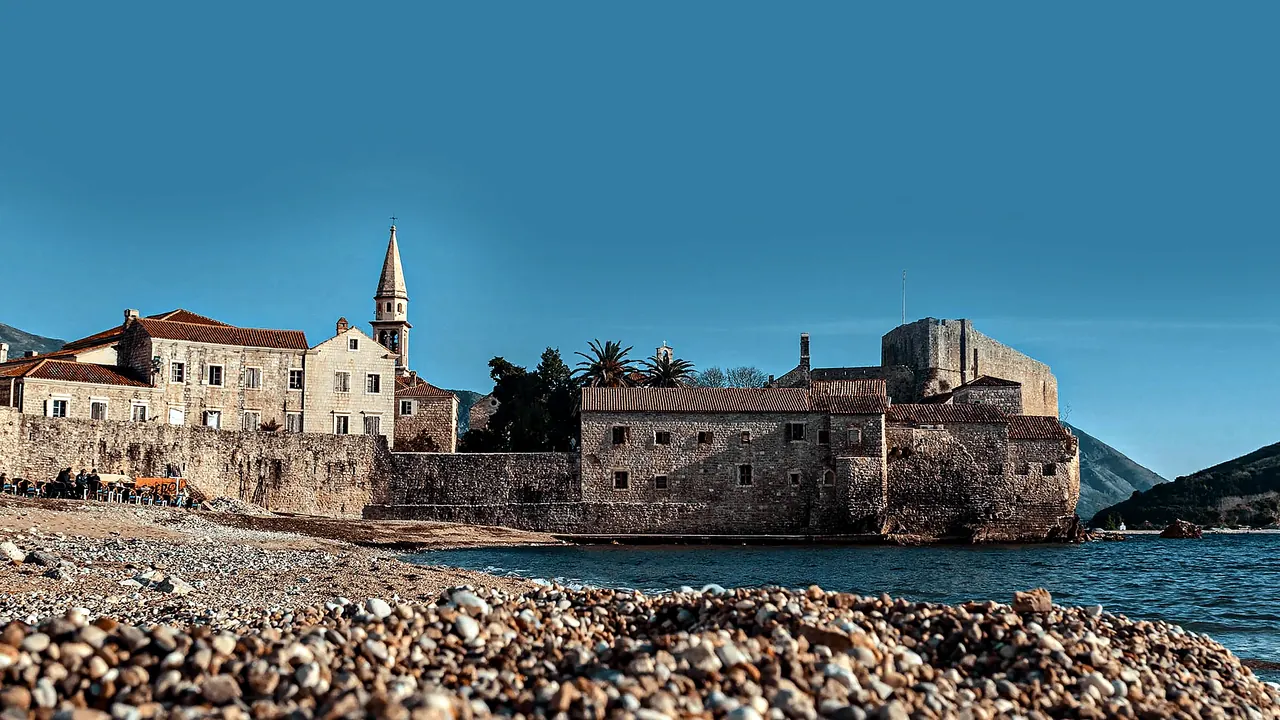
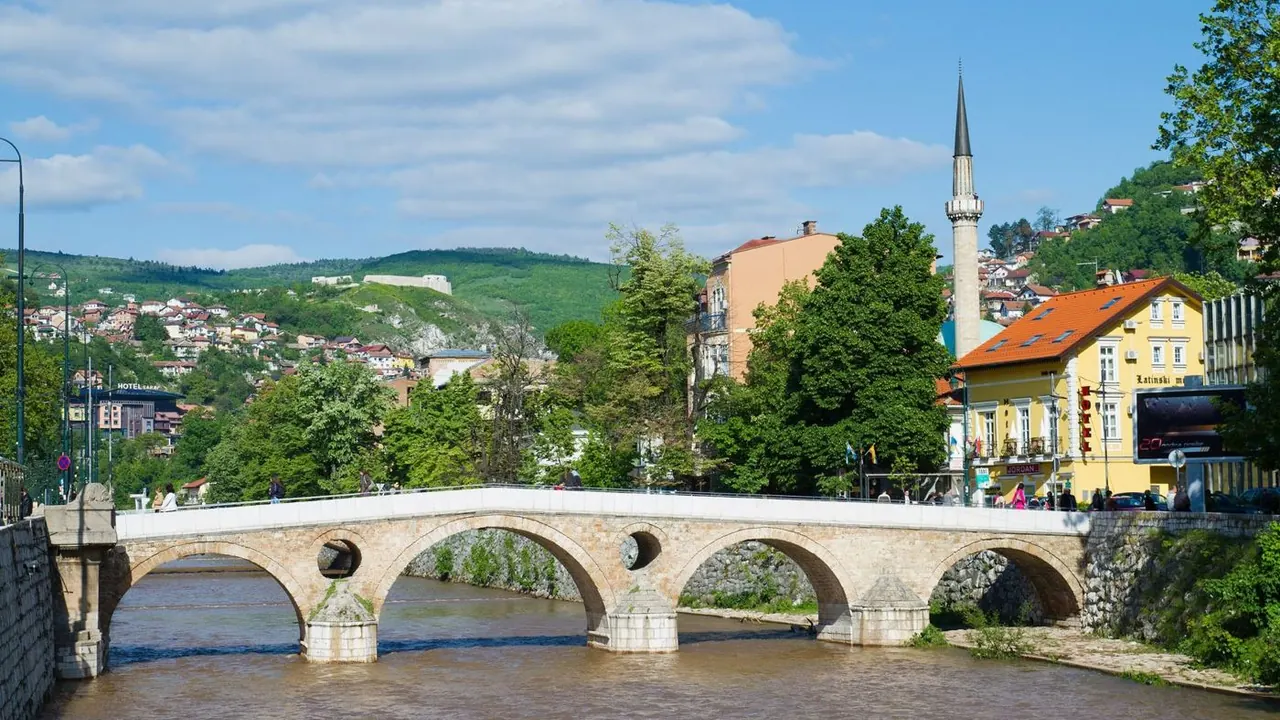
Photos: Budva by Ender Vatan, Pexels License; Sarajevo by Tumi-1983, CC0.
Budva or Sarajevo?
Our verdict in twelve categories, each scored against the same fixed benchmark cities, and the climate month by month, so you can choose for your trip.
Choose Budva for
- beaches
- families
- nightlife
Budva is the pick for a summer by the sea. Its town beaches are on the doorstep, with coves and longer bays a short ride along the coast. Nights are loud in high season, and Kotor, Perast and Cetinje are all within easy reach. It suits couples and groups who put sun and swimming first, and families happy with a vacation built around the beach.
Choose Sarajevo for
- culture and sights
- food and drink
- prices
Travellers who want a city with depth should choose Sarajevo. The Ottoman bazaar, the Austro-Hungarian avenues and the story of 1914 and the 1990s siege lie within a short walk of each other. The grills and coffee houses give the city a real food identity, and mountains rise straight behind it. It is also far easier on the budget, and it works in winter, when the coast has shut down and the Olympic slopes are open.
Scoreboard
Twelve categories on one fixed scale from 0 to 100. The shaded stretch is the gap between the two.
Your match
Pick a travel style or drag the sliders, and both match scores follow your weighting.
Wins on beaches and families with your weighting.
Wins on culture and sights and food and drink with your weighting.
What matters to you?
Category by category
What the scores mean for a trip.
Beaches & swimming
This is Budva's strongest point and Sarajevo's weakest. Budva has a town beach along the whole seafront, coves under the cliffs at Mogren and longer bays at Becici, Jaz and towards Petrovac. Most of it is fine pebble or coarse sand, and the sea stays warm all summer. In high season the sunbeds are packed, so early mornings and coves reached by boat make a difference.
Sarajevo sits in a mountain valley about three hours from the Adriatic. Swimming there means cold rivers, the lake at Jablanica or a pool. A traveller who wants the sea should add a few days on the coast, and Budva is one obvious place to go.
Food & drink
Sarajevo has a food identity that Budva lacks. The grills of Baščaršija, the pita bakeries and slow Bosnian dishes such as begova čorba and lamb cooked under the lid are all made with real care. Coffee in a copper džezva with rahat lokum is part of the day. The range is narrow, but the city does these things well.
Budva's promenade restaurants cater to the summer crowds, and quality varies. The best food is regional and worth seeking out: Njegusi ham and mountain cheese, squid and the day's catch at family konobas, and Vranac red from around Lake Skadar.
Culture & sights
Budva's heritage comes down to its walled Stari Grad, much of it rebuilt after a severe earthquake. Its churches, the Citadel with its coastal views and a small archaeological museum make a pleasant hour or two. Visitors who want more of the region's history go to Kotor or Cetinje.
Sarajevo is far richer in sights. In a few walkable streets you move from the Ottoman bazaar and the Gazi Husrev-beg Mosque to the Austro-Hungarian avenues, the cathedrals, the Old Synagogue and the Latin Bridge of 1914. The Tunnel of Hope and the War Childhood Museum bring the 1990s siege close. The sights are compact rather than grand, but they reward several days.
Nightlife
Budva is better for a big summer night out. Beach bars and terrace clubs line Slovenska Plaza, an open-air club on the hill runs until dawn, and the old town bars stay full late. It suits groups who want loud pop and house, but almost all of it closes from October to May.
Sarajevo is quieter but steadier through the year. Café-bars fill from the afternoon, and students keep the cellar bars and small clubs around Ferhadija going at weekends. Drinks are cheap, and evenings often end over rakija rather than on a dancefloor.
Nature & outdoors
Both cities have mountains close by, but Sarajevo's are nearer and more varied. A cable car from the Old Town climbs Mount Trebević, past the overgrown Olympic bobsleigh track. Jahorina and Bjelašnica offer skiing in winter and hiking and biking on the ridges in summer. The stone village of Lukomir above the Rakitnica canyon is a highlight, though trails are lightly marked.
In Budva the outdoors means sea against mountain. There are cliff paths between the bays, sea kayaking, boat trips and paragliding above Becici, with Lovcen and Lake Skadar about an hour inland. In midsummer the heat moves most activity onto the water.
Day trips
Budva makes the easier base. Kotor is about half an hour away, and Perast, Cetinje, the wine villages by Lake Skadar, Stari Bar and Ulcinj all fit comfortably into a day. Buses cover some of these routes, though the single coast road is slow in summer.
Sarajevo's best excursion is a fine one: Mostar, reached by a scenic train through the Neretva gorge, with Konjic, Blagaj and Počitelj along the way or close by. Beyond that, Travnik and Višegrad mean long drives on winding roads, so most trips need a car or a tour.
Good for families
Budva works better with children, as long as the trip is about the beach. Gently shelving town beaches, calmer bays at Becici and a water park cover most days. The town is loud and crowded at night in July and August, so families do better in Becici or in June and September.
Sarajevo is warm towards children, and its flat Old Town is easy to walk with them. The cable car, Vrelo Bosne and the small zoo make good outings. Its main sights are about war and history, though, and the steep hillside streets and winter smog count against it.
Getting around
Sarajevo is simpler without a car. Its trams have run along the valley floor since the late nineteenth century, linking Baščaršija with the centre and Ilidža. Buses, trolleybuses and cheap taxis climb to the slopes, although away from the tram corridor the network is harder for a visitor to follow.
Budva's compact centre and the shore walk to Becici are easy, and boat taxis reach the nearby coves. There is no railway, though, and the one coast road jams in summer, so Lovcen and Cetinje are far easier with a car or a driver.
Shopping & style
Neither city is a shopping destination, but Sarajevo has a craft tradition worth browsing. On Kazandžiluk coppersmiths still hammer out coffee sets and trays, and the Bezistan and the lanes around it sell kilims, leather slippers and filigree, though some of it is souvenir stock. Budva sticks to beachwear, silver jewellery, olive oil, honey and rakija, plus a modest centre near the marina for the basics.
Affordability
Sarajevo is clearly the cheaper stay. Food from the grills and bakeries, trams, taxis, museum entry and central guesthouses all cost little. Only the Old Town and the summer film festival push prices up a little.
Budva is the most expensive resort in Montenegro, and seafront rooms, sunbeds and promenade meals cost most in July and August. Apartments a few streets back, local grill houses and a visit in June or September keep it moderate, and it is still cheaper than most Western European coasts.
Live music & performing arts
Sarajevo has a stage season. The Austro-Hungarian National Theatre puts on drama, opera and ballet, and the Philharmonic gives regular concerts. MESS brings international theatre in autumn, a jazz festival follows in November, and you can hear sevdah in traditional restaurants, though most plays are in the local language.
In Budva live performance comes down to Grad Teatar, the long-running summer festival on open-air stages in the old town, plus cover bands along the seafront.
Wellness & relaxation
Sarajevo has a real thermal tradition at Ilidža, at the end of the tram line, where springs used since Roman times feed a spa complex. The shaded walk to Vrelo Bosne is close by, and the habit of lingering over a single coffee slows the pace in the centre. Winter smog makes the city less restful in the cold months.
Budva has no bathing tradition, so wellness means the hotel spas in Becici and around Sveti Stefan. The town is calmest in May, June and late September, when it quietens down and the sea is still warm.
When should you go?
Pick your month. The climate figures are measured averages, not a forecast.
Budva in July
Sarajevo in July
Daytime high, °C
Rainfall in the month, mm
Where the figures come from
Budva has no rain gauge within 25 km of the centre, so its rainfall comes from a gridded climate dataset read at the city rather than from a gauge further away.
Budva's sunshine is measured 40 km from the centre, at Podgorica-Grad.
Temperature and rainfall are climate normals, averaged over the years shown. Budva: 1991-2020 normals, Tivat (15.8 km from centre). Sarajevo: 1991-2020 (rainfall 1971-2000) normals, Sarajevo-Bejelave (2 km from centre).
Budva's weather suits a summer resort. The sea is warm enough for comfortable swimming from June and reaches about 26°C in August. It stays pleasant into early October. July and August also bring highs above 30°C, which make the old town lanes hard work at midday. From late September the rain arrives in earnest and peaks in November at over 200mm, so winter is mild but wet and grey.
Sarajevo lies inland and higher, so it runs cooler. Winter highs near 4°C make December and January raw for sightseeing unless you come to ski. Summer peaks around 28°C, warm but still good for walking. Rain is spread evenly through the year rather than falling in one wet season, so May, June and September are the easy months for both the streets and the mountain trails.
Which traveller are you?
On a beach and sun trip, Budva wins easily. You can walk from your room to the sand, take a boat to a quieter cove in the afternoon and swim from June well into October. Sarajevo can offer only rivers, a lake or a pool.
For a culture and arts trip, Budva's walled old town fills a morning at most. Sarajevo gives a traveller who reads up on history something new each day: four faiths side by side, the shadow of two wars, and evenings at the theatre.
On a trip on a tight budget, Budva can work, but it means compromises: a room well back from the sea and picnics instead of promenade lunches. Sarajevo needs none of that, so a small budget still covers meals out, taxis and Mostar.
Before you go
| Measure | Budva | Sarajevo |
|---|---|---|
| Official language | Montenegrin | Croatian, Serbian, Bosnian |
| Currency | Euro (EUR) | Convertible Mark (BAM) |
| Sockets | CF230 V, 50 Hz | CF230 V, 50 Hz |
| Driving side | Right | Right |
| Time zone | UTC+1, UTC+2 in summer | UTC+1, UTC+2 in summer |
| Emergency number | 112 | 112 |
| Elevation | 3 m | 518 m |
| Main airport | Tivat Airport (TIV)17 km from centre42 non-stop destinations | Sarajevo International Airport (SJJ)7 km from centre38 non-stop destinations |
| Public holidays this year | - | 8 days |
By the numbers
| Measure | Budva | Sarajevo |
|---|---|---|
| City population | 13,338 | 275,524 |
| People per km² | 109 | 1,947 |
| Museums within 10 km | 0 | 26 |
| UNESCO World Heritage sites within 50 km | 3 | 1 |
| Swim season, months above 21 °C | 5 months | - |
Where else could you go?
Every comparison below shares a destination with this one, so you can follow Budva or Sarajevo somewhere new.