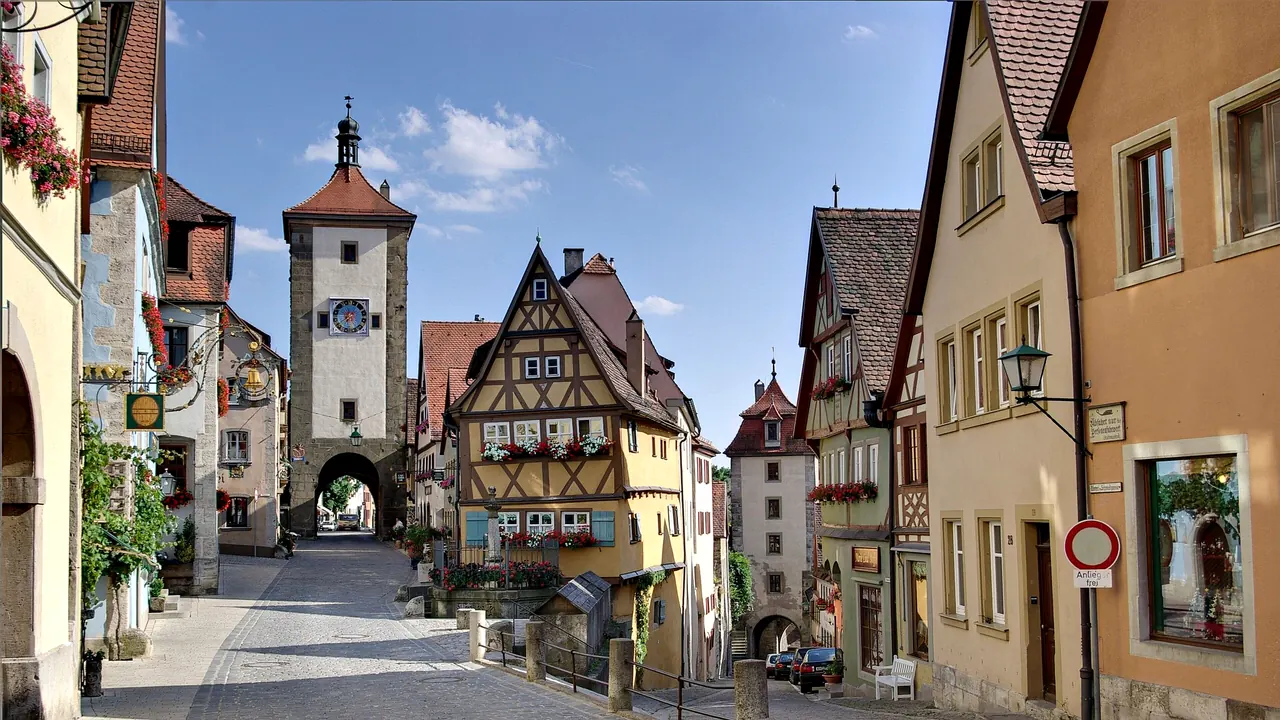
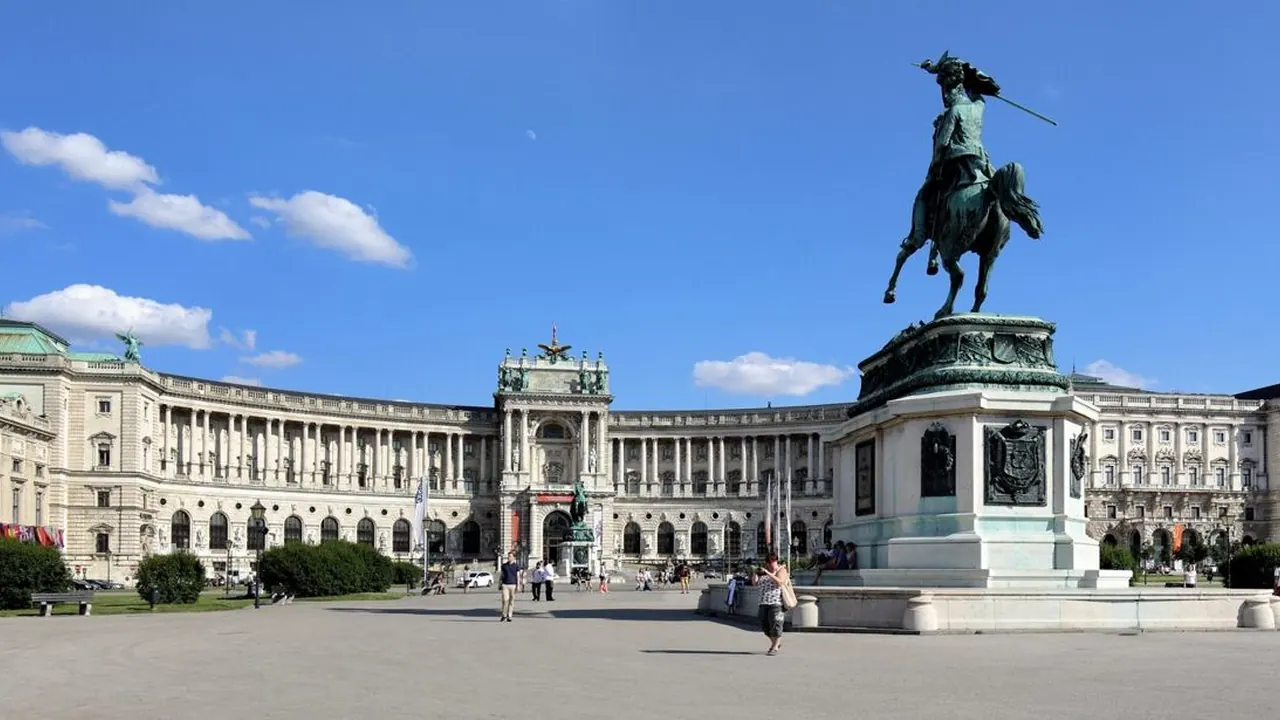
Photos: Rothenburg ob der Tauber by Berthold Werner, Public domain; Vienna by C.Stadler/Bwag, CC BY-SA 3.0 AT, cropped.
Rothenburg ob der Tauber or Vienna?
Our verdict in twelve categories, each scored against the same fixed benchmark cities, and the climate month by month, so you can choose for your trip.
Choose Rothenburg ob der Tauber for
- prices
Rothenburg ob der Tauber suits a traveller who wants one perfectly kept medieval town, walked slowly over a day or two, then left behind by car along the Romantic Road. Its appeal is narrow: the walls, the gabled lanes, the quiet once the coaches go. It works best as a stop on a Franconian road trip rather than the whole vacation.
Choose Vienna for
- live music and the arts
- nightlife
- food and drink
Choose Vienna for almost anything longer or broader. It is a full imperial capital with great museums, the strongest concert and opera life in the German-speaking world, its own cuisine and coffee house culture, and transport that takes you everywhere without a car. Families, music lovers and anyone staying a week will find far more to fill the days.
Scoreboard
Twelve categories on one fixed scale from 0 to 100. The shaded stretch is the gap between the two.
Your match
Pick a travel style or drag the sliders, and both match scores follow your weighting.
Wins on prices with your weighting.
Wins on live music and the arts and nightlife with your weighting.
What matters to you?
Category by category
What the scores mean for a trip.
Beaches & swimming
Neither place has a coast, but Vienna at least has real summer swimming inside the city. The Danube Island's gravel shores and the warmer, calmer Alte Donau with its old lidos are a U-Bahn ride from the centre.
In Rothenburg swimming means the town's outdoor pool or an hour's drive to grassy lake shores such as the Altmühlsee. Neither is a reason to go.
Food & drink
Vienna has a cuisine of its own, from Tafelspitz and schnitzel in wood-panelled Beisl taverns to strudel and Sachertorte in the grand coffee houses, plus wine poured in Heuriger taverns on the city's own slopes. Its weakness is international range, not quality.
Rothenburg's table is narrower: roast pork, Schäufele and bratwurst with Silvaner from the Bocksbeutel, and the sugary Schneeball. The good meals hide in family guesthouses away from the Marktplatz, and there is little beyond Franconian cooking.
Culture & sights
Rothenburg is a single, near-complete medieval townscape: the wall walk, the Plönlein, the Rathaus tower view and Riemenschneider's Holy Blood Altar in St Jakob's. It is memorable but done in a day.
Vienna works on another scale. The Hofburg and Schönbrunn, St Stephen's and the Ringstrasse, then Bruegel, Klimt and Schiele in first-rank museums, with Jugendstil buildings as a second great era. A week barely exhausts it.
Nightlife
Rothenburg's evenings end with the night watchman's tour and a glass in an inn; there are no clubs and Würzburg is the nearest real night out. Vienna has a relaxed but genuine scene, with late bars under the Gürtel railway arches, the Bermuda Triangle in the old town, summer deckchair bars on the Danube Canal and, in winter, the formal ball season.
Nature & outdoors
Vienna's green edges are bigger and more varied: the beech-covered Vienna Woods with vineyard trails to the Kahlenberg, the wild floodplain forest of the Donau-Auen, and the Rax and Schneeberg mountains within reach for a day.
Rothenburg offers a gentler kind of countryside. Paths drop from the walls into the Tauber valley past mills and meadows, and the Tauber valley cycle path makes an easy family ride, but there are no mountains or wild country nearby.
Day trips
Both are well placed, but in different ways. From Rothenburg the outings are more medieval and half-timbered towns along the Romantic Road, Dinkelsbühl, Nördlingen in its crater, Schwäbisch Hall, plus Würzburg's Residenz and Nuremberg, and a car is close to essential.
From Vienna the range crosses borders: Bratislava by train or boat, the Wachau with Melk and Dürnstein, Eisenstadt's Esterházy palace and Brno, most of it easy by rail.
Good for families
Rothenburg feels like a storybook to children, with ramparts to walk, a tower to climb and the lantern-carrying night watchman, while older ones relish the Medieval Crime Museum. Beyond that there is little for them, and cobbles are hard on pushchairs.
Vienna can hold a family for a week: Schönbrunn Zoo and its maze, the Prater's Ferris wheel and rides, sharks in the flak-tower aquarium, and the Natural History and Technical museums for wet days. Trams that take prams easily help too.
Getting around
Inside Rothenburg's walls you can cross the town on foot in fifteen minutes, but leaving it is the problem: a branch line with a change at Steinach and sparse buses make a car the practical choice.
Vienna combines a walkable centre inside the Ring with U-Bahn, trams and buses on one ticket, reaching Schönbrunn, the Danube and even the vineyard villages. Here a car is a burden rather than a help.
Shopping & style
Rothenburg's shops sell one thing above all, Christmas: year-round baubles, nutcrackers and Erzgebirge carvings along the Herrngasse, with little in the way of fashion or everyday shopping.
Vienna has a fuller offer, from luxury houses on the Kohlmarkt and Graben to everyday fashion on Mariahilfer Strasse and independent designers in Neubau. Augarten porcelain, crystal and Loden coats make the more distinctive gifts.
Affordability
Costs come out much the same, though they bite in different places. In Rothenburg it is the tourist premium on rooms and meals inside the walls, easily avoided by sleeping in a nearby village. In Vienna it is full admission at the big palaces and museums, offset by cheap transport passes, free palace gardens and opera standing places.
Live music & performing arts
This is where the two are furthest apart. Rothenburg's stage is mostly history: the costumed Meistertrunk play, a small summer open-air theatre and organ concerts in St Jakob's, with evenings otherwise spent at dinner.
Vienna is a music capital without rival: a different opera most nights at the State Opera, the Vienna Philharmonic in the Musikverein's Golden Hall, the Burgtheater, the Volksoper and the Boys' Choir, with the music of Mozart, Haydn and Strauss played every night.
Wellness & relaxation
Rothenburg's calm comes from emptiness: the walls and the Tauber valley are deeply quiet early and late, and for thermal bathing you drive to Bad Windsheim or Bad Mergentheim.
Vienna builds rest into daily life, with long coffee house afternoons and vineyard evenings, and has thermal water close at hand in Therme Wien, the Art Deco Amalienbad and the sulphur springs of Baden.
When should you go?
Pick your month. The climate figures are measured averages, not a forecast.
Rothenburg ob der Tauber in July
Vienna in July
Daytime high, °C
Rainfall in the month, mm
Where the figures come from
Rothenburg ob der Tauber's sunshine is measured 27 km from the centre, at Feuchtwangen-heilbronn.
Temperature and rainfall are climate normals, averaged over the years shown. Rothenburg ob der Tauber: 1991-2020 normals, Rothenburg ob der Tauber (0.9 km from centre). Vienna: 1991-2020 normals, Wien / Hohe Warte (4.7 km from centre).
The two share a central European climate, so the pattern is the same: cold, dim winters with highs around 3°C in January, and warm summers ideal for walking. Late spring and September are the most comfortable months for sightseeing in both, mild enough for long days on foot without summer heat.
Vienna runs a little warmer and sunnier, reaching about 27°C in July against Rothenburg's 25°C, which is warm enough for an afternoon swim in the Danube from June to early September. Its rain falls mostly in early summer, with around 80mm in May, while Rothenburg's rainfall stays fairly even all year. In midwinter Vienna also gets noticeably more sunshine than the small Franconian town.
Which traveller are you?
On a culture and arts trip, Vienna is the clear choice. Habsburg palaces, the Kunsthistorisches Museum and Belvedere, and a night at the State Opera or Musikverein give a week's depth. Rothenburg's medieval streets and Riemenschneider altar fill a day.
For a food and nightlife trip, Vienna again. Schnitzel in a Beisl, a Heuriger among city vineyards, coffee houses and late bars under the Gürtel arches beat Rothenburg's hearty inns and lanes that fall silent by eleven.
On a family trip with children, Vienna offers the zoo at Schönbrunn, the Prater rides, an aquarium and hands-on museums for rainy days. Rothenburg's ramparts and lantern-lit night watchman tour delight children, but only for a day or two.
Before you go
| Measure | Rothenburg ob der Tauber | Vienna |
|---|---|---|
| Official language | German | German, Austrian Sign Language |
| Currency | Euro (EUR) | Euro (EUR) |
| Sockets | CF230 V, 50 Hz | CF230 V, 50 Hz |
| Driving side | Right | Right |
| Time zone | UTC+1, UTC+2 in summer | UTC+1, UTC+2 in summer |
| Emergency number | 112 | 112 |
| Elevation | 430 m | 151 m |
| Main airport | Nuremberg Airport (NUE)66 km from centre56 non-stop destinations | Vienna International Airport (VIE)18 km from centre202 non-stop destinations |
| Public holidays this year | 12 days | 16 days |
By the numbers
| Measure | Rothenburg ob der Tauber | Vienna |
|---|---|---|
| City population | 11,331 | 2,028,289 |
| People per km² | 272 | 4,890 |
| Museums within 10 km | 6 | 152 |
| UNESCO World Heritage sites within 50 km | 2 | 4 |
Where else could you go?
Every comparison below shares a destination with this one, so you can follow Rothenburg ob der Tauber or Vienna somewhere new.
- Bratislavavs Vienna
- Nurembergvs Rothenburg ob der Tauber
- Bambergvs Rothenburg ob der Tauber
- Stuttgartvs Rothenburg ob der Tauber
- Heidelbergvs Rothenburg ob der Tauber
- Brnovs Vienna