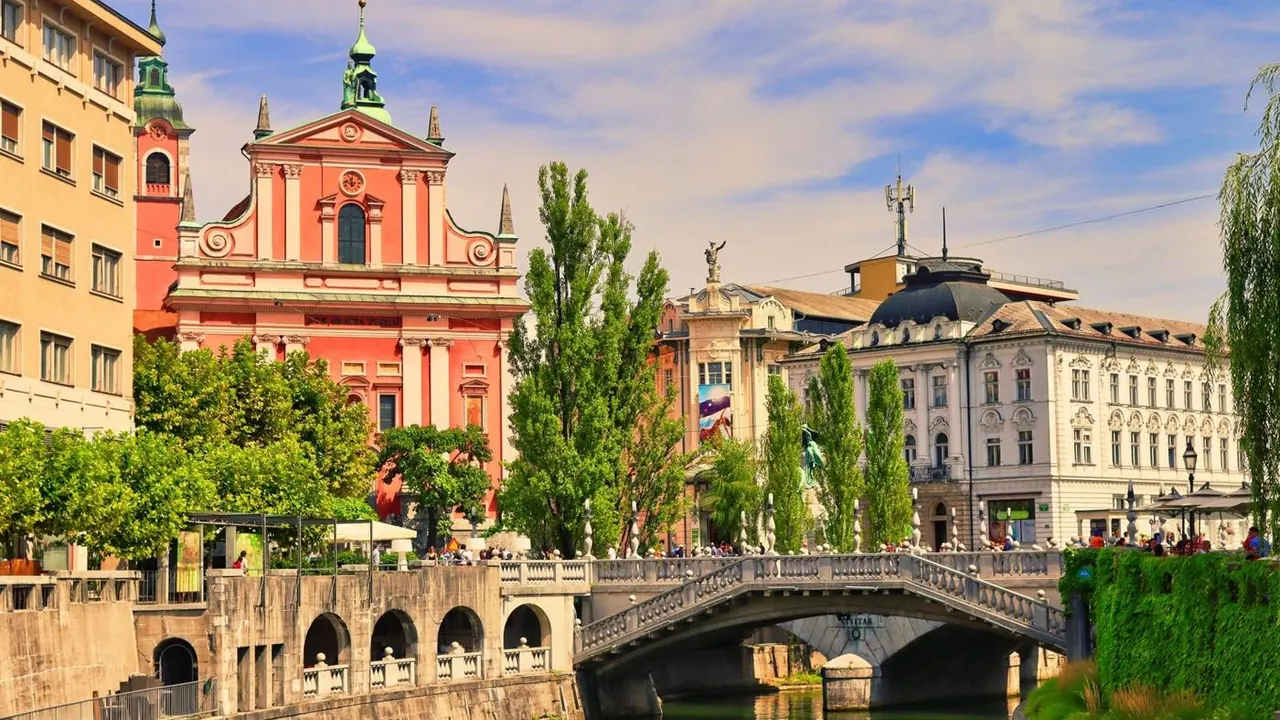
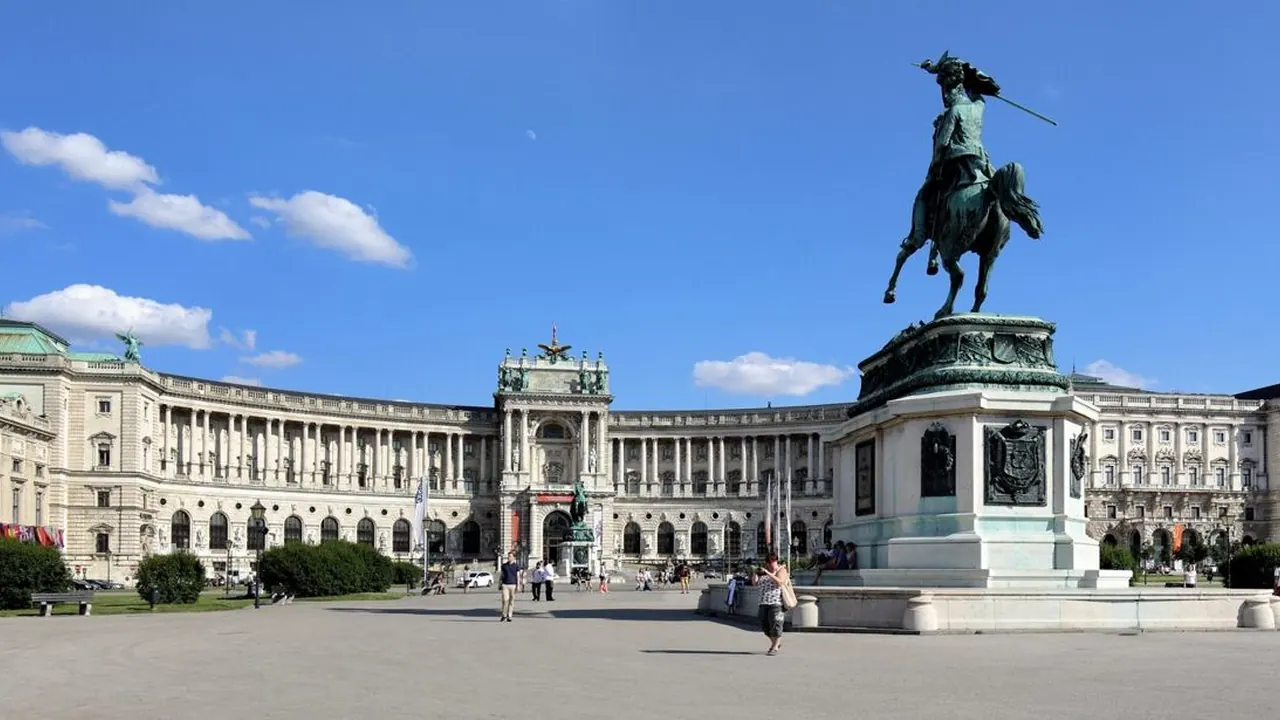
Photos: Ljubljana by detait, Pexels License; Vienna by C.Stadler/Bwag, CC BY-SA 3.0 AT, cropped.
Ljubljana or Vienna?
Our verdict in twelve categories, each scored against the same fixed benchmark cities, and the climate month by month, so you can choose for your trip.
Choose Ljubljana for
- nature and the outdoors
- prices
- day trips
Ljubljana suits travellers who want a small, calm capital as a base for mountains, lakes and caves. The Julian Alps, Bled and the karst country are all close, the centre takes minutes to cross on foot, and meals and sights cost less. Come for the landscape around it, plus two or three easy days in Plečnik's riverside city.
Choose Vienna for
- live music and the arts
- culture and sights
- shopping
Vienna is the better choice if the city itself is the point of the trip. Habsburg palaces, world-class galleries and opera or concerts every night can fill a week, and there is far more to keep children busy. It costs more, but the transport, the coffee houses and the food make for a richer stay in town.
Scoreboard
Twelve categories on one fixed scale from 0 to 100. The shaded stretch is the gap between the two.
Your match
Pick a travel style or drag the sliders, and both match scores follow your weighting.
Wins on nature and the outdoors and prices with your weighting.
Wins on live music and the arts and culture and sights with your weighting.
What matters to you?
Category by category
What the scores mean for a trip.
Beaches & swimming
Neither city is a beach destination, and in both a swim is a summer afternoon rather than the point of the trip. The difference is where the water is. In Vienna it is inside the city: the Danube Island's long gravel banks and the calmer, warmer Alte Donau with its old lidos are a U-Bahn ride from the centre.
From Ljubljana you mostly travel to swim: to Lake Bled about an hour away, to colder, clearer Bohinj, or to the Adriatic at Piran, where the shore is concrete and pebble rather than sand. The Sava on the city's edge is the only option close at hand.
Food & drink
Both cuisines are hearty and regional, but Vienna's has more depth and more rituals around it. Schnitzel, Tafelspitz, and the strudel and Sachertorte of the grand coffee houses form a cuisine of their own, and the Heuriger taverns on Grinzing's slopes pour wine grown inside the city.
Ljubljana is simpler: štruklji, Carniolan sausage and jota at gostilna inns, and a riverside market of cheeses and pumpkin-seed oil. Its strength is wine by the glass from Vipava or Brda, including the orange wines of the west, but you run through the choice sooner. Neither city has much range in international food.
Culture & sights
This is a wide gap. Vienna is an imperial capital with the Hofburg, Schönbrunn, St Stephen's and the Ringstrasse, and its museums are world-class: Bruegel at the Kunsthistorisches, Klimt at the Belvedere, Schiele at the Leopold. Add the Secession and Otto Wagner's Jugendstil buildings, and a week is barely enough.
Ljubljana's appeal comes from one architect's vision: Plečnik's bridges, colonnades and library, set in a small baroque and Secession old town below the castle. Its galleries are pleasant but not essential, and two or three days cover it all.
Nightlife
Vienna has more choice after dark, though neither is a party capital. Bars under the Gürtel railway arches, the Bermuda Triangle in the old town, deckchair bars on the Danube Canal and electronic nights in old industrial spaces give it range, and the winter ball season is something Ljubljana cannot match.
Ljubljana's evenings centre on the terraces along the Ljubljanica, which are livelier in term time thanks to the students, and on the scruffy late clubs of Metelkova. It is a good town for a drink by the river, but quiet after midnight on weekdays.
Nature & outdoors
Ljubljana is the stronger base for the outdoors because real mountains are close. The Kamnik-Savinja Alps are under an hour away and the Julian Alps and Triglav National Park about an hour. Beyond them lie rafting on the Soča, the Vintgar gorge and the karst caves of Postojna and Škocjan, with small ski resorts within reach in winter.
Vienna's countryside is gentler: the beech-covered Vienna Woods, vineyard trails up to the Kahlenberg, the Donau-Auen floodplain forest and flat Danube cycle routes such as the Wachau path. Its nearest proper peaks, the Rax and Schneeberg, are about an hour and a half away.
Day trips
Both are well placed for excursions, but the trips are of a different kind. From Ljubljana they are mostly about Slovenia's scenery and small towns: Bled's island church, painted Radovljica, Predjama Castle in its cliff and the coast at Piran, with Trieste and Zagreb at a stretch. A car helps for the smaller places.
From Vienna they are more about other cities and river landscapes, easily reached by train or boat: Bratislava within an hour, the abbeys and vineyards of the Wachau, Haydn's Eisenstadt and Brno over the Czech border.
Good for families
Vienna has much more for children. Schönbrunn Zoo, the Prater's Ferris wheel and rides, the Haus des Meeres aquarium and the Natural History and Technical Museums keep a family busy in any weather, and summer bathing on the Danube Island adds more.
Ljubljana is gentle rather than exciting: a flat, car-free centre that suits pushchairs, the castle funicular, the dragons on the Dragon Bridge and the puppet theatre. With no aquarium or theme park, families will have seen it in a few days.
Getting around
Both centres are walkable, but Vienna adds a full public transport network. Five U-Bahn lines, a dense tram network and buses share one ticket, run through the night at weekends, and reach Schönbrunn, the Prater and the vineyard villages without a car.
Ljubljana has no metro or tram, and in its compact centre you will rarely miss one. Leaving town is the weak point: intercity buses are quicker than the slow trains, and the remote valleys need a hire car.
Shopping & style
Vienna has the bigger and more polished range. Luxury houses line the Kohlmarkt and Graben, high-street brands fill Kärntner Strasse and Mariahilfer Strasse, and independent designers work in Neubau. Gifts such as Augarten porcelain and Loden coats are worth buying, and the Christmas markets give a seasonal reason to shop.
Ljubljana is small-scale and local. It is best for honey, pumpkin-seed oil, coastal salt, Idrija lace and the Sunday flea market on the embankment, with a few boutiques around Trubarjeva street.
Affordability
Ljubljana is the cheaper stay of the two, especially when eating out: set lunch menus at the inns, fairly priced local wine and almost nothing spent on transport. Its weak spot is hotels, since central rooms are few, and in July and August they are priced like those in Western Europe.
Vienna asks more for meals and for its palaces and museums, which charge full admission. Free gardens and churches, good-value transport passes and the State Opera's standing places soften the bill.
Live music & performing arts
Here Vienna is on another scale, and for many visitors music is the reason to come. The State Opera, the Vienna Philharmonic at the Musikverein, the Konzerthaus, the Volksoper and the Burgtheater put on a full programme every night in the city of Mozart, Beethoven and Schubert.
Ljubljana does well for its size, with the Slovenian Philharmonic, the national opera and ballet, Cankarjev dom and the summer festival in Plečnik's Križanke courtyard. That is enough for an evening or two, but most theatre is in Slovene.
Wellness & relaxation
Proper bathing is easier to reach from Vienna. There are the thermal pools of Therme Wien and the Art Deco Amalienbad in town, and the sulphur springs of Baden are half an hour away. The coffee houses and evenings at vineyard taverns set a slow pace too.
Ljubljana itself has less: an indoor water park and a few hotel spas, with the country's thermal spa towns up to an hour's drive away. What it gives instead is quiet, a green, car-free centre and long afternoons at riverside cafés.
When should you go?
Pick your month. The climate figures are measured averages, not a forecast.
Ljubljana in July
Vienna in July
Daytime high, °C
Rainfall in the month, mm
Temperature and rainfall are climate normals, averaged over the years shown. Ljubljana: 1991-2020 normals, Ljubljana / Bezigrad (1.9 km from centre). Vienna: 1991-2020 normals, Wien / Hohe Warte (4.7 km from centre).
The two cities have a similar continental climate and almost the same temperatures. Winters are cold, with daytime highs of around 4°C in December and January. Summer peaks near 28°C in July and August, and from June into early September it is warm enough in either city to swim in lakes and rivers. May and September, at about 22°C, are the most comfortable months for walking the streets, and neither city gets uncomfortably hot.
The big difference is rain. Ljubljana is much wetter all year, and autumn is its dampest season: September brings about 159mm, against 64mm in Vienna, so a late-season walking trip in Slovenia needs some spare days. Vienna stays drier through spring and autumn, which makes April and October more reliable there. Both get plenty of summer sunshine, Ljubljana slightly more in July, while November and December are short and grey in each.
Which traveller are you?
On a culture and arts trip, Vienna is the clear choice. The Hofburg, Schönbrunn and museums holding Bruegel, Klimt and Schiele fill a week, and the State Opera and the Musikverein offer a performance every evening. Ljubljana's Plečnik townscape takes only a few days.
For an outdoors trip, Ljubljana wins. Šmarna Gora is a morning climb from town, the Julian Alps are about an hour away, and the Soča, the Vintgar gorge and the Postojna caves all make easy day trips. Vienna's woods and Danube cycle paths are gentler.
On a family trip with children, Vienna offers far more. Schönbrunn Zoo, the Prater's rides, an aquarium inside a wartime flak tower and hands-on museums cover sunny and rainy days alike. Ljubljana is easy with pushchairs, but children see its sights in a few days.
Before you go
| Measure | Ljubljana | Vienna |
|---|---|---|
| Official language | Slovene | German, Austrian Sign Language |
| Currency | Euro (EUR) | Euro (EUR) |
| Sockets | CF230 V, 50 Hz | CF230 V, 50 Hz |
| Driving side | Right | Right |
| Time zone | UTC+1, UTC+2 in summer | UTC+1, UTC+2 in summer |
| Emergency number | 112 | 112 |
| Elevation | 309 m | 151 m |
| Main airport | Ljubljana Jože Pučnik Airport (LJU)20 km from centre32 non-stop destinations | Vienna International Airport (VIE)18 km from centre202 non-stop destinations |
| Public holidays this year | 21 days | 16 days |
By the numbers
| Measure | Ljubljana | Vienna |
|---|---|---|
| City population | 284,293 | 2,028,289 |
| People per km² | 1,736 | 4,890 |
| Museums within 10 km | 14 | 152 |
| UNESCO World Heritage sites within 50 km | 3 | 3 |
Where else could you go?
Every comparison below shares a destination with this one, so you can follow Ljubljana or Vienna somewhere new.