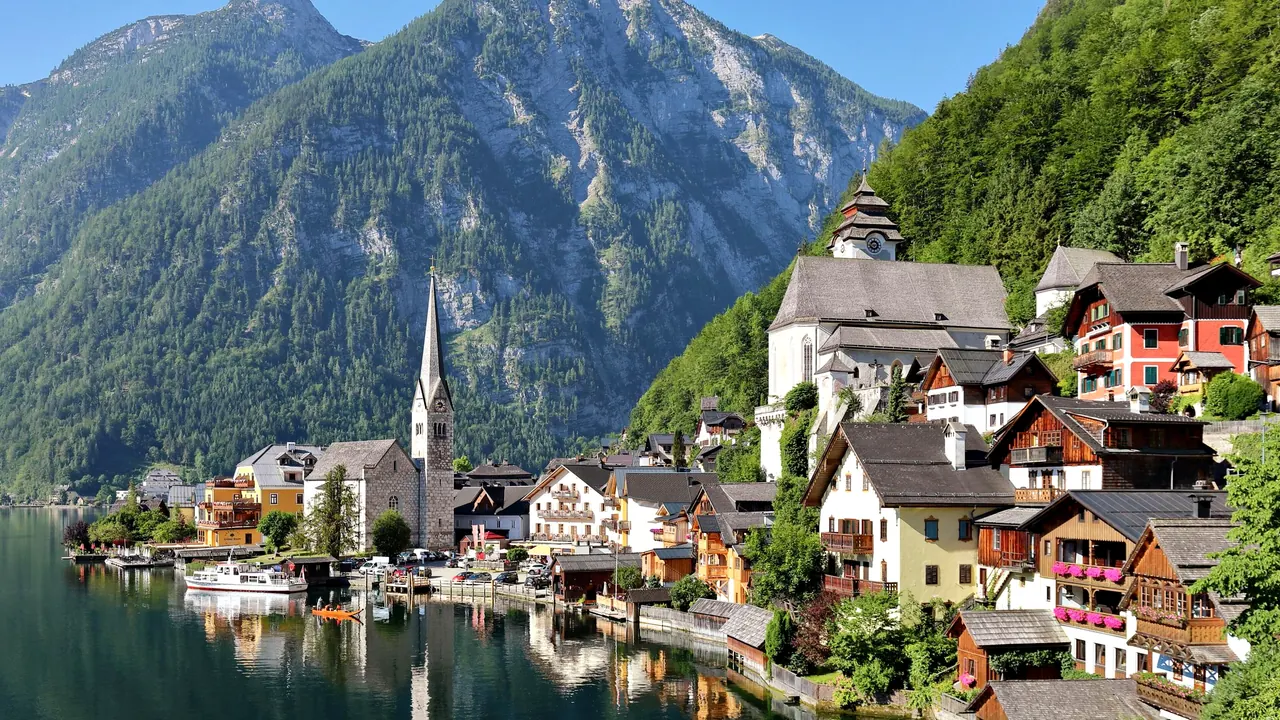
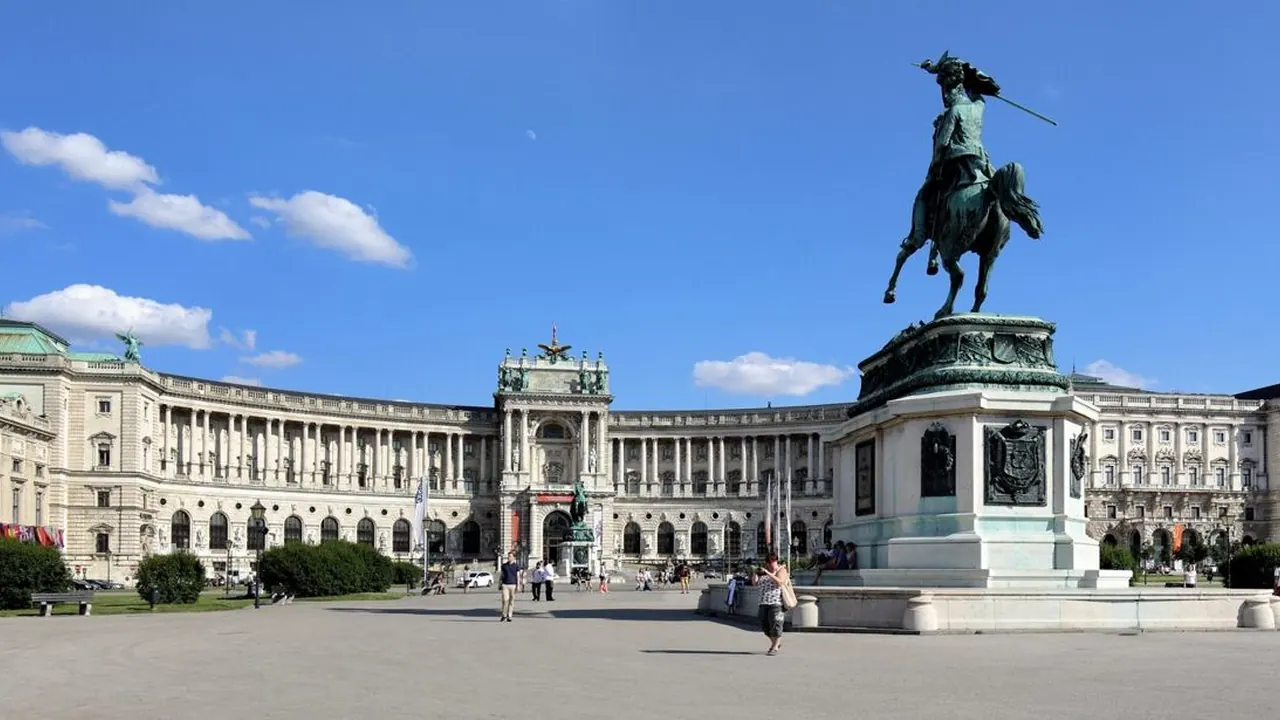
Photos: Hallstatt by C.Stadler/Bwag, CC BY-SA 4.0, cropped; Vienna by C.Stadler/Bwag, CC BY-SA 3.0 AT, cropped.
Hallstatt or Vienna?
Our verdict in twelve categories, each scored against the same fixed benchmark cities, and the climate month by month, so you can choose for your trip.
Choose Hallstatt for
- nature and the outdoors
- beaches
Hallstatt suits travellers who want mountains, water and quiet more than anything a city can offer. The Dachstein starts at the edge of the village, with ice caves, high viewpoints and lake walks within easy reach, and the evenings after the day visitors leave are very still. Treat it as a base for hiking and the Salzkammergut lakes, not as a place to eat, shop or go out, and expect to pay well for a room.
Choose Vienna for
- live music and the arts
- culture and sights
- food and drink
For music, art, food and the ease of a capital, Vienna is the clear choice. Its palaces, museums and opera house fill a week, coffee houses and wine taverns give the days a rhythm, and trams and the U-Bahn take you everywhere without a car. Families, first-time visitors to Austria and anyone travelling in winter will find far more to do, and the Vienna Woods give enough greenery for a gentle walk.
Scoreboard
Twelve categories on one fixed scale from 0 to 100. The shaded stretch is the gap between the two.
Your match
Pick a travel style or drag the sliders, and both match scores follow your weighting.
Wins on nature and the outdoors and beaches with your weighting.
Wins on live music and the arts and culture and sights with your weighting.
What matters to you?
Category by category
What the scores mean for a trip.
Beaches & swimming
Neither place is about beaches, and the swimming they offer is about equally limited, but it feels quite different. In Hallstatt you take a cold plunge into a deep, dark green Alpine lake from a small jetty or the lido at Obertraun, usually after a hike, and only in high summer.
Vienna's bathing is an urban afternoon out: the long grassy banks of the Danube Island and the calmer, warmer Alte Donau with its old lidos, reached by U-Bahn and shared with locals swimming after work.
Food & drink
Vienna is far the better place to eat. It has a whole cuisine of its own, from Tafelspitz in wood-panelled Beisl taverns to strudel in grand coffee houses, wine poured by the growers at Heuriger in Grinzing and Nussdorf, and the stalls of the Naschmarkt.
Hallstatt offers a few guesthouse dining rooms and lakeside terraces with Austrian standards. Its one real pleasure is char or whitefish from the lake with the view, and kitchens can close early, so food is something to arrange rather than look forward to.
Culture & sights
Vienna has the depth here: the Hofburg, Schönbrunn, St Stephen's and the Ringstrasse, then Bruegel at the Kunsthistorisches Museum, Klimt at the Belvedere and Schiele at the Leopold, with Jugendstil buildings as a second great period. A week is easily filled.
Hallstatt's culture is older and narrower. The village is itself the sight, set above a salt mine worked for millennia that gave its name to an Iron Age culture, and the painted skulls of the Beinhaus are memorable. It fills a day at most.
Nightlife
Vienna has a real if relaxed night out: bars under the Gürtel railway arches, the old-town Bermuda Triangle, deckchair bars on the Danube Canal in summer and, in winter, the formal ball season. Hallstatt has essentially nothing after dark beyond dinner and a lakeside walk, which is precisely what overnight guests come for.
Nature & outdoors
This is Hallstatt's great strength. The lake lies in a glacial trough beneath the Dachstein, with the Five Fingers platform, the Giant Ice Cave and the karst plateau above Obertraun, the Gosausee walk, via ferratas in summer and ski touring in winter. The price is often wet weather and mist on the water.
Vienna's green side is gentler and easier to reach: beech woods and vineyards up to the Kahlenberg, the Prater meadows and the floodplain forest of the Donau-Auen. For real mountains, Viennese travel to the Rax and Schneeberg, which Hallstatt has on its doorstep.
Day trips
Vienna has the wider and easier choice. Bratislava is an hour away by train or boat, the Wachau with Melk and Dürnstein is a classic outing, and Baden, Eisenstadt and Brno are all straightforward by rail.
Hallstatt's outings are lovely but harder to reach. The Salzkammergut lake towns, Bad Ischl with the Kaiservilla, St Wolfgang and Gmunden, are close, and Salzburg makes a long day, but without a car the buses and railway need planning.
Good for families
Hallstatt suits families with older, sturdy children on an active trip, the kind who will happily climb long flights of steps, wrap up for a cave that stays icy in August and walk a mountain path. It rewards a short visit more than a long stay. Rowing on the lake can fill a summer afternoon, but with toddlers the village works better as an outing from a roomier lakeside base than as a place to sleep.
Vienna works for children of any age, and for a week as easily as a weekend. It is a calm, safe city with green space and a playground never far away, so parents can fit in a palace or a gallery and then do something the children have chosen. The main thing to adjust is the pace. Formal coffee houses and long concerts test small children, while a summer afternoon swimming off the Danube Island does not.
Getting around
Hallstatt's railway station is on the far shore, so arriving by train means taking a small boat across the lake. Buses to Obertraun, Gosau and Bad Ischl get sparse outside summer, and most visitors find a car worth having for the wider region. The village itself takes only minutes to cross on foot, though the lanes are narrow and steps climb to the church.
In Vienna a car is only a burden. The old town inside the Ring is compact and easy to walk, and the U-Bahn, trams and buses share one ticket out to Schönbrunn, the Danube Island and the vineyard villages. At weekends the U-Bahn runs through the night.
Shopping & style
Vienna has proper shopping, from luxury houses on the Kohlmarkt and Graben to everyday fashion on Mariahilfer Strasse and independent designers in Neubau, plus Augarten porcelain, crystal and Loden coats. Hallstatt is a half hour past souvenir shops, worth it mainly for salt from the local mine.
Affordability
Neither is cheap, but Vienna is noticeably easier on a budget. Hotels are reasonable for a capital, set lunches and Heuriger buffets keep meals sensible, palace gardens and churches are free, and opera standing places cost little.
Hallstatt has few rooms and global demand, so prices run well above the Austrian norm and fill early in summer, and the salt mine and cable car add up. Budget travellers usually sleep in Obertraun or Bad Ischl and come in for the day.
Live music & performing arts
The gap could hardly be wider. Vienna is one of the great music cities: the State Opera plays most nights, the Vienna Philharmonic is at home in the Musikverein, the Burgtheater and Volksoper add theatre and operetta, and the Boys' Choir sings Sunday Mass.
Hallstatt has a village brass band at feast days and the odd church concert. For a real evening of music from there, you would go to Bad Ischl's summer operetta or to Salzburg.
Wellness & relaxation
Vienna makes rest easier to find. Slow coffee house afternoons and palace garden walks are part of daily life, and there are thermal pools at Therme Wien, the Art Deco Amalienbad and the sulphur springs of Baden close by.
Hallstatt's calm comes from its setting: mist on the lake at dawn and empty evenings after the tour groups go. Midday crowds break that spell, and for proper bathing you drive to the brine baths of Bad Ischl or Bad Aussee.
When should you go?
Pick your month. The climate figures are measured averages, not a forecast.
Hallstatt in July
Vienna in July
Daytime high, °C
Rainfall in the month, mm
Where the figures come from
Hallstatt's temperatures are measured 56 km from the centre, at Salzburg.
Hallstatt has no rain gauge within 25 km of the centre, so its rainfall comes from a gridded climate dataset read at the city rather than from a gauge further away.
Temperature and rainfall are climate normals, averaged over the years shown. Hallstatt: 1991-2020 normals, Salzburg (55.5 km from centre). Vienna: 1991-2020 normals, Wien / Hohe Warte (4.7 km from centre).
Hallstatt and Vienna have almost the same temperatures, with January highs of about 3°C and warm summers, but rain sets them apart. Hallstatt lies under the Alps and is wettest exactly when it is warmest, with around 178mm in July, so summer hiking needs waterproofs and a flexible plan. A swim in the lake only really works in July and August, when days reach about 25°C. September is mild and a little drier, which makes it a good month for walking. From October to January the village actually gets slightly more sun than Vienna, and in winter the Krippenstein is used for ski touring.
Vienna is drier all year, with around 78mm in July. From spring to late summer it is clearly the sunnier of the two, with long bright days from May to August. July and August reach about 27°C, which is good for the Danube lidos but warm for long days on city pavements, so May, June and September are the best months for sightseeing on foot. From November to February the city is cold and often grey, and the days are better spent in museums, coffee houses and the opera than in the parks.
Which traveller are you?
On an outdoors trip, Hallstatt wins easily. The Krippenstein cable car, the Dachstein ice caves, the Echerntal waterfalls and the walk to the Gosausee are all close by, while Vienna offers wooded hills and river cycling rather than true Alpine country.
For a culture and arts trip, Vienna is in another league. Imperial palaces, the Kunsthistorisches Museum and the Belvedere fill the days, and the State Opera and Musikverein fill the evenings. Hallstatt's salt mine and charnel house make a rewarding half day, not a week.
On a family trip with children, Vienna has more to offer and makes it easier. Schönbrunn Zoo, the Prater rides and hands-on museums cover sunny and rainy days, and trams take a pram. Hallstatt's salt mine slides delight children, but its steep, crowded lane does not.
Before you go
| Measure | Hallstatt | Vienna |
|---|---|---|
| Official language | German, Austrian Sign Language | German, Austrian Sign Language |
| Currency | Euro (EUR) | Euro (EUR) |
| Sockets | CF230 V, 50 Hz | CF230 V, 50 Hz |
| Driving side | Right | Right |
| Time zone | UTC+1, UTC+2 in summer | UTC+1, UTC+2 in summer |
| Emergency number | 112 | 112 |
| Elevation | 511 m | 151 m |
| Main airport | Salzburg Airport (SZG)55 km from centre64 non-stop destinations | Vienna International Airport (VIE)18 km from centre202 non-stop destinations |
| Public holidays this year | 16 days | 16 days |
By the numbers
| Measure | Hallstatt | Vienna |
|---|---|---|
| City population | 741 | 2,028,289 |
| People per km² | 12 | 4,890 |
| Museums within 10 km | 3 | 152 |
| UNESCO World Heritage sites within 50 km | 2 | 4 |
Where else could you go?
Every comparison below shares a destination with this one, so you can follow Hallstatt or Vienna somewhere new.
- Salzburgvs Hallstatt
- Bratislavavs Vienna
- Bledvs Hallstatt
- Grazvs Vienna
- Grazvs Hallstatt
- Cortina d'Ampezzovs Hallstatt