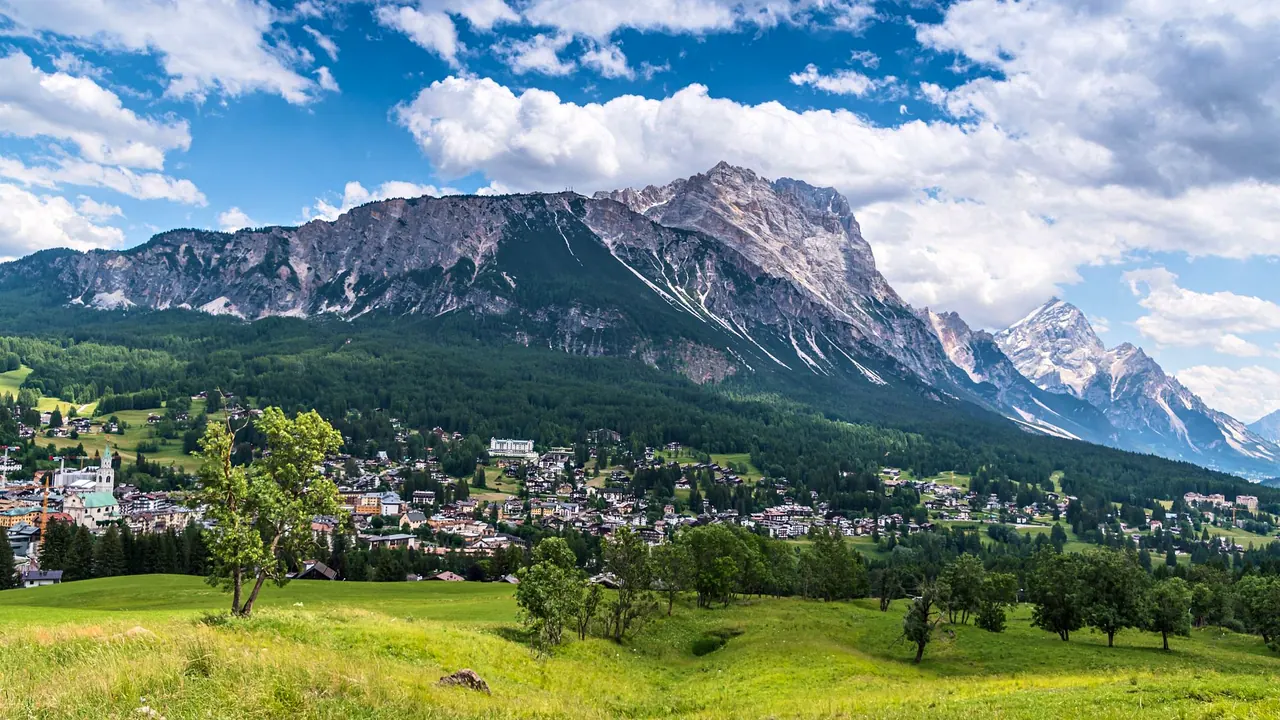
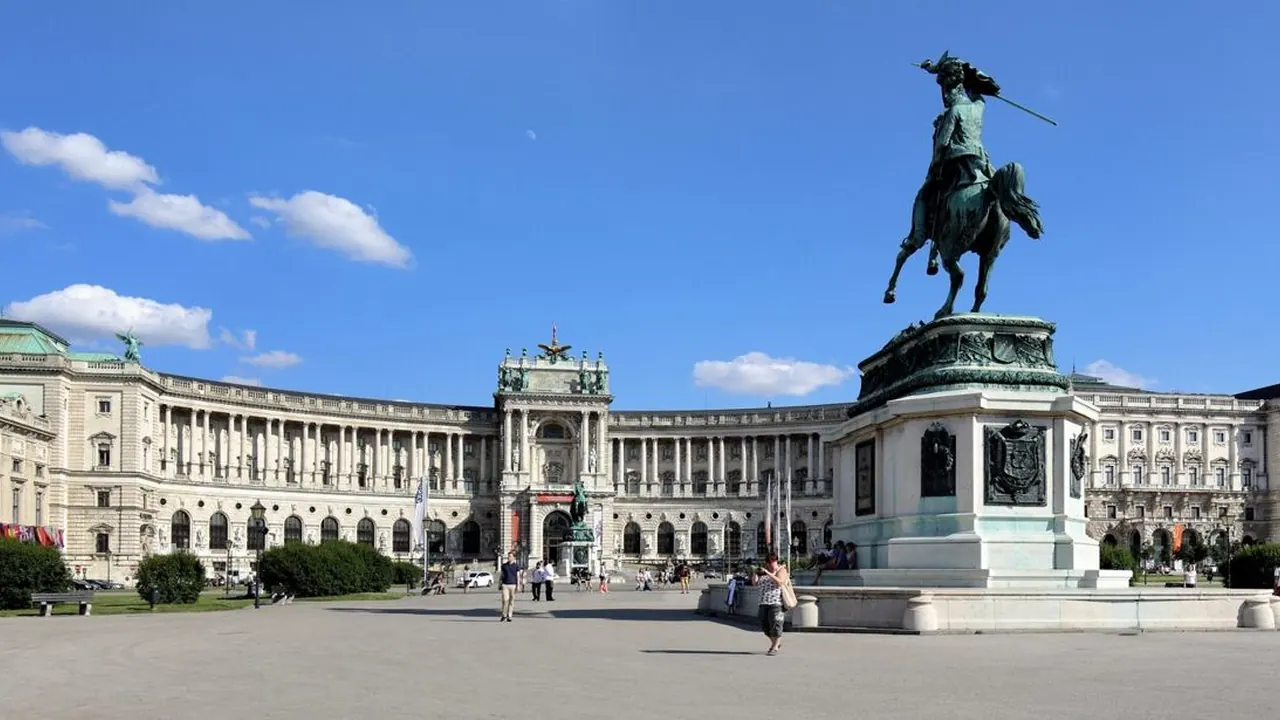
Photos: Cortina d'Ampezzo by Andreas Neubauer, Pexels License; Vienna by C.Stadler/Bwag, CC BY-SA 3.0 AT, cropped.
Cortina d'Ampezzo or Vienna?
Our verdict in twelve categories, each scored against the same fixed benchmark cities, and the climate month by month, so you can choose for your trip.
Choose Cortina d'Ampezzo for
- nature and the outdoors
Cortina is the choice for a trip built around the mountains themselves. The Dolomites rise straight from the valley, and lifts carry you from town onto the peaks. Skiing on the Dolomiti Superski network in winter, or hut-to-hut hiking and via ferrata in summer, can fill every day. Go knowing that it is expensive and quiet in the evenings, and that it has few sights or indoor options when the weather turns.
Choose Vienna for
- live music and the arts
- culture and sights
- getting around
Travellers who want a great city should pick Vienna. It has imperial palaces, first-rank art museums and a musical life with few equals, and all of it is easy to reach on foot, by tram or by U-Bahn. It is also the easier and cheaper base for families, and for anyone who wants to add Bratislava or the Wachau to the trip. Its green edges are pleasant, but they are wooded hills and river meadows rather than high peaks.
Scoreboard
Twelve categories on one fixed scale from 0 to 100. The shaded stretch is the gap between the two.
Your match
Pick a travel style or drag the sliders, and both match scores follow your weighting.
Wins on nature and the outdoors with your weighting.
Wins on live music and the arts and culture and sights with your weighting.
What matters to you?
Category by category
What the scores mean for a trip.
Beaches & swimming
Neither city is on the coast, but Vienna is the one where you can actually swim. The Danube Island and the lidos along the Alte Donau offer real summer bathing a U-Bahn ride from the centre, and the Neusiedler See is close enough for a day at the lake.
In Cortina, alpine lakes such as Ghedina and Pianozes are for walking round rather than swimming, because snowmelt keeps them cold all summer. A swim there usually means a hotel pool.
Food & drink
Vienna has more to eat and drink. Its cuisine dates from the empire: schnitzel and Tafelspitz in wood-panelled Beisl taverns, strudel and Sachertorte in the grand coffee houses. Heuriger taverns in Grinzing and Nussdorf pour wine grown inside the city itself.
Cortina eats well for a small town. There is casunziei, polenta with game, and long lunches on rifugio terraces among the peaks, but the choice is narrow and seldom cheap. Neither place is strong on international food, although Vienna at least has its sausage stands and the Naschmarkt.
Culture & sights
This is where the two are furthest apart. Vienna is an imperial capital that still stands largely intact, with the Hofburg, Schönbrunn, St Stephen's and the Ringstrasse. Its museums hold Bruegel, Klimt and Schiele, and there is easily enough for a full week.
Cortina's sights fit into an afternoon: the basilica and its bell tower, painted houses, the 1956 Olympic ice stadium and the Rimoldi art collection. Its most striking heritage is the First World War tunnels and trenches on Lagazuoi and the Cinque Torri, and those are up in the mountains rather than in town.
Nightlife
Vienna offers far more choice in the evening, though it is relaxed rather than wild. There are late bars under the Gürtel railway arches, the old-town Bermuda Triangle, deckchair bars on the Danube Canal in summer and formal balls in winter. A night in Cortina is après-ski drinks, a stroll along the Corso Italia and a long dinner, and the few smart late bars open only in the peak winter weeks.
Nature & outdoors
Cortina is the outright winner. The Ampezzo valley is ringed by the Tofane, Cristallo and the Cinque Torri, lifts climb straight from town, and the Tre Cime and Lago di Misurina are close by. Winter means the Dolomiti Superski area, and summer brings hut-to-hut trails and some of the oldest via ferrata routes in the Alps.
Vienna's nature is gentler and easier to reach: beech woods and vineyard paths up to the Kahlenberg, the floodplain forest of the Donau-Auen and flat cycle routes along the Danube. Its nearest real mountains, the Rax and Schneeberg, are a day out rather than the view from your window.
Day trips
Vienna's position makes day trips easy. Bratislava is about an hour away by train or by boat on the Danube. The Wachau with Melk and Dürnstein, the abbeys of Klosterneuburg and Heiligenkreuz, and Haydn's Eisenstadt are all within easy reach.
From Cortina, most days out stay in the mountains. The best town trips are in South Tyrol, to San Candido, Brunico, and Bolzano with the Iceman, mostly by car. Venice is a long day by coach.
Good for families
Vienna is set up for children in a way Cortina is not. It has Schönbrunn Zoo, the Prater with its Ferris wheel and rides, and an aquarium inside a wartime flak tower. The ZOOM children's museum and the Technical Museum mean rainy days are covered too.
Cortina works for families who come to ski or hike. There are ski schools at Socrepes, public skating and gentle trails to huts. Beyond the outdoors, though, there is little aimed at children, and bad weather can leave young ones restless.
Getting around
Both centres are small enough to cross on foot, but beyond them the gap is wide. In Vienna, the U-Bahn, trams and buses all run on one ticket and reach Schönbrunn, the Prater and the vineyard villages, so a car is more of a burden than a help.
Cortina has had no railway since 1964, so getting there means a coach or a long drive. Buses up to the passes and the Tre Cime run on a limited service, and most visitors who want to see the wider Dolomites hire a car.
Shopping & style
Vienna offers the wider range. Luxury houses line the Kohlmarkt and Graben, Mariahilfer Strasse has everyday fashion, and Neubau has independent designers, alongside Augarten porcelain, Loden coats and the Christmas markets. Cortina has one polished street, the Corso Italia, with jewellers, furriers and ski wear around the old Cooperativa store, and little beyond it.
Affordability
Neither city is a bargain, but Vienna is far easier on the wallet. Set lunches, sausage stands, Heuriger buffets, transport passes, free palace gardens and standing places at the State Opera all help keep costs down.
Cortina is among the most expensive places to stay in Italy, and in winter lift passes and equipment hire come on top. Rifugio meals and the quieter weeks of June and late September ease the cost, and many travellers on a budget stay in a cheaper valley nearby and drive in.
Live music & performing arts
For music, Vienna is in a class of its own. The State Opera plays most nights of a long season, and the Vienna Philharmonic performs in the Golden Hall of the Musikverein. The Konzerthaus, Volksoper, Theater an der Wien and Burgtheater keep the calendar full all year.
Cortina has no theatre season and no regular venue. Its music comes mostly from summer festivals, with chamber concerts in churches and halls and sometimes out among the mountains, plus the odd concert around New Year.
Wellness & relaxation
Vienna has the edge because it has real thermal water. Therme Wien in Oberlaa, the Art Deco Amalienbad and the sulphur springs of Baden half an hour away all offer it, and there is the slow ritual of the coffee house too. In Cortina, relaxation means hotel spas with saunas and hay baths, and the clear air and quiet of June and September, but the peak weeks bring traffic and crowds.
When should you go?
Pick your month. The climate figures are measured averages, not a forecast.
Cortina d'Ampezzo in July
Vienna in July
Daytime high, °C
Rainfall in the month, mm
Temperature and rainfall are climate normals, averaged over the years shown. Cortina d'Ampezzo: 1991-2020 normals, Dobbiaco (22.5 km from centre). Vienna: 1991-2020 normals, Wien / Hohe Warte (4.7 km from centre).
Cortina has two distinct seasons. From December to March the valley is cold, with January highs around freezing, which suits the ski season. Summer is mild rather than hot, peaking at about 22°C in July and August. That is good hiking weather, but June, July and August are also the wettest months, with around 130mm of rain in July alone. September is the best month for walking: it stays mild and is noticeably drier. April, May, October and November are cool in-between months.
Vienna is warmer through the year. July and August reach about 27°C, which is warm enough to swim at the Danube Island and the Alte Donau, and from May to August the city gets around 250 hours of sunshine a month. Long days of sightseeing are most comfortable in May, June and September. Winter is grey and chilly, with January highs only a few degrees above freezing and little sun. Even so, the coffee houses, concert halls and museums still make it a fair season for a city visit.
Which traveller are you?
On an outdoors trip, Cortina is the clear pick. Lifts rise from town into the Dolomites, and the Tre Cime and the Fanes-Sennes-Braies park are close. Summer brings Alta Via 1 hiking and via ferrata, and winter opens up the Dolomiti Superski area.
For a culture and arts trip, Vienna wins by a wide margin. The Hofburg, Schönbrunn and the Kunsthistorisches Museum fill the days, and the State Opera, Musikverein and Konzerthaus fill the evenings. Cortina offers three small museums and some summer concerts.
On a family trip with children, Vienna has far more to offer. Schönbrunn Zoo, the Prater rides, an aquarium and hands-on museums keep children busy in any weather, and trams are easy with prams. Cortina mainly suits families who come to ski or hike.
Before you go
| Measure | Cortina d'Ampezzo | Vienna |
|---|---|---|
| Official language | Italian | German, Austrian Sign Language |
| Currency | Euro (EUR) | Euro (EUR) |
| Sockets | CFL230 V, 50 Hz | CF230 V, 50 Hz |
| Driving side | Right | Right |
| Time zone | UTC+1, UTC+2 in summer | UTC+1, UTC+2 in summer |
| Emergency number | 112 | 112 |
| Elevation | 1,224 m | 151 m |
| Main airport | Venice Marco Polo Airport (VCE)116 km from centre103 non-stop destinations | Vienna International Airport (VIE)18 km from centre202 non-stop destinations |
| Public holidays this year | 13 days | 16 days |
By the numbers
| Measure | Cortina d'Ampezzo | Vienna |
|---|---|---|
| City population | 5,546 | 2,028,289 |
| People per km² | 22 | 4,890 |
| Museums within 10 km | 3 | 152 |
| UNESCO World Heritage sites within 50 km | 1 | 4 |
Where else could you go?
Every comparison below shares a destination with this one, so you can follow Cortina d'Ampezzo or Vienna somewhere new.
- Bratislavavs Vienna
- Innsbruckvs Cortina d'Ampezzo
- Venicevs Cortina d'Ampezzo
- Grazvs Vienna
- Veronavs Cortina d'Ampezzo
- Bledvs Cortina d'Ampezzo