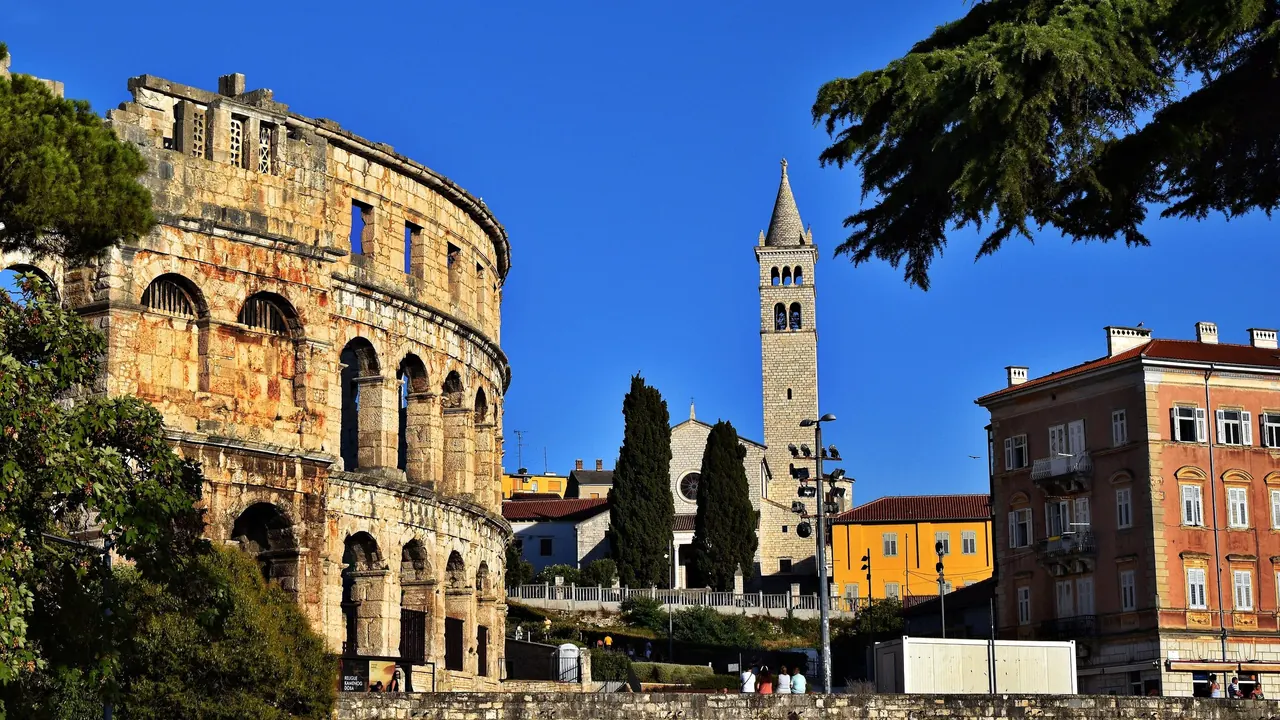
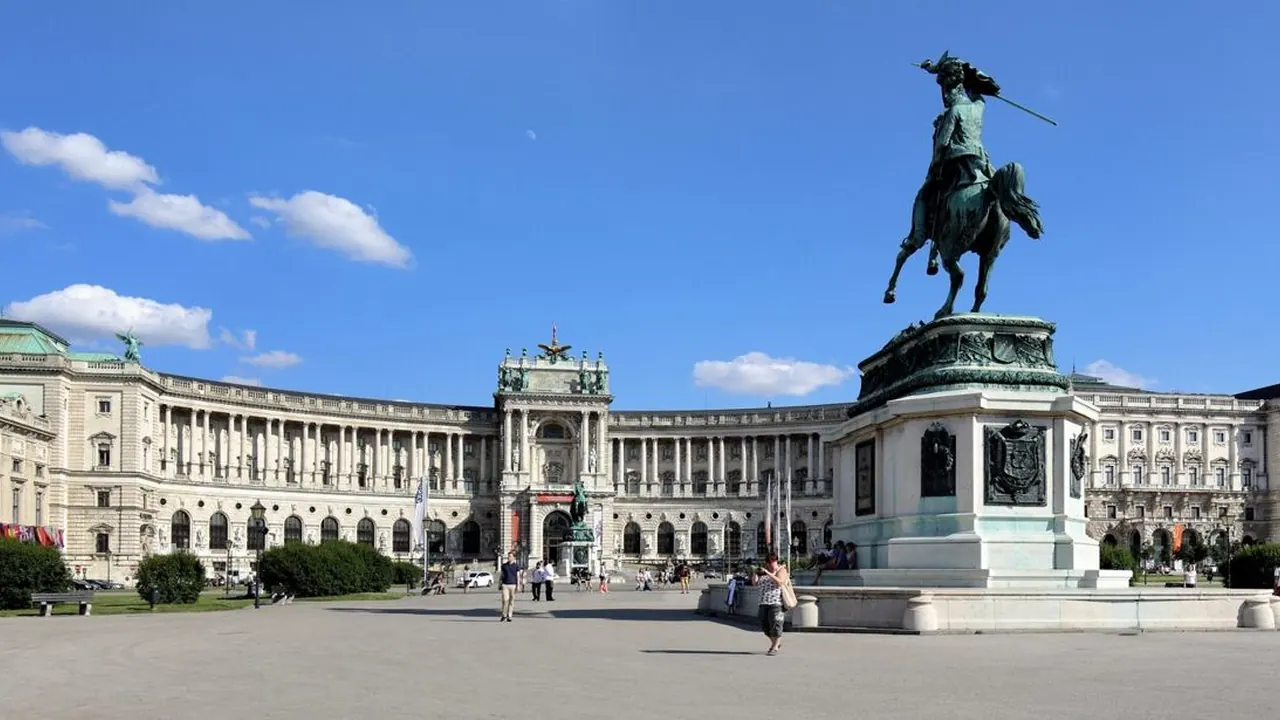
Photos: Pula by Miroslav.vajdic, CC BY-SA 4.0, cropped; Vienna by C.Stadler/Bwag, CC BY-SA 3.0 AT, cropped.
Pula or Vienna?
Our verdict in twelve categories, each scored against the same fixed benchmark cities, and the climate month by month, so you can choose for your trip.
Choose Pula for
- beaches
- prices
- day trips
Pula suits a summer trip built around the sea. You get clear water off pine-shaded rocks, the wild coves of Cape Kamenjak, a Roman amphitheatre you can see in a morning, and the hill towns and wine estates of Istria within easy driving distance. It works best for travellers who want a slow pace, plan to hire a car, and are happy to spend more time swimming than sightseeing.
Choose Vienna for
- live music and the arts
- getting around
- shopping
Vienna is the better choice for anyone who travels for art, music and grand cities. Imperial palaces, first-rank museums and an opera house with a performance most nights could fill a week on their own, and an excellent transport network links all of it. It is also the easier city with children, for shopping and for a trip outside summer, although it has no sea.
Scoreboard
Twelve categories on one fixed scale from 0 to 100. The shaded stretch is the gap between the two.
Your match
Pick a travel style or drag the sliders, and both match scores follow your weighting.
Wins on beaches and prices with your weighting.
Wins on live music and the arts and getting around with your weighting.
What matters to you?
Category by category
What the scores mean for a trip.
Beaches & swimming
This is Pula's clearest advantage. Its coast south of the centre breaks into rocky platforms and pebble coves with very clear water and pine shade down to the shore. The wild inlets of Cape Kamenjak give some of the best swimming in Istria. There is no sand, so water shoes are worth packing, and families with small children tend to use the gentler bays around Medulin.
Vienna offers river and lake bathing instead. The Danube Island and the calmer Alte Donau lidos are pleasant on a hot afternoon after sightseeing, but they make a nice extra rather than the reason for the trip.
Food & drink
Vienna has the stronger food culture to explore inside the city. You can eat schnitzel and Tafelspitz in wood-panelled Beisl taverns, have strudel at a marble table in a grand coffee house, and drink young Grüner Veltliner at the Heuriger taverns on the vineyard slopes within the city limits.
Pula has an excellent regional kitchen but a limited choice of restaurants in town. Istrian truffle pasta, scampi buzara, pršut and Malvazija are well worth trying. The best meals tend to be in village konobas inland or at harbours along the coast, so eating well usually means driving out of the city.
Culture & sights
Pula has one world-class monument, the remarkably complete Arena, along with the Temple of Augustus, the Arch of the Sergii and Austro-Hungarian forts. You can see all of it comfortably in a day or two.
Vienna works on a different scale. The Hofburg, Schönbrunn and St Stephen's sit within a UNESCO-listed old town, and the Kunsthistorisches Museum, the Belvedere and the Leopold hold collections that people cross Europe to see. The Jugendstil buildings and Otto Wagner's architecture add a second great period on top of the imperial one, and the whole city easily fills a week.
Nightlife
Neither city is a party destination, but Vienna has more going on and keeps it up all year. There are late bars under the Gürtel railway arches, electronic nights in former industrial spaces, and deckchair bars on the Danube Canal in summer. In winter the formal balls offer a night out you won't find anywhere else.
Pula's evenings come alive only in summer, and they stay low-key: terrace drinks around the Forum, then beach bars on Verudela or in Medulin. For many visitors the best night is a glass of wine by the harbour with the Arena lit up behind them.
Nature & outdoors
The two are broadly level, but the outdoors means different things in each. In Pula it is the coast: walking, cycling and sea kayaking at Kamenjak, windsurfing in Premantura bay and wreck dives from the naval era. Spring and autumn suit these best, because summer middays are hot.
Vienna's green space is woodland and river. You can hike through vineyards in the Vienna Woods up to the Kahlenberg, explore the Donau-Auen floodplain forest or cycle the flat Danube paths. The Rax and Schneeberg are the nearest real mountains, at about the same distance as Učka is from Pula.
Day trips
Both make good bases, but for different kinds of trip. From Pula you tour a single region: Venetian Rovinj, the mosaics in Poreč, the truffle hill towns of Motovun and Hum, and the Brijuni islands. Buses are limited, so you will need a car for most of them.
From Vienna the trips cross borders, and you can make most of them by train. Bratislava and Brno are each a short ride away, and the Wachau valley, with Melk and Dürnstein, offers abbeys and vineyards along the Danube.
Good for families
Vienna is easier with children, and it keeps them busy in any weather. Schönbrunn has the zoo, a maze and a children's museum. The Prater has the giant wheel and its rides. When it rains, the dinosaurs at the Natural History Museum and the play areas at ZOOM take over.
Pula's family days are mostly beach days, best in the shallow bays at Medulin. The aquarium in an old fort and climbing round the Arena make good extras. With rocky shores, summer heat and the need for a car, it takes more effort for parents.
Getting around
Vienna is about as easy as a big city gets. Five U-Bahn lines, trams around the Ring and one integrated ticket take you to Schönbrunn, the Danube Island and even the Heuriger villages, so you won't need a car.
Pula's flat centre is small enough to cover on foot. Beyond it, though, you can't get far without a car or scooter. City buses go out to Verudela, but regional buses are infrequent and the railway is of little use, which makes Kamenjak and the hill towns much easier to reach by car.
Shopping & style
Vienna has real shopping streets. There are luxury houses on the Graben and the Kohlmarkt, everyday fashion on Mariahilfer Strasse and independent designers in Neubau. It also has crafts that make good gifts, such as Augarten porcelain, crystal and Loden coats.
In Pula, the things worth taking home are mostly edible. Truffle products, olive oil, Malvazija and pršut from the market hall or straight from the producers beat anything sold on the main pedestrian street.
Affordability
Pula is slightly the cheaper of the two, mainly because private apartments and simple konobas cost little in spring and autumn. In July and August, rooms and restaurant prices near the Arena climb towards Western European levels, and car hire and boat trips soon add up.
In Vienna, the costs are concentrated in hotels and palace and museum tickets. Many things are free or cheap, though: the passes for public transport, gardens and church interiors, Heuriger buffets and standing places at the State Opera.
Live music & performing arts
For live music, Vienna is in a different league. The State Opera stages a different work almost every night, the Philharmonic plays in the Musikverein's Golden Hall, and the Konzerthaus, the Volksoper and the Burgtheater add to the programme. The city plays its own composers all year round.
Pula has one memorable setting. On summer nights the Arena hosts concerts and film festival screenings under its Roman arches. For the rest of the year the Istrian National Theatre performs drama in Croatian, and there is little else.
Wellness & relaxation
Vienna is the better place to unwind. It has the thermal pools at Oberlaa, the tiled Art Deco sauna hall of the Amalienbad and the sulphur springs at Baden, which is half an hour away. Its coffee houses also make lingering part of everyday life.
Pula has no bathing tradition. For spa facilities you need a resort hotel on Verudela or in Medulin. What it offers instead is a calm pace outside high summer, with long coffees on the Forum and walks on coastal paths under the pines.
When should you go?
Pick your month. The climate figures are measured averages, not a forecast.
Pula in July
Vienna in July
Daytime high, °C
Rainfall in the month, mm
Where the figures come from
Pula's temperatures are measured 87 km from the centre, at Trieste.
Pula has no rain gauge within 25 km of the centre, so its rainfall comes from a gridded climate dataset read at the city rather than from a gauge further away.
Temperature and rainfall are climate normals, averaged over the years shown. Pula: 1991-2020 normals, Trieste (87 km from centre). Vienna: 1991-2020 normals, Wien / Hohe Warte (4.7 km from centre).
Pula is a summer place. From June to September the days reach the high 20s, the sea is warm enough to swim in, and the Adriatic peaks at about 25°C in August. July is the sunniest month and also one of the driest. Late May and early October are milder and good for walking the Roman centre and Kamenjak. From September the rain builds, and November is the wettest month at about 107mm. Winters are mild but grey and quiet.
Vienna has a more continental pattern. Its summers are a little cooler than Pula's, and they are also its wettest season, with afternoon showers likely from May to August. Winter is properly cold, with January highs near 3°C, but that is when the ball season and Christmas markets take place, and museums and concert halls don't depend on the weather. For walking the city, April, May and September are the most comfortable months.
Which traveller are you?
For a beach and sun trip, choose Pula. It has clear Adriatic water from June to late September, rock ledges and pebble coves around Verudela, and the protected headland of Kamenjak. Vienna's river lidos are fine for an afternoon, but they are no replacement for the sea.
On a culture and arts trip, Vienna is far ahead. You can see Bruegel and Klimt in the morning, tour the Hofburg in the afternoon and hear the Philharmonic or an opera at night. Pula's Roman monuments are impressive, but they take a day or two to see.
On a family trip with children, Vienna offers more, and on more kinds of day: Schönbrunn Zoo, the Prater rides, hands-on museums for rainy weather, and trams that cope with prams. Pula is better for families who mainly want sheltered, shallow bays and a car.
Before you go
| Measure | Pula | Vienna |
|---|---|---|
| Official language | Croatian | German, Austrian Sign Language |
| Currency | Euro (EUR) | Euro (EUR) |
| Sockets | CF230 V, 50 Hz | CF230 V, 50 Hz |
| Driving side | Right | Right |
| Time zone | UTC+1, UTC+2 in summer | UTC+1, UTC+2 in summer |
| Emergency number | 112 | 112 |
| Elevation | 5 m | 151 m |
| Main airport | Pula Airport (PUY)7 km from centre34 non-stop destinations | Vienna International Airport (VIE)18 km from centre202 non-stop destinations |
| Public holidays this year | 14 days | 16 days |
By the numbers
| Measure | Pula | Vienna |
|---|---|---|
| City population | 52,220 | 2,028,289 |
| People per km² | 971 | 4,890 |
| Museums within 10 km | 4 | 152 |
| UNESCO World Heritage sites within 50 km | 1 | 4 |
| Swim season, months above 21 °C | 4 months | - |
Where else could you go?
Every comparison below shares a destination with this one, so you can follow Pula or Vienna somewhere new.