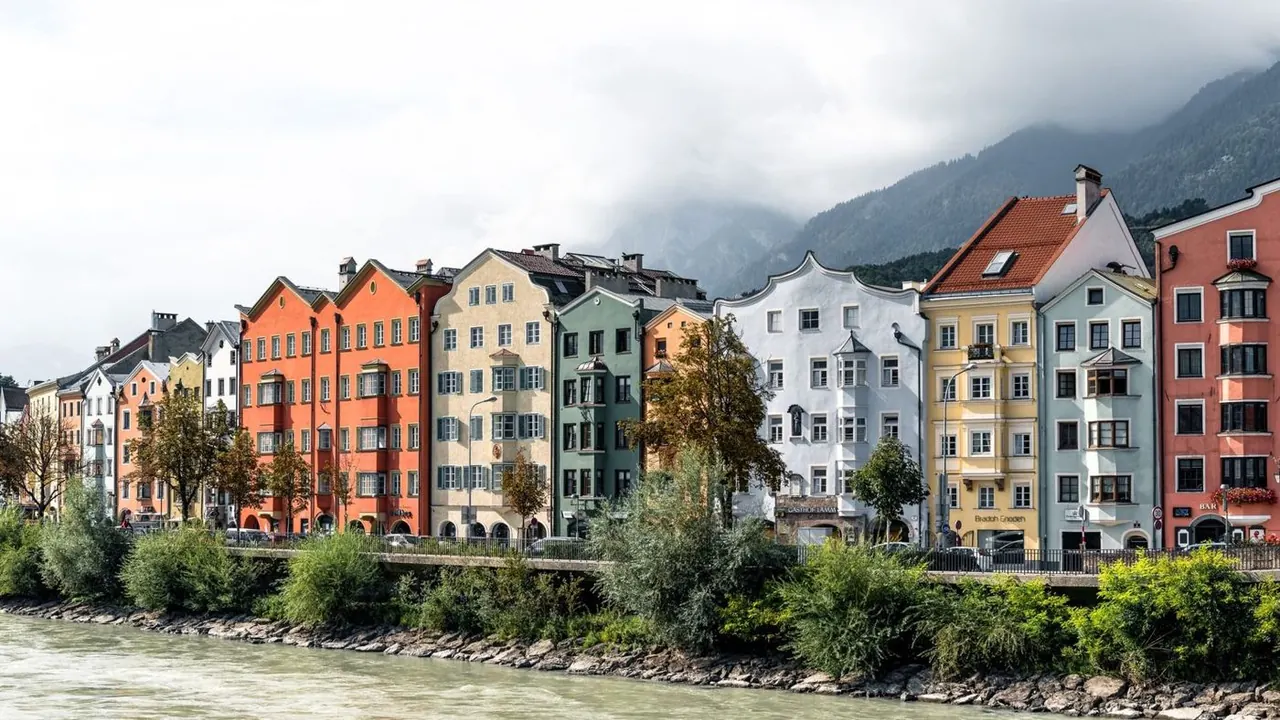
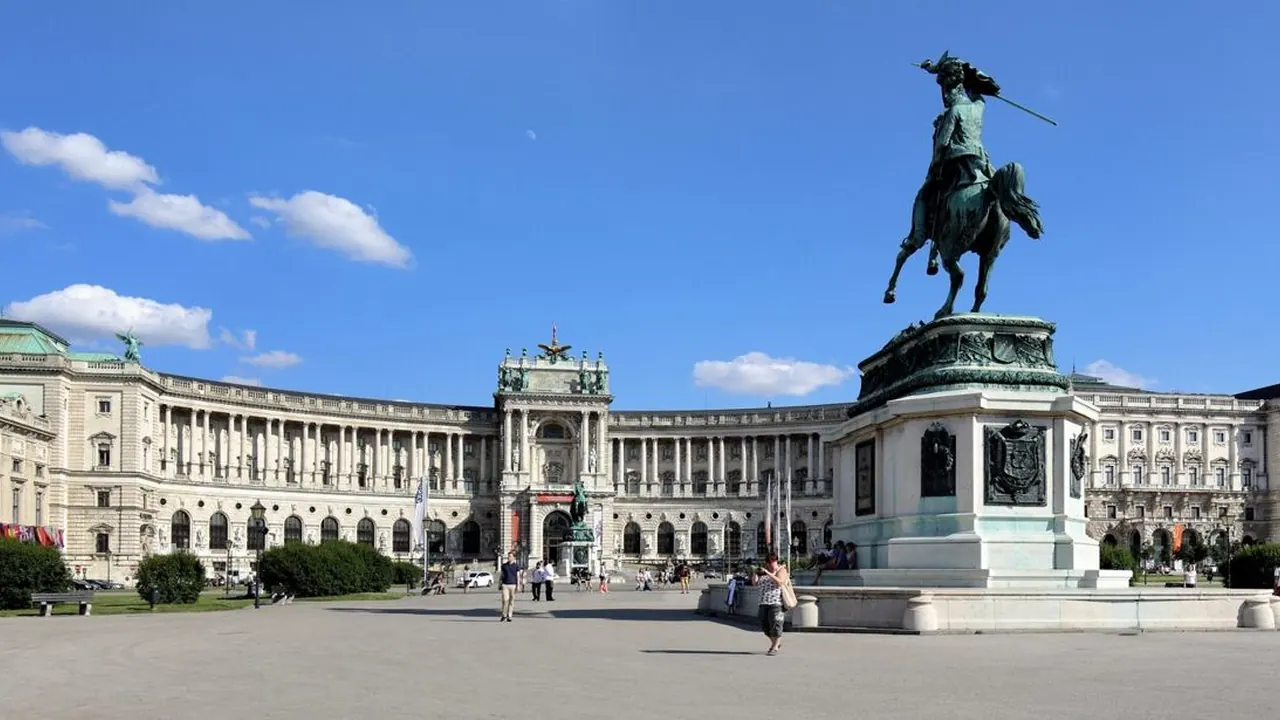
Photos: Innsbruck by Wolfgang Weiser, Pexels License; Vienna by C.Stadler/Bwag, CC BY-SA 3.0 AT, cropped.
Innsbruck or Vienna?
Our verdict in twelve categories, each scored against the same fixed benchmark cities, and the climate month by month, so you can choose for your trip.
Choose Innsbruck for
- nature and the outdoors
Innsbruck is the choice when the mountains are the point of the trip. Cable cars from the edge of the old town reach high ridges in minutes, ski areas and a glacier are close by, and summer brings hiking, via ferratas and paragliding. For days off the slopes there is a compact Habsburg old town, and trains run to Munich and over the Brenner to the Italian side of the Alps.
Choose Vienna for
- live music and the arts
- culture and sights
- food and drink
For music, museums and food, Vienna is the much stronger city. Opera on most nights, Klimt and Bruegel, coffee houses and wine taverns in the city's own vineyards easily fill a week. It is also easier with children and simpler to get around. The trade-off is that nature in Vienna means woods and riverbanks rather than peaks.
Scoreboard
Twelve categories on one fixed scale from 0 to 100. The shaded stretch is the gap between the two.
Your match
Pick a travel style or drag the sliders, and both match scores follow your weighting.
Wins on nature and the outdoors with your weighting.
Wins on live music and the arts and culture and sights with your weighting.
What matters to you?
Category by category
What the scores mean for a trip.
Beaches & swimming
Neither city is a place to go for swimming, but Vienna's summer bathing is on a bigger scale. The 20km of banks on the Danube Island and the lidos on the Alte Donau are a U-Bahn ride from the centre, so a swim fits into an ordinary city day.
In Innsbruck, a swim means going up to the small plateau lakes such as the Lanser See, which get pleasantly warm in high summer, or out to the Achensee, which is beautiful but cold. In both cities the season is short, and swimming fills an afternoon rather than a whole trip.
Food & drink
Vienna has a cuisine of its own and the institutions that serve it: Beisl taverns, the grand coffee houses, the Naschmarkt and, unusually for a capital, Heuriger taverns pouring wine from vineyards inside the city limits. You could eat somewhere different every day for a week.
Innsbruck's cooking is hearty Tyrolean food such as Gröstl, Kaspressknödel and Speck, and it tastes best at a mountain hut after a climb. In town the choice is narrower, and the restaurants around the Golden Roof mostly serve tour groups.
Culture & sights
Innsbruck's sights are good and close together: the Golden Roof, the Hofkirche with Maximilian's ring of bronze figures, and Ambras Castle, all covered in two or three days. Vienna works on another scale, with Schönbrunn, the Hofburg, the Ringstrasse and major museums ranging from the Bruegels in the Kunsthistorisches to Klimt's The Kiss at the Belvedere.
Both cities were Habsburg seats, so their history is linked. Vienna also has a second great period in Jugendstil and the Secession, and it fills a week without effort.
Nightlife
In both cities the late crowd heads for bars and small clubs under old railway arches: the viaduct in Innsbruck and the Gürtel in Vienna. Vienna has a good deal more on top of that. There is the Bermuda Triangle in the old town, deckchair bars on the Danube Canal in summer, electronic nights in old industrial spaces and, in winter, formal balls that visitors can buy tickets for.
Innsbruck's scene is small and driven by its students. In winter much of the fun moves out to après-ski in the resorts.
Nature & outdoors
This is where Innsbruck is in a different league. A funicular from the old town connects with cable cars that reach the Nordkette ridge at about 2,300m in under half an hour. The Karwendel lies behind the ridge and there are glaciers in the Stubai valley, so the mountains give you skiing in winter and via ferratas, paragliding and hut-to-hut hiking in summer.
Vienna's green side is gentler. There are beech woods and vineyard trails up to the Kahlenberg, the meadows of the Prater, the Donau-Auen floodplain forest and flat cycling along the Danube. The nearest real mountains, the Rax, are an hour and a half away.
Day trips
Both cities make good bases, but the trips lead in different directions. From Innsbruck they are Alpine and cross borders: Munich and Salzburg are each a little under two hours by train, Bolzano and Merano are over the Brenner, and medieval Hall in Tirol is ten minutes away.
From Vienna the trips are into river and wine country. There is the Wachau with Melk Abbey, the abbeys of Klosterneuburg and Heiligenkreuz, Haydn's Eisenstadt, and a second capital, Bratislava, about an hour away by train or boat.
Good for families
Vienna gives children more to do and more to fall back on. On dry days there is Schönbrunn Zoo, the Prater with its rides and Ferris wheel, and the aquarium inside a wartime flak tower. On wet days there are the dinosaurs at the Natural History Museum, the Technical Museum and ZOOM.
Innsbruck suits families who want to be outdoors. There is the Alpenzoo with its ibex and lynx, adventure trails and playgrounds by the huts in summer, and ski schools in winter. It has few attractions built for children, though, so a rainy day takes more planning.
Getting around
Both centres are easy to walk, but Vienna's public transport is the more complete system. Five U-Bahn lines and a dense tram network run on one ticket and reach Schönbrunn, the Danube Island and the vineyard villages, and the U-Bahn runs all night at weekends.
Innsbruck's strength is getting up into the mountains. The funicular from the edge of the old town puts the Nordkette within easy reach, and ski buses run out to the slopes. For the remoter valleys and lakes, though, a car helps, which you never need in Vienna.
Shopping & style
Vienna has the range Innsbruck lacks. The luxury houses are on the Kohlmarkt and Graben, everyday fashion runs along Mariahilfer Strasse, independent designers are in Neubau, and there is Augarten porcelain to take home.
Innsbruck's Maria-Theresien-Strasse and old-town arcades fill an afternoon. Both cities sell loden jackets and dirndls, but Innsbruck's real strength is its specialist outdoor and ski shops, which are useful if you are buying gear for the mountains.
Affordability
Neither city is cheap, but a budget goes a little further in Vienna. Set lunch menus, sausage stands, Heuriger buffets, free palace gardens and standing places at the State Opera all help.
Innsbruck adds an Alpine premium that is highest in the ski season, and cable car tickets add up quickly on an active trip. The guest cards that bundle lifts with transport soften the cost, and spring and autumn are clearly cheaper.
Live music & performing arts
For music the gap is wide, and in Vienna it is a reason to go in itself. The State Opera plays on most nights, the Vienna Philharmonic is at home in the Musikverein's Golden Hall, the Konzerthaus, Volksoper and Burgtheater fill out the week, and the Boys' Choir sings on Sundays.
Innsbruck has a solid provincial season at the Tiroler Landestheater and one standout, the summer Festival of Early Music, held in settings such as the Spanish Hall at Ambras Castle. It is worth checking the dates for a summer visit, but it does not compete with Vienna.
Wellness & relaxation
Vienna has the thermal water that Innsbruck lacks. There is Therme Wien in Oberlaa, the Art Deco Amalienbad, and the sulphur springs of Baden half an hour away, along with the slow ritual of the coffee house.
Relaxing in Innsbruck is Alpine in style. Hotels in Igls and the plateau villages have spas with mountain views, a sauna follows a day outside, and the big thermal complexes in the Ötztal and Zillertal are about an hour away.
When should you go?
Pick your month. The climate figures are measured averages, not a forecast.
Innsbruck in July
Vienna in July
Daytime high, °C
Rainfall in the month, mm
Temperature and rainfall are climate normals, averaged over the years shown. Innsbruck: 1991-2020 normals, Innsbruck-Flughafen (3.3 km from centre). Vienna: 1991-2020 normals, Wien / Hohe Warte (4.7 km from centre).
Temperatures in the two cities follow almost the same curve. Summer highs reach about 26°C in Innsbruck and 27°C in Vienna, and winter days stay in low single figures in both. In either city, July and August are the only real months for swimming, at the plateau lakes above Innsbruck or on the Danube in Vienna. Rain is the big difference. Summer is Innsbruck's wettest season, with about 144mm in August, so mountain days need some flexibility. Vienna stays much drier, never much above 80mm in any month, and gets more sun from April to September.
May, June and September are the best months in both cities for walking the streets and the trails. In winter the picture reverses. Vienna turns grey, with under two hours of sun a day in December. Innsbruck's valley gets noticeably more sunshine through the cold months, and that is when the ski season around the city begins.
Which traveller are you?
On an outdoors trip, Innsbruck is the clear pick. Skiing, glacier snow, hut-to-hut hiking, via ferratas and rafting all start close to the centre. Vienna has woods, vineyards and Danube cycling, but its nearest real mountains are an hour and a half away.
For a culture and arts trip, choose Vienna. Its palaces, first-rank museums and opera and concerts on nearly every night give you a full week of things to see. Innsbruck's sights and its provincial stage take two or three days.
On a food and nightlife trip, Vienna comes out ahead again. Beisl taverns, wine evenings at a Heuriger, the Naschmarkt and late bars on the Gürtel and along the Danube Canal give far more variety than Innsbruck's Tyrolean inns and small student scene.
Before you go
| Measure | Innsbruck | Vienna |
|---|---|---|
| Official language | German, Austrian Sign Language | German, Austrian Sign Language |
| Currency | Euro (EUR) | Euro (EUR) |
| Sockets | CF230 V, 50 Hz | CF230 V, 50 Hz |
| Driving side | Right | Right |
| Time zone | UTC+1, UTC+2 in summer | UTC+1, UTC+2 in summer |
| Emergency number | 112 | 112 |
| Elevation | 574 m | 151 m |
| Main airport | Innsbruck Airport (INN)4 km from centre40 non-stop destinations | Vienna International Airport (VIE)18 km from centre202 non-stop destinations |
| Public holidays this year | 16 days | 16 days |
By the numbers
| Measure | Innsbruck | Vienna |
|---|---|---|
| City population | 132,499 | 2,028,289 |
| People per km² | 1,263 | 4,890 |
| Museums within 10 km | 28 | 152 |
| UNESCO World Heritage sites within 50 km | 1 | 3 |
Where else could you go?
Every comparison below shares a destination with this one, so you can follow Innsbruck or Vienna somewhere new.