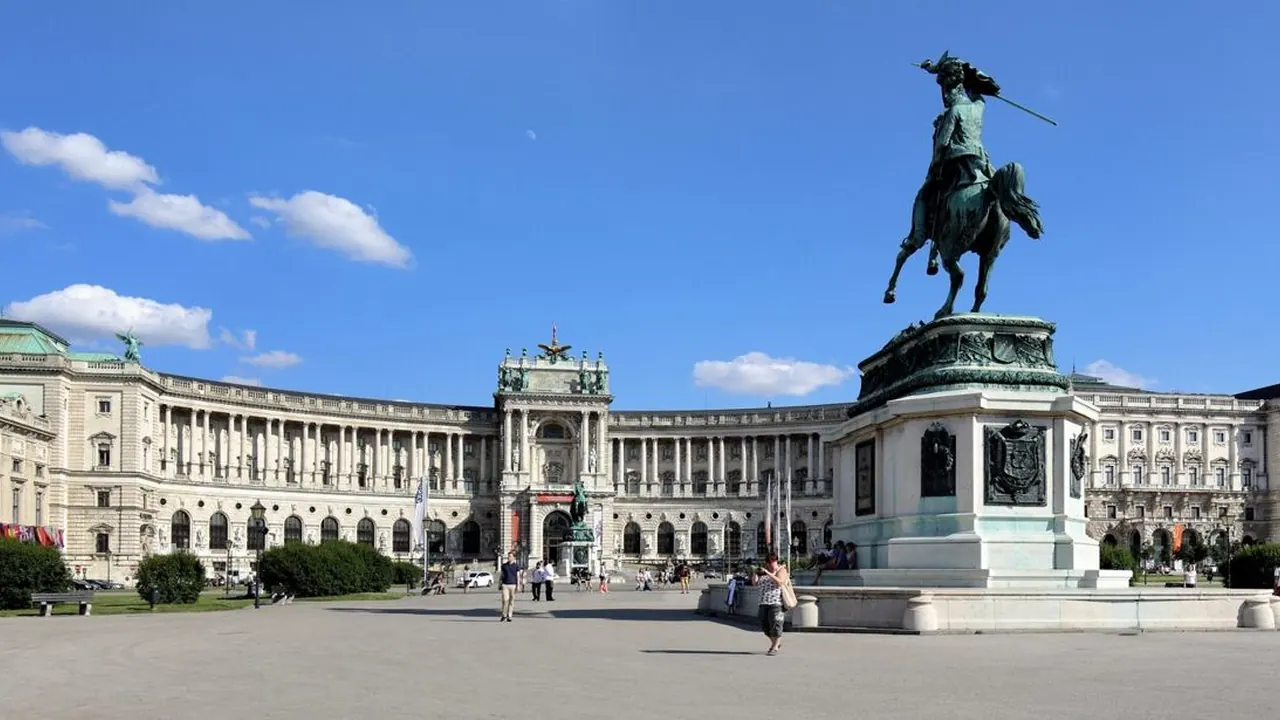
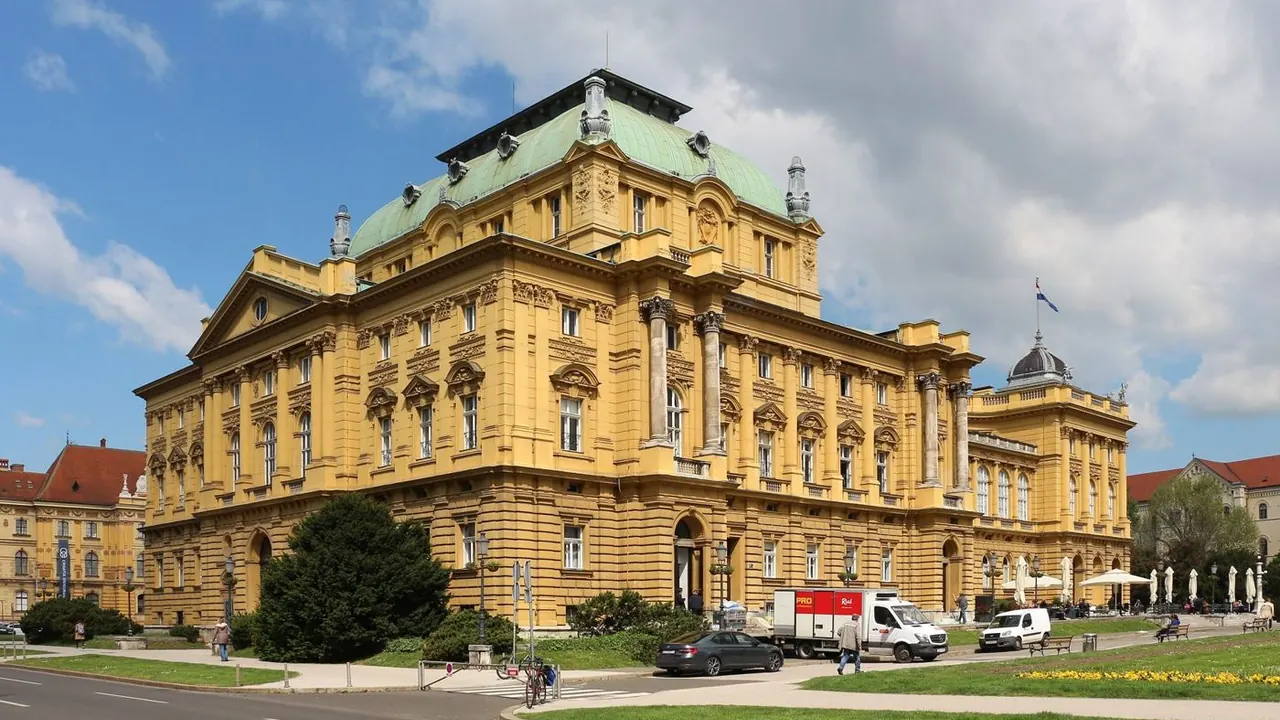
Photos: Vienna by C.Stadler/Bwag, CC BY-SA 3.0 AT, cropped; Zagreb by Bernard Gagnon, CC BY-SA 4.0, cropped.
Vienna or Zagreb?
Our verdict in twelve categories, each scored against the same fixed benchmark cities, and the climate month by month, so you can choose for your trip.
Choose Vienna for
- live music and the arts
- culture and sights
- families
Vienna is the better choice for most trips, and by a wide margin for anyone who travels for music, art and grand architecture. A night at the State Opera or the Musikverein, the Habsburg palaces and the Bruegels and Klimts can fill a week. It is also easier with children and simpler to get around, and the Wachau, Bratislava and the spa at Baden are close by. You pay more for all this, but you get more for it.
Choose Zagreb for
- prices
Zagreb suits travellers who want a smaller, cheaper capital for two or three unhurried days: the Upper Town lanes, the morning stalls at Dolac, long coffees on Lower Town terraces and a walk through Mirogoj. It works especially well as one stop on a longer Croatian trip, with Plitvice or the Adriatic coast to follow. Everyday prices are low enough to leave more of the budget for the rest of the journey.
Scoreboard
Twelve categories on one fixed scale from 0 to 100. The shaded stretch is the gap between the two.
Your match
Pick a travel style or drag the sliders, and both match scores follow your weighting.
Wins on live music and the arts and culture and sights with your weighting.
Wins on prices with your weighting.
What matters to you?
Category by category
What the scores mean for a trip.
Beaches & swimming
Neither city has a sea shore, but Vienna has much better summer bathing. The Danube Island gives about 20km of grassy banks and free swimming spots, the warmer Alte Donau has old lidos such as the Gänsehäufel, and the U-Bahn takes you to both.
Zagreb's swimming is limited to Jarun and Bundek, two lakes with pebbly shores that are fine for cooling off. The Adriatic is about two hours' drive away, so if you want sea and sand, plan a separate stay on the coast.
Food & drink
Vienna has the richer table. Its cooking is a cuisine in its own right, from schnitzel and Tafelspitz to Sachertorte, and the grand coffee houses are a reason to visit in themselves. Wine taverns in Grinzing and Stammersdorf pour wine grown inside the city.
Zagreb's cooking is hearty and Central European in feel. Try štrukli, turkey with mlinci and fresh cheese with cream from the Dolac stalls, then join the Saturday coffee promenade around Flower Square. Neither city is strong on international food, and Zagreb has fewer serious restaurants.
Culture & sights
The difference here is large. Vienna is a former imperial capital, with the Hofburg, Schönbrunn, St Stephen's and the Ringstrasse. Its museums are world class, with the Kunsthistorisches, the Belvedere and the Albertina, and Otto Wagner and the Secession add a second great era. It fills a week without effort.
Zagreb's heritage is pleasant and on a smaller scale. The medieval Upper Town has St Mark's tiled roof and the Stone Gate, and the Austro-Hungarian Lower Town is laid out around the Green Horseshoe of parks and squares. Mirogoj cemetery and the Museum of Broken Relationships are memorable, but two days cover the city.
Nightlife
Both cities go out in a relaxed way rather than a wild one, and they differ mainly in setting. Vienna's evenings move between bars under the Gürtel railway arches, deckchair bars on the Danube Canal and slow evenings at a wine tavern. Its winter ball season, when visitors can buy tickets to formal balls in palaces, has no equivalent in Zagreb.
Zagreb's nights centre on café-bars that switch from coffee to drinks. The main strip is the terrace-lined Tkalčićeva, and in summer people move on to the lakeside clubs at Jarun. Its students keep alternative venues going all year.
Nature & outdoors
Both cities have green country close at hand, but of different kinds. Vienna's walks climb through vineyards to the Kahlenberg, the Donau-Auen floodplain forest can be explored by boat, and the flat Danube cycle paths lead to the Wachau. Real limestone mountains, the Rax and Schneeberg, are about 90 minutes away.
Zagreb's mountain starts at the edge of town. A tram and a short bus ride bring you to the beech woods and mountain huts of Medvednica, which rises to about 1,030m at Sljeme and has a small ski slope in snowy winters. The lakes and waterfalls of Plitvice make a long day out.
Day trips
Vienna has the stronger list, and most of it is easy without a car. Bratislava is about an hour away by train or Danube boat. The Wachau has Melk abbey and Dürnstein among its vineyards, and Baden, Eisenstadt and Brno are all within easy reach.
Zagreb's best trips go north into Zagorje, to Trakošćan castle and the baroque town of Varaždin, with Samobor and Karlovac closer in. These make pleasant days out, but none is as famous as Vienna's best. Several of them, along with Plitvice, are much easier with a hire car.
Good for families
Vienna is the far easier city for children. Schönbrunn Zoo, the Prater rides and the shark tanks at Haus des Meeres give a full programme in good weather. The Natural History Museum, the Technical Museum and ZOOM cover the rainy days.
Zagreb is safe, flat in the Lower Town and easy with a pushchair. The Maksimir zoo, the Tesla technical museum and the tiny funicular are good for a day or two. With no aquarium or theme park, it suits a short, relaxed family stop better than a trip built around children.
Getting around
Both centres are compact enough to walk, but Vienna's transport goes much further. Five U-Bahn lines, trams and buses share one ticket, the U-Bahn runs all night at weekends, and even the vineyard villages can be reached by public transport.
Zagreb relies on its blue trams and buses, and the trams slow down in rush-hour traffic. The funicular saves the climb to the Upper Town, but the cobbles up there are steep. You will need a car only for Zagorje and Plitvice.
Shopping & style
Vienna offers more, especially at the top end. Luxury houses line the Kohlmarkt and Graben, Mariahilfer Strasse and the Neubau side streets have everyday fashion and independent designers, and Augarten porcelain, crystal and Loden make lasting gifts. Its Christmas markets add a seasonal reason to shop.
Zagreb's shopping is everyday, concentrated along Ilica, with little luxury. Its souvenirs are distinctive, though: red licitar hearts, Croatian neckties, lace and truffle products, plus food from Dolac to take home.
Affordability
Zagreb is clearly the cheaper city. Rooms, trams, museum entry and simple meals all cost less, although cocktails and the best hotels cost about what they would in Western Europe.
Vienna costs more, mainly because the major palaces and museums charge full admission. Some things soften the bill: cheap standing places at the State Opera, transport passes, free palace gardens and the buffets at wine taverns.
Live music & performing arts
This is where the two cities are furthest apart. Vienna is one of the world's great music cities, with the State Opera on most nights, the Philharmonic in the Musikverein's Golden Hall, the Konzerthaus and the Volksoper. The Vienna Boys' Choir sings Sunday Mass, and Mozart, Haydn and Beethoven are played all year.
Zagreb has a proper season of its own. The ochre Croatian National Theatre stages opera and ballet, the Lisinski hall is home to the Zagreb Philharmonic, and there are summer concerts in Upper Town courtyards. Much of the theatre is in Croatian, though, and little of it is internationally known.
Wellness & relaxation
Vienna makes rest easier. Therme Wien's thermal pools and the Art Deco Amalienbad are inside the city, and Baden's sulphur springs are about half an hour away.
In Zagreb itself, spa options are mostly hotel wellness floors. For thermal pools you need the Zagorje spa resorts, about an hour north. Both cities share a slow café rhythm, Vienna in its coffee houses and Zagreb on its terraces and quiet Upper Town lanes.
When should you go?
Pick your month. The climate figures are measured averages, not a forecast.
Vienna in July
Zagreb in July
Daytime high, °C
Rainfall in the month, mm
Temperature and rainfall are climate normals, averaged over the years shown. Vienna: 1991-2020 normals, Wien / Hohe Warte (4.7 km from centre). Zagreb: 1991-2020 normals, Zagreb / Gric (0.6 km from centre).
The two cities follow almost the same year, and both are at their best in late spring and early autumn. From June to early September both are warm enough to swim in their lakes and river arms. Zagreb runs a little hotter, with afternoons of about 29°C in July against 27°C in Vienna, so on the hottest days walking the streets is more tiring there. Summer sunshine is long and very similar in both.
They differ most in when the rain falls. Vienna is wettest in early summer and drier in autumn, which makes September and October good months for walking. Zagreb's rain builds through autumn and peaks at about 104mm in September, so in Zagreb May and early June are the safer bet. Winters are cold and grey in both, around 3°C by day in a Viennese January and a little milder in Zagreb. That suits museums, concert halls and Vienna's Christmas markets better than long walks.
Which traveller are you?
For a culture and arts trip, Vienna is the clear pick. It has an opera house that stages a different work most nights, a concert hall that is home to the Vienna Philharmonic, and museums holding Bruegel, Klimt and Schiele, all set among imperial palaces. Zagreb's sights are rewarding but take only a couple of days.
On a family trip with children, Vienna offers far more. There is the world's oldest working zoo at Schönbrunn, the Prater rides and meadows, sharks in a flak-tower aquarium and a children's museum for rainy days. Zagreb's zoo, Tesla museum and funicular make a gentler, shorter visit.
On a tight budget, Zagreb goes further. Central rooms, tram fares, museum tickets, bakery snacks and market food all cost noticeably less than in Vienna. Coffee on a terrace is an everyday habit there, while in Vienna the palaces and museums charge full admission.
Before you go
| Measure | Vienna | Zagreb |
|---|---|---|
| Official language | German, Austrian Sign Language | Croatian |
| Currency | Euro (EUR) | Euro (EUR) |
| Sockets | CF230 V, 50 Hz | CF230 V, 50 Hz |
| Driving side | Right | Right |
| Time zone | UTC+1, UTC+2 in summer | UTC+1, UTC+2 in summer |
| Emergency number | 112 | 112 |
| Elevation | 151 m | 127 m |
| Main airport | Vienna International Airport (VIE)18 km from centre202 non-stop destinations | Zagreb Franjo Tuđman International Airport (ZAG)11 km from centre64 non-stop destinations |
| Public holidays this year | 16 days | 14 days |
By the numbers
| Measure | Vienna | Zagreb |
|---|---|---|
| City population | 2,028,289 | 767,131 |
| People per km² | 4,890 | - |
| Museums within 10 km | 152 | 27 |
| UNESCO World Heritage sites within 50 km | 3 | 0 |
Where else could you go?
Every comparison below shares a destination with this one, so you can follow Vienna or Zagreb somewhere new.