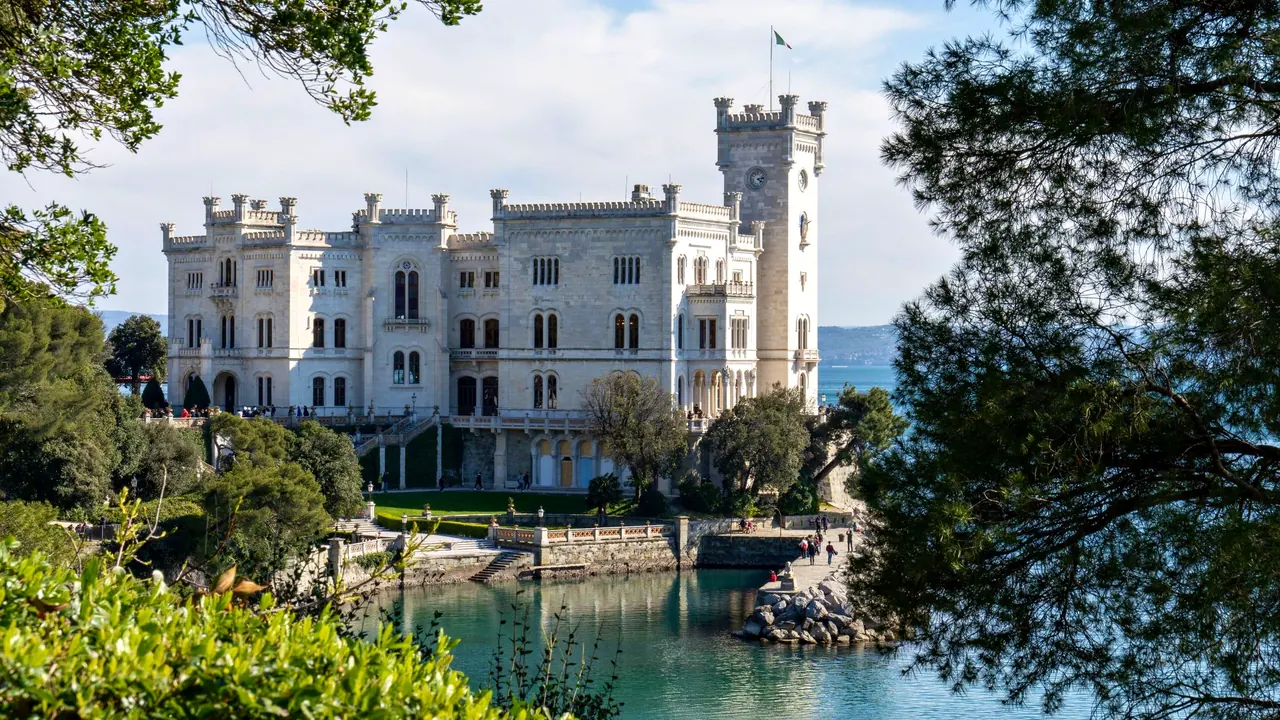
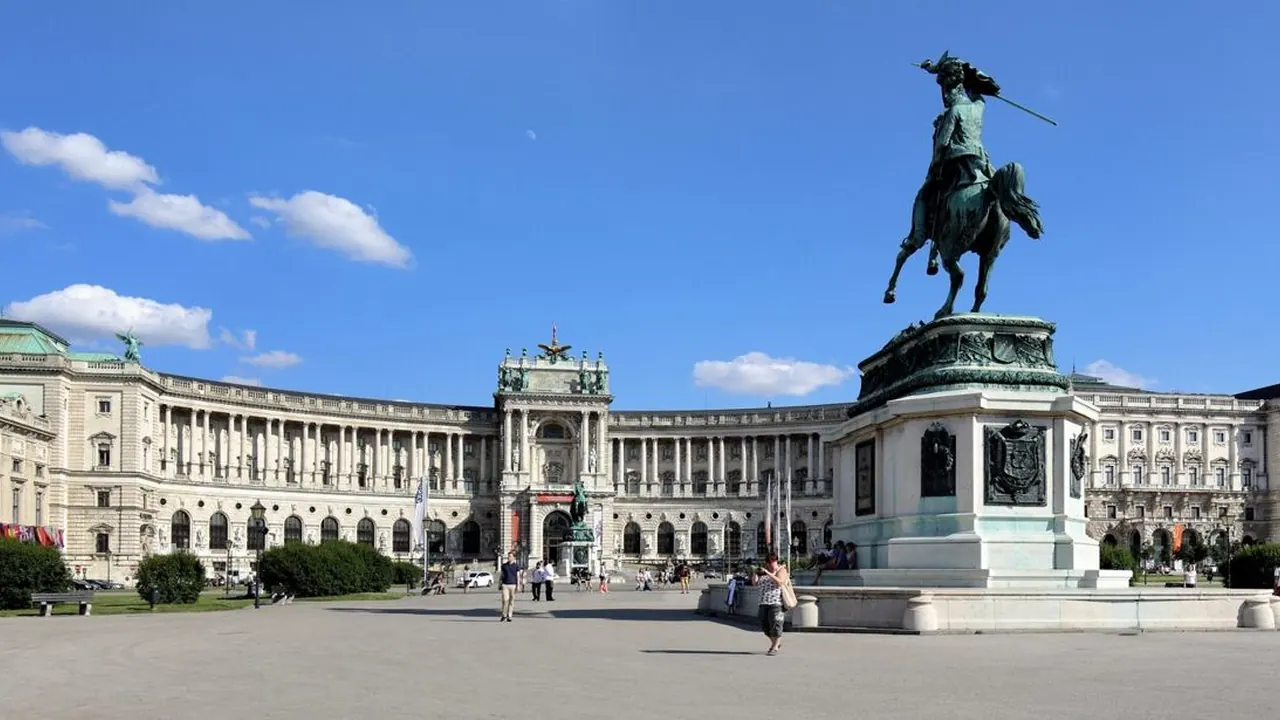
Photos: Trieste by Tibor Szabo, Pexels License; Vienna by C.Stadler/Bwag, CC BY-SA 3.0 AT, cropped.
Trieste or Vienna?
Our verdict in twelve categories, each scored against the same fixed benchmark cities, and the climate month by month, so you can choose for your trip.
Choose Trieste for
- beaches
- prices
- nature and the outdoors
Trieste suits a slower, cheaper trip where the sea and the landscape matter as much as the sights. You can swim off the Barcola platforms in the morning, walk the Karst edge above the gulf in the afternoon and cross into Slovenia or Friuli the next day, all from a compact Habsburg port that is easier on the budget. Expect quiet evenings and a smaller cultural programme.
Choose Vienna for
- live music and the arts
- culture and sights
- shopping
For art, music and imperial architecture, Vienna is by far the stronger choice. The State Opera, the Musikverein and the museums around the Hofburg could fill a week on their own. The U-Bahn and trams make the whole city easy, and children have much more to do. It has no sea, though, and day-to-day costs are higher.
Scoreboard
Twelve categories on one fixed scale from 0 to 100. The shaded stretch is the gap between the two.
Your match
Pick a travel style or drag the sliders, and both match scores follow your weighting.
Wins on beaches and prices with your weighting.
Wins on live music and the arts and culture and sights with your weighting.
What matters to you?
Category by category
What the scores mean for a trip.
Beaches & swimming
Trieste has the real sea, and that settles it. The whole city swims at the Barcola promenade, with its concrete platforms, pine-shaded lawns and ladders down into clear Adriatic water. The pebble coves at Sistiana and Duino are prettier still. There is hardly any sand, so you swim off rocks rather than lie on a beach.
Vienna does well for an inland capital. From June to early September, the gravel shores of the Danube Island and the calmer lidos on the Alte Donau are fine for an after-work swim. But this is river water, and nobody plans a seaside trip around it.
Food & drink
The two kitchens share an imperial past, so both have boiled meat with horseradish, strudel and grand coffee houses. Trieste adds the sea and the Slavic borderland: sardoni, jota, pork carved at its buffets, and the Karst osmize selling farm wine and cheese. Its coffee even has its own way of ordering.
Vienna's cooking is more polished, from schnitzel and Tafelspitz in wood-panelled Beisl to a solid tier of fine dining, which Trieste largely lacks. Its Heuriger pour wine grown inside the city limits. Neither city has much international range.
Culture & sights
Vienna is in a different league. The Hofburg, Schönbrunn, St Stephen's and the Ringstrasse would make a full trip on their own. On top of that, the museums hold Bruegel at the Kunsthistorisches, Klimt at the Belvedere and Schiele at the Leopold, and Jugendstil adds a whole second period to explore.
Trieste fills a rewarding couple of days rather than a week. It has real character: Piazza Unità facing the sea, the Canal Grande with San Spiridione, the mosaics in San Giusto cathedral and the white Miramare Castle. The Risiera di San Sabba is a sobering visit. Its collections are modest next to Vienna's.
Nightlife
Neither is a party city, but Vienna gives you more to do after dinner. The Gürtel railway arches have late bars and small clubs, and there are electronic nights in old industrial spaces. Deckchair bars line the Danube Canal in summer, and in winter the ball season lets visitors dance in palace halls.
In Trieste the evening means aperitivo: a spritz on Piazza Unità or by the Canal Grande, wine bars kept going by students, and kiosks on the Barcola seafront in summer. There are few clubs, and on a winter weeknight the streets are quiet by midnight.
Nature & outdoors
Trieste has the more dramatic outdoors, and it starts on the city's doorstep. The Karst rises straight behind the town, so the Strada Napoleonica high above the gulf, the Rilke Path on the Duino cliffs and the Val Rosandra gorge are all short trips. The Grotta Gigante and Škocjan Caves lie underground, and the Miramare marine reserve adds snorkelling and kayaking.
Vienna's green belt is gentler. There are the beech hills of the Vienna Woods, vineyard trails up to the Kahlenberg, the floodplain forest of the Donau-Auen and flat cycling along the Danube. The nearest real mountains, the Rax and Schneeberg, are about an hour and a half away.
Day trips
Both cities sit near borders, but from Trieste it is easier to reach three countries. In Friuli, Aquileia's mosaic floor, star-shaped Palmanova, Cividale and the Collio wine villages are all about an hour away. Piran in Slovenia takes under an hour, and Venice makes a long but realistic day by train.
Vienna's list is shorter but strong. Bratislava is reachable by train or by boat on the Danube, and the Wachau has Melk and Dürnstein. There are also the abbeys of Klosterneuburg and Heiligenkreuz, and the palace at Eisenstadt where Haydn worked. Its best-known neighbours, Budapest and Salzburg, need an overnight stay.
Good for families
Trieste is a safe, unhurried place to bring children, though little in it is built for them. Summer days mean the Barcola promenade alongside local families or the gardens below Miramare Castle, and the Grotta Gigante is the outing to save, a cave big enough to amaze older children. In winter the Bora can make a day outdoors miserable.
Vienna gives a family far more to choose from in any weather. On wet days the Natural History Museum has dinosaurs and meteorites, and the Technical Museum is full of exhibits to press, pull and try. In summer there are the Prater's open meadows, the maze in the Schönbrunn grounds and swimming off the Danube Island, with playgrounds in every district. Only the formal side of the city, the grand coffee houses and long concerts, is worth skipping with small children.
Getting around
Vienna is about as easy as a large city gets. The old town inside the Ring is largely pedestrian, and five U-Bahn lines, trams and buses all run on one ticket, with night trains at weekends. Even the vineyard villages and the Danube Island are a short ride away.
Trieste is smaller, and its flat waterfront is easy to walk, but the climb to San Giusto is a real effort. Beyond the centre you rely on buses and the boats across the bay to Muggia, and a car helps for the Karst and trips across the border.
Shopping & style
Of the two, Vienna is the place to shop. The Kohlmarkt and Graben carry the luxury houses, Mariahilfer Strasse covers everyday fashion and Neubau has independent designers. Augarten porcelain, crystal and Loden make proper gifts, and the Christmas markets give a reason to come in winter.
Trieste has ordinary Italian chains around Corso Italia and some characterful antique shops in the old town. Its best souvenirs are things to eat and drink: coffee, Karst wine and honey, and presnitz.
Affordability
Trieste is easier on the wallet. Coffee at a standing bar and a plate of boiled pork at a buffet cost little, and buses are cheap. Much of the best of the city is free, from swimming at Barcola to walks on the Karst.
Vienna costs more for rooms and meals, and the major palaces and museums charge full admission. Set lunches, sausage stands, good-value transport passes and the State Opera's standing places soften the bill.
Live music & performing arts
Vienna is one of the world's great music cities, and the gap here is huge. The State Opera changes its programme almost every night, and the Vienna Philharmonic plays in the Golden Hall of the Musikverein. The Konzerthaus and Volksoper fill the rest of the week, and the Burgtheater and the Boys' Choir add more.
Trieste has a fine opera house in the Teatro Verdi, a taste for operetta that is rare in Italy and summer concerts on San Giusto. Beyond that, there is little live music.
Wellness & relaxation
Both are slow cities centred on the coffee house, so the everyday pace is much the same. The difference is thermal water. Vienna has the pools of Therme Wien, the Art Deco Amalienbad and the sulphur springs of Baden, half an hour away. In Trieste, spas stop at hotel spas.
Trieste offers the sea instead, and a gulf sunset from the Molo Audace pier, which suits a quiet, literary kind of rest.
When should you go?
Pick your month. The climate figures are measured averages, not a forecast.
Trieste in July
Vienna in July
Daytime high, °C
Rainfall in the month, mm
Temperature and rainfall are climate normals, averaged over the years shown. Trieste: 1991-2020 normals, Trieste (1.6 km from centre). Vienna: 1991-2020 normals, Wien / Hohe Warte (4.7 km from centre).
Of the two, Trieste is the summer city. From June to September the Adriatic is warm enough to swim in every day, reaching about 25°C in July and August, and July is the sunniest month. Late spring is pleasant for walking the hills before the heat. Autumn turns wet, with more than 110mm of rain a month from September to November. Winters stay milder than Vienna's, but the Bora can make the waterfront raw.
Vienna swings harder between seasons. Summer highs of around 27°C suit the Danube bathing spots and evenings at the Heuriger, although May to August is also its wettest stretch. Winters are properly cold, around 3°C in January, so that is the time for coffee houses, concert halls and museums. In both cities, late spring and September are the most comfortable months for long days on foot.
Which traveller are you?
For a beach and sun trip, choose Trieste. Vienna's Danube Island and Alte Donau make pleasant summer afternoons, but Trieste has the open Adriatic, with clear water at Barcola and pebble coves near Sistiana and Duino, and swimming is part of daily life all summer.
On a culture and arts trip, Vienna wins easily. The Kunsthistorisches Museum, Klimt at the Belvedere and the Hofburg would justify the journey on their own, and the State Opera and Musikverein have world-class music on stage almost every night. Trieste's opera and Miramare are lovely but smaller.
On a family trip with children, Vienna has far more for them. Schönbrunn Zoo, the Prater rides, the Haus des Meeres and the ZOOM children's museum cover every age and every kind of weather, and trams take prams easily. Trieste's steps and rocky swimming suit older children best.
Before you go
| Measure | Trieste | Vienna |
|---|---|---|
| Official language | Italian | German, Austrian Sign Language |
| Currency | Euro (EUR) | Euro (EUR) |
| Sockets | CFL230 V, 50 Hz | CF230 V, 50 Hz |
| Driving side | Right | Right |
| Time zone | UTC+1, UTC+2 in summer | UTC+1, UTC+2 in summer |
| Emergency number | 112 | 112 |
| Elevation | 2 m | 151 m |
| Main airport | Trieste Airport (TRS)31 km from centre32 non-stop destinations | Vienna International Airport (VIE)18 km from centre202 non-stop destinations |
| Public holidays this year | 13 days | 16 days |
By the numbers
| Measure | Trieste | Vienna |
|---|---|---|
| City population | 198,417 | 2,028,289 |
| People per km² | 2,332 | 4,890 |
| Museums within 10 km | 33 | 152 |
| UNESCO World Heritage sites within 50 km | 5 | 4 |
| Swim season, months above 21 °C | 4 months | - |
Where else could you go?
Every comparison below shares a destination with this one, so you can follow Trieste or Vienna somewhere new.