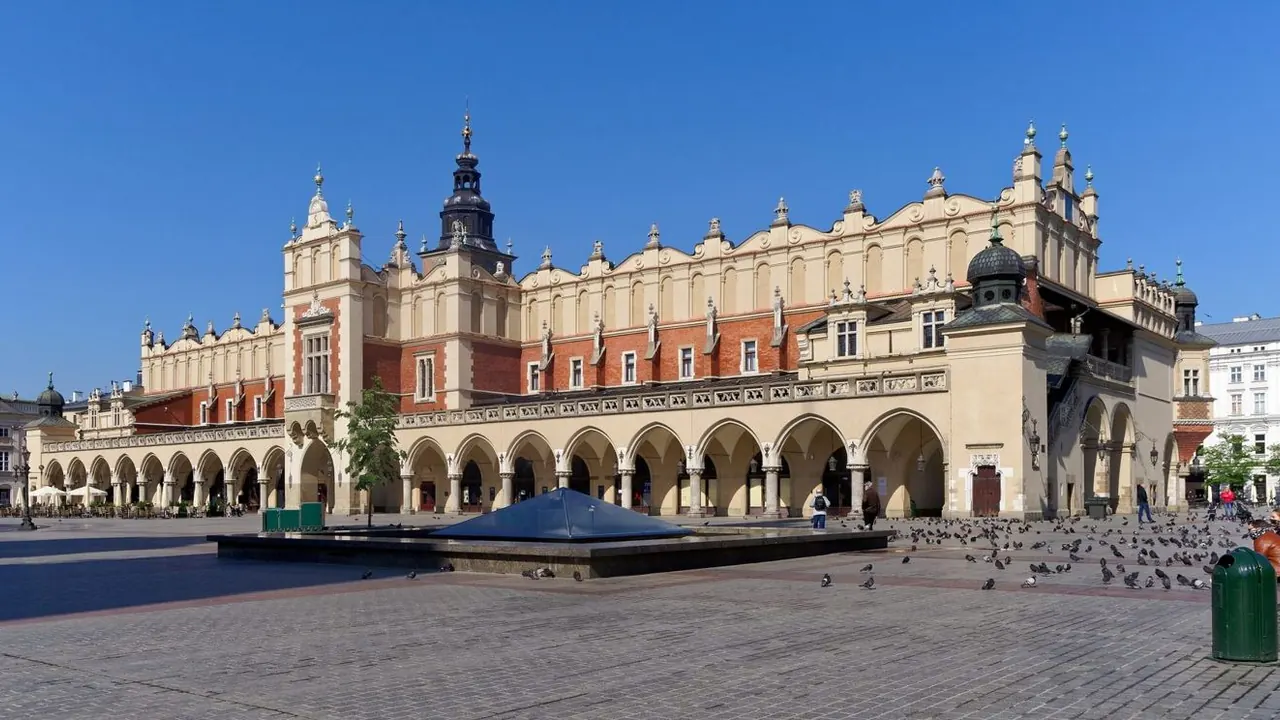
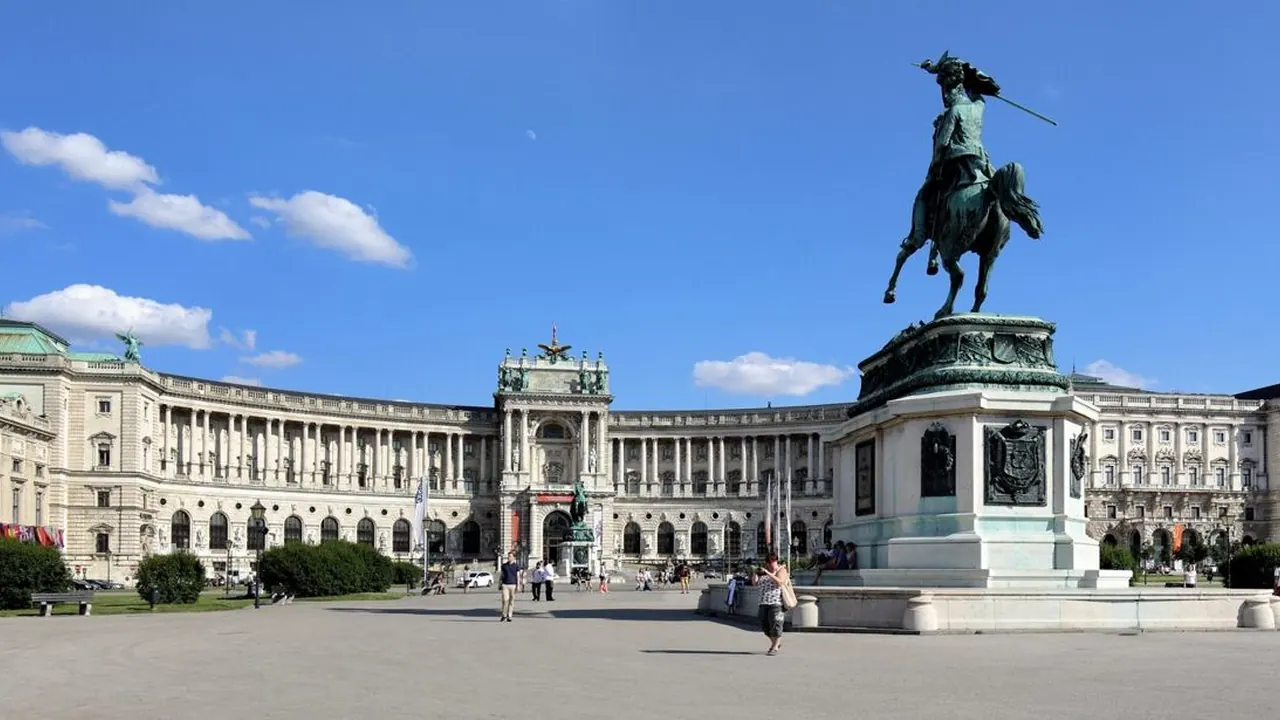
Photos: Krakow by Jakub Hałun, CC BY-SA 4.0, cropped; Vienna by C.Stadler/Bwag, CC BY-SA 3.0 AT, cropped.
Krakow or Vienna?
Our verdict in twelve categories, each scored against the same fixed benchmark cities, and the climate month by month, so you can choose for your trip.
Choose Krakow for
- prices
- nightlife
- day trips
Krakow suits travellers who want a lot of history in a few walkable days without spending much. Wawel, the Main Square and Kazimierz sit close together, the cellar bars keep evenings going late, and Wieliczka and Auschwitz are easy day trips. It is a natural choice for friends on a long weekend or anyone watching costs.
Choose Vienna for
- live music and the arts
- wellness
- families
If you're after music, art and comfort, Vienna is the stronger choice. Its opera and concert halls, imperial museums and coffee houses reward a longer stay, its transport makes every corner easy to reach, and families will find more to do. Expect to pay noticeably more for all of it.
Scoreboard
Twelve categories on one fixed scale from 0 to 100. The shaded stretch is the gap between the two.
Your match
Pick a travel style or drag the sliders, and both match scores follow your weighting.
Wins on prices and nightlife with your weighting.
Wins on live music and the arts and wellness with your weighting.
What matters to you?
Category by category
What the scores mean for a trip.
Beaches & swimming
Krakow has almost no swimming. Its one setting is the flooded Zakrzowek quarry, with turquoise water and fenced bathing areas in summer. The Vistula is for sitting beside, so otherwise it is pools and the indoor water park.
Neither city is a beach destination, but Vienna does have a proper swimming summer. The Danube Island has about 20km of grassy and gravel banks, and the warmer Alte Donau has old lidos. Locals reach both by U-Bahn after work, and the shallow Neusiedler See is about an hour away.
Food & drink
Krakow eats generously and cheaply, built on Polish home cooking: pierogi with every filling, zurek served in a loaf of bread, canteen lunches in the old milk bars and late-night zapiekanki from the round market hall on Plac Nowy. Flavoured vodka and craft beer go well with all of it, but the cooking is filling rather than refined, and there are few fine-dining restaurants.
Vienna has more to offer at the table, with a cuisine of its own shaped by the empire. Schnitzel and Tafelspitz are served in wood-panelled Beisl taverns, and a pastry tradition of strudel and Sachertorte makes a coffee-house visit part of every day. The city grows its own wine, poured at the Heuriger of Grinzing and Nussdorf, and its fine dining is solid. Its weak spot is international and street food, where the choice is thinner than in other capitals of its size.
Culture & sights
Krakow came through the Second World War largely intact and has one of the best-preserved medieval centres in Central Europe. The vast Main Market Square, the Veit Stoss altarpiece in St Mary's, Wawel's royal castle and coronation cathedral and the synagogues of Kazimierz all sit close together. Leonardo's Lady with an Ermine is its most famous painting, and two or three days cover the main sights well.
Vienna works on an imperial scale and needs longer. It has the Hofburg and Schönbrunn palaces, the Ringstrasse, and major museums such as the Kunsthistorisches with its Bruegels and the Belvedere with Klimt. The Jugendstil and Secession buildings add a second great period, and together they easily fill a week.
Nightlife
Krakow is the better city for going out. Its many students keep the brick-vaulted cellar bars of the Old Town busy past midnight, and the bars and courtyards around Plac Nowy in Kazimierz have real character. Drinks are cheap enough that bar-hopping is the usual plan. Stag groups fill parts of the Old Town at weekends.
Vienna's evenings are slower. People drink wine at a Heuriger, sit in wood-panelled bars, try the bars under the Gürtel arches or use the summer deckchair bars on the Danube Canal. The club scene is small. Its one distinctive draw is the winter ball season, when visitors can buy tickets to formal balls in palaces.
Nature & outdoors
The two are evenly matched, but the countryside sits in different places. In Vienna it starts inside the city limits: trails climb through vineyards to the Kahlenberg, and the floodplain forest of the Donau-Auen can be explored by boat. Krakow's green space is gentler: the Planty, the Blonia meadow, the Kosciuszko Mound, and the limestone valley of Ojcow half an hour north.
For mountains, Krakow has the Tatras, with real alpine hiking, and rafting through the Dunajec gorge, each about two hours away. Vienna's answer is the Rax and Schneeberg, high limestone plateaus at the eastern edge of the Alps, one of them reached by rack railway.
Day trips
Both cities have excellent day trips, but of very different kinds. Krakow's are serious ones: the salt chambers and underground church of Wieliczka, the Auschwitz-Birkenau memorial that needs a full day, and pilgrimage sites such as Kalwaria Zebrzydowska, Wadowice and Jasna Gora.
Vienna's are lighter and more varied. Bratislava is reached by train or Danube boat, and the Wachau has vineyards, apricot orchards and the abbey at Melk. There is also the spa town of Baden, Haydn's palace at Eisenstadt, and Brno across the Czech border.
Good for families
Krakow works well with children for a few days. There are the car-free square with its carriages and street performers, the fire-breathing dragon below Wawel, a zoo and a big water park, with Energylandia an hour's drive away. Cobbles are hard on pushchairs, though, and the wartime sights are not for younger children.
Vienna offers families more and makes it easier. Schönbrunn Zoo, the Prater's Ferris wheel and rides, a shark aquarium inside a flak tower, and dinosaurs at the Natural History Museum can fill a week. Playgrounds are never far away.
Getting around
Krakow's Old Town, Wawel, Kazimierz and Podgorze are close enough that most visitors rarely need more than their feet and the odd tram. Without a metro, though, trams can crawl in traffic, and the cobbles slow anyone pulling luggage.
Vienna is easier to get around. Five U-Bahn lines, trams and buses all run on one ticket, and the U-Bahn runs through the night at weekends. Public transport reaches Schönbrunn, the Danube Island and even the vineyard villages, so a car is never needed.
Shopping & style
Krakow's shopping is mostly good souvenirs: amber, lace and carved boxes in the medieval Cloth Hall, blue-patterned Boleslawiec pottery, and a few vintage and antique shops in Kazimierz. Beyond the high-street chains and the station mall there is little serious fashion.
Vienna does better for both fashion and crafts. Luxury houses line the Kohlmarkt and Graben, Mariahilfer Strasse covers everyday fashion, and Neubau has independent designers. Augarten porcelain, crystal and Loden coats make gifts made to a long tradition.
Affordability
Krakow makes a budget go much further. Cheap beer, milk-bar lunches and trams keep daily spending low, and rooms are reasonable for most of the year. Prices rise mainly around the Main Square and on summer weekends.
Vienna costs Western European money. Hotels are dearest in the ball season and the Christmas market weeks, and the big palaces charge full admission. Good-value transport passes and free palace gardens help.
Live music & performing arts
This is where the two differ most. Krakow has a respectable music life: the Philharmonic and the opera, nightly Chopin recitals in churches and palaces, jazz in brick cellars and klezmer in Kazimierz. Its strong theatre, though, is almost all in Polish.
Many visitors travel to Vienna for the music alone. The State Opera performs on most nights, with standing places anyone can afford, and the Vienna Philharmonic plays in the Golden Hall of the Musikverein. The Volksoper stages operetta, and the Vienna Boys' Choir sings Sunday Mass, in the city where Mozart, Beethoven and Schubert worked.
Wellness & relaxation
Krakow has little in the way of bathing: hotel spas, saunas at the water park and, more unusually, salt-air therapy deep in the Wieliczka mine. The hot springs of Podhale are two hours south. In town, rest mostly means the Planty and the riverbanks below Wawel.
In Vienna, slowing down is part of daily life, from coffee-house afternoons to evenings at the vineyard taverns. Thermal water is close at hand too: the warm-spring pools of Therme Wien, the Art Deco Amalienbad, and the sulphur baths of Baden half an hour away.
When should you go?
Pick your month. The climate figures are measured averages, not a forecast.
Krakow in July
Vienna in July
Daytime high, °C
Rainfall in the month, mm
Temperature and rainfall are climate normals, averaged over the years shown. Krakow: 1991-2020 normals, Krakow (10.1 km from centre). Vienna: 1991-2020 normals, Wien / Hohe Warte (4.7 km from centre).
The two cities share a Central European climate of cold winters and warm summers, and their seasons line up closely. Vienna runs a couple of degrees warmer all year, reaching about 27°C in July and August against Krakow's 25°C. That is warm enough for outdoor swimming but rarely too hot for a day on foot. Vienna's riverside lidos make real use of those weeks.
Summer is also the wettest season in both cities, and Krakow's July brings around 100mm, usually as heavy showers. Late spring and September are the most comfortable for long walks, with highs near 20°C. From December to February daytime temperatures sit just above freezing, and in December Vienna gets barely two hours of sun a day. Winter trips to either city are spent mostly indoors.
Which traveller are you?
On a trip on a tight budget, Krakow is the safer bet. Food, drink, trams and museum entry all cost little, and the Wieliczka and Auschwitz day trips are simple by public transport. Vienna's hotels and palace tickets quickly use up a modest budget.
For a culture and arts trip, choose Vienna. Its imperial palaces and great galleries would justify the visit on their own. The opera, concert halls and German-language stages add evenings that Krakow, where most theatre is in Polish, cannot match.
On a family trip with children, Vienna has more to offer. It has enough to fill a longer stay, from the ZOOM children's museum to summer swimming on the Danube Island, and its trams cope with prams far better than Krakow's cobbles.
Before you go
| Measure | Krakow | Vienna |
|---|---|---|
| Official language | Polish | German, Austrian Sign Language |
| Currency | Zloty (PLN) | Euro (EUR) |
| Sockets | CE50 Hz | CF230 V, 50 Hz |
| Driving side | Right | Right |
| Time zone | UTC+1, UTC+2 in summer | UTC+1, UTC+2 in summer |
| Emergency number | 112 | 112 |
| Elevation | 219 m | 151 m |
| Main airport | Kraków John Paul II International Airport (KRK)11 km from centre131 non-stop destinations | Vienna International Airport (VIE)18 km from centre201 non-stop destinations |
| Public holidays this year | 14 days | 16 days |
By the numbers
| Measure | Krakow | Vienna |
|---|---|---|
| City population | 804,237 | 2,028,289 |
| People per km² | 2,459 | 4,890 |
| Museums within 10 km | 113 | 152 |
| UNESCO World Heritage sites within 50 km | 4 | 3 |
Where else could you go?
Every comparison below shares a destination with this one, so you can follow Krakow or Vienna somewhere new.