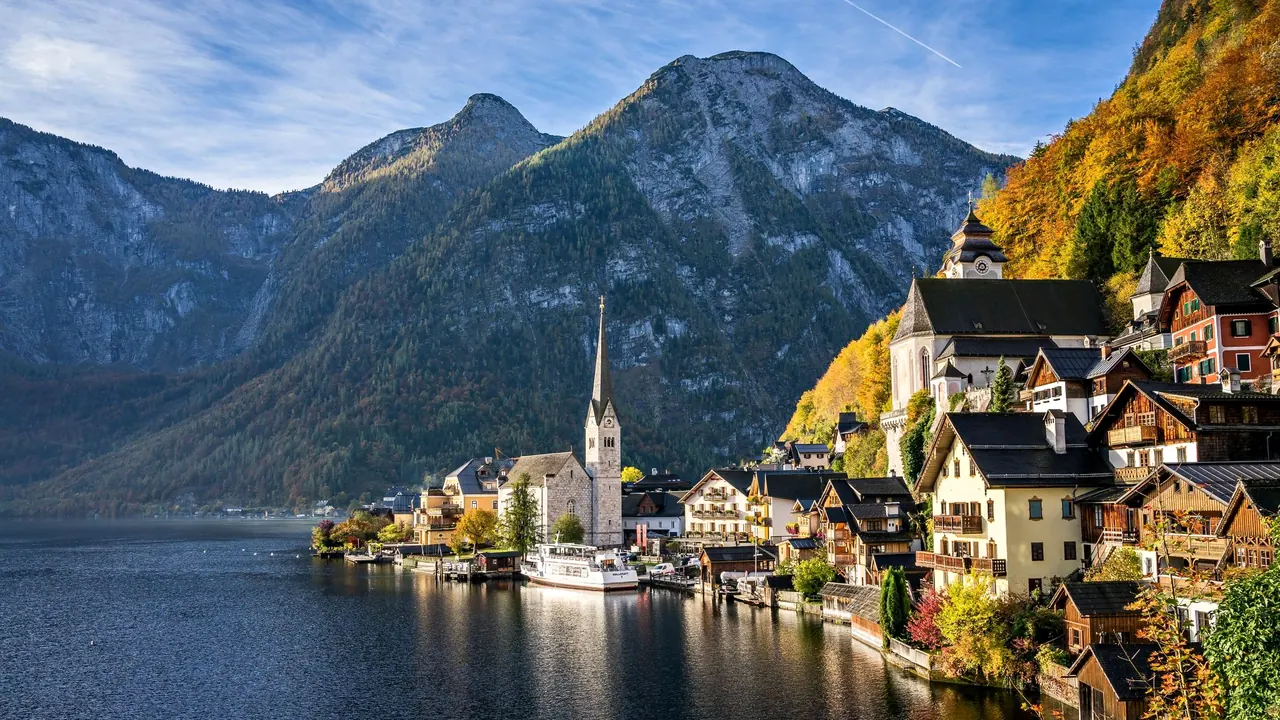
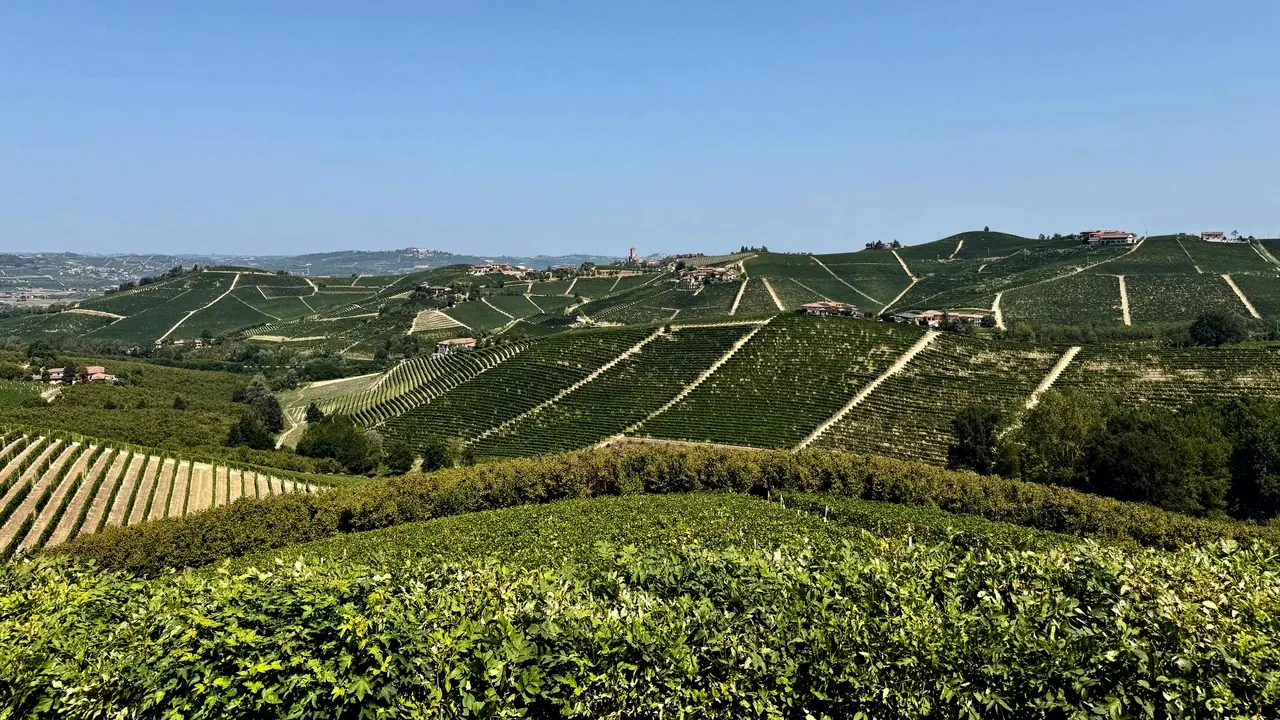
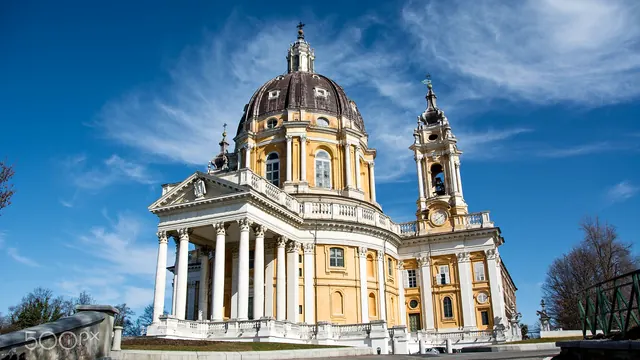
Photos: Austrian Alps by Leonhard Niederwimmer, Pexels License; Piedmont by Martina Amaro, Pexels License.
Austrian Alps or Piedmont?
Our verdict in twelve categories, each scored against the same fixed benchmark cities, and the climate month by month, so you can choose for your trip.
Choose Austrian Alps for
- families
- wellness
- beaches
Pick the Austrian Alps for a trip built around the mountains themselves: skiing from December to April, hut-to-hut walking in summer, a lakeside lido in Carinthia and a long sauna at the end of the day. It's the easier choice with children and the stronger one for spa towns and the Salzburg Festival. Its main valleys are simple to reach by train, though the whole trip costs more.
Choose Piedmont for
- food and drink
- prices
- culture and sights
Piedmont suits travellers who plan their days around the table and a great city. Barolo country and the white truffle autumn around Alba, Turin's Egyptian Museum and royal residences, and outings to Milan or the Ligurian coast make a richer trip for food and culture, at kinder prices. There are high mountains here too, but they sit apart from the wine hills, and a car matters more.
Scoreboard
Twelve categories on one fixed scale from 0 to 100. The shaded stretch is the gap between the two.
Your match
Pick a travel style or drag the sliders, and both match scores follow your weighting.
Wins on families and wellness with your weighting.
Wins on food and drink and prices with your weighting.
What matters to you?
Category by category
What the scores mean for a trip.
Beaches & swimming
Neither region has a coast, so this is lake against lake. The Austrian Alps have the better bathing. Carinthian lakes such as the Wörthersee and Millstätter See get warmer than Maggiore, and towns like Velden and Pörtschach build their summers around lidos with lawns, piers and diving boards, so a whole week of swimming works.
In Piedmont you swim from small pebble beaches and bathing platforms on Lake Maggiore's western shore, at Stresa or Baveno, or from a few grassy spots on Lake Orta. It's a pleasant afternoon during a lake stay rather than the reason for one.
Food & drink
This is Piedmont's clearest advantage. The Langhe around Alba offers Barolo and Barbaresco at the cellar door, white truffles in autumn and a cuisine with dishes of its own, from vitello tonnato to agnolotti del plin. Turin adds historic coffee houses, bicerin and an aperitivo it takes seriously.
The Austrian Alps feed you well after a day outdoors, with Kaiserschmarrn or Käsespätzle on a hut terrace and fine dining in the Arlberg and Kitzbühel. But menus repeat from village to village. In Austria you come for the setting of the meal; in Piedmont you come for the meal itself.
Culture & sights
Piedmont pulls ahead because so much of it sits in one city. From a single hotel in Turin you can spend several days on the Egyptian Museum, the Royal Palace and Palazzo Madama, the Cinema Museum in the Mole and the Savoy residences at Venaria Reale and Stupinigi. The Sacra di San Michele and the Sacri Monti add hilltop pilgrimage sites outside the city.
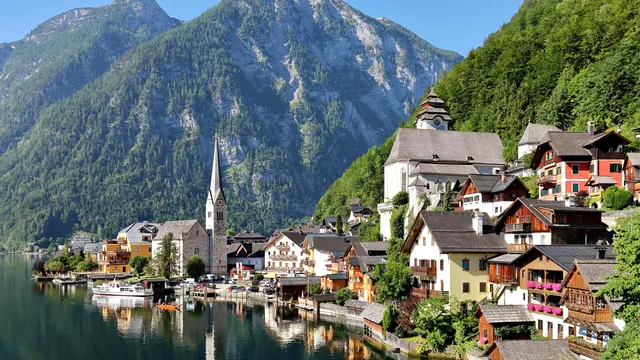
The Austrian Alps offer baroque Salzburg under its fortress, Innsbruck's Habsburg monuments and the salt-mining landscape of Hallstatt. All are strong, but they lie in separate towns, so seeing them means moving between bases.
Nightlife
The Austrian Alps come out ahead, but mainly in winter. Après-ski in Ischgl, St Anton or Saalbach is loud and late, starting in slopeside huts and moving on to village bars and clubs. In summer the resorts go quiet, and Innsbruck's student bars carry the evenings.
Piedmont's nights belong to Turin: aperitivo first, then the pavement bars of San Salvario and Vanchiglia, and the banks of the Po in summer. It's relaxed and steady all year, but no match for an Austrian ski village in high season.
Nature & outdoors
Both are serious mountain country, but the Austrian Alps go further. The Hohe Tauern around the Grossglockner, Tyrol's glacier valleys and some of Europe's largest ski areas can be reached directly from almost any valley. Innsbruck has high peaks right above the town, and staffed huts link the summer trails.
Piedmont has Monte Rosa above Alagna, the ibex of Gran Paradiso and the wild Val Grande. It also has road cycling among the vineyards of the Langhe, which Austria lacks. The catch is that its mountains need a separate base from Turin and the wine hills.
Day trips
Piedmont reaches a little further. From Turin, Milan is about an hour away by fast train, Genoa and the Ligurian coast are within two, and Aosta is up the valley. The Barolo villages make a full day of cellars, and a lake base adds boats to the Swiss shore.
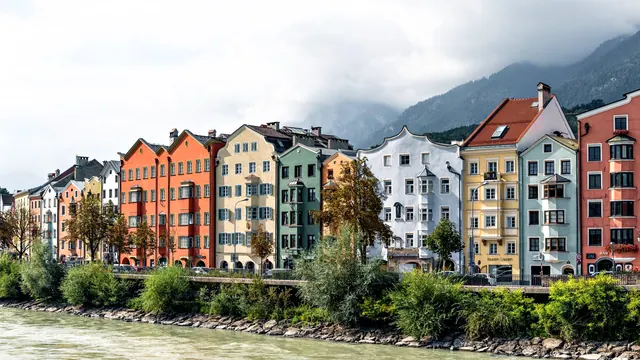
The Austrian Alps hold their own. From Salzburg you can reach the Salzkammergut, Berchtesgaden and the Königssee. From Innsbruck there are Hall in Tirol and Rattenberg, with Bolzano and Bavaria's royal castles over the passes. What Piedmont adds is the sea, which Austria cannot offer.
Good for families
The Austrian Alps are the stronger family choice by some way. Resorts such as Serfaus-Fiss-Ladis and the Zillertal run nursery slopes, ski schools and childcare as standard. Hotels designed for children are an Austrian speciality, and in summer the lifts lead to adventure trails and toboggan runs.
Piedmont works if you mix Turin's mummies and Cinema Museum with island boats and peacock gardens on Lake Maggiore. The wine hills offer children little, though, and very little in the region is built around families in the same way.
Getting around
Without a car, the Austrian Alps are the easier region to get around. Trains run the length of the Inn valley through Innsbruck, from Salzburg into the Gastein valley and over the Arlberg, and Postbus lines carry on up the side valleys, often included on a resort's guest card. Moving from one valley to the next is slower, and a car still helps if you want to link lakes and passes in one trip.
Piedmont relies much more on driving. Turin is simple, with a flat grid, long arcades, trams and a metro, and regional trains reach Alba, Asti and Stresa on Lake Maggiore. Beyond those lines buses are sparse, so the hilltop villages of the Langhe and the ski valleys realistically mean hiring a car. The roads are good, but without one the trip shrinks to the city and the lake.
Shopping & style
The two are broadly level, but you fill a different basket. In the Austrian Alps it's dirndls, loden and felt hats on Salzburg's Getreidegasse and in Innsbruck, Tyrolean carvings, crystal from Wattens and Christmas market crafts, plus a few luxury boutiques in Kitzbühel and Lech. Piedmont offers city streets and a well-stocked pantry: Via Roma, Porta Palazzo and the Balon flea market in Turin, Biella cashmere, and gianduiotti, vermouth and Barolo to carry home.
Affordability
Piedmont is easier on the wallet. Turin's hotels, generous aperitivo and the countryside trattorias keep an ordinary trip moderate. Prices climb sharply only in the truffle autumn, in the Maggiore resorts in summer and at the ski stations.
The Austrian Alps are expensive in winter, when lift passes, ski hire, lessons and hotels in the big-name resorts quickly add up, and Salzburg is dear at festival time. Quieter valleys, farm stays and half-board help, but the starting point stays higher.
Live music & performing arts
The Austrian Alps lead because of their festival summer. The Salzburg Festival, with Jedermann in front of the cathedral, opera on Bregenz's floating stage and the Schubertiade in the Vorarlberg villages draw audiences from all over the world. Outside those weeks there is far less: Mozart Week and the Mozarteum in Salzburg, Innsbruck's theatre and brass bands in the valleys.
Piedmont has the steadier calendar in the city, with opera and ballet at Turin's Teatro Regio, the RAI orchestra and drama at the Teatro Carignano. Beyond Turin, though, it is mostly the Stresa festival and summer concerts in the castles of the Langhe.
Wellness & relaxation
The Austrian Alps are the better region for a restful trip, though their spa towns are spread across it rather than grouped together. Bad Gastein, with its radon springs and healing gallery inside the mountain, sits beside the large thermal bath at Bad Hofgastein, while Bad Ischl, the old Habsburg summer resort, is in the Salzkammergut, the Aqua Dome's outdoor pools face the Ötztal peaks in Tyrol and Bad Kleinkirchheim lies in Carinthia. So you choose one thermal town as a base rather than touring them, and wherever you stay, a hotel with a proper sauna world and quiet rooms is rarely far away.
Piedmont has only a handful of spas, led by the hot Bollente spring in the middle of Acqui Terme and the mountain baths at Valdieri and Vinadio near Cuneo. Rest there comes more from the slow pace than from a spa culture, with long lunches at a wine resort in the Langhe or a few quiet days on Lake Orta.
When should you go?
Pick your month. The climate figures are measured averages, not a forecast.
Austrian Alps in July
Piedmont in July
Daytime high, °C
Rainfall in the month, mm
Where the figures come from
Piedmont has no weather station within reach, so its figures come from a gridded climate model rather than a measured record, and read a broad area rather than one spot.
Temperature and rainfall are climate normals, averaged over the years shown. Austrian Alps: 1991-2020 normals, Innsbruck-Flughafen (4.1 km from centre). Piedmont: 1991-2020 normals, TerraClimate 4 km grid at the town, no weather station within 90 km.
The Austrian Alps have two distinct seasons. Skiing runs from December to April, when midwinter days stay only a few degrees above freezing. The summer for walking and lake bathing runs from June to early September and peaks at about 26°C in July, the sunniest month. Summer is also the wettest time, with August reaching about 144mm, so September, drier and still mild, is often the most comfortable month on the trails.
Piedmont is warmer all year round. Highs reach about 29°C in July and August. That is warm for walking around Turin but ideal on the lakes, and these months are fairly dry. Spring and early autumn are the best times for the wine hills and the city. November is the wettest month, at about 89mm. The Ligurian sea, within day-trip reach, is around 25°C in August.
Which traveller are you?
On a family trip with young children, the Austrian Alps are the easier choice. Ski schools with nursery slopes, family hotels with pools and kids' clubs, summer toboggan runs and shallow lake lidos are standard, and short distances keep the days simple.
For a food and nightlife trip, Piedmont wins at the table, with Barolo cellars, white truffles in autumn and Turin's aperitivo and arcaded coffee houses. Its nights are relaxed rather than wild. For loud, late partying, an Austrian ski village in winter does more.
On a tight budget, Piedmont goes further. Turin's hotels and set lunches, the countryside trattorias and farm stays in the hills keep costs moderate. The Austrian Alps charge heavily for lift passes, ski hire and resort rooms, above all in winter.
Before you go
| Measure | Austrian Alps | Piedmont |
|---|---|---|
| Official language | German, Austrian Sign Language | Italian |
| Currency | Euro (EUR) | Euro (EUR) |
| Sockets | CF230 V, 50 Hz | CFL230 V, 50 Hz |
| Driving side | Right | Right |
| Time zone | UTC+1, UTC+2 in summer | UTC+1, UTC+2 in summer |
| Emergency number | 112 | 112 |
| Main airport | Innsbruck Airport (INN)40 non-stop destinations | Turin Airport (TRN)65 non-stop destinations |
| Public holidays this year | 16 days | 13 days |
By the numbers
| Measure | Austrian Alps | Piedmont |
|---|---|---|
| Population | - | 4,341,375 |
| Swim season, months above 21 °C | - | 4 months |
Where else could you go?
Every comparison below shares a destination with this one, so you can follow Austrian Alps or Piedmont somewhere new.
- Bavariavs Austrian Alps
- Dolomitesvs Austrian Alps
- Lake Maggiorevs Piedmont
- Cinque Terrevs Piedmont
- French Rivieravs Piedmont
- French Alpsvs Piedmont