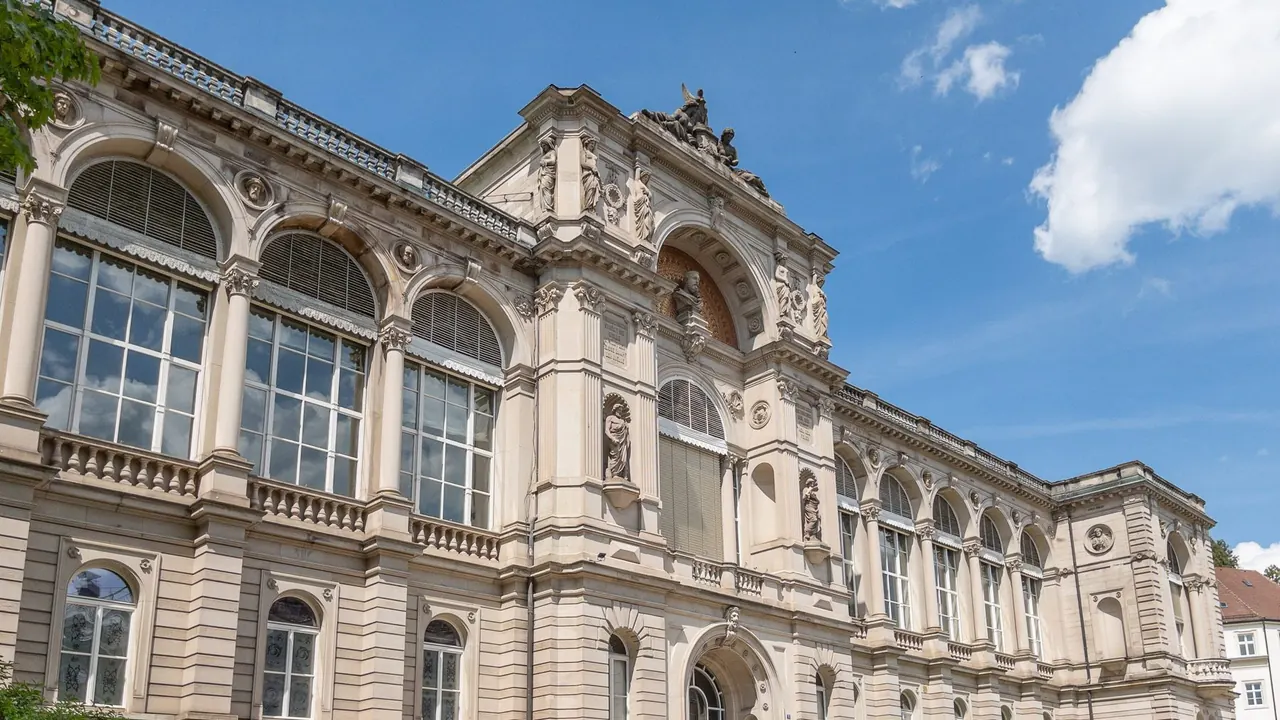
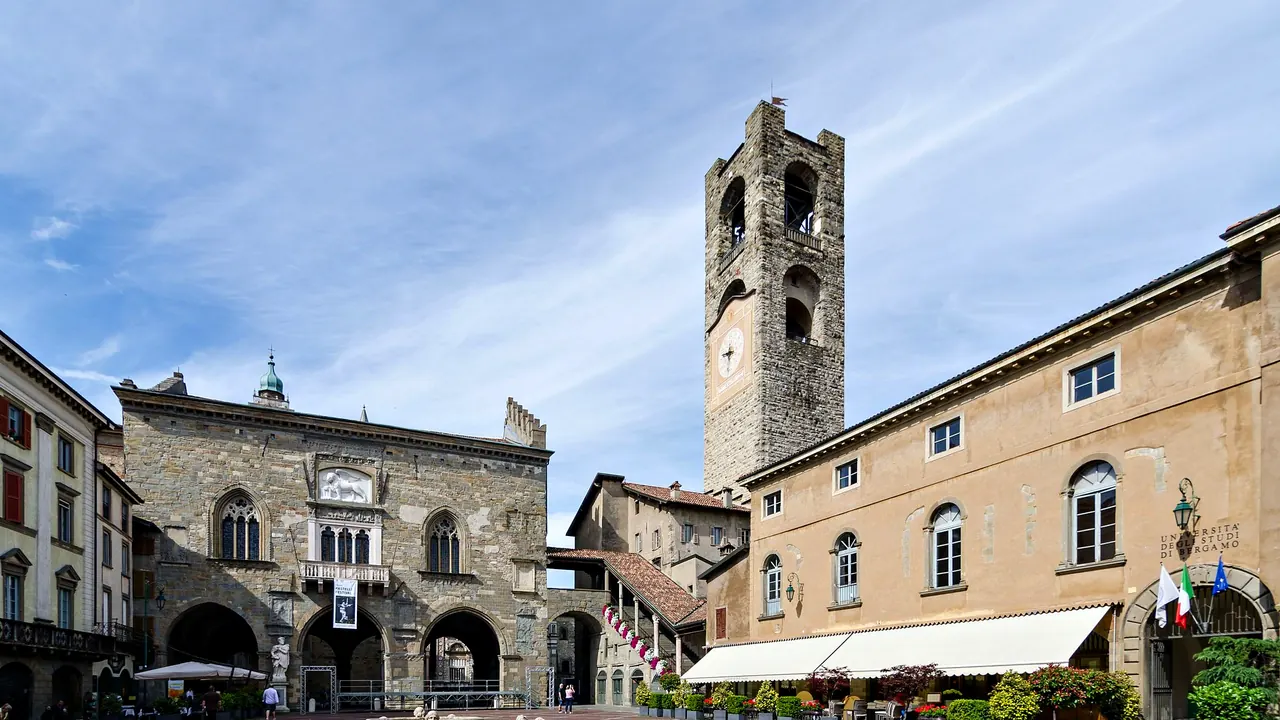
Photos: Baden-Baden by Kent Wang, CC BY-SA 2.0, cropped; Bergamo by Steffen Schmitz, CC BY-SA 4.0, cropped.
Baden-Baden or Bergamo?
Our verdict in twelve categories, each scored against the same fixed benchmark cities, and the climate month by month, so you can choose for your trip.
Choose Baden-Baden for
- wellness
- live music and the arts
Baden-Baden is the pick for a slow, restorative stay built around the water. The Friedrichsbad and Caracalla baths set the rhythm of the day, and the Lichtentaler Allee, the Festspielhaus concerts and the northern Black Forest on the doorstep fill the hours in between. It suits travellers who want to rest properly, enjoy classical music and walk in the woods, and who don't mind paying resort prices or having quiet evenings.
Choose Bergamo for
- beaches
- prices
- nightlife
Bergamo gives more to do for less money. The walled Città Alta and the Accademia Carrara make a richer sightseeing core, the cooking is heartier and more varied, and evenings at least have an aperitivo culture. Milan, Lake Como, Lake Iseo and the Orobie valleys are all close, so it works best for an active traveller who wants a handsome, fairly priced base for touring Lombardy.
Scoreboard
Twelve categories on one fixed scale from 0 to 100. The shaded stretch is the gap between the two.
Your match
Pick a travel style or drag the sliders, and both match scores follow your weighting.
Wins on wellness and live music and the arts with your weighting.
Wins on beaches and prices with your weighting.
What matters to you?
Category by category
What the scores mean for a trip.
Beaches & swimming
Neither town is a place for the beach, but Bergamo at least has good summer swimming within reach. Lake Iseo's lidos around Sarnico and Lovere and the Lecco arm of Lake Como make a proper hot-weather day out, although the shores are mostly pebble, grass or concrete rather than sand.
Baden-Baden only has the gravel pits of the Rhine plain and outdoor pools. Its water is meant for warm thermal bathing, not for swimming outdoors.
Food & drink
Bergamo eats better and with more variety. Its Lombard mountain cooking runs from casoncelli in butter and sage to polenta with game, and the valley cheeses such as Taleggio and Strachitunt are a reason to linger at the counters in the upper town. Two old towns of trattorias and aperitivo bars give it more choice.
Baden-Baden's strength is wine. The Riesling and Pinot Noir taverns of the Rebland villages make a lovely evening, and Alsace's influence shows in the Flammkuchen. In the town itself, though, eating mostly means hotel dining rooms and cake in cafés.
Culture & sights
Bergamo has the greater sights. The Città Alta is an almost complete walled hilltop town inside UNESCO-listed Venetian ramparts. Piazza Vecchia, Santa Maria Maggiore and the marble front of the Cappella Colleoni sit together at its centre, and below the hill the Accademia Carrara holds Raphael, Bellini and Mantegna.
Baden-Baden's appeal is the whole ensemble rather than any single masterpiece. Its Belle Époque resort fabric survives almost intact, from the Kurhaus casino and the Trinkhalle to the hillside villas, and the Museum Frieder Burda adds strong modern art. Both towns fill a day or two.
Nightlife
Evenings in Baden-Baden are dressed-up and early, while Bergamo's are longer, more casual and draw a younger crowd. In Baden-Baden the gilded rooms of the Kurhaus casino, with their dress code, are the one real night out. After that comes a hotel bar or a glass of Rebland wine, and the town is calm well before late evening.
Bergamo gives you more of an evening. A long aperitivo around Via XX Settembre or Borgo Santa Caterina leads on to wine bars kept busy by university students, and on summer nights people drink in the squares and along the walls of the Città Alta. Clubs are scarce in both, and Bergamo's few are out on the edge of the city.
Nature & outdoors
Both have fine country right on the doorstep, but it is a different kind of landscape. Baden-Baden opens straight into the fir forests of the northern Black Forest. The Merkur funicular, the Battert cliffs and the Black Forest High Road up to the Hornisgrinde moors give rolling wooded uplands that are ideal for steady hiking and autumn colour.
Bergamo has real mountains and lakes. Val Brembana and Val Seriana climb into the Orobie Alps with their rifugi and high lakes, while Iseo and Como add sailing and lakeside cycling.
Day trips
Both are excellent bases, and Bergamo has the edge. Milan's Duomo and Last Supper are under an hour away by train, Lake Como and Lake Iseo with Monte Isola are closer still, and Verona, Cremona and Brescia are all reachable in a day.
Baden-Baden counters with two countries. Strasbourg and the Alsace wine villages lie on one side, Heidelberg and Freiburg on the other, though the French and Black Forest outings are much easier by car.
Good for families
Both are calm and safe, and in both the funiculars delight children. The main difference is mood. Bergamo's walls, gelato and parks feel more relaxed for families, and Leolandia, a park built for younger children, is only twenty minutes away. The cobbled upper town is a struggle with a buggy, though.
Baden-Baden is designed for adults taking the waters, and the Friedrichsbad does not admit young children. Families tend to use it as a quiet base for days at the much bigger Europa-Park, an hour south.
Getting around
Bergamo is slightly easier to get around without a car. Funiculars link the lower town, the Città Alta and San Vigilio, a light-rail line runs up Val Seriana, and Milan, Brescia and Lecco are each a direct train ride.
Baden-Baden's compact centre is pleasant on foot, with some steep streets. However, its station sits a few kilometres out in Oos, and the wine villages and Alsace really need a car.
Shopping & style
Neither town is a shopping destination, and each sends serious shoppers elsewhere: Bergamo to Milan, Baden-Baden to Strasbourg. Baden-Baden's Sophienstraße and Lange Straße are the more polished of the two, with jewellers and watchmakers that cater to spa guests.
Bergamo is better for food to take home. The narrow main lane of the Città Alta is lined with cheese shops, salumi and Valcalepio wine, while the lower town's arcades offer mid-range Italian fashion.
Affordability
Bergamo is noticeably easier on the wallet. Lower-town hotels are fairly priced for a city with so much to see, and its trattorias, buses and funicular are all inexpensive. The Città Alta is where prices rise.
Baden-Baden was built for the wealthy and still feels like it. Grand hotels set the price level and the baths charge for every visit, so only the guesthouses and wine taverns keep a stay moderate.
Live music & performing arts
For a small town, Baden-Baden punches well above its weight. The Festspielhaus is one of Germany's largest opera and concert houses and brings leading international orchestras, while the Kurhaus philharmonic and the jewel-box theatre fill the rest of the year. The town's connection with Brahms and Clara Schumann is part of its identity.
Bergamo's stage life centres on Donizetti, with the Teatro Donizetti and its autumn festival, and the long-running Bergamo Jazz in spring. Outside those, its programme is a provincial one, although La Scala is an easy evening trip.
Wellness & relaxation
Here the two are furthest apart. Baden-Baden exists to take the waters. It offers the silent sequence of hot rooms and scrubs in the domed Friedrichsbad, Caracalla's thermal pools and saunas, and a whole town set to an unhurried pace.
Bergamo has no bathing culture in the city. You have to go to San Pellegrino Terme, forty minutes up Val Brembana, or the old sulphur springs at Trescore Balneario. Its calm comes instead from quiet mornings on the Venetian walls.
When should you go?
Pick your month. The climate figures are measured averages, not a forecast.
Baden-Baden in July
Bergamo in July
Daytime high, °C
Rainfall in the month, mm
Where the figures come from
Bergamo has no rain gauge within 25 km of the centre, so its rainfall comes from a gridded climate dataset read at the city rather than from a gauge further away.
Bergamo's sunshine is measured 64 km from the centre, at Lugano.
Temperature and rainfall are climate normals, averaged over the years shown. Baden-Baden: 1991-2020 normals, Baden-Baden-Geroldsau (3.9 km from centre). Bergamo: 1991-2020 normals, Bergamo / Orio Al Serio (3.9 km from centre).
Both towns have four distinct seasons, but Bergamo is the warmer and brighter of the two for most of the year. Midsummer highs reach about 29°C in Bergamo against 25°C in Baden-Baden. That makes July and August in the Città Alta warm work on the steep lanes but good for a day at the lakes, while Baden-Baden stays comfortable for forest walks. Late spring and September are the best months for walking the streets in either town.
The two differ most in winter. Baden-Baden is grey from November to January, with barely 41 hours of sunshine in December and steady rain in every month of the year. That suits a spa stay well enough. Bergamo's winters are drier and much sunnier, so a January city break there feels brighter. In return, Bergamo's wettest stretch is autumn, with around 129mm in October.
Which traveller are you?
On a relaxing and wellness trip, Baden-Baden is the clear choice. A whole town is built around its Roman hot springs, the silent ritual of the Friedrichsbad and Caracalla's pools and saunas. Bergamo relies on spa towns up the valleys and on hotel spas.
For a trip on a tight budget, Bergamo goes much further. Rooms in the lower town are fairly priced, and trattorias, aperitivo bars and the funicular cost little. Baden-Baden is a resort for the wealthy, and paying for every visit to the baths soon adds up.
For a food and nightlife trip, Bergamo is the better bet. It has casoncelli, polenta and cheese counters selling Taleggio, and long aperitivo evenings around Borgo Santa Caterina that run until midnight. Baden-Baden's wine taverns are pleasant, but its nights end early and quietly.
Before you go
| Measure | Baden-Baden | Bergamo |
|---|---|---|
| Official language | German | Italian |
| Currency | Euro (EUR) | Euro (EUR) |
| Sockets | CF230 V, 50 Hz | CFL230 V, 50 Hz |
| Driving side | Right | Right |
| Time zone | UTC+1, UTC+2 in summer | UTC+1, UTC+2 in summer |
| Emergency number | 112 | 112 |
| Elevation | 181 m | 249 m |
| Main airport | Karlsruhe Baden-Baden Airport (FKB)12 km from centre43 non-stop destinations | Il Caravaggio International Airport (BGY)4 km from centre146 non-stop destinations |
| Public holidays this year | 12 days | 13 days |
By the numbers
| Measure | Baden-Baden | Bergamo |
|---|---|---|
| City population | 56,952 | 119,534 |
| People per km² | 406 | 2,973 |
| Museums within 10 km | 11 | 21 |
| UNESCO World Heritage sites within 50 km | 3 | 6 |
Where else could you go?
Every comparison below shares a destination with this one, so you can follow Baden-Baden or Bergamo somewhere new.
- Strasbourgvs Baden-Baden
- Milanvs Bergamo
- Comovs Bergamo
- Luganovs Bergamo
- Stuttgartvs Baden-Baden
- Heidelbergvs Baden-Baden