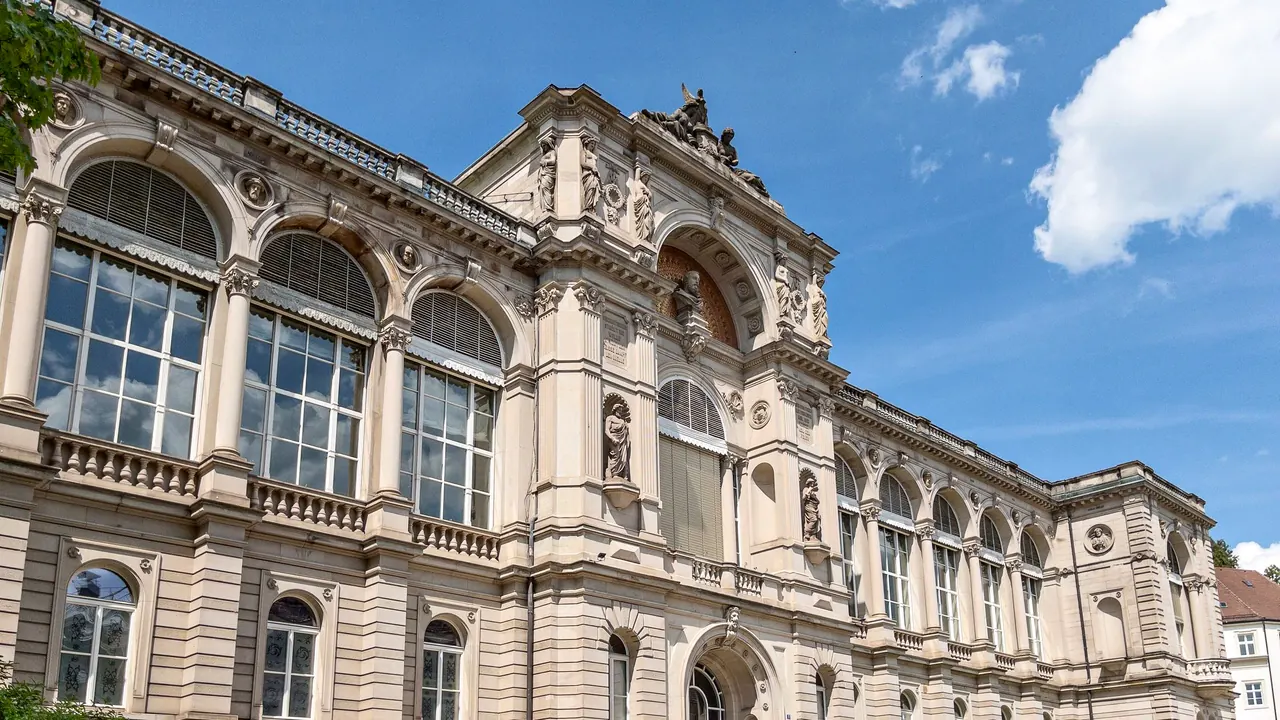
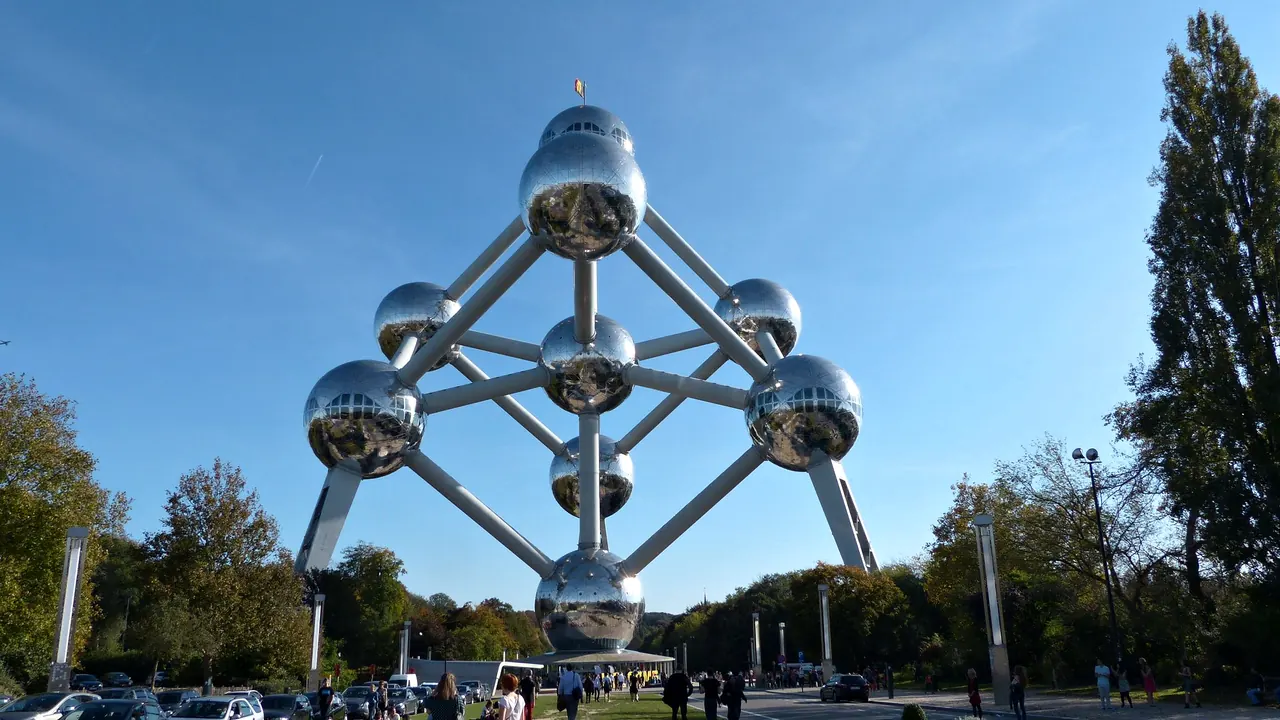
Photos: Baden-Baden by Kent Wang, CC BY-SA 2.0, cropped; Brussels by Ettanghe, CC BY-SA 4.0, cropped.
Baden-Baden or Brussels?
Our verdict in twelve categories, each scored against the same fixed benchmark cities, and the climate month by month, so you can choose for your trip.
Choose Baden-Baden for
- wellness
- nature and the outdoors
Baden-Baden is the choice for a trip built around rest. The thermal baths are the whole point of the place, from the silent ritual of the Friedrichsbad to the pools and saunas of Caracalla, and the Black Forest begins at the edge of town for walks between soaks. Add evenings of classical music at the Festspielhaus and wine in the Rebland villages and it suits couples and older travellers who want a slow, polished few days and don't mind paying for it.
Choose Brussels for
- nightlife
- food and drink
- shopping
Brussels gives more to do from morning to late at night. Its museums, its Art Nouveau houses and the Grand-Place give it far more culture, and its brown cafés, lambic beers and immigrant neighbourhoods give it much better food and drink. Evenings run on until late, and fast trains to Ghent, Bruges, Antwerp and Paris make it the better base for anyone who wants to cover ground. Choose it for an active city trip rather than a restful one.
Scoreboard
Twelve categories on one fixed scale from 0 to 100. The shaded stretch is the gap between the two.
Your match
Pick a travel style or drag the sliders, and both match scores follow your weighting.
Wins on wellness and nature and the outdoors with your weighting.
Wins on nightlife and food and drink with your weighting.
What matters to you?
Category by category
What the scores mean for a trip.
Beaches & swimming
Neither city is a beach destination. Brussels has a slight edge only because the wide sands of Ostend and Knokke are a little over an hour away by train, although the North Sea makes that a breezy day out rather than a swim.
Baden-Baden has no coast within reach, just gravel-pit lakes on the Rhine plain and outdoor pools for a hot afternoon. In both places the better way to get into water is indoors: thermal pools in Baden-Baden, Art Deco swimming halls in Brussels.
Food & drink
Brussels is the better city to eat in. Its Belgian classics, from carbonnade and waterzooi to shrimp croquettes, come with one of the world's great beer cultures and the chocolatiers of the Sablon. The cooking of Matonge, Saint-Josse and Schaerbeek adds a range that a small spa town cannot offer.
Baden-Baden's strength lies in its region rather than its own streets. Flammkuchen, venison and Black Forest gateau are on the menus, and the Riesling and Pinot Noir of Neuweier and Varnhalt are poured in the village taverns. The serious tables are a drive away in the northern Black Forest, and in town the choice is mostly hotel dining and cake.
Culture & sights
Brussels has much more to see: the Grand-Place, Bruegel and Rubens at the Royal Museums of Fine Arts, the Magritte museum, Horta's UNESCO-listed houses and the Cinquantenaire collections could fill several days. The catch is that the city around these sights is patchy, with office blocks breaking up the old fabric.
Baden-Baden is the opposite. It has fewer sights, but the Belle Époque town of the Kurhaus, the Trinkhalle and the hillside villas survives almost whole, which makes walking through it the main sight. The Museum Frieder Burda, the Brahms house and the Russian church round out a day or two.
Nightlife
After dark the two have little in common. Brussels has a proper night out, mostly in bars: Saint-Géry and the Bourse on warm evenings, Flagey and Châtelain for a local crowd, plus a well-known techno club in the Marolles and a queer scene on Rue du Marché au Charbon.
In Baden-Baden the evening means the gilded casino in the Kurhaus, a hotel bar or a glass of wine, with an older crowd and quiet streets well before midnight. Anyone wanting more takes the train to Karlsruhe or Strasbourg.
Nature & outdoors
Baden-Baden is much the stronger for the outdoors because the Black Forest starts at its edge. The funicular to the Merkur summit, climbing on the Battert cliffs and fir-forest trails lead up to the Mummelsee and the moorland of the Hornisgrinde, with mountain biking in summer and modest skiing in winter.
Brussels has the tall beech stands of the Sonian Forest and city parks such as the Bois de la Cambre, good for a walk or a ride. Beyond them the land is flat, and kayaking or proper hikes mean a trip to the Meuse valley around Dinant.
Day trips
Both are excellent bases, but Brussels has the edge for speed and density. Ghent is half an hour away, Antwerp forty minutes and Bruges an hour, all by frequent train with no car needed, and Paris is within an hour and a half on the high-speed line.
Baden-Baden's outings take you across a border and into the hills: Strasbourg and the Alsace wine route, Heidelberg, Freiburg, and the UNESCO sites of Speyer and Maulbronn. They are just as rewarding, but several of them work far better with a car.
Good for families
Brussels does more for children inside the city itself. The Atomium and Mini-Europe, the Iguanodon herd at the Natural Sciences museum, Train World and the comic murals fill several days, with Walibi and Pairi Daiza close by. The cobbles, the traffic and the rain are the drawbacks.
Baden-Baden is calm and safe, and the funicular and forest trails go down well with children. But its main attraction, the Friedrichsbad, does not admit young children, so families tend to spend their days at Europa-Park or Karlsruhe's zoo.
Getting around
Brussels is easier to get around without a car. Metro, trams and buses reach Ixelles and Saint-Gilles, the main stations link straight to the airport, and the centre is compact apart from the climb to the upper town. Driving there is a burden.
Baden-Baden's centre is small enough to walk, though steep in places, and the station sits out in Oos with buses into town. The real difference is beyond the centre: the High Road, the Rebland villages and Alsace are much simpler with a car of your own.
Shopping & style
Brussels has far more to browse. Chocolatiers in the Galeries Royales and on the Sablon, antiques and the Jeu de Balle flea market in the Marolles, Belgian designers on Rue Antoine Dansaert and luxury brands on Avenue Louise cover many tastes.
Baden-Baden's shopping is polished but narrow, with jewellers, watchmakers and delicatessens on Sophienstraße and Lange Straße serving a wealthy spa clientele. Beyond cuckoo clocks and local wine there is little else, and serious shoppers head to Strasbourg.
Affordability
Neither is cheap, but Brussels is the easier city on a budget. Its business hotels empty out at weekends, and frites, sandwiches and the cooking in the immigrant neighbourhoods keep daily costs down.
Baden-Baden was built for the wealthy and still feels like it. Grand hotels set the prices and every visit to the baths is paid for, so a spa-centred stay adds up quickly, even if guesthouses, bakeries and wine taverns stay fair by German standards.
Live music & performing arts
Brussels has the broader stage. La Monnaie's adventurous opera, the national orchestra at Bozar, the Queen Elisabeth Competition, dance and theatre in two languages, and rock halls on every European tour give a visitor choice on most nights.
Baden-Baden is narrower but remarkable for its size. The Festspielhaus brings international orchestras and opera to one of Germany's largest halls, and the legacy of Brahms and Clara Schumann still shapes the town. Outside classical music there is little.
Wellness & relaxation
For rest, Baden-Baden is in a different class. The town exists because of its hot springs, and the silent sequence of hot rooms and pools at the Friedrichsbad, the saunas of Caracalla and the slow walks along the Lichtentaler Allee make relaxing the purpose of the stay rather than a break from sightseeing.
Brussels is a working capital with no bathing tradition. A North African hammam, a hotel spa or a long lunch on an Ixelles terrace is about as restful as it gets.
When should you go?
Pick your month. The climate figures are measured averages, not a forecast.
Baden-Baden in July
Brussels in July
Daytime high, °C
Rainfall in the month, mm
Temperature and rainfall are climate normals, averaged over the years shown. Baden-Baden: 1991-2020 normals, Baden-Baden-Geroldsau (3.9 km from centre). Brussels: 1991-2020 normals, Uccle (5.2 km from centre).
The two share a similar calendar. Both are cold and dark in winter, around 6°C by day, and mild in summer, and from May to September either is comfortable for walking the streets. Baden-Baden runs a little warmer and sunnier at the height of summer, about 25°C in July and August against 23°C in Brussels. That makes the Black Forest trails and the wine villages especially pleasant then, and early autumn brings the forest colour before October turns cooler and duller.
The real difference is the rain. Baden-Baden is wet all year, with around 100mm or more in most months and the heaviest rain in December, so plan for showers in any season. The baths make a grey day easy to fill. Brussels gets less rain overall. It is driest in spring, with only 47mm in April, and wettest in August and December, and its summers are greyer, with fewer sunny hours than Baden-Baden. Neither city has a beach season worth planning around.
Which traveller are you?
On a relaxing and wellness trip, Baden-Baden is the clear choice. Roman hot springs feed the Friedrichsbad and Caracalla, grand hotels have their own spas, and the town keeps a slow pace. Brussels has a few hammams and hotel spas but no bathing tradition at all.
For a food and nightlife trip, Brussels wins easily. Trappist ales and lambics in old taverns, mussels and frites, Congolese and Moroccan cooking, and late bars around Saint-Géry and Ixelles. Baden-Baden offers wine taverns, a dressed-up casino and quiet streets by late evening.
On an outdoors trip, Baden-Baden has the forest right on the doorstep. The Merkur funicular, the Battert cliffs, the Panoramaweg and the Black Forest High Road to the Hornisgrinde give real hiking and mountain biking. Brussels has the Sonian Forest, with hills nearly two hours away.
Before you go
| Measure | Baden-Baden | Brussels |
|---|---|---|
| Official language | German | French, German, Dutch |
| Currency | Euro (EUR) | Euro (EUR) |
| Sockets | CF230 V, 50 Hz | CE230 V, 50 Hz |
| Driving side | Right | Right |
| Time zone | UTC+1, UTC+2 in summer | UTC+1, UTC+2 in summer |
| Emergency number | 112 | 112 |
| Elevation | 181 m | 70 m |
| Main airport | Karlsruhe Baden-Baden Airport (FKB)12 km from centre44 non-stop destinations | Brussels Airport (BRU)11 km from centre191 non-stop destinations |
| Public holidays this year | 12 days | 14 days |
By the numbers
| Measure | Baden-Baden | Brussels |
|---|---|---|
| Population | 56,952 | 195,546 |
| People per km² | 406 | 5,908 |
| Museums within 10 km | 11 | 106 |
| UNESCO World Heritage sites within 50 km | 3 | 11 |
Where else could you go?
Every comparison below shares a destination with this one, so you can follow Baden-Baden or Brussels somewhere new.
- Strasbourgvs Baden-Baden
- Antwerpvs Brussels
- Ghentvs Brussels
- Stuttgartvs Baden-Baden
- Heidelbergvs Baden-Baden
- Brugesvs Brussels