Baden-Baden or Cologne?
Two destinations compared in twelve categories, each scored against the same fixed benchmark cities. Weight what matters to you and the verdict follows.
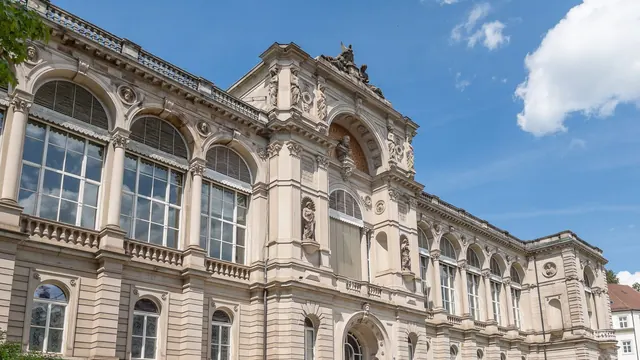
Photo: Kent Wang, CC BY-SA 2.0, cropped
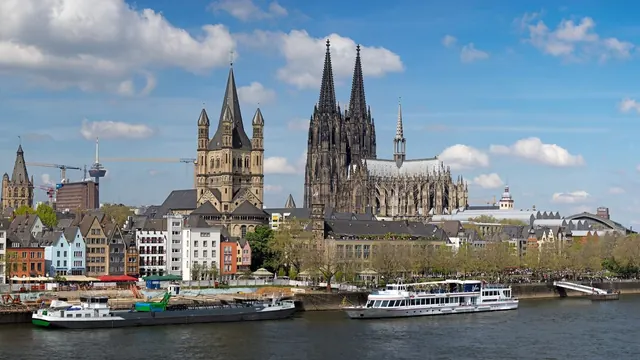
Photo: Jörg Braukmann, CC BY-SA 4.0, cropped
Your match
Wins on wellness and nature and the outdoors with your weighting.
Wins on nightlife and families with your weighting.
What matters to you?
Pick a travel style or drag the sliders. The match scores above update as you do.
The verdict
Baden-Baden is the place for a slow, restorative stay. The Friedrichsbad and Caracalla baths, the Belle Époque Kurhaus and the Lichtentaler Allee set a rhythm of bathing, strolling and early nights, and the fir forests of the northern Black Forest begin where the town ends. It suits couples and older travellers who want quiet, Riesling from the Rebland villages and perhaps an evening at the Festspielhaus, and who are happy to pay for comfort.
Cologne gives you far more to do once the day is over. The cathedral, the ring of Romanesque churches and Museum Ludwig fill the days, then the Kölsch brewhouses and the bars of the Belgian Quarter and Ehrenfeld fill the nights. It is also easier with children, cheaper to stay in and simple to get around without a car. Choose it for energy, a full city break and fast trains to Bonn, Aachen and Brussels rather than for rest.
Scoreboard
Our verdict on each category, scored 0 to 100 against fixed benchmark cities.
Category by category
What the scores mean for a trip to Baden-Baden or Cologne.
Beaches & swimming814
Neither city suits a beach trip. Baden-Baden's water culture is thermal and indoors, and on a hot afternoon the options are outdoor pools or the flooded gravel pits out on the Rhine plain. Cologne has slightly more close at hand: Fühlinger See, Escher See and Otto-Maigler-See on the city's edge have grassy banks, small patches of sand and water that warms to about 22°C.
Food & drink4552
Cologne has the more distinctive food culture and the greater range. The brewhouse ritual is the draw: a Köbes keeps bringing small glasses of Kölsch until you cover yours with a beer mat, alongside sauerbraten, Himmel un Ääd and the Halve Hahn. Beyond that come the bistros of the Belgian Quarter and the Turkish kitchens along Ehrenfeld's Venloer Strasse.
Baden-Baden's strength is in the glass. Riesling and Pinot Noir from Neuweier, Varnhalt and Steinbach, drunk in the village wine taverns, go well with Flammkuchen, venison and Black Forest gateau, with a French touch from across the Rhine. The town itself is small, though, and much of its eating is in hotel dining rooms and cake cafés.
Culture & sights5267
Cologne has more to see. The cathedral and its Shrine of the Three Kings are the main sight, twelve Romanesque churches and Roman remains add depth, and Museum Ludwig, the Wallraf-Richartz and Kolumba make it a real museum city. Its weakness is the plain postwar townscape between these individual landmarks.
Baden-Baden is the opposite. The town is the sight: a complete nineteenth-century spa resort of Kurhaus, Trinkhalle, hillside villas and parkland, with the Frieder Burda museum and Brahms's summer house to add to it. Its beauty holds together, but it fills a day or two rather than a week.
Nightlife1566
This is where the two cities differ most. Cologne goes out in stages, from the Altstadt brewhouses to the Belgian Quarter's bars, the student crowds on Zülpicher Strasse and the factory clubs of Ehrenfeld, and it has one of Germany's most open gay scenes around Rudolfplatz. At Carnival the whole city is in costume from morning until long after dark.
Baden-Baden's one big night out is the casino in the Kurhaus, with its dress code and gilded rooms. After that come hotel bars and wine bars, and the streets are calm by late evening. Anyone wanting a club has to go to Karlsruhe or Strasbourg.
Nature & outdoors7056
Baden-Baden is the stronger choice for outdoor time because the forest starts at the edge of town. The Merkur funicular, the Battert climbing cliffs and the Panoramaweg are all close by. Beyond them the Black Forest High Road climbs past the Mummelsee to the moorland of the Hornisgrinde, which has mountain biking and a little skiing in winter.
Cologne is flat. Its green spaces are the Grüngürtel parks and long cycle paths along the Rhine, and real hill walking means a trip of forty minutes or more to the Siebengebirge or the Eifel.
Day trips7880
Both are excellent bases for day trips, but in different ways. From Baden-Baden the best outings cross into France: Strasbourg's Petite France, the Alsace wine route and Colmar. Heidelberg, Freiburg, Speyer and Maulbronn are also within reach, though a car makes the Alsace and Black Forest trips much easier.
Cologne's day trips work by fast train and come in short hops. Brühl's rococo palaces, Bonn, Düsseldorf and Aachen's Carolingian chapel are each under forty minutes away, and the castle towns of the Rhine Gorge, Maastricht and Brussels are all reachable within a day.
Good for families5070
Baden-Baden is safe, clean and calm. Children can run along the Lichtentaler Allee and the forest trails above town, and Karlsruhe's zoo is a short trip away. Still, the town's quiet, refined mood is set for adults, so families tend to stay here and spend their days somewhere else.
Cologne is the easier city with children and keeps them busy without leaving town. It has an aquarium, traffic-free promenades along the Rhine, science centres, adventure playgrounds in the Grüngürtel and boat trips on the river, and nobody minds children in a brewhouse. The one time to avoid with small children is Carnival, when the streets are crowded and full of drinkers.
Getting around6274
Cologne is simpler. Trains arrive right beside the cathedral, the old town and museums are close together on flat ground, and the Stadtbahn and S-Bahn reach Ehrenfeld, the zoo and the suburbs, so a car is never needed. The trams can be crowded, though.
Baden-Baden's centre is compact but hilly, and its station is a bus ride away in Oos. The wine villages, the High Road and Alsace are hard to see without a car.
Shopping & style3857
Cologne is the better shopping city. Schildergasse and Hohe Strasse have the department stores and chains, Ehrenstrasse and the Belgian Quarter have independent fashion and design shops, and the historic perfume houses on Glockengasse still sell Eau de Cologne.
Baden-Baden is smaller and more refined. Its shopping is Sophienstraße and Lange Straße, with jewellers, watchmakers and delicatessens for a wealthy spa crowd, and it is pleasant to browse but soon done.
Affordability3046
Cologne costs noticeably less. A brewhouse meal with Kölsch is cheap compared with most big cities, and the cathedral is free to enter. The main thing to watch is hotel rates, which climb steeply during trade fairs at the Messe and during Carnival.
Baden-Baden was built for the rich and still prices itself that way. Every visit to the baths is paid for, and grand hotels set the tone. Simple guesthouses, bakeries and wine taverns help keep a budget in check.
Live music & performing arts5868
Both are good for classical music, but Cologne has the broader stage life. Its opera and Schauspiel, the Gürzenich and WDR orchestras in the Philharmonie by the cathedral, jazz and electronic music in Ehrenfeld and the Südstadt, and the dialect sessions of Carnival mean something is on most nights.
Baden-Baden is unusually strong for its size. The Festspielhaus, one of Germany's largest concert halls, brings in international orchestras and opera, and the legacy of Brahms and Clara Schumann is part of the town. Beyond classical music, though, there is little.
Wellness & relaxation9650
Baden-Baden is in another league. Bathers have used its hot springs since Roman times, the domed Friedrichsbad leads you through its set sequence of hot rooms and pools in silence, and Caracalla adds outdoor pools and a large sauna area. The whole town slows to match.
Cologne has good German sauna complexes and a thermal bath in the Rheinpark with a view of the cathedral. Still, the city around them is busy, and finding real calm takes more effort.
Which traveller are you?
On a relaxing and wellness trip, Baden-Baden is the clear choice. The silent sequence of hot rooms and pools in the Friedrichsbad and the outdoor pools at Caracalla are the reason the town exists, and the whole place moves at the same unhurried pace.
For a food and nightlife trip, Cologne wins easily. An evening can run from Kölsch and Himmel un Ääd in an Altstadt brewhouse to cocktails in the Belgian Quarter and late clubs in Ehrenfeld, while Baden-Baden goes quiet soon after dinner.
On a family trip with children, Cologne is easier. The zoo, the Chocolate Museum, the cable car over the Rhine and nearby Phantasialand fill several days. In Baden-Baden the Friedrichsbad turns young children away, and Europa-Park is an hour's drive.
When should you go?
Pick the month you can travel and see both cities side by side. The climate figures are measured averages, not a forecast.
| July | Baden-Baden | Cologne |
|---|---|---|
| Daytime high | 25 °C | 25 °C |
| Night-time low | 14 °C | 16 °C |
| Rainfall in the month | 117 mm | 81 mm |
| Sunshine | 8 hours a day | 7 hours a day |
| Daylight | 16 hours a day | 16 hours a day |
The two cities have almost exactly the same temperatures through the year. Days reach about 25°C in July and August and drop to around 6°C in December and January, so late spring to early autumn is the comfortable season for walking in both. Neither is a beach destination, but the lakes and outdoor pools are pleasant on the warmest summer afternoons.
The real difference is rain and sun. Baden-Baden, against the Black Forest hills, is much wetter, with over 100mm in most months, while Cologne usually gets between 50mm and 80mm. Even so, Baden-Baden has more sunshine in summer, with about 240 hours in July, so its showers tend to clear between bright spells. For forest walks, June to September suits it best. Cologne is the drier choice in spring and autumn. In winter, a cold grey day is easier to fill in Baden-Baden, where the thermal baths are indoors and warm.
The whole year
Each row is shaded against that destination’s own year, so the deepest cell is its best month for that figure and the palest its weakest. Shades are not comparable between the two rows.
Temperature and rainfall are climate normals, averaged over the years shown. Baden-Baden: 1991-2020 normals, Baden-Baden-Geroldsau (3.9 km from centre). Cologne: 1991-2020 normals, Köln-Stammheim (5.4 km from centre).
Getting there
| Flying from | Baden-Baden | Cologne |
|---|---|---|
| PalmaPMI | 2 h 0 m no fares FKB · 12 km | 2 h 10 m no fares CGN · 15 km |
| AntalyaAYT | 3 h 20 m no fares FKB · 12 km | 3 h 30 m €204-239 1 stop CGN · 15 km |
| LondonLHR, LGW, STN, LTN +2 | 1 h 30 m no fares FKB · 12 km | 1 h 20 m no fares CGN · 15 km |
| IstanbulIST, SAW | 2 h 50 m no fares SXB · 51 km | 3 h 0 m €145-156 CGN · 15 km |
| MunichMUC | 55 m no fares STR · 72 km | 1 h 10 m no fares CGN · 15 km |
| ViennaVIE | 1 h 20 m €174-248 STR · 72 km | 1 h 35 m €126-182 CGN · 15 km |
| AlicanteALC | 2 h 15 m €136-156 FKB · 12 km | 2 h 30 m €112-124 CGN · 15 km |
| MalagaAGP | 2 h 40 m no fares FKB · 12 km | 2 h 50 m no fares CGN · 15 km |
| NiceNCE | 1 h 20 m €81-198 SXB · 51 km | 1 h 35 m no fares CGN · 15 km |
| HurghadaHRG | 4 h 25 m no fares STR · 72 km | 4 h 45 m no fares CGN · 15 km |
The busiest departure cities for these two, with a place kept for each other part of the world. Busiest means arriving passengers where an official count exists, and where none does, the number of non-stop services flown: official route statistics are published by the European reporting countries and by nobody else, so a table ranked on them alone would offer a reader in New York or Tokyo ten European cities. Flying times are estimated from the distance between airports, and every row is a city flown non-stop to both. Where the typical offer connects anyway, the stops are shown. Under each figure is the airport the flight lands at and how far that is from the centre, because the nearest airport is not always the one a route is flown to. Where both columns name the same airport it is one flight, and the difference between the two is the distance printed beside it. Typical return fares for 2026-08 to 2026-10, cached market data up to 7 days old. The figure is the middle half of the offers found, so a single price means they agreed and a range means they did not; for a typical route that middle half spans about a quarter of the median, and for the least settled routes rather more than the median itself.
Before you go
| Measure | Baden-Baden | Cologne |
|---|---|---|
| Official language | German | German |
| Currency | Euro (EUR) | Euro (EUR) |
| Sockets | CF230 V, 50 Hz | CF230 V, 50 Hz |
| Driving side | Right | Right |
| Time zone | UTC+1, UTC+2 in summer | UTC+1, UTC+2 in summer |
| Emergency number | 112 | 112 |
| Elevation | 181 m | 59 m |
| Main airport | Karlsruhe Baden-Baden Airport (FKB)12 km from centre43 non-stop destinations | Cologne Bonn Airport (CGN)15 km from centre115 non-stop destinations |
| Public holidays this year | 12 days | 11 days |
By the numbers
| Measure | Baden-Baden | Cologne |
|---|---|---|
| City population | 56,952 | 1,024,621 |
| People per km² | 406 | 2,530 |
| Museums within 10 km | 11 | 40 |
| UNESCO World Heritage sites within 50 km | 2 | 3 |
Where else could you go?
Every comparison below shares a destination with this one, so you can follow Baden-Baden or Cologne somewhere new.