Photos: Baden-Baden by Kent Wang, CC BY-SA 2.0, cropped; Dijon by Dennis G. Jarvis, CC BY-SA 2.0, cropped.
Baden-Baden or Dijon?
Our verdict in twelve categories, each scored against the same fixed benchmark cities, and the climate month by month, so you can choose for your trip.
Choose Baden-Baden for
- wellness
- nature and the outdoors
- live music and the arts
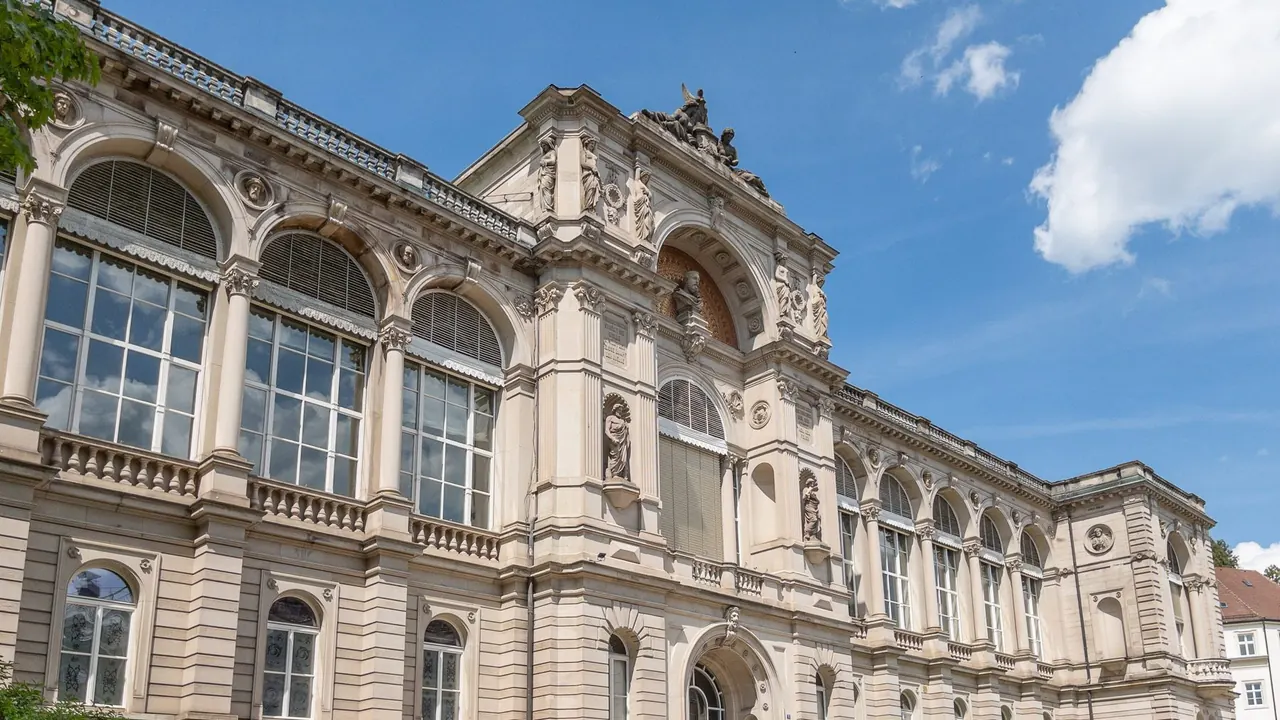
Baden-Baden is the choice for a slow, restorative stay built around its thermal baths. The Black Forest begins at the edge of town and the Festspielhaus brings world-class orchestras in the evenings. It suits travellers who want to rest, walk in fir forest and dress up for the casino, and who accept that this is a quiet and expensive place to do it.
Choose Dijon for
- food and drink
- prices
- nightlife
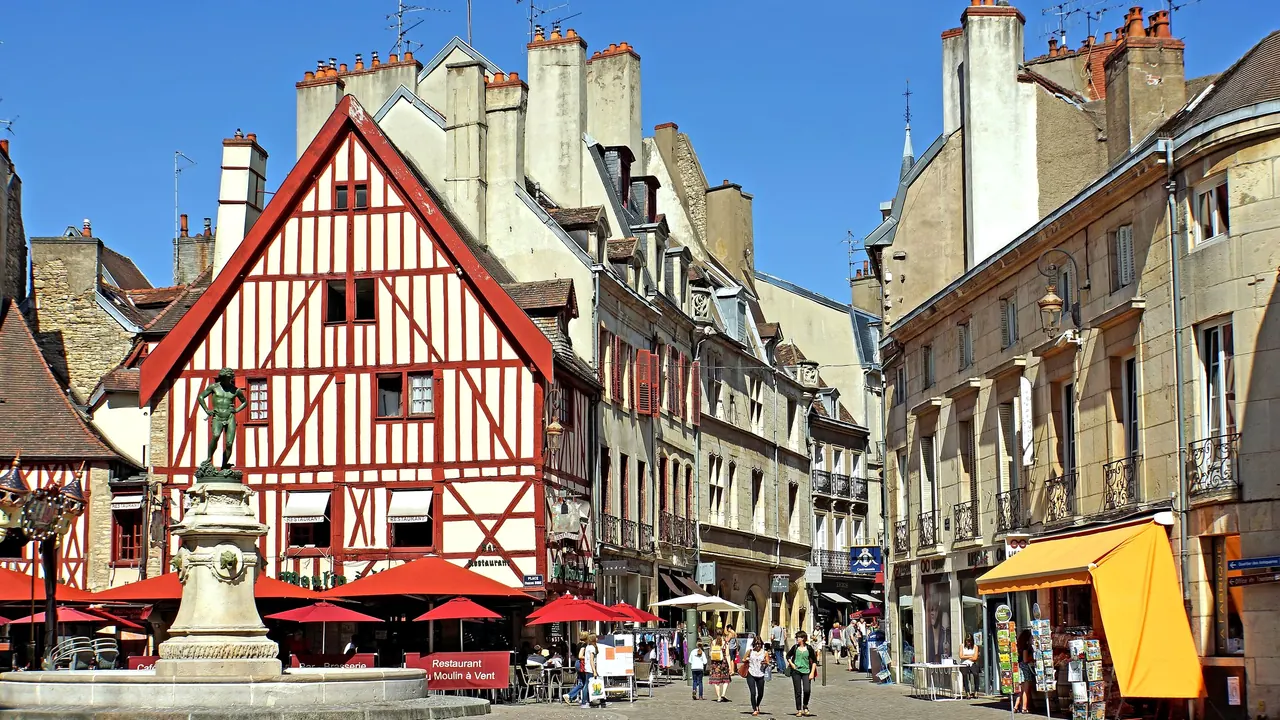
Food and wine are what tip the balance towards Dijon. Burgundian cooking, the market hall and village wines poured by the glass make every meal part of the trip, and the ducal palace and old streets give you more to see. It is also the cheaper and livelier of the two, with a student bar street, trams and a short walk from the station to everything.
Scoreboard
Twelve categories on one fixed scale from 0 to 100. The shaded stretch is the gap between the two.
Your match
Pick a travel style or drag the sliders, and both match scores follow your weighting.
Too close to call, 2 points apart
Wins on wellness and nature and the outdoors with your weighting.
Wins on food and drink and prices with your weighting.
What matters to you?
Category by category
What the scores mean for a trip.
Beaches & swimming
Neither works for a beach trip, and you should not choose between them on this. In Baden-Baden summer swimming means the flooded gravel pits out on the Rhine plain or an outdoor pool. Dijon has Lac Kir on the edge of town, a reservoir with a supervised lawn-and-sand bathing area that is the nearest thing to a beach in either place.
Food & drink
Baden-Baden eats well within a small frame: Flammkuchen, venison, Black Forest ham and cherry gateau, with Riesling and Pinot Noir from the Rebland wine taverns just outside town. In the centre, though, most of it is hotel dining and cafés serving cake, and the celebrated restaurants are a drive away in the Black Forest.
Dijon is the better place to eat and drink. It is the capital of Burgundian cooking and has its own mustard, cassis and pain d'épices. The iron market hall feeds the city on market days, and the vineyards start so close that village wines are poured by the glass in town. Expect regional French cooking rather than variety.
Culture & sights
Baden-Baden's main sight is the town itself, a Belle Époque spa resort with the Kurhaus, the Trinkhalle and the villas of the aristocratic summer set. The Frieder Burda and the Kunsthalle add good modern art. A day or two covers it.
Dijon has more depth and more history. Its centre is the palace of the medieval Dukes of Burgundy, home to the Musée des Beaux-Arts and the ducal tombs with their carved mourners. Around it, streets of half-timbered houses lead to Notre-Dame's gargoyles and lucky owl, and Sluter's Well of Moses is out at Champmol, enough for two or three full days.
Nightlife
Evenings in Baden-Baden are formal and end early. A night at the casino in its gilded rooms is the highlight, followed by a hotel or wine bar among an older crowd. Dijon's university keeps things noticeably busier, with small bars and pubs along Rue Berbisey and terraces on Place Émile Zola. Even there it is a night of wine and beer rather than clubbing, and it is quieter outside term time.
Nature & outdoors
Baden-Baden has the better outdoors on its doorstep. The Merkur funicular and the Battert cliffs open straight onto the fir forests of the northern Black Forest, and the High Road runs on past the Mummelsee to the Hornisgrinde moors, with mountain biking and some skiing in winter.
Dijon's countryside is softer. The limestone combes west of town have short trails and climbing cliffs, the Burgundy Canal towpath is flat and easy to cycle, and the wildest landscape, the Morvan, is about an hour and a half away.
Day trips
Both make excellent bases. The difference is the kind of outing. Baden-Baden's trips cross a border and take in cities: Strasbourg's cathedral and Petite France, the Alsace wine villages around Colmar, and Heidelberg and Freiburg by train.
From Dijon the trips stay deep in Burgundy and centre on wine. The Route des Grands Crus runs to Beaune, and Fontenay Abbey, Semur-en-Auxois and Vézelay lie to the west. Both need a car for the vineyards.
Good for families
Baden-Baden does slightly better for children, mostly because Europa-Park, one of Europe's biggest theme parks, is about an hour away and Karlsruhe zoo is closer still. The funicular and forest trails help too, though the Friedrichsbad is closed to young children. Dijon is calm and safe, with a planetarium and natural history museum at the Arquebuse and paddling at Lac Kir, but its tastings and fine-art museums are really for the parents.
Getting around
Dijon is easier to get around. You can walk from the station to the market, the palace and the cathedral in minutes, trams run to the outskirts and Lac Kir, and regional trains go along the wine route to Beaune. Baden-Baden's centre is also walkable but hilly, its station is a bus ride out in Oos, and the High Road and Alsace really call for a car.
Shopping & style
Neither is a big shopping destination, and the difference is in what you would buy. Baden-Baden's Sophienstraße and Lange Straße are smart and polished, with jewellers, watchmakers and boutiques aimed at spa guests. Dijon's best buys are things to eat and drink: mustard, cassis, Burgundy from the cellars and cheese from Les Halles, plus a department store and antique shops off Rue de la Liberté.
Affordability
Dijon is easier on a budget. Hotels are moderate, bistro set lunches are a good way to eat well, and wine by the glass is cheap even by French standards. Baden-Baden was built for wealthy guests and still caters to them. The grand hotels set the tone and every visit to the baths is paid for separately, although simple guesthouses and wine taverns help keep costs down.
Live music & performing arts
Baden-Baden has the more remarkable stage for a town of its size. The Festspielhaus, built into the old railway station, is one of Germany's largest opera and concert houses and draws international orchestras and soloists. The Kurhaus has its own philharmonic, and the town still keeps the memory of Brahms, who spent his summers here.
Dijon's season is smaller but covers more kinds of performance. Its Opéra runs both the Grand Théâtre and the Auditorium, and the city also has a national drama centre and a venue for touring bands, though the programme slows down in summer.
Wellness & relaxation
This is where the two are furthest apart. Baden-Baden exists because of its hot springs. The domed Friedrichsbad leads you through a silent series of hot rooms and pools, Caracalla has indoor and outdoor thermal pools, and the whole town is built around rest. Dijon has no bathing tradition and only a few hotel spas, some offering grape-based treatments. What rest it offers comes from long lunches and quiet squares.
When should you go?
Pick your month. The climate figures are measured averages, not a forecast.
Baden-Baden in July
Dijon in July
Daytime high, °C
Rainfall in the month, mm
Temperature and rainfall are climate normals, averaged over the years shown. Baden-Baden: 1991-2020 normals, Baden-Baden-Geroldsau (3.9 km from centre). Dijon: 1991-2020 normals, Dijon (7 km from centre).
Neither town is ever too hot for walking the streets. July and August peak at about 25°C in Baden-Baden and 27°C in Dijon, which is warm enough for a swim in a lake or gravel pit. December and January sit around 6°C in both. Late spring to early autumn is the time for trails, vineyards and terraces, and the two get much the same sunshine through the year, most in July and least in December.
The real difference is rain. Baden-Baden is wet in every season, with over 100mm in most months and the wettest spells in May, July and December, so pack for showers even in summer. On a grey day the thermal baths are the best reason to be there anyway. Dijon gets a little over half as much rain, and is driest from February to April and in September, which makes spring and early autumn good times for cycling the wine route.
Which traveller are you?
For a relaxing and wellness trip, Baden-Baden is in a different class. The Friedrichsbad's silent hot rooms and the Caracalla pools draw on Roman springs, and the whole town moves at a slow pace. Dijon offers only a few hotel spas.
On a food and nightlife trip, Dijon is the clear pick. Les Halles and village wines by the glass fill the days, and evenings move on to the student bars of Rue Berbisey. Baden-Baden's nights are quieter and dressed-up, centred on the casino.
For an outdoors trip, Baden-Baden has the stronger setting. The Merkur funicular, the Battert cliffs and the Black Forest High Road lead into fir forest and up to moorland above 1,100m. Dijon's combes, canal towpath and vineyard cycle route are gentler.
Before you go
| Measure | Baden-Baden | Dijon |
|---|---|---|
| Official language | German | French |
| Currency | Euro (EUR) | Euro (EUR) |
| Sockets | CF230 V, 50 Hz | CE230 V, 50 Hz |
| Driving side | Right | Right |
| Time zone | UTC+1, UTC+2 in summer | UTC+1, UTC+2 in summer |
| Emergency number | 112 | 112 |
| Elevation | 181 m | 220 m |
| Main airport | Karlsruhe Baden-Baden Airport (FKB)12 km from centre43 non-stop destinations | Lyon Saint-Exupéry Airport (LYS)178 km from centre141 non-stop destinations |
| Public holidays this year | 12 days | 11 days |
By the numbers
| Measure | Baden-Baden | Dijon |
|---|---|---|
| City population | 56,952 | 161,830 |
| People per km² | 406 | 3,890 |
| Museums within 10 km | 11 | 8 |
| UNESCO World Heritage sites within 50 km | 2 | 1 |
Where else could you go?
Every comparison below shares a destination with this one, so you can follow Baden-Baden or Dijon somewhere new.