Baden-Baden or Dresden?
Two destinations compared in twelve categories, each scored against the same fixed benchmark cities. Weight what matters to you and the verdict follows.
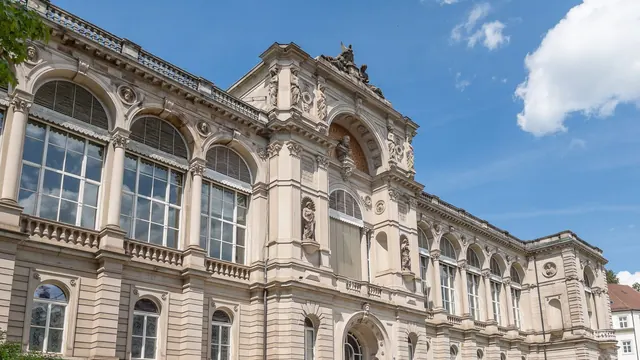
Photo: Kent Wang, CC BY-SA 2.0, cropped
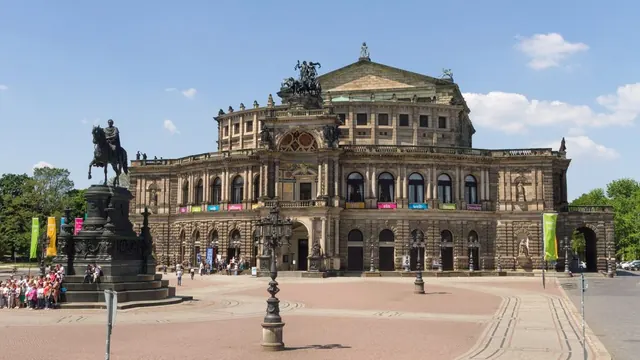
Photo: Maksym Kozlenko, CC BY-SA 4.0, cropped
Your match
Wins on wellness and day trips with your weighting.
Wins on nightlife and culture and sights with your weighting.
What matters to you?
Pick a travel style or drag the sliders. The match scores above update as you do.
The verdict
Baden-Baden is for travellers who want to slow down. The Friedrichsbad and Caracalla baths sit at the heart of a stay, the Belle Époque town around them is calm and well kept, and the Black Forest starts at the edge of town. It suits couples and older travellers who like a quiet, dressed-up evening at the casino or a concert at the Festspielhaus, and who are happy to pay for comfort.
Dresden gives more to do and costs less. Its baroque old town holds art collections of world rank, the Semperoper and the Staatskapelle give it one of Europe's great musical traditions, and the Neustadt supplies the student bars and late evenings that Baden-Baden lacks. Trams make getting around easy, Saxon Switzerland is a train ride upriver, and families will find more for children within the city itself.
Scoreboard
Our verdict on each category, scored 0 to 100 against fixed benchmark cities.
Category by category
What the scores mean for a trip to Baden-Baden or Dresden.
Beaches & swimming810
Neither town is a beach destination, and both send swimmers to the same kinds of places on hot days: outdoor pools and flooded gravel pits, with Dresden also having the ponds around Moritzburg. Dresden has the Elbe's sandy banks to sit on, though not to swim from, and Baden-Baden's water is all in its thermal baths.
Food & drink4545
Both eat well in a regional way, but the styles are different. Baden-Baden has Baden cooking with a French accent, Flammkuchen and Black Forest ham, and Riesling and Pinot Noir from the Rebland villages just outside town. The centre itself leans towards hotel dining and cake, and the serious restaurants lie out in the northern Black Forest.
Dresden's Saxon food is heavier, with sauerbraten and dumplings, plus Eierschecke and Stollen at coffee time and Elbe valley wines from Radebeul and Meissen. Its advantage is the Neustadt, where Vietnamese, Middle Eastern and beer-garden meals give a range that a small spa town does not have.
Culture & sights5279
Dresden is in another league for sightseeing. The Old Masters in the Zwinger, the Green Vault in the Residenzschloss, the Albertinum's Romantic painting and the rebuilt Frauenkirche add up to several days of first-rate museums and monuments, though much of the old town is reconstruction set among post-war blocks.
Baden-Baden's appeal is the town as a whole: the Kurhaus, the Trinkhalle and the hillside villas of a spa resort that has kept its nineteenth-century fabric. The Museum Frieder Burda and the Kunsthalle are good, but a day or two covers it all.
Nightlife1547
Dresden has a real night out. The Äußere Neustadt fills with students in small bars, beer kiosks and courtyard pubs, there is pavement drinking on summer nights, and a handful of clubs run late at weekends.
Baden-Baden's evening centres on the Kurhaus casino, with its dress code and gilded rooms, followed by a hotel or wine bar and an early night among an older crowd. Anyone wanting more has to travel to Karlsruhe or Strasbourg.
Nature & outdoors7074
The choice here is between fir forest and sandstone rock. Baden-Baden opens straight onto the northern Black Forest: the Merkur funicular climbs to views across the Rhine plain to the Vosges, climbers use the Battert cliffs, and the High Road follows the ridge past the dark Mummelsee to the Hornisgrinde moorland at over 1,100m. It is rolling wooded upland, at its best in autumn colour and much easier to explore with a car.
Dresden's showpiece is Saxon Switzerland, upriver by suburban train, where the Bastei looks down on the Elbe and the Malerweg links several days of walking among towers and gorges that helped give birth to free climbing. Closer in, the Elbe cycle route runs past vineyards and palaces, and the Ore Mountains add cross-country skiing in winter.
Day trips7876
Both are excellent bases, one facing France and the other facing the east. From Baden-Baden, Strasbourg and the Alsace wine villages, Heidelberg, Freiburg and the UNESCO sites at Speyer and Maulbronn are all about an hour away, though a car helps.
From Dresden, the outings are mostly by train: porcelain and cathedral at Meissen, the lake lodge at Moritzburg, Königstein fortress, Leipzig, intact Görlitz, and Prague at the far edge of a long day.
Good for families5060
Dresden is the easier city with children. The zoo and the child-run miniature railway in the Großer Garten, the Transport Museum, the hands-on section of the Hygiene Museum and the paddle steamers all lie within the city.
Baden-Baden is safe and calm, and the funicular and forest trails go down well, but it is built for adults and the Friedrichsbad turns away young children. Its biggest family draw is Europa-Park, an hour south, which beats anything in Dresden's area but means spending the day out of town.
Getting around6274
Both centres are compact enough to walk, but Dresden has the better network once you leave the centre. Trams reach the Großer Garten and the Blue Wonder bridge, and suburban trains run to Meissen and into the national park, so a car is never needed.
In Baden-Baden the sights are close together but some streets are steep, the station is a bus ride away in Oos, and the High Road, the wine villages and Alsace are much easier to reach with a car.
Shopping & style3842
Neither is a strong shopping destination, and they serve different tastes. Baden-Baden's Sophienstraße and Lange Straße are for jewellers, watchmakers and boutiques catering to a well-off spa crowd, while Dresden has chain stores on Prager Straße, vintage and design shops in the Neustadt, Meissen porcelain and Ore Mountain wooden toys. At Advent, the Striezelmarkt gives Dresden a season that Baden-Baden has nothing to match.
Affordability3055
Dresden costs noticeably less. Its hotels are reasonable for most of the year, Neustadt meals are good value and a single day ticket covers trams and trains, though the separate museum entries add up.
Baden-Baden was built for the wealthy and still prices itself that way, with grand hotels and a charge for every visit to the baths. Guesthouses, bakeries and wine taverns soften the cost, but a stay built around the spas soon gets expensive.
Live music & performing arts5876
Both are serious classical music towns, but Dresden's tradition runs deeper. The Semperoper and its Staatskapelle, with Wagner and Strauss premieres in their history, the Kreuzchor in the Kreuzkirche and the Philharmonic in the Kulturpalast make an evening of first-class music easy to find, and the Dixieland festival adds lighter fare.
Baden-Baden does remarkably well for its size. The Festspielhaus in the old station attracts international orchestras and opera, and the Brahms and Clara Schumann connections still matter. Outside classical music, though, there is little on offer.
Wellness & relaxation9642
This is where Baden-Baden stands apart. Roman-era hot springs feed the Friedrichsbad, with its domed halls and silent sequence of rooms, and the large thermal pools and saunas of Caracalla, and the whole town keeps to the slow pace of a spa cure.
Dresden can offer the ordinary German pleasure of a municipal sauna, the nearest thermal pool at Bad Schandau, and quiet afternoons on the Elbe meadows. That is restful, but it does not compare with a town built around taking the waters.
Which traveller are you?
On a relaxing and wellness trip, Baden-Baden is the clear choice. The town exists for its hot springs, and the silent ritual of the Friedrichsbad, the pools at Caracalla and slow walks along the Lichtentaler Allee give the kind of real rest that Dresden's municipal saunas cannot match.
For a culture and arts trip, Dresden wins. The Sistine Madonna in the Zwinger, the Green Vault treasures and the Semperoper fill three or four full days, while Baden-Baden's spa architecture and two good galleries are covered in one or two.
On a tight budget, Dresden goes much further. Hotels are reasonably priced, a day ticket covers the trams and the suburban trains to Saxon Switzerland, and Neustadt meals are good value. Baden-Baden's grand hotels and paid baths quickly drain a modest budget.
When should you go?
Pick the month you can travel and see both cities side by side. The climate figures are measured averages, not a forecast.
| July | Baden-Baden | Dresden |
|---|---|---|
| Daytime high | 25 °C | 26 °C |
| Night-time low | 14 °C | 14 °C |
| Rainfall in the month | 117 mm | 80 mm |
| Sunshine | 8 hours a day | 7 hours a day |
| Daylight | 16 hours a day | 16 hours a day |
The two towns follow a similar curve of temperature, both pleasant for walking from May to September, with summer highs in the mid-twenties and grey, cold winters. Dresden runs slightly colder in midwinter and slightly warmer in high summer. The bigger difference is rain. Baden-Baden is wet all year, with roughly 100mm or more in most months, so a stay of any length here needs an umbrella whatever the season. Dresden is far drier, often half as wet, and its rain falls mainly in summer, peaking at around 83mm in August, while late winter and early spring are noticeably dry.
Baden-Baden has the sunnier summer, with about 243 hours of sunshine in July, which suits the long green walks on the forest trails and the wine villages. Dresden holds on to a little more light from October to December. Neither is a beach destination at any time of year. The baths make Baden-Baden a good winter choice, and Dresden's drier spring and early autumn are the best times for its museums and walks along the Elbe.
The whole year
Each row is shaded against that destination’s own year, so the deepest cell is its best month for that figure and the palest its weakest. Shades are not comparable between the two rows.
Temperature and rainfall are climate normals, averaged over the years shown. Baden-Baden: 1991-2020 normals, Baden-Baden-Geroldsau (3.9 km from centre). Dresden: 1991-2020 normals, Dresden-Strehlen (3.8 km from centre).
Getting there
| Flying from | Baden-Baden | Dresden |
|---|---|---|
| PalmaPMI | 2 h 0 m no fares FKB · 12 km | 2 h 30 m no fares DRS · 10 km |
| ParisCDG, ORY, BVA | 1 h 15 m no fares STR · 72 km | 1 h 40 m €86-113 PRG · 112 km |
| AmsterdamAMS | 1 h 15 m €213-254 STR · 72 km | 1 h 30 m €163-247 PRG · 112 km |
| MilanMXP, BGY, LIN | 1 h 5 m no fares FKB · 12 km | 1 h 25 m €57-79 PRG · 112 km |
| RomeFCO, CIA | 1 h 40 m no fares SXB · 51 km | 1 h 45 m €62-97 PRG · 112 km |
| IstanbulIST, SAW | 2 h 50 m no fares SXB · 51 km | 2 h 25 m €118-136 PRG · 112 km |
| New YorkJFK, EWR, LGA | 7 h 55 m €537-713 FRA · 143 km | 8 h 10 m €737 BER · 147 km |
| BeijingPEK, PKX | 9 h 50 m €683-756 FRA · 143 km | 9 h 20 m €718-820 2 stops BER · 147 km |
| HurghadaHRG | 4 h 25 m no fares STR · 72 km | 4 h 20 m no fares DRS · 10 km |
| Punta CanaPUJ | 9 h 30 m no fares FRA · 143 km | 10 h 0 m no fares PRG · 112 km |
The busiest departure cities for these two, with a place kept for each other part of the world. Busiest means arriving passengers where an official count exists, and where none does, the number of non-stop services flown: official route statistics are published by the European reporting countries and by nobody else, so a table ranked on them alone would offer a reader in New York or Tokyo ten European cities. Flying times are estimated from the distance between airports, and every row is a city flown non-stop to both. Where the typical offer connects anyway, the stops are shown. Under each figure is the airport the flight lands at and how far that is from the centre, because the nearest airport is not always the one a route is flown to. Where both columns name the same airport it is one flight, and the difference between the two is the distance printed beside it. Typical return fares for 2026-08 to 2026-10, cached market data up to 7 days old. The figure is the middle half of the offers found, so a single price means they agreed and a range means they did not; for a typical route that middle half spans about a quarter of the median, and for the least settled routes rather more than the median itself.
Before you go
| Measure | Baden-Baden | Dresden |
|---|---|---|
| Official language | German | German |
| Currency | Euro (EUR) | Euro (EUR) |
| Sockets | CF230 V, 50 Hz | CF230 V, 50 Hz |
| Driving side | Right | Right |
| Time zone | UTC+1, UTC+2 in summer | UTC+1, UTC+2 in summer |
| Emergency number | 112 | 112 |
| Elevation | 181 m | 126 m |
| Main airport | Karlsruhe Baden-Baden Airport (FKB)12 km from centre43 non-stop destinations | Dresden Airport (DRS)10 km from centre13 non-stop destinations |
| Public holidays this year | 12 days | 11 days |
By the numbers
| Measure | Baden-Baden | Dresden |
|---|---|---|
| City population | 56,952 | 564,904 |
| People per km² | 406 | 1,720 |
| Museums within 10 km | 11 | 70 |
| UNESCO World Heritage sites within 50 km | 2 | 1 |
Where else could you go?
Every comparison below shares a destination with this one, so you can follow Baden-Baden or Dresden somewhere new.