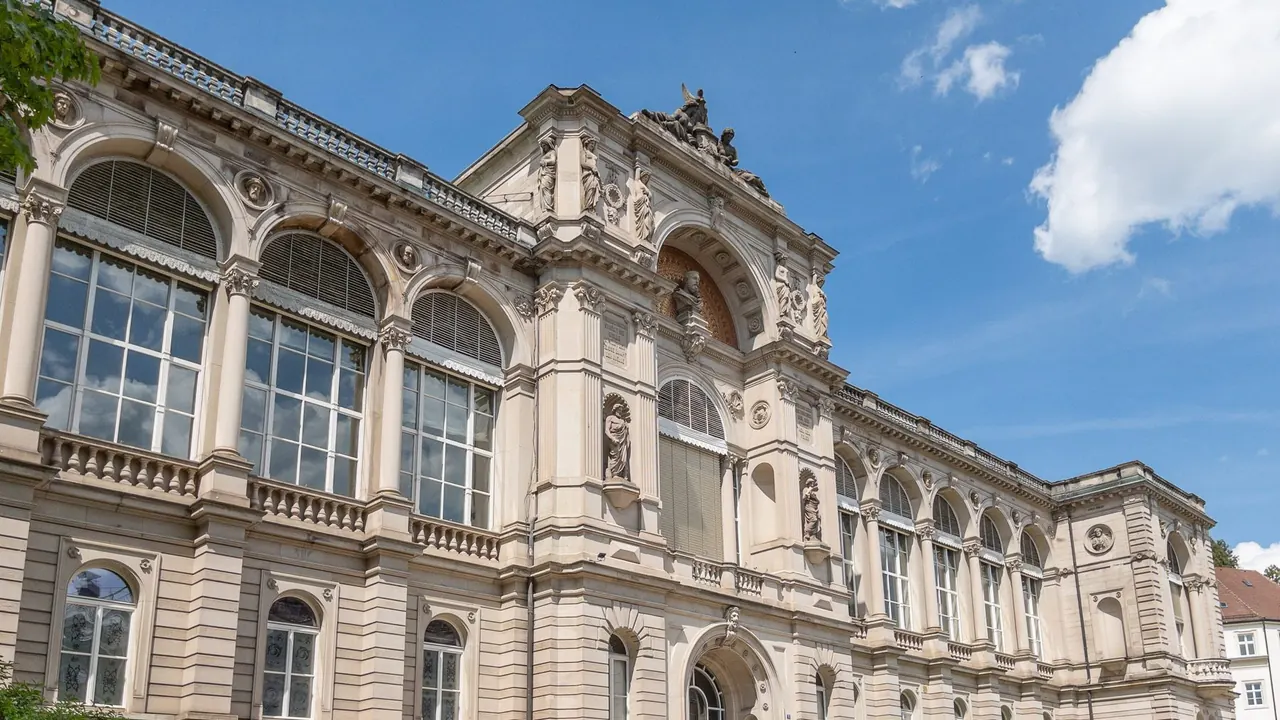
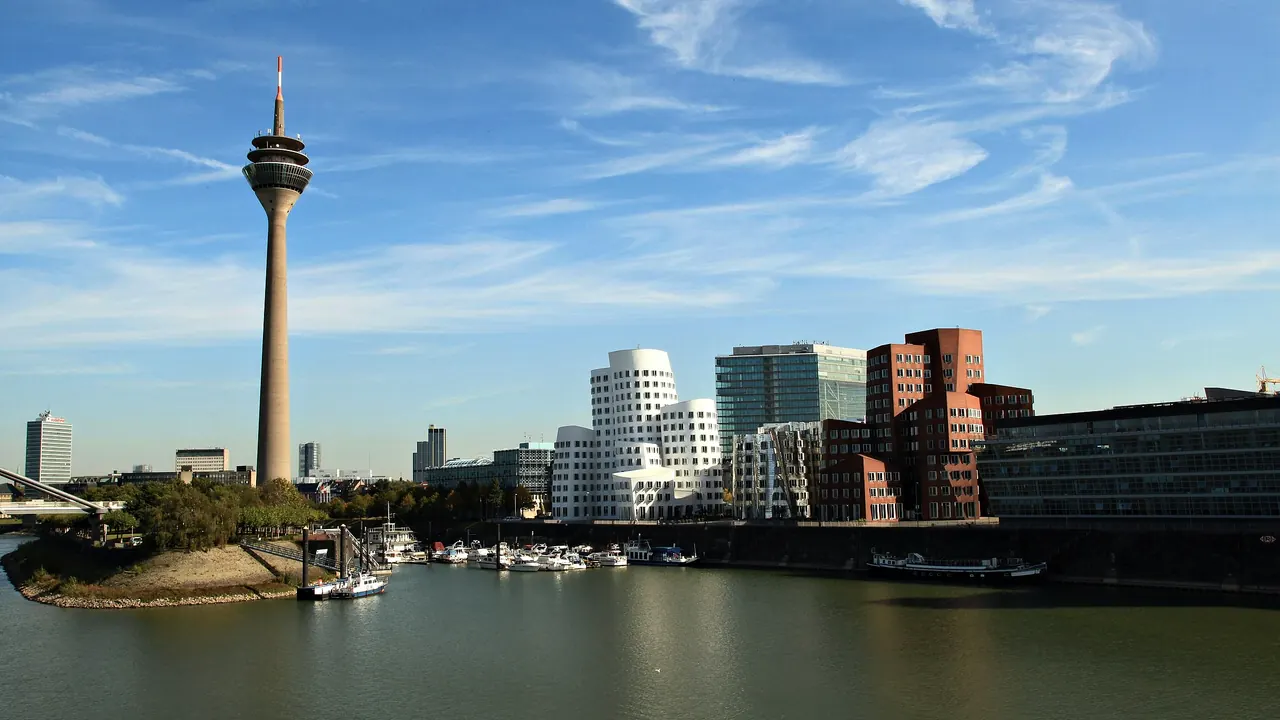
Photos: Baden-Baden by Kent Wang, CC BY-SA 2.0, cropped; Dusseldorf by Frank Vincentz, CC BY-SA 3.0, cropped.
Baden-Baden or Dusseldorf?
Our verdict in twelve categories, each scored against the same fixed benchmark cities, and the climate month by month, so you can choose for your trip.
Choose Baden-Baden for
- wellness
- nature and the outdoors
Baden-Baden is for the traveller who wants to slow down. The Friedrichsbad and Caracalla baths, the long Lichtentaler Allee and the forest trails that begin at the edge of town make it a place for resting, walking and early nights. A concert at the Festspielhaus and a glass of Riesling in a Rebland tavern round things off. It also makes a fine base for Alsace and the northern Black Forest, provided you have a car and don't mind quiet evenings.
Choose Dusseldorf for
- nightlife
- shopping
- food and drink
Düsseldorf suits a more sociable, city-minded trip. Its Altstadt brewhouses fill the lanes on weekend nights, the Japanese quarter adds a second food culture, and the Königsallee and K20 and K21 give shoppers and art lovers plenty to do. Trams and fast regional trains make it easy to get around without a car, and Cologne, Bonn and the Ruhr are all within easy reach.
Scoreboard
Twelve categories on one fixed scale from 0 to 100. The shaded stretch is the gap between the two.
Your match
Pick a travel style or drag the sliders, and both match scores follow your weighting.
Wins on wellness and nature and the outdoors with your weighting.
Wins on nightlife and shopping with your weighting.
What matters to you?
Category by category
What the scores mean for a trip.
Beaches & swimming
Neither town is a place for a beach. If you want a swim in summer, you'll be using lakes and pools in both. Around Baden-Baden that means the flooded gravel pits of the Rhine plain. Düsseldorf has Unterbacher See, a proper bathing lake with lawns on the city's edge, which is a little easier to reach for an afternoon. The Rhine's sandy banks look tempting, but the river is too dangerous for swimming.
Food & drink
Düsseldorf gives you more to eat your way through. It has two separate food worlds: the Altstadt brewhouses, with sauerbraten, Halve Hahn and the city's sharp mustard, and one of Europe's largest Japanese communities, whose ramen and izakaya cluster around Immermannstrasse. Carlsplatz market adds snacks and produce.
Baden-Baden's strengths are regional rather than varied. You'll find Flammkuchen, venison and Black Forest gateau with a French touch, and above all the Riesling and Pinot Noir of the Rebland villages just outside town. The centre itself is mostly hotel dining and cake cafés, so keen eaters drive out to the restaurants of the northern Black Forest.
Culture & sights
There is a similar amount to see in each town, but the kind of sightseeing is very different. Baden-Baden is itself the sight: an intact nineteenth-century spa resort with the Kurhaus, the Trinkhalle, hillside villas and Roman baths beneath the old town. The Frieder Burda and Kunsthalle add art, and the whole town is covered in a day or two.
Düsseldorf has lost most of its old buildings to wartime bombing, so its strength is its galleries. Klee at K20, the net under K21's dome and the wide-ranging Kunstpalast make it a stronger stop for art lovers. Benrath Palace is the main historic outing.
Nightlife
The gap here is wide. Düsseldorf's Altstadt packs a few hundred bars and brewhouses into a few streets, and on weekends people drink standing in the lanes until well after midnight. Quieter cocktail bars in Carlstadt and the Medienhafen, plus the days of Carnival, add to the choice.
Baden-Baden's big night out is the gilded casino in the Kurhaus, with a dress code to match. After that there are hotel and wine bars with an older crowd. Anyone looking for a club takes the train to Karlsruhe or Strasbourg.
Nature & outdoors
Baden-Baden has much the better outdoors. The northern Black Forest begins at the edge of town. The Merkur funicular climbs to views across the Rhine plain to the Vosges, climbers use the Battert cliffs, and the High Road runs past the Mummelsee to moorland at over 1,100m, with some modest skiing in winter.
Around Düsseldorf the landscape is flatter and gentler. There are long cycle paths along the Rhine meadows to Kaiserswerth, shaded walks in Grafenberg forest and the Neandertal valley, and the Bergisches Land hills half an hour away. It is good for a pleasant day out but has nothing to match the Black Forest's height or forest.
Day trips
Both towns are excellent bases for day trips, but they suit different travellers. From Baden-Baden you can reach Strasbourg in about an hour, then the Alsace wine villages and Colmar, Heidelberg, Freiburg, and the UNESCO sites at Speyer and Maulbronn. Many of these are much easier by car.
Düsseldorf sits in a dense urban region where fast trains do the work. Cologne Cathedral is under half an hour away, and the Brühl palaces, Bonn, the Zollverein colliery in Essen, Aachen and Maastricht are all within easy reach. You can see the lot without ever hiring a car.
Good for families
Düsseldorf is the easier city with children. Trams take buggies, and the Aquazoo Löbbecke, the tilted windows of the Rheinturm and the free boar and deer park in Grafenberg forest are all close at hand. Phantasialand is about an hour away.
Baden-Baden is safe and calm, and children enjoy the funicular and the forest paths. But the town is built around adults taking the waters, and the Friedrichsbad does not admit young children. Families usually treat it as a quiet base and drive to Europa-Park for the big day out.
Getting around
Düsseldorf is easier to get around. Its flat centre links the Altstadt, the Kö and the Japanese quarter on foot, trams and light rail cover the rest, and one regional network reaches Cologne and the Ruhr. Trains from the airport take only minutes.
Baden-Baden's core is also walkable, but some of the streets climb steeply and the station is a bus ride away in Oos. Trains are fine for Karlsruhe and Freiburg, but a car is close to essential for the wine villages, the High Road and Alsace.
Shopping & style
Düsseldorf is the shopping city of the two. The Königsallee lines its canal with luxury flagships and arcades, and big department stores sit around Schadowstrasse and the Kö-Bogen. Flingern's design shops and Japanese stationery and homeware add some independent character.
Baden-Baden's Sophienstraße and Lange Straße are polished but short: jewellers, watchmakers and delicatessens for a spa clientele. Beyond cuckoo clocks and local wine there is little else, so it is pleasant for browsing rather than a reason to come.
Affordability
Neither is cheap, but Düsseldorf costs a little less to stay in. Brewhouse meals, Japanese noodle lunches and museums with free or reduced entry help keep daily costs down. The exception is trade fair weeks, when hotel rooms become scarce and much dearer.
Baden-Baden was built for the wealthy and still feels like it. Grand hotels set the tone, and every visit to the baths adds to the bill. Guesthouses, wine taverns and bakeries help, but a stay centred on the spas soon adds up.
Live music & performing arts
The two are fairly evenly matched, but they offer different things. Baden-Baden is really about classical music. The Festspielhaus in the old railway station brings leading orchestras and opera to a very small town, and the legacy of Brahms and Clara Schumann is still part of its identity, though there is little beyond classical.
Düsseldorf's programme is wider and runs all year. It has the Deutsche Oper am Rhein, the symphony orchestra in the domed Tonhalle, a leading German-language theatre, political cabaret and small jazz venues, plus the city's place in electronic music as the home of Kraftwerk.
Wellness & relaxation
This is Baden-Baden's defining strength. The town's hot springs have been used since Roman times, and you can follow the silent, unclothed sequence of warm rooms and pools in the domed Friedrichsbad, then spend the next day in Caracalla's saunas and outdoor pools. The rest of the town keeps to the same slow pace.
Düsseldorf has no springs of its own. It offers ordinary mixed sauna halls in public pools and calm walks in the Hofgarten and the Japanese garden in Nordpark. For proper thermal bathing you would travel out to complexes in the region or to Aachen.
When should you go?
Pick your month. The climate figures are measured averages, not a forecast.
Baden-Baden in July
Dusseldorf in July
Daytime high, °C
Rainfall in the month, mm
Temperature and rainfall are climate normals, averaged over the years shown. Baden-Baden: 1991-2020 normals, Baden-Baden-Geroldsau (3.9 km from centre). Dusseldorf: 1991-2020 normals, Düsseldorf (8.3 km from centre).
The two towns follow almost the same temperature curve. Both reach about 25°C in July and August, and both drop to around 6°C in midwinter, when walking the streets is cold, grey work. Late spring and early autumn are comfortable for sightseeing in either place, and the high summer is warm enough for a swim in a lake or an outdoor pool, though neither has a sea.
The real difference is rain and sun. Baden-Baden is far wetter, with around 100mm or more in most months and its heaviest falls in May, July and December. It is also sunnier in summer, at about 243 hours in July, which suits forest walks between showers. Düsseldorf is drier all year, usually between 50mm and 75mm a month, with slightly duller summers. In both towns the winter months are short on light, which suits the thermal baths better than the Rhine promenade.
Which traveller are you?
On a relaxing and wellness trip, Baden-Baden is the obvious choice. The whole town grew up around its Roman hot springs, and days there follow the rhythm of the baths and the park. Düsseldorf has ordinary sauna halls, and you have to travel out of the city to find real thermal water.
For a food and nightlife trip, Düsseldorf is much the stronger pick. It has Altbier brewhouses, ramen counters around Immermannstrasse and a street-party Altstadt that goes on past midnight. Baden-Baden's evenings come down to the casino, hotel bars and wine taverns, and the town is quiet by late evening.
On an outdoors trip, choose Baden-Baden. The Merkur funicular, the Battert cliffs and the Black Forest High Road up to the Hornisgrinde are right on the doorstep. Düsseldorf has flat cycling along the Rhine meadows and gentle hills half an hour away, but nothing as wild.
Before you go
| Measure | Baden-Baden | Dusseldorf |
|---|---|---|
| Official language | German | German |
| Currency | Euro (EUR) | Euro (EUR) |
| Sockets | CF230 V, 50 Hz | CF230 V, 50 Hz |
| Driving side | Right | Right |
| Time zone | UTC+1, UTC+2 in summer | UTC+1, UTC+2 in summer |
| Emergency number | 112 | 112 |
| Elevation | 181 m | 38 m |
| Main airport | Karlsruhe Baden-Baden Airport (FKB)12 km from centre43 non-stop destinations | Düsseldorf Airport (DUS)7 km from centre182 non-stop destinations |
| Public holidays this year | 12 days | 11 days |
By the numbers
| Measure | Baden-Baden | Dusseldorf |
|---|---|---|
| City population | 56,952 | 619,444 |
| People per km² | 406 | 2,849 |
| Museums within 10 km | 11 | 25 |
| UNESCO World Heritage sites within 50 km | 2 | 4 |
Where else could you go?
Every comparison below shares a destination with this one, so you can follow Baden-Baden or Dusseldorf somewhere new.