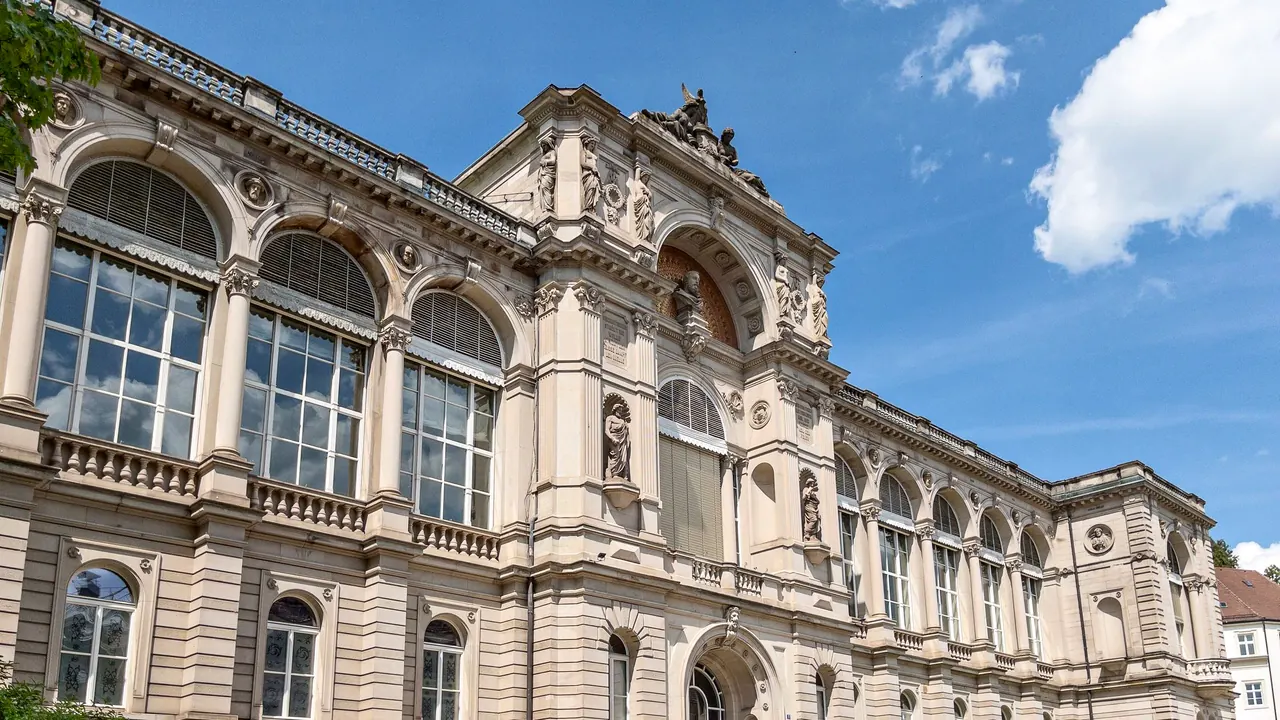
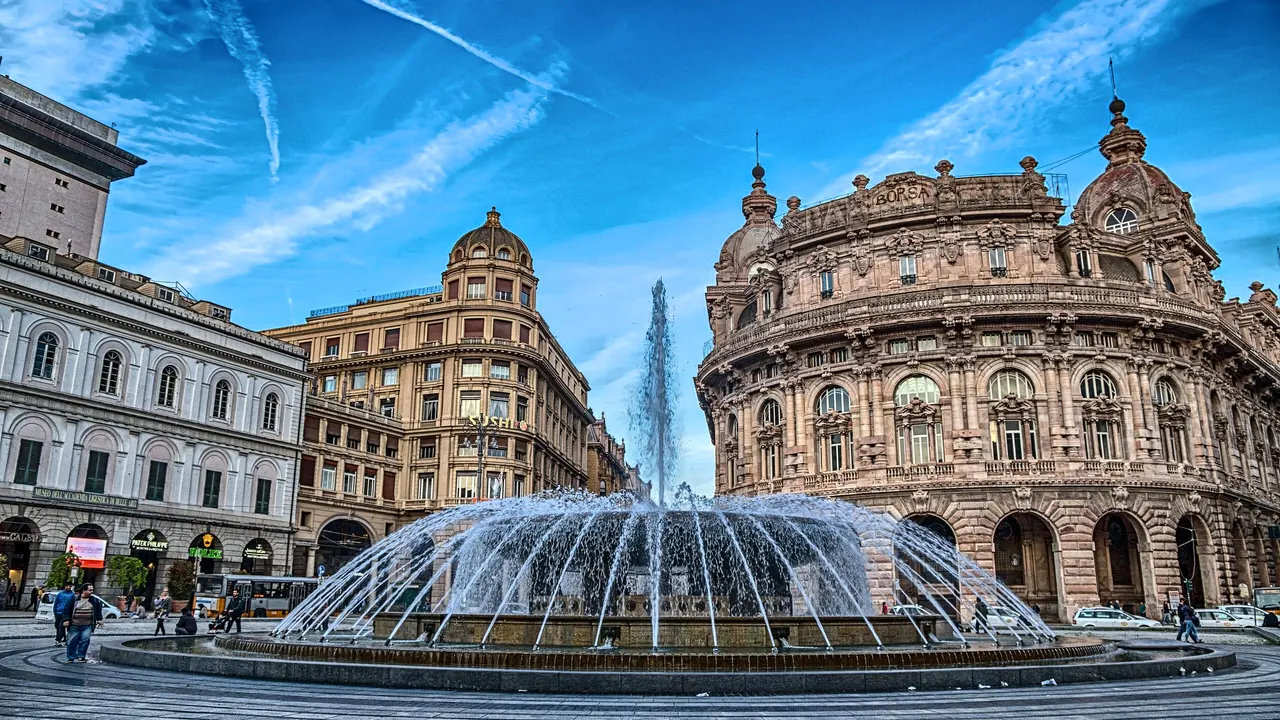
Photos: Baden-Baden by Kent Wang, CC BY-SA 2.0, cropped; Genoa by Faber1893, CC BY-SA 4.0, cropped.
Baden-Baden or Genoa?
Our verdict in twelve categories, each scored against the same fixed benchmark cities, and the climate month by month, so you can choose for your trip.
Choose Baden-Baden for
- wellness
- live music and the arts
Baden-Baden is the choice for a slow, restorative stay. Days revolve around the Friedrichsbad and Caracalla, walks along the Lichtentaler Allee, a concert at the Festspielhaus and an early night, with the Black Forest starting at the edge of town. It suits couples and older travellers who want calm and polish, don't mind paying for them, and are happy to go to Strasbourg for a livelier evening.
Choose Genoa for
- beaches
- food and drink
- nightlife
Pick Genoa if you want a real city with far more going on. It has a huge medieval old town, streets lined with palaces, the home cooking of pesto and focaccia, a swim off the rocks in summer and the Riviera along the railway line. It is cheaper, rougher round the edges and much less restful, and it rewards travellers who like to walk, eat and explore more than those who want to unwind.
Scoreboard
Twelve categories on one fixed scale from 0 to 100. The shaded stretch is the gap between the two.
Your match
Pick a travel style or drag the sliders, and both match scores follow your weighting.
Wins on wellness and live music and the arts with your weighting.
Wins on beaches and food and drink with your weighting.
What matters to you?
Category by category
What the scores mean for a trip.
Beaches & swimming
Baden-Baden has no beach to speak of. It sits inland at the edge of the Black Forest, and summer swimming means outdoor pools or the flooded gravel pits of the Rhine plain.
Genoa offers a real swim on most summer days: the pebble cove at Boccadasse, the bathing establishments along Corso Italia and the platforms below Nervi's promenade. For longer stretches of shore the train runs to Camogli, Sestri Levante and Varazze. Most of the coast is pebbly, though, and rented loungers take up much of the space.
Food & drink
Baden-Baden eats well but in a narrow range: Flammkuchen, venison, Black Forest ham and cherry gateau, plus the Riesling and Pinot Noir of the Rebland villages, best drunk in their wine taverns. The town is small, so serious eating means a drive into the northern Black Forest.
Genoa has more variety and more character from breakfast to dinner. There is focaccia dunked in cappuccino, farinata and fried fish from old friggitorie, trofie with pesto, and seafood in the harbour trattorias. Its top-end restaurants are fewer, but the everyday food is a strong reason to come in itself.
Culture & sights
In Baden-Baden the spa town itself is the main sight: the Kurhaus, the Trinkhalle, the Lichtentaler Allee and the hillside villas of the Belle Époque, with the Museum Frieder Burda and the Kunsthalle for art. It fills a day or two well.
Genoa has much more to see. Its lanes, the caruggi, make up one of Europe's largest medieval quarters. The Rolli palaces on Via Garibaldi hold Van Dyck and Rubens in painted halls, and San Lorenzo, the Palazzo Ducale and the marble sculpture of Staglieno cemetery could fill several days.
Nightlife
Neither is a party town, but Genoa has far more life after dark. Students and locals fill the small bars around Piazza delle Erbe for aperitivo and stay out late in the squares at weekends. In summer the evenings move to Corso Italia and the beach clubs.
Baden-Baden's big night out is the dressed-up casino in the Kurhaus, followed by a hotel or wine bar. The streets are calm by late evening. Clubs are thin in both places, and from Baden-Baden they mean a trip to Karlsruhe or Strasbourg.
Nature & outdoors
In both places you can walk straight out of town, but Genoa's mix of sea and hills gives it the edge. The funicular to Righi leads to the ring of hilltop forts, and the cliff paths on the Portofino promontory drop down to San Fruttuoso. The Cinque Terre trails are a train ride away, and boats go out to watch whales and dolphins.
Baden-Baden's outdoors is wooded upland: the Merkur funicular, the Battert cliffs for climbers, the Panoramaweg, and the Black Forest High Road up to the Mummelsee and the Hornisgrinde. It is gentler and greener, at its best in autumn colour, and has modest skiing in winter.
Day trips
Both towns are excellent bases, and the difference is in the kind of outing. From Baden-Baden the trips cross a border and the centuries: Strasbourg and the Alsace wine villages, Heidelberg and Freiburg, and the UNESCO-listed cathedral at Speyer and monastery at Maulbronn. Many of these are easier with a car.
From Genoa almost everything is on the coast and on a single railway line. Portofino, Camogli and the Cinque Terre lie to the east, and Finale Ligure Borgo and Noli to the west. Milan and Turin are close enough for a big-city museum day.
Good for families
Genoa gives children more to do in one place. The Porto Antico has the large Aquarium, a science centre, the glass biosphere and the walk-through submarine at the Galata museum all together, and the funiculars and public lifts are a treat in themselves. The steep, dark old lanes are hard going with a pushchair.
Baden-Baden is calm, clean and easy to walk, but it is made for adults, and the Friedrichsbad does not admit young children. Families tend to use it as a quiet base and spend their days at Europa-Park or Karlsruhe's zoo.
Getting around
You get around both towns mostly on foot, but the scale is different. In Baden-Baden the baths, Kurhaus and museums are a short stroll apart, though the station is out in Oos, and the High Road, wine villages and Alsace really need a car.
Genoa is a steeper maze. Funiculars, a rack railway, public lifts and one short metro line help with the climbs, and slow buses fill the gaps. Its coastal railway does the job a car does in Baden-Baden, reaching Nervi and the Riviera easily, and driving in the city is best avoided.
Shopping & style
Shopping in Baden-Baden is limited but polished: jewellers, watchmakers and boutiques on Sophienstraße and Lange Straße for a well-off spa crowd, and little beyond cuckoo clocks and wine. Genoa has more range and more character, with the arcades of Via XX Settembre, long-established old-town shops selling candied fruit and pesto, workshops making silver filigree and coral, and the Mercato Orientale for food to take home.
Affordability
Genoa is clearly the cheaper stay. Focaccia and farinata make for very cheap meals, and central hotels cost less than in Italy's best-known cities. Costs climb mainly in the smart Riviera resorts and when you hire loungers in summer.
Baden-Baden was built for the wealthy and is still priced that way, with grand hotels and a charge for every visit to the baths. Guesthouses, bakeries and wine taverns help, but a stay centred on the spas soon adds up.
Live music & performing arts
Baden-Baden has the edge for classical music, which is remarkable for a town its size. The Festspielhaus, one of Germany's largest opera and concert houses, brings in leading international orchestras and soloists. The town's philharmonic plays in the Kurhaus, and the small nineteenth-century theatre stages drama and opera.
Genoa's Teatro Carlo Felice has its own season of opera, ballet and symphony concerts, and the city honours Paganini with concerts. What it has that Baden-Baden lacks is small live-music clubs carrying on its singer-songwriter tradition. Its main drama company performs in Italian.
Wellness & relaxation
The baths are Baden-Baden's whole reason for being. The silent sequence of hot rooms, scrubs and pools at the Friedrichsbad, the indoor and outdoor pools and saunas at Caracalla, and the spas of the grand hotels set the slow pace of the entire town.
Genoa has no bathing tradition of its own, and the nearest thermal waters are at Acqui Terme, over an hour away. Its calmest places are Nervi's promenade and villa gardens and the long lunches of the Riviera villages, a contrast with the port traffic and crowded lanes of the centre.
When should you go?
Pick your month. The climate figures are measured averages, not a forecast.
Baden-Baden in July
Genoa in July
Daytime high, °C
Rainfall in the month, mm
Where the figures come from
Genoa has no rain gauge within 25 km of the centre, so its rainfall comes from a gridded climate dataset read at the destination rather than from a gauge further away.
Genoa's sunshine is measured 80 km from the centre, at Capo Mele.
Temperature and rainfall are climate normals, averaged over the years shown. Baden-Baden: 1991-2020 normals, Baden-Baden-Geroldsau (3.9 km from centre). Genoa: 1991-2020 normals, Genova / Sestri (6.7 km from centre).
Baden-Baden is at its best in summer and early autumn. June to August bring the warmest days, around 25°C at most, and the most sunshine, which is good weather for forest trails and the wine villages. Autumn colour keeps the walking good into October. Rain falls steadily all year, so no month is reliably dry. From November to February the days are cold, grey and short, though that is when the hot baths feel most welcome.
Genoa is milder all year and gets more sun than Baden-Baden in every month. The sea is warm enough for swimming from June to September, at its warmest around 25°C in August, when the air reaches about 28°C. That is hot for climbing the steep lanes but fine for an afternoon swim. July is the driest month, with 27mm of rain. In autumn the weather turns wet: October, with 212mm, and November are the wettest months. May and June are the most reliable months for walking the city and the coast, and September is warm but less settled.
Which traveller are you?
On a relaxing and wellness trip, Baden-Baden wins easily. The silent ritual of hot rooms and pools at the Friedrichsbad, the Caracalla complex and the slow pace of the whole town are made for proper rest. Genoa's port and crowded lanes are lively, not calming.
For a beach and sun trip, Genoa is the only real option. Clear water is warm enough from June, Boccadasse and Nervi have swimming within the city, and the Riviera bays are a short train ride away. Baden-Baden lies far inland and offers only pools and gravel lakes.
On a food and nightlife trip, Genoa is much stronger. You can eat focaccia, farinata and pesto in the old lanes and then join the aperitivo crowd around Piazza delle Erbe. Baden-Baden has hotel dining and its casino, though the Rebland wine taverns make a pleasant, quiet evening.
Before you go
| Measure | Baden-Baden | Genoa |
|---|---|---|
| Official language | German | Italian |
| Currency | Euro (EUR) | Euro (EUR) |
| Sockets | CF230 V, 50 Hz | CFL230 V, 50 Hz |
| Driving side | Right | Right |
| Time zone | UTC+1, UTC+2 in summer | UTC+1, UTC+2 in summer |
| Emergency number | 112 | 112 |
| Elevation | 181 m | 20 m |
| Main airport | Karlsruhe Baden-Baden Airport (FKB)12 km from centre44 non-stop destinations | Genoa Cristoforo Colombo Airport (GOA)7 km from centre25 non-stop destinations |
| Public holidays this year | 12 days | 13 days |
By the numbers
| Measure | Baden-Baden | Genoa |
|---|---|---|
| Population | 56,952 | 558,745 |
| People per km² | 406 | 2,325 |
| Museums within 10 km | 11 | 51 |
| UNESCO World Heritage sites within 50 km | 3 | 1 |
| Swim season, months above 21 °C | - | 4 months |
Where else could you go?
Every comparison below shares a destination with this one, so you can follow Baden-Baden or Genoa somewhere new.
- Portofinovs Genoa
- Strasbourgvs Baden-Baden
- Stuttgartvs Baden-Baden
- La Speziavs Genoa
- Heidelbergvs Baden-Baden
- Freiburgvs Baden-Baden